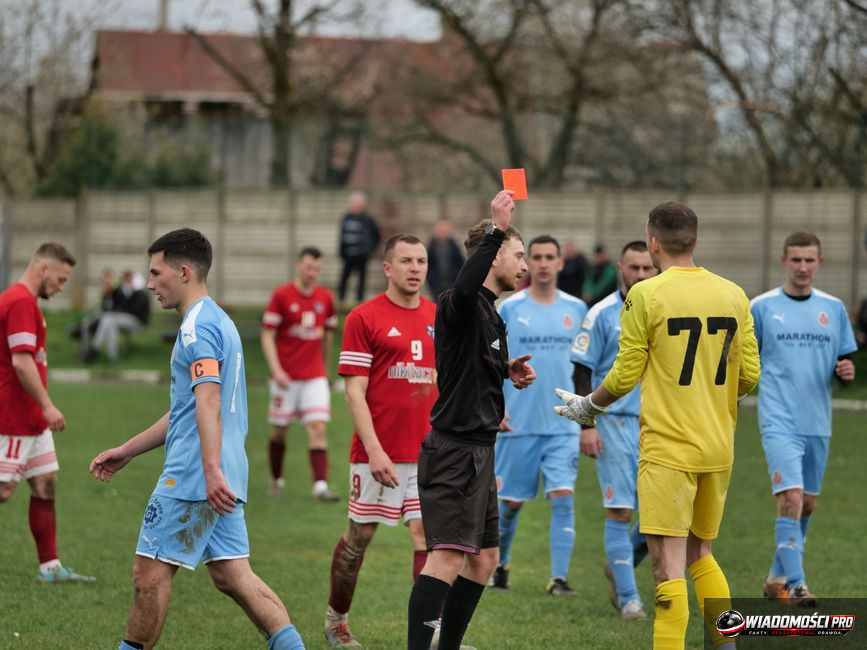
Starting July 1, 2026, new PZPN regulations come into effect, including the launch of a modern VAR center in Warsaw, which aims to streamline refereeing from the first matchday of the 2026/2027 season. The Polish Football Association is thus ending the era of referees working from broadcast vans stationed at stadiums. Moving the entire burden of verifying controversial situations to the capital is a signal that the federation is looking for a way to extinguish the disputes over the quality of officiating that have been growing over the last few months.
Technology: New VAR center in Warsaw
Centralization of the VAR system is the most radical operational change in the history of Polish officiating. Until now, every match was serviced by a broadcast van, where video assistant referees were isolated from the main database and subject to variable technical conditions at individual venues. From the 2026/2027 season, all camera signals will be sent to a specialized center in Warsaw. This change is primarily intended to eliminate problems with image quality and data transmission, which have repeatedly paralyzed the flow of the game in previous years.
Working in a single, stationary facility allows for the standardization of communication procedures. Video referees now have direct access to analytical systems, which should theoretically drastically reduce the duration of verification breaks. However, the technical challenges are significant. Moving decision-making to an office building in Warsaw distances the referees from direct contact with the match atmosphere. Critics of this solution point out that a referee who does not feel the dynamics of a specific clash at the stadium may have difficulty correctly interpreting the players' intentions. PZPN, however, argues that the objectivity of data transmitted in real-time outweighs the subjective feeling of the pitch climate.
The first matchday of the season will be the test for the Warsaw headquarters. Video referees who have been delegated to work in the capital have undergone intensive training in the last few weeks on handling the new communication protocols. If the system fails during an August weekend, the association's image will suffer in a way that is difficult to repair. Responsibility for every incorrect decision now rests directly on the shoulders of the team working in Warsaw, rather than on mobile technical crews.
Discipline: New penalties and a tougher course
Along with the new laws of the game that came into effect on July 1, 2026, the PZPN has introduced an uncompromising model for enforcing discipline. The changes are not limited to the technical aspects of football but strike at the culture of behavior of players and members of coaching staffs. The most important novelty is a package of stricter penalties for insulting referees, developed in consultation with the DZPN (Lower Silesian Football Association). The goal is to completely eliminate verbal aggression, which for years was tolerated as an element of football folklore.
The new penalty tariff provides for significantly longer suspensions and severe financial consequences for clubs whose representatives violate the referee's physical integrity or blatantly undermine their authority. According to the guidelines, referees have received a clear signal to apply "zero tolerance." Any exit outside the designated technical zones or attempts to exert unauthorized pressure on the referee during halftime will result in an immediate disciplinary report. The PZPN is aiming for a radical image change. The player is to focus on the game, and the referee on interpreting the rules, without the need to constantly fend off verbal attacks.
The introduction of these regulations is a response to the growing frustration of the community, which reached its zenith in June 2026. The controversy surrounding the work of Szymon Marciniak became a catalyst for change. The association, instead of backing away from difficult decisions, decided to harden the framework in which the participants of the spectacle operate. Local associations, including the DZPN, have already begun to implement these guidelines at the regional level, which makes discipline in Polish football uniform from the top tier down to the lower leagues. Will a change in mentality happen in one season? That remains an open question, but the legal tools are now on the side of the referees.
Interpretation: New laws of the game
Changes to the "Laws of the Game" for the 2026/2027 season are not just cosmetic. The PZPN has published a series of modifications that change the way handballs and contact situations in the penalty area are interpreted. Referees have been instructed to place greater emphasis on intentionality and natural body movement when assessing fouls. This is a response to years of complaints from fans and experts that the current handball rules are too restrictive and often distort match results.
The new protocols also aim to minimize the number of so-called "soft" penalties. The head referee, supported by the VAR center in Warsaw, must now demonstrate that physical contact had a real impact on the course of the action, and was not just the attacker looking for a foul. This approach requires referees to be much bolder in making decisions because each one will now be analyzed under a microscope by the systems in Warsaw. Referees must learn to balance the letter of the law with the spirit of the game.
Among the changes is also a new communication protocol between the referee on the pitch and the team in Warsaw. Referees have been obliged to make decisions faster if the situation is clear to the VAR system. Excessive delays, which in the past irritated fans, are to be reduced thanks to better theoretical preparation before each matchday. Observers note that the success of these changes depends on how quickly referees break the habit of over-checking every situation. The effectiveness of the new regulations will be verified on an ongoing basis, and the PZPN does not rule out further adjustments during the autumn round if the need arises.
Challenges for referees: Pressure and logistics
Referees in the new season face challenges that go beyond just knowing the rules. The biggest of these is reaction time. In a centralized model, the head referee must trust the information flowing from the capital in a way that does not allow for a loss of control over the pace of the match. Radio communication must work flawlessly, and any signal interference in Warsaw could lead to decision-making paralysis at distant stadiums.
Another challenge is referee staffing. The official list of referees for the first matchday of the 2026/27 PKO BP Ekstraklasa was announced on July 23, 2026. Each of the designated referees had to undergo certification on the new regulations, which means that the margin of error in interpretation has been radically narrowed. Referees can no longer excuse themselves with "ignorance of the guidelines," because the PZPN has ensured that every change was consulted and implemented in the training process.
It is worth noting that referees must now work under pressure they did not know in previous years. Every decision made based on indications from the VAR center in Warsaw is publicly available for verification. The association has begun publishing explanations of controversial situations, which is intended to increase transparency, but at the same time puts referees in the role of public figures whose every mistake is accounted for by the media and fans in real-time. This is a huge psychological burden that not only experienced referees but also debutants entering the Ekstraklasa must cope with.
What about the 1st and 2nd League?
Changes in refereeing regulations are not limited only to the top tier. The Betclic 1 Liga and 2 Liga are also subject to the new interpretation, which is important for maintaining uniform standards throughout Polish football. Although clubs at these levels do not use central VAR support to the same extent as the Ekstraklasa, they must adhere to identical disciplinary and interpretive rules.
For referees in the lower leagues, this means the need to assimilate changes even faster. The lack of VAR technology at every 2 Liga match makes the role of the pitch referee even more difficult. They must rely solely on their own judgment, while knowing that their decisions are evaluated according to the new, stricter PZPN criteria. The publication of the full list of changes by Gol24 serves as the most important guide for these referees, which they use before every match weekend.
There is a risk that the discrepancy in the quality of refereeing between the Ekstraklasa and the lower leagues will become even more visible. The association is trying to counteract this by organizing training for central-level referees, but real work on the pitch in the 2 Liga, without the support of technology, remains a challenge that cannot always be met at the current pace of the game. Clubs from the lower leagues look at these changes with hope, counting on the fact that the unification of foul interpretation will make life easier for players who often feel lost in the maze of changing guidelines.
Crisis response: PZPN on the defensive
The position of referees in Polish football was subjected to exceptionally harsh assessment in June 2026. The controversy surrounding Szymon Marciniak, which dominated sports headlines, forced the PZPN to take a firm stance. The federation's reaction was swift: not only were internal analyses conducted, but above all, the implementation of planned changes in infrastructure was accelerated. The launch of the VAR center in Warsaw was the final chord of these remedial actions.
The federation realized that it could no longer allow chaos in officiating to affect the image of the league. The decision to tighten penalties for insulting referees, announced on July 22, 2026, was a direct response to the brutalization of language in Polish football. The PZPN wants to regain control over the narrative by shifting the burden of responsibility to the system and procedures, rather than individuals. Is that enough? History shows that in Polish football, even the most refined systems often fail when faced with emotions.
The association has bought itself time to calm the mood, but the pressure on referees has not diminished at all. From the first matchday of 2026/2027, every whistle will be analyzed in terms of whether there has truly been an "improvement in work." If after a few months it turns out that the system in Warsaw does not eliminate controversy, but only moves it elsewhere, the PZPN will have to look for even deeper solutions. At this moment, the federation has implemented the most technically advanced refereeing model in history, hoping that the professionalization of infrastructure will allow people to forget about the June unrest.
The future of officiating: What does this mean for fans?
For fans, the current changes primarily mean higher expectations regarding the fairness of verdicts. The transparency that the VAR center in Warsaw is supposed to provide is a promise that "human errors" will be reduced to a minimum. Viewers in front of televisions and in the stands want to watch a fluid spectacle, not constant breaks to watch replays. The PZPN declares that the new communication protocols are a response to these very expectations.
However, it should be remembered that technology will not replace a referee's intuition. Even the most advanced system in Warsaw will not eliminate the risk of error in ambiguous situations. Fans must prepare for the fact that even with the use of the most modern tools, refereeing will remain the domain of human decisions. The change is that these decisions are now made in a controlled environment, which should increase their predictability.
In the upcoming season, due to stricter regulations regarding behavior on the pitch, fans can also expect a higher number of individual penalties for players who cannot keep their nerves in check. This could lead to more red cards in the early phase of the season, until players get used to the new standards. Will this change the way the game is played in the Ekstraklasa? It will certainly force greater tactical and emotional discipline.
Questions and answers
Where is the new VAR center physically located and what does it change for referees?
The new VAR center is located in Warsaw and becomes the central command point for all Ekstraklasa matches. This changes the referees' work model from mobile, based on broadcast vans, to stationary, which is intended to ensure better connection quality and faster verification of events.
What specific penalties have been tightened according to the new DZPN regulations?
According to the regulations from July 2026, sanctions for verbal attacks and violation of the physical integrity of referees have been tightened. This includes both longer suspension periods and increased financial penalties for players and coaching staffs, which is intended to force a change in the culture of work on the pitch.
Do the new laws of the game apply only to the PKO BP Ekstraklasa?
No, the new guidelines and updated "Laws of the Game" also apply to the Betclic 1 Liga and 2 Liga. Although the lower leagues do not use the full technical facilities of the center in Warsaw, referees are obliged to follow the new standards of rule interpretation from the first matchday of the 2026/2027 season.
When exactly were the key changes and referee appointments announced?
The PZPN published the package of changes to the laws of the game on June 28, 2026. The referee appointments for the first matchday of the competition were officially announced on July 23, 2026, which allowed clubs to prepare for working with specific referees.
Will the system in Warsaw eliminate all refereeing controversies?
Technology is intended to streamline the decision-making process and eliminate technical errors, but the interpretation of the rules by humans remains a key element of refereeing. The PZPN believes that centralization will reduce the number of mistakes, but the final test will come with the first controversial situations during matches.
What challenges do referees face in connection with the new infrastructure?
The main challenge is reaction time and the need to maintain a high level of concentration while working in a stationary center. Referees must now demonstrate proficiency in handling new communication protocols, which, combined with the pressure of the stands and public evaluation of their work, constitutes the most difficult test of their careers.
Sources
- Power Ranking of the PKO BP Ekstraklasa 2026/2027 according to TVP Sport - sport.tvp.pl
- New "Laws of the Game" for the 2026/2027 season - PZPN
- Referee appointments for the 1st matchday of the PKO BP Ekstraklasa 2026/27 – check who will lead the matches [LIST] - sport.tvp.pl
- Stricter penalties for insulting referees! New DZPN regulations for the 2026/2027 season - Sportowy Wałbrzych
- PZPN boasted about the new VAR center. Referees will work in Warsaw from the first matchday of the PKO BP Ekstraklasa - sport.tvp.pl
- Controversy surrounding Marciniak, but what happened next. Unexpected reaction of the PZPN - Interia Sport
- New laws of the game from July 1. PZPN published the most important changes before the 2026/2027 season - CKsport.pl
- Changes in refereeing regulations in the PKO Ekstraklasa, Betclic 1 Liga, or 2 Liga. Get to know the most interesting ones [LIST] - Gol24
Article prepared by the Wiadomości PRO editorial team with the support of artificial intelligence. Facts come from the sources provided above.
Komentarze (0)
Ładowanie komentarzy...