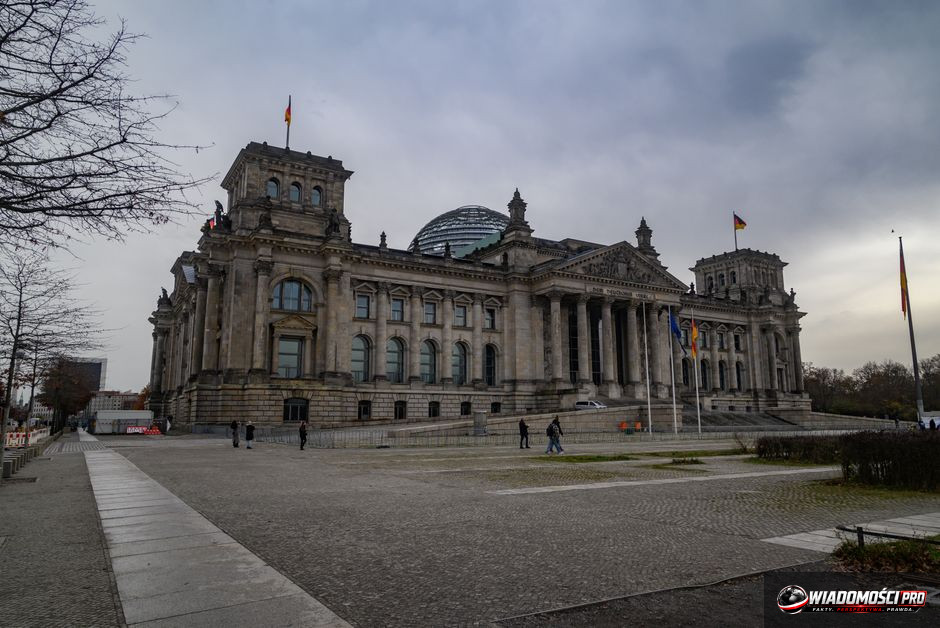
A ban on the AfD is unlikely despite the motion filed in December 2024, because German law requires proof of active and aggressive opposition to the democratic order, which is extremely difficult to demonstrate in court. Judges of the Federal Constitutional Court in Karlsruhe impose evidentiary requirements on applicants that no parliamentary party in the history of the Federal Republic of Germany has yet failed to meet. A decision on a potential ban will not be made based on polling sentiment, but through a legal process in which every thesis must be supported by irrefutable facts.
Facts: Chronology of actions and legal status
In December 2024, a group of parliamentarians from various political factions initiated a formal process aimed at banning Alternative for Germany. This motion represents the culmination of a months-long debate on the boundaries of political freedom in the face of rising radical sentiment. Since January 2024, German cities have become the arena for mass demonstrations. Hundreds of thousands of citizens took to the streets to express their opposition to the growing influence of the AfD, which was a direct reaction to media reports about the party's radicalization and its political plans.
Parallel to the debate surrounding the AfD, the German state is testing the effectiveness of its "militant democracy" mechanisms against smaller entities. On July 16, 2024, the Ministry of the Interior decided to ban a far-right magazine and its associated publishing house. This event became an important point of reference for lawyers. It showed that the state apparatus is capable of effectively removing organizations that propagate content contrary to the constitution from legal circulation, provided it possesses concrete, irrefutable evidence.
The Centre for Eastern Studies (OSW), in an analysis from May 27, 2024, emphasized that the popularity of the AfD has ceased to be treated by German elites as a temporary polling trend. It has become a permanent, structural element of the political landscape. This situation forces state institutions to constantly seek strategies to contain the group's influence. However, administrative tools that proved effective against niche publications encounter insurmountable constitutional barriers when pitted against a large parliamentary party.
Arguments for a ban
Supporters of dissolving the AfD build their strategy on the assumption that the group has ceased to function as a political party in the traditional sense. They argue that it has become a vehicle for activities that threaten the foundations of the state. They point to numerous personal and ideological links between AfD members and radical pro-Russian circles. In June 2024, media outlets, including OKO.press, highlighted the relationships of politicians, pointing to contacts with MP Fritz and the involvement of individuals maintaining close ties with the AfD. At the same time, the figure of Harald Weyel frequently appears in the debate, whose activities are analyzed by the party's opponents as proof of its deep radicalization and anti-democratic sympathies.
The applicants' argumentation is based on the thesis that "militant democracy" is not merely a dead historical record, but an active tool for protecting the legal order. The initiators of the December 2024 motion declare that they possess the appropriate tools to demonstrate to the court that the AfD uses democratic mechanisms solely for the purpose of their subsequent destruction. However, every argument must pass a rigorous judicial sieve.
Another point of contention is the rhetoric used by party representatives. Critics point to statements that, in their view, go beyond the framework of permissible political criticism, becoming an aggressive call for a change in the system. Ignoring these signals would be a mistake that could lead to the erosion of the republic's foundations. Proponents of a ban believe that passivity would be tantamount to allowing the destruction of the order from within.
Arguments against: Constitutional barriers
The German Federal Constitutional Court in Karlsruhe operates within a legal regime that places the protection of political pluralism above the immediate political needs of the government. For a party to be banned, it is necessary to demonstrate its "active and aggressive" opposition to the democratic order. The Court requires hard evidence that the party not only proclaims controversial theses but takes concrete, coordinated actions aimed at overthrowing the constitutional order.
The judges from Karlsruhe maintain great restraint. In the history of the FRG, attempts to ban parties have ended in failure if the evidence was based solely on ideology rather than direct, dangerous action against the state. In the case of the AfD, the situation is complicated by its high public support. Dissolving a group for which a significant portion of the electorate votes could be perceived as an attack on the will of the voters, which would consequently lead to deep destabilization of the state and an increase in social unrest.
Lawyers note that the motion for a ban could get stuck in formal procedures for years. Every piece of evidence presented by the applicants will be countered by the AfD's legal team. These processes do not proceed at the pace of political discussions, but at the pace of judicial analysis, which favors a party on the defensive. The court will not risk the institution's authority without possessing evidence that leaves no room for interpretation.
Forecast: Political theater or a real threat?
The motion filed in December 2024 is a political signal with high destructive power. Those in power in Berlin, facing the challenge of the AfD's high poll numbers, are trying to use available legal tools to push the party onto the defensive. The outcome of this clash remains highly uncertain. Even if the motion meets procedural requirements, gathering evidence at the level required by the constitution is a challenge that is difficult to meet in the face of the protection of freedom of association.
There is a real risk that in the event of a failure before the court, the AfD will emerge from this dispute strengthened. The party will gain the status of a "martyr" in the eyes of its electorate, which will allow it to mobilize dissatisfied voters even more effectively. Instead of eliminating the threat, the state may inadvertently provide the far-right with fuel for further growth in support. The court in Karlsruhe will likely avoid the role of arbiter in the dispute over the shape of the political scene, focusing solely on the technical interpretation of the articles of the constitution.
The German legal system was designed to protect the state from authoritarianism, but at the same time, it secures the system against arbitrary political decisions. The AfD will therefore most likely continue to be present in parliament, and the fight against it will shift to the field of public debate and polls, rather than the courtroom.
Questions and answers
Why is banning the AfD so difficult?
German law requires proof that a party not only proclaims radical slogans but actively and aggressively strives to overthrow the democratic order. This constitutes a very high evidentiary threshold for the Federal Constitutional Court, which in its history has repeatedly rejected motions that lacked sufficient support in hard, irrefutable actions by the party.
Who filed the motion to ban the AfD?
The motion was formalized in December 2024 by a group of parliamentarians representing various political options. They argue that the state possesses the appropriate legal tools to protect democracy from groups striving for its destruction, which serves as a response to the months-long conflict over the permissible boundaries of public debate.
Have extremist organizations been closed in Germany before?
Yes. In July 2024, German authorities banned a far-right magazine and its associated publishing house. This shows that the state effectively applies the mechanisms of "militant democracy" against niche entities, however, transferring this practice to a party with a wide nationwide reach and strong parliamentary representation encounters significantly greater legal and systemic obstacles.
Who are MP Fritz and Harald Weyel in the context of contacts with the AfD?
MP Fritz is pointed out in the media, including by OKO.press, as a person maintaining relationships with AfD representatives, which is used by the party's opponents as an argument testifying to its anti-democratic sympathies. Harald Weyel, on the other hand, is an AfD politician whose activities and connections are the subject of analysis in the context of allegations of the group's pro-Russian sympathies, which constitutes one of the elements of a broader debate about state security. Both figures are cited in the discussion as examples of controversial connections that are meant to testify to the threat posed by the party.
Sources
- General rehearsal: strategies for containing the AfD - OSW Centre for Eastern Studies
- Germany. Low chances of an AfD ban, although supporters are growing - Rzeczpospolita
- They filed a motion to ban the AfD. "We have the appropriate legal tools" - Interia Wydarzenia
- Ban on AfD activities. Increasing pressure - dw.com
- Germany demonstrates against the AfD. Fear of the far-right is growing, as are its poll results - Wyborcza.pl
- Braun's party and its pro-Russian friends from Germany. MP Fritz: we meet with the AfD - OKO.press
- German militant democracy - edgp.gazetaprawna.pl
- Germany bans far-right magazine and publishing house - Polish Press Agency SA



Komentarze (0)
Ładowanie komentarzy...