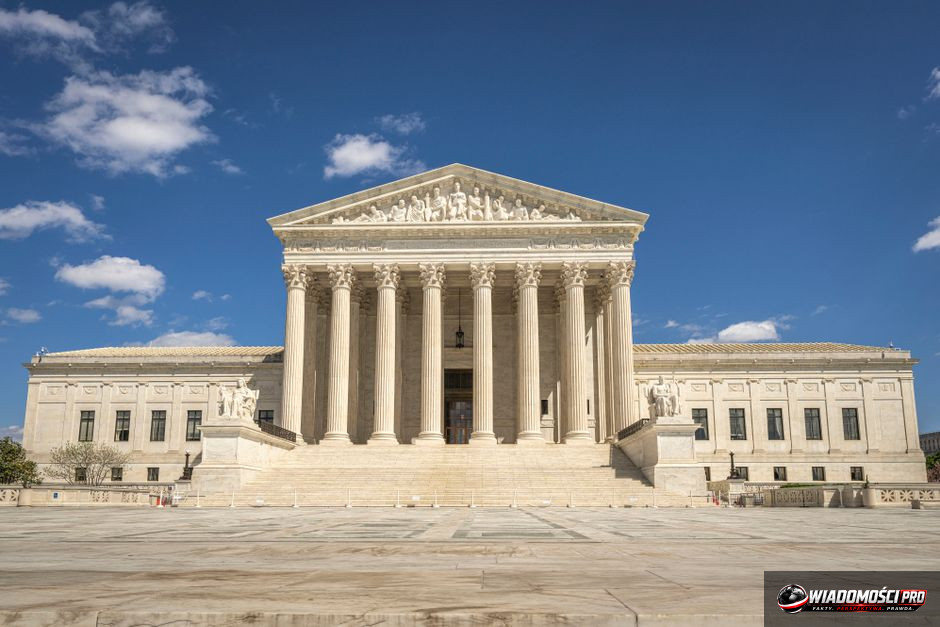
25 states are suing the Trump administration primarily in connection with the introduction of new tariffs and attempts to redirect funds intended for disaster relief and election security. Courts are increasingly siding with the plaintiffs, ordering the refund of collected fees and declaring certain decisions unlawful. This series of lawsuits, initiated in August 2026, is shifting the balance of power between Washington and individual states. The president's administration is ceasing to be the sole center of power capable of imposing economic and financial conditions.
Conflict over tariffs and its impact on the market
On August 4, 2026, the American administration faced a challenge that is paralyzing its trade policy. A coalition of 25 states filed a formal lawsuit, challenging the legality of the White House's recent tariff decisions. This is not merely a dispute over political rhetoric. The states point to real, measurable damage to their economies.
When you impose tariffs on imported raw materials, the manufacturing sector suffers most. For example, automotive parts manufacturers in Illinois must now pay higher rates for steel and aluminum from abroad. The cost of producing a component rises immediately. The company passes these expenses on to the end consumer, that is, to you. Every car produced in a region affected by tariffs becomes several percent more expensive in the showroom. Entrepreneurs warn that the current tariff policy is an attempt to cause chaos in supply chains that does not take market realities into account.
Courts began intervening in this matter earlier. As early as March 6, 2026, a verdict was issued ordering the administration to refund unlawfully collected tariff fees to companies. This is a signal to the White House that arbitrary economic decisions are losing in the face of the letter of the law. Democrats, who initiated legal action on August 5, emphasize that Trump's policy strikes at the foundations of internal stability. States do not want to pay for the president's tariff experiments.
Funds for elections and natural disasters under court scrutiny
The tariff issue is just one of the fronts on which the battle is being fought. On July 24, 2026, the state of Illinois, along with a group of more than 20 other states, took action against the administration regarding earmarked funds. The president attempted to redirect resources intended for securing election infrastructure and for assisting victims of cataclysms. Governors consider this a direct threat to the safety of their residents.
When a hurricane or flood hits a state, money for rapid reconstruction must be available immediately. Redirecting these funds to other political goals means that in the event of a crisis, the state taxpayer will have to cover the budget gap. This is not a theoretical legal dispute. It is a fight for real money from the state treasury, which is meant to serve the citizen in situations of danger to life or property.
Equally important is the issue of elections. Funds for securing voting processes are a guarantee of the system's transparency. An administration attempting to manipulate these budgets encounters resistance that transcends party lines. Federal courts are increasingly siding with the plaintiffs, recognizing attempts at manual budget control as an overreach of the president's constitutional powers. Every ruling blocking these actions is an image blow to the White House, showing that the president does not have unlimited power over the state treasury.
Lost lawsuits and unlawful decisions
The balance sheet of the last dozen or so months is devastating for the Trump administration. The judiciary is systematically undermining the president's decisions, which forces him to withdraw from implemented restrictions.
In December 2025, the court sided with 17 states that challenged a ban introduced by Trump. The judges explicitly declared it unlawful. This event became a precedent cited by lawyers in subsequent cases. The president must also face the consequences of his actions in the private sphere. On July 15, 2026, a court ordered him to pay 5.6 million dollars in damages to a writer. Although this is a personal matter, in the context of mass state lawsuits, it weakens Trump's political position.
The administration is ceasing to be a monolith. This is visible in the increasingly numerous rulings ordering the return of wrongfully collected funds. State lawyers point out every inaccuracy in presidential decrees. Since courts are already ordering the return of money and questioning the legality of regulations, every subsequent lawsuit increases the pressure on Washington. The administration is becoming a hostage to its own legally questionable initiatives. A lack of success in the courts means that the president can no longer rely on the force of his decrees as a tool for exercising power.
Mechanisms of power control in practice
The American system of checks and balances is working at full force. Suing a sitting president by 25 states is proof that the federal executive does not have an unlimited field of maneuver. States are using the courts as an arbiter in disputes over the constitutionality of White House decisions.
These actions are not political theater. This is a hard game for budgetary autonomy. Even within his own ranks, Trump encounters resistance. On June 3, 2026, a rare event occurred: Republicans blocked the president's request to reallocate 1.8 billion dollars. This shows that even party loyalty ends where responsibility for federal finances begins.
For the citizen, this means one thing: every financial decision of the administration will now be analyzed through the prism of a potential lawsuit, and not just political convenience. The Trump administration, by attempting to introduce tariffs and shift the budget without legislative authorization, is encountering resistance that goes beyond party divisions. If the courts maintain the current judicial line, the president will cease to be the unquestioned disposer of federal funds. The chaos that critics speak of is becoming the new legal norm. This means that the country's financial stability now depends on court rulings, not on decisions made in the Oval Office.
The catch in the fight for state autonomy
The conflict between the states and the White House means decision-making paralysis for the Trump administration. States defending budgetary autonomy gain from this, companies burdened by tariffs lose, and the catch is the long duration of the processes, which may deepen market instability. Entrepreneurs do not like uncertainty. Long legal battles over whether a tariff is valid or not make planning investments impossible. A company that does not know whether importing raw materials will cost the same next month as it does today halts hiring. In this sense, the state rebellion is a form of self-defense against the unpredictability of federal policy.
The costs of these lawsuits, counted in millions of dollars, burden the budgets of all parties. But would the alternative—agreeing to arbitrary fund management—be cheaper for the citizen? The history of 2025 and 2026 suggests not. Courts are becoming the only barrier protecting against the excessive expansion of executive power.
Is the president untouchable? The answer is: no. The legal system in the USA was designed so that every authority, even the highest, is subject to control. State lawsuits are the best proof of this. Every ruling that orders the refund of tariffs or blocks the illegal reallocation of funds is a step toward restoring balance. For the citizen, this means that in the event of a cataclysm or during voting, the state must act within the limits set by law, not by the whim of a politician.
Questions and answers
Is it even possible to sue a sitting US president?
Yes, states have every right to sue the federal administration in matters concerning the overreach of statutory or constitutional powers. This is confirmed by a series of successful lawsuits from 2025-2026, in which courts repeatedly sided with the states against the president's decisions.
How many states have become involved in the fight against the Trump administration?
The number of involved states changes depending on the subject of the dispute. In matters concerning tariffs, the coalition reached 25 states, while in other matters, such as blocking specific administrative bans, 17 states were involved in the resistance.
What are the main charges against Trump in 2026?
The main charges concern unlawful tariff decisions that hit local economies, and attempts to unauthorizedly dispose of funds for natural disasters and election security. Additionally, the administration is struggling with the consequences of court rulings, including the necessity to pay 5.6 million dollars in damages in private cases.
Why are Republicans blocking their own president?
Republicans in Congress blocked the reallocation of 1.8 billion dollars in June 2026 because they oppose the way the administration manages the federal budget. This shows that even within the ruling party, resistance to the White House's financial maneuvers is real and stems from concerns about the stability of state finances.
What do court rulings mean for the average entrepreneur?
For an entrepreneur, court rulings, such as the one from March 6, 2026, ordering the refund of collected tariffs, are proof that the administration's policy is challengeable. At the same time, the long duration of legal processes creates market instability, which makes planning long-term investments and forecasting production costs difficult.
Are funds for natural disasters safe?
Court disputes indicate that states treat these funds as inviolable. Attempts to redirect them by the administration end in legal blocks, which in practice means that courts are trying to protect funds intended for crisis situations from political exploitation.
Sources
- Will new tariffs turn against Trump? More lawsuits are pouring in. "He is trying to introduce even greater chaos" - wnp.pl
- Democrats are suing Donald Trump again. They point to the consequences of introducing tariffs - Interia Biznes
- 25 US states filed a lawsuit against Trump over tariffs — Deutsche Welle - UA.NEWS
- Trump had to pay a writer 5.6 million dollars. And that's not the end - Rzeczpospolita
- 17 states sued Donald Trump. Court explicitly: The ban is unlawful - polsatnews.pl
- Rare rebellion against Trump. Republicans blocked 1.8 billion dollars for the president - Bankier.pl
- Court orders Trump to refund collected tariffs to companies. The president also faces more lawsuits - Wyborcza.biz
- Illinois and over 20 other states are suing the Trump administration. It concerns funds for natural disasters and elections - wiadomosci.com



Komentarze (0)
Ładowanie komentarzy...