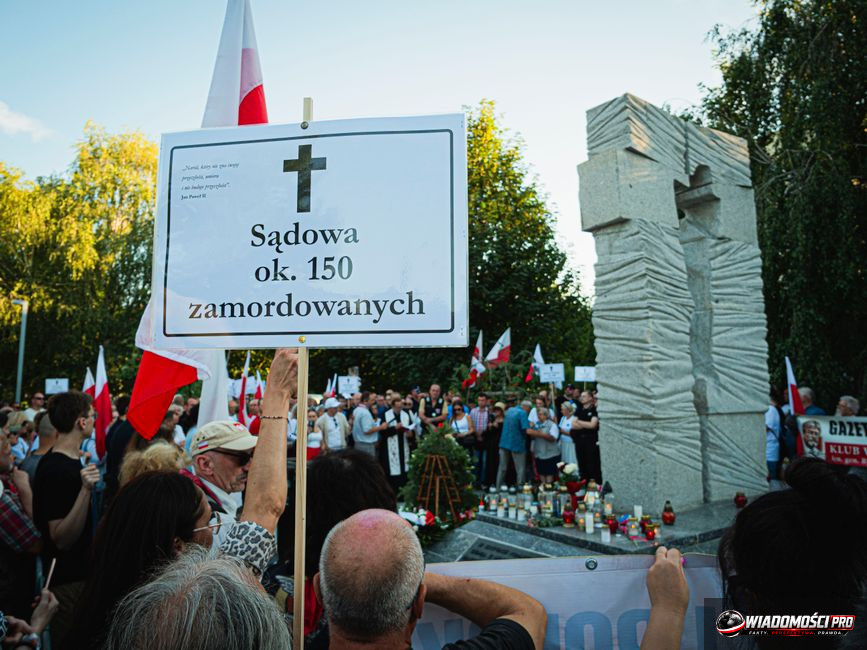
Between 1943 and 1944, UPA units carried out a planned extermination of the Polish civilian population in Volhynia, which led to the deaths of 60,000 to 100,000 Poles. The culmination occurred on July 11, 1943, during the so-called Bloody Sunday, when dozens of Polish villages were attacked. This operation, aimed at the complete removal of the Polish presence from these territories, was based on the ruthless coordination of military actions that encompassed hundreds of parishes and settlements.
Anatomy of a crime: How did Bloody Sunday come about?
The systematic extermination of the Polish population in Volhynia was not the result of a spontaneous outburst of anger, but the implementation of guidelines from the command of the Ukrainian Insurgent Army. The main architect of these actions was Dmytro Klyachkivsky, codenamed "Klym Savur," who, as the UPA commander in Volhynia, issued the order to liquidate the Polish element. The logistics of terror were prepared in a military manner: UPA units surrounded selected villages in the early morning hours, often taking advantage of Sunday gatherings of worshippers in churches.
The attack strategy was consistent. First, escape routes were cut off by occupying roads and paths leading to forests or neighboring villages. Then, death squads entered homes, murdering residents using firearms, axes, pitchforks, and knives. Burning farm buildings and houses was intended to erase traces of the crime and prevent survivors from returning. In a single day, July 11, 1943, the coordinated strike affected, among others, towns such as Kisielin, Poryck, and Zagaje. In Poryck, the attackers burst into the church during Mass, sparing no one.
The scale of the mobilization of UPA units points to efficient command of underground structures. Each sotnia (company) had designated sectors of operation, and support was provided by so-called peasant self-defense units, which participated in looting and the direct slaughter of the population. For the Polish population, who had tried to maintain a semblance of normalcy during the German occupation, the brutality of their neighbors became a shock for which there was no answer. The victims had no chance of defense, as surprise was a key element for the success of the ethnic cleansing. The methodical way in which successive villages were destroyed proves that the UPA command possessed an executive apparatus capable of lightning-fast mobilization.
Methods of terror: Why does Volhynia still bleed?
The methods used by UPA units were intended to induce paralyzing fear that would force a mass flight of Poles toward cities or areas under German administration. Burning churches where the faithful were praying and gruesome murders became a daily occurrence that summer. These actions were not limited only to the physical liquidation of people. It was an attempt to erase Polishness from the cultural landscape of Volhynia.
After more than eight decades, we are struggling with a long-term process of suppressing facts from collective memory. For years, a conspiracy of silence grew, which effectively hindered a reliable assessment of history. Contemporary challenges in research on the anatomy of this crime are enormous. Historians still encounter resistance, and attempts to commemorate the victims often become the spark for new tensions. The problem is that politics constantly takes precedence over historical facts, and the lack of full access to UPA archives makes it impossible to reliably establish a list of all perpetrators.
Each subsequent anniversary, instead of being a time of quiet reflection, becomes an arena for diplomatic games. Are we doomed to eternal disputes over history, instead of a calm search for the truth about every murdered person? This question remains unanswered, as emotions still outweigh hard archival data in public debate. The lack of a full reckoning with the past means that Volhynia still bleeds in Polish memory, and subsequent generations learn history through the prism of disputes over monuments, rather than through reliable research on the course of the events of 1943.
Commemoration and politics: Domostawa and anniversaries
The legacy of this crime does not allow for the silencing of emotions, especially when official commemorations become a field of political clashes. National memory has ceased to be merely a historical duty and has become an element of current diplomatic maneuvering. Subsequent round anniversaries have gained symbolic significance for Polish memory, cementing the scale of the tragedy in the social consciousness. However, even such important memorial sites are not free from acts of aggression, which shows how deep the divisions remain regarding the interpretation of history.
The facts that shape today's image of the memory of Volhynia are unambiguous:
- On July 12, 2025, ceremonies were held in Domostawa, organized under the auspices of the Institute of National Remembrance, where tribute was paid to the victims of the Volhynian Massacre.
- Just a month later, in August 2025, a provocation occurred involving the destruction of the "Volhynian Massacre" monument in the same town, which became the spark for new disputes over the boundaries of acceptable historical debate.
The events in Domostawa show that Polish memory of Volhynia is still confronted with hostility. Instead of dampening emotions, each subsequent commemoration is put to the test in the face of political tensions. For some, monuments become not so much a place of reflection as a target of attack aimed at destabilizing social consensus. The case of the destruction of the monument in Domostawa clearly testifies to the fact that the history of Volhynia remains a living, painful flashpoint. The lack of unity in assessing these events causes public debate to revolve around incidents, instead of focusing on commemorating specific victims and seeking the truth about the course of the cleansings.
Diplomatic perspective: The voice of Kyiv
In July 2026, exactly on the 83rd anniversary of "Bloody Sunday," President Volodymyr Zelenskyy spoke again about the Volhynian crime. Kyiv officially declares that it is "making efforts" to face this painful page of shared history. However, this is only the diplomatic tip of the iceberg. For the Ukrainian authorities, operating in the shadow of the ongoing war, the issue of UPA responsibility remains a political minefield. Every word is weighed, and the process of reconciliation resembles groping in the dark through a thicket of mutual grievances and expectations.
The official message from Kyiv emphasizes the importance of dialogue but often avoids an unambiguous reckoning with the systemic nature of the ethnic cleansings. Historical truth here becomes an element of a broader strategy for building future relations with Poland. Warsaw expects specifics, while Kyiv proposes an evolutionary approach, which for many circles in Poland is unacceptably slow. From a diplomatic perspective, this process has reached a dead end, mainly due to differences in the perception of the UPA. While in Poland this formation is unequivocally associated with genocide, in Ukrainian discourse it is sometimes treated as an element of the fight for independence, which excludes a common denominator in moral assessment.
The facts, however, remain merciless to diplomatic evasions. In the years 1943-1944, UPA units carried out a planned, brutal extermination of the Polish civilian population in Volhynia. The scale of these actions claimed between 60,000 and 100,000 Polish lives. The culmination of this inhumane strategy occurred on July 11, 1943, during the so-called Bloody Sunday. On that day, dozens of Polish towns were attacked, turning them into sites of mass slaughter, which to this day constitutes the foundation upon which an honest debate about history must be based. The lack of openness to exhumations and reliable archival research on the Ukrainian side is the main barrier in the reconciliation process, which makes every subsequent political declaration merely an attempt to delay the final reckoning with the past.
What this means for you
Editorial angle: For Poland, Volhynia is a matter of fundamental national memory and historical reckoning, which cannot be the subject of diplomatic compromise. For Ukraine, it is a difficult element of building its own identity in the shadow of the ongoing war, which makes admitting to UPA guilt perceived as political suicide. The catch lies in the difference between courteous declarations of "efforts" and actually allowing Polish researchers access to mass grave sites. Without exhumations, any discussion remains sterile, and the victims are still waiting for a dignified burial, which is the only real step toward ending this dispute.
Questions and answers
Why is July 11 so important?
On this day in 1943, a coordinated UPA attack on nearly 100 Polish towns took place, which is considered the apogee of the genocide. The choice of this date was linked to the Sunday presence of the faithful in churches, which made mass murder easier for the perpetrators.
How many people died in Volhynia?
Historians estimate that between 60,000 and 100,000 Poles fell victim to ethnic cleansing in 1943-1944. These figures result from an analysis of available documents and witness accounts, although the exact number of victims remains impossible to determine precisely due to the lack of full access to archives.
Has the case of the monument in Domostawa been resolved?
In August 2025, the monument was destroyed, which was considered a provocation. Although the case sparked a wide public debate on the limits of historical debate, Polish services have not made public the final findings regarding the perpetrators of this vandalism, which only fuels further speculation.
Sources
- "We are making efforts". Zelenskyy spoke on the anniversary of the Volhynian crime - Interia Wydarzenia
- Burning churches and gruesome murders. Today is the anniversary of "Bloody Sunday" - RMF24
- Volhynian Massacre. 70th anniversary - TVN24
- Why does Volhynia still bleed? Anatomy of a crime and a conspiracy of silence - Zero.pl
- Volhynia must be remembered - Dziennik Bałtycki
- In Domostawa we commemorated the victims of the Volhynian Massacre - Institute of National Remembrance
- Volhynian Massacre: What happened in 1943? Key facts, victims, and memory after years - WP Wiadomości
- Provocation in Domostawa. The "Volhynian Massacre" monument was destroyed - wszystkoconajwazniejsze.pl
Komentarze (0)
Ładowanie komentarzy...