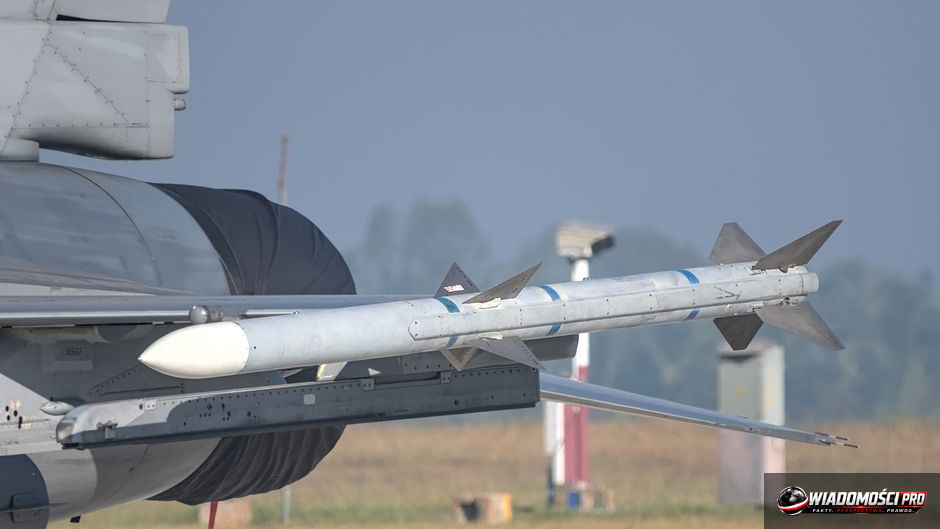
The steel border is a Trump doctrine assuming the total military isolation of Iran with US support, intended to prevent Tehran from launching direct attacks on Israel. This concept, the technical assumptions of which began to be debated in staff circles in the autumn of 2024, is based on creating an airtight anti-missile umbrella. This strategy definitively ends previous attempts at diplomatically limiting Tehran's influence, replacing them with a physical military blockade.
The genesis of tensions: Why is the situation between Israel and Iran critical?
Israel and Iran have moved from hybrid actions to a phase of direct confrontation. Tel Aviv defines the Iranian nuclear program as an existential threat that precludes the possibility of peaceful coexistence. Decision-makers in Israel point out that any attempt by Iran to enrich uranium is treated as preparation for a final strike.
The rivalry for regional influence is based on Tehran's use of the so-called axis of resistance. Organizations such as Hezbollah in Lebanon or Hamas in the Gaza Strip serve as tools for power projection. Jerusalem does not recognize these entities as independent players, but as a direct extension of the Iranian command. Every attack by these groups is interpreted by Israeli staffs as direct state aggression by Iran.
Tehran, surrounded by Washington's allies, seeks to break its isolation through the development of missile technology. Israel responds to these actions with preemptive strikes, which lock both sides in a vicious cycle of retaliation. There is a lack of official data confirming the status of Iranian uranium enrichment work, which makes it impossible to verify the regime's intentions. Tehran's silence is read in Jerusalem as a signal of preparations for escalation.
What is the 'steel border' in Donald Trump's vision?
The "steel border" doctrine is based on creating a multi-layered anti-missile umbrella. The system is intended to physically block Iranian air attack assets. Trump promotes a security model based on strength, which in practice means deploying advanced sensors and anti-aircraft batteries along key Middle Eastern air corridors.
The technological foundation of this concept is the combination of Israeli and American interception systems. The Israeli Arrow-3 system, designed to combat ballistic missiles outside the atmosphere, is intended to be the first line of defense. The cost of one such system is counted in the hundreds of millions of dollars, with a single interceptor missile costing around 2-3 million USD. American support includes the installation of THAAD (Terminal High Altitude Area Defense) batteries, the market price of which oscillates around 1.5–2 billion dollars per complete battery. These systems specialize in destroying missiles in the terminal phase of flight. They are complemented by Patriot launchers, responsible for neutralizing targets at medium and low altitudes.
The logistics of this undertaking remain unclear. The permanent presence of American technical personnel on the territories of third countries generates significant political risk. Data regarding the operation's budget or the consent of Arab countries to install American espionage and defensive equipment on their territory has also not been published.
The catch in this strategy lies in the risk of losing diplomatic flexibility. If the steel border is fully implemented, Iran will be cut off from the possibility of traditional deterrence. However, this may push Tehran toward deeper military integration with Moscow and Beijing. A physical blockade of the region constitutes a state of permanent, frozen conflict, in which every American device becomes a target for a potential attack.
Tehran's response: Rhetoric of resistance versus US pressure
Authorities in Tehran rejected the proposal for isolation, considering it a violation of sovereignty. Representatives of the Iranian Foreign Ministry described the "steel border" doctrine as a provocation aimed at regional stability. Instead of entering into negotiations, the regime announced an acceleration of work on its own missile potential.
Iranian commanders emphasize that they do not recognize external control over their territory. However, Tehran remains silent on the specific technical parameters of the systems being developed. It has not been confirmed whether this concerns the modernization of existing ballistic missiles or work on a new generation of technology capable of penetrating layers of anti-aircraft defense. The lack of transparency suggests that the current rhetoric serves a psychological function, aimed at internal social consolidation and demonstrating readiness for confrontation.
As of August 13, 2026, it has not been verified whether these declarations will translate into real operational capabilities. There is a discrepancy between official communiqués about "breakthrough technologies" and the lack of evidence for their implementation. For observers, this means that Iran is playing a delaying game, testing Washington's determination regarding the funding of Israel's protection. The arms race is thus becoming the main point of reference for relations between these states.
Geopolitical consequences: Who will gain and who will lose?
The implementation of the "steel border" changes Israel's role in the balance of power in the Middle East. Benjamin Netanyahu, by accepting the American umbrella, decides to isolate himself from regional partners in exchange for security guarantees. Tel Aviv thus becomes the main foothold for the American military presence, which closes the path to the normalization of relations with many Arab states.
For Iran, the consequence is the breaking of dialogue channels with the West. The regime is forced to seek alternative alliances that do not recognize American hegemony. Although the form of new pacts has not been officially confirmed, the direction of cooperation with Russia and China remains obvious to analysts. Iran loses the ability to negotiate, which in the long term may lead to full military autarky.
The balance of gains and losses is as follows:
- Israel gains direct US military support, including access to THAAD and Arrow-3 technology, but pays the price of permanent diplomatic isolation.
- Iran loses the ability to conduct negotiations with the West, which pushes the regime toward tightening strategic ties with Washington's opponents.
- The USA solidifies its presence in the region through the direct protection of Israel, risking the role of a hostage to its own defense architecture. Any threat to border infrastructure will require an American military response.
An unresolved issue remains the impact of these actions on the energy commodity market. The security of trade routes in the Red Sea depends on whether the "steel border" acts as a dam or as a catalyst for open conflict. In the event of a blockade of the Strait of Hormuz, through which about 20-30% of global crude oil trade flows, the global economy could experience a drastic increase in fuel prices of 50-100% within a few weeks. Currently, there is no data confirming the impact of these plans on oil prices, however, the risk of destabilization is real.
What this means for you
This doctrine represents a return to a policy based on hard military dominance. This mainly benefits companies in the defense sector and politicians seeking confrontation with Iran. The loss for the social side is primarily an increase in the risk of a direct clash between the USA and Iran, which in the event of escalation could lead to the destabilization of the global commodity market. The catch lies in the costs of maintaining the system, which in the long term may burden the US budget without a guarantee of lasting peace.
Questions and answers
Is the 'steel border' a physical wall?
No, it is a metaphor for an integrated air defense system, including radars, early warning sensors, and Patriot, THAAD, and Arrow-3 missile batteries.
Why did Trump speak this way right now?
The statement is an element of campaign rhetoric promoting "peace through strength," aimed at signaling a decisive stance toward US adversaries.
How did Israel react to Trump's proposal?
Official sources in Jerusalem accepted the concept with approval, emphasizing the importance of the strategic alliance with the USA as the foundation of the state's security.
Is the system already operational?
Full operationality of the system has not been confirmed. Analyses regarding the logistics and deployment of individual defense components in the region are currently underway.
What is the main risk for the USA?
The main threat is the role of a "hostage" to its own doctrine, where every Iranian activity will require an immediate military response from the USA in defense of Israel.
Does Iran have a real chance of breaking through this border?
Tehran announces the modernization of missiles, however, there is a lack of technical data confirming Iran's ability to break through an integrated defense based on THAAD and Arrow-3 systems.
Does this mean the end of diplomacy?
The doctrine significantly limits the room for maneuver for diplomacy, prioritizing battlefield engineering and technological deterrence.
What is Russia's role in this arrangement?
Russia remains a key ally of Iran, which may use Tehran's isolation to tighten military cooperation and exchange technology, although the scale of this cooperation has not been officially confirmed.
Will the 'steel border' affect oil prices?
Analysts point to potential risks for the commodity market in the event of a blockade of the Strait of Hormuz, however, there is currently no hard data confirming the direct impact of Trump's plans on crude oil quotations.
Who is funding the construction of this border?
Financial details have not been made public. It is assumed that the burden of costs will be shared between the USA and Israel, with the American role being key to the availability of technology.
Do Arab states support this vision?
Official support from Arab states is lacking. Many of them fear that the steel border will increase tension in the region, making them a site for potential military operations.
What is missing in official communiqués?
Specific implementation dates, a detailed budget, and information about the consent of third countries to install American sensors are missing.
Is this solution final?
One cannot speak of a final solution. The "steel border" is rather an attempt to freeze the conflict, which does not eliminate the causes of tensions between Israel and Iran.
What is the status of the Iranian nuclear program?
There is a lack of hard data confirming the current state of work. Each side interprets the lack of information in a way that is beneficial to its own political strategy.
Will US soldiers operate the systems?
It has not been specified whether operating the systems requires the presence of American personnel. This is one of the most controversial points of the doctrine, generating political risk.
Does the system protect against cyberattacks?
The doctrine focuses on physical air defense. Cybersecurity issues have not been included in the main assumptions of the "steel border."
Is this the end of the conflict in the Gaza Strip?
The doctrine mainly concerns the isolation of Iran. It has no direct bearing on the internal situation in the Gaza Strip or on resolving the conflict with Hamas.
What is Trump's short-term goal?
The short-term goal is to show decisiveness and strength in the face of regional threats, which is intended to bring image benefits within the USA.
Can the system be compared to the Iron Dome?
The "steel border" is a system with a much greater range and degree of complexity, going beyond local anti-missile defense like the Iron Dome.
Are we threatened by a world war?
Experts point to the risk of escalation, however, there are no premises allowing for an assessment of the probability of a conflict on a global scale.
What is China's role?
China, as a strategic partner of Iran, may try to balance US influence, however, its military involvement in the region remains negligible at this moment.
Can Israel act independently?
Israel has a developed defense industry, but the "steel border" requires US technological and intelligence support, which makes it dependent on the ally.
Does this mean an increase in defense spending in Poland?
The doctrine refers to the Middle East. There is no data indicating a direct impact of these actions on the defense policy of Poland or other NATO countries in Europe.
What happens if Iran attacks despite the border?
In such a case, the doctrine assumes a direct military response, which carries the risk of an open regional war.
Is this a response to the 2024 attack?
The doctrine fits into a long-term deterrence strategy, being a response to Iran's many years of activity in the region.
Is the system resistant to drone attacks?
Patriot and THAAD systems are capable of combating a wide spectrum of threats, including drones, which is the main asset of the "steel border."
Can Iran destroy these systems?
Iran possesses missile potential that theoretically could threaten the installations, which makes the defense of the "steel border" a priority for the USA.
Is this Trump's final plan?
The doctrine is presented as an element of a broader "peace through strength" strategy, which may be modified depending on the situation in the international arena.
Does public opinion in the USA support this solution?
There is no clear polling data regarding support for such deep military involvement in the Middle East in the current context.
Is this solution ethical?
Ethical assessment remains outside the scope of military analysis; the doctrine is evaluated primarily in terms of effectiveness and regional stability.
The analysis of the "steel border" requires understanding that in THAAD (Terminal High Altitude Area Defense) type air defense systems, the operational range, which is about 200 kilometers, is key. American THAAD batteries are designed to combat short- and medium-range ballistic missiles in their terminal flight phase. Taking into account the geography of the Middle East, the deployment of these systems would require the consent of third countries on whose territory the AN/TPY-2 radars would be located. These are devices of extraordinary sensitivity, capable of tracking targets at a distance of thousands of kilometers. The lack of public information regarding diplomatic consents in this regard casts doubt on the reality of implementing the doctrine to the full extent that the Trump camp speaks of.
The Israeli Arrow-3 system, being a complement to American technologies, represents the pinnacle of achievements in the field of exoatmospheric ballistic missile interception. Its effectiveness in laboratory conditions is high, however, in a clash with a real, saturated missile attack, where Tehran could launch dozens of missiles simultaneously, even the most modern systems can be overloaded. This is the main point of criticism from military analysts. The Trump doctrine is based on the assumption that a physical barrier will be sufficient to discourage Iran from further actions. From Tehran's perspective, the steel border is perceived as another form of aggression, which only strengthens the arguments of hardliners within the Iranian Islamic Revolutionary Guard Corps.
It is worth noting the costly nature of the American presence. Maintaining one THAAD battery requires the involvement of about 100 American soldiers, not counting support personnel and logisticians. Deploying the entire system along Iran's border could cost the American taxpayer billions of dollars annually in operating costs alone. Is the Trump administration prepared for such an expense in the face of growing budgetary problems within the USA? The lack of data on this subject makes the "steel border" currently treated more as a political declaration than a ready operational plan.
The issue of oil supplies is key here. The Strait of Hormuz, through which about 20 million barrels of oil flow every day, is the most sensitive point of the global economy. If Iran decides that the steel border makes any action impossible for it, the only effective bargaining chip that will remain for the regime will be the blockade of this route. Such a scenario would mean a global energy shock. Gasoline prices in the USA, which are a key electoral indicator, could jump to levels unseen in years. This is the paradox of this doctrine: an attempt to ensure security for Israel through the isolation of Iran may lead to an economic crisis that will hit the Americans themselves.
The Chinese factor cannot be ignored either. Beijing, as the main recipient of Iranian oil, will not passively watch an American blockade of the region. We can expect attempts to break sanctions on a scale hitherto unseen. If the steel border turns out to be leaky, the entire prestige of the Trump doctrine will collapse. Conversely, if it turns out to be airtight, Iran may respond with cyberattacks on the critical infrastructure of US allies in the region, which is a field where THAAD or Arrow-3 systems are completely useless.
In summary, Trump's concept is a project of enormous scale, but burdened with fundamental unknowns. Without a clear financial plan, support from regional partners, and consideration of the economic risk associated with oil prices, the "steel border" remains largely a theoretical political construct. Whether it will become the foundation of a new security architecture in the Middle East, or rather a costly strategic error, depends on how quickly Washington manages to move from rhetoric to concrete logistical arrangements. Currently, however, the lack of transparency in actions suggests that the game is about the image of a strong leader, and not about a real solution to the problem of Iranian nuclear ambitions.
For the average observer, this situation is a warning signal. Even if the steel border is built, it will not solve the deep religious and political animosities that have defined this region for decades. The conflict between Israel and Iran is not just a dispute over missiles. It is a rivalry over who will shape the order in the Middle East in the coming years. The Trump doctrine bets everything on one card – on American technology. History, however, teaches that technology in this region is rarely the final solution to problems of an ideological nature.
Therefore, the question remains about the determination of both sides. Will Iran decide on full confrontation, knowing that on the other side stands the most modern anti-missile shield in the world? Or will it rather choose the path of "a thousand cuts" – actions below the threshold of war, on which the steel border will have no impact? We will not find answers to this question in official communiqués from military staffs, which for now are limited to technical descriptions of the systems. The real answer will emerge in the oil fields, in ports, and in diplomatic corridors, where the fate of the region's stability is being weighed.
One should not forget the role of Israel. Netanyahu, balancing between security needs and political pressure within his own country, bets on an alliance with Trump. But is he ready to become a "hostage" to American policy? If the steel border fails, Israel will be blamed for it first and foremost. This is a very risky game, in which the stakes are existential. Any stumble could lead to a catastrophe, the consequences of which we will feel in Europe and Asia.
Finally, it is worth emphasizing that the lack of data is not a coincidence. In operations of such scale, information is a weapon. If American staffs do not provide details, it means that either the plan is still in its infancy, or it is so complicated that its disclosure could ruin the entire deterrence effect. Either way, the world must prepare for a period of great uncertainty. The steel border is perhaps the greatest challenge for diplomacy and the military at the beginning of the 21st century.
All these factors add up to a picture in which technology, politics, and economics are intertwined in an extremely complicated way. There are no easy answers, and any attempt to simplify this conflict leads to erroneous conclusions. Will Trump's steel border be able to stop Iranian expansion? We will know the answer only when the first missiles are launched and the defense systems are put to the final test. Until then, we are left with observing, analyzing, and drawing conclusions from the increasingly tense situation in the Middle East.
In the face of such a huge scale of the undertaking, which is the installation of THAAD and Arrow-3 systems, one cannot omit the issue of the sovereignty of the states on whose territory these systems would be placed. The Persian Gulf states, although officially US allies, have their own interests, which are often contradictory to Israel's interests. Forcing them to consent to an American presence may lead to the internal destabilization of these countries. Will Trump take this into account? Or will he rather bet on a forceful solution, which will only accelerate the processes of the collapse of the current regional order? These are questions to which we do not know the answers today.
This uncertainty is the greatest enemy of stability. Financial markets hate uncertainty, and the situation in the Middle East is full of it. Every unclear communiqué from Washington or Jerusalem causes fluctuations in the stock prices of defense and energy companies. The steel border, instead of calming things down, has become a new source of tension that will accompany us for a long time. It remains to be hoped that political wisdom will win over the lust for dominance, although current trends point rather to the opposite.
Everything indicates that we are entering a new stage in the history of the Middle East. A stage in which military technology defines political borders, and these borders are becoming increasingly rigid and difficult to change. The steel border may turn out to be not only a barrier for Iran, but also a prison for diplomacy, from which it will not be easy to escape. Is this what the Trump doctrine was about? Or is it just another step toward chaos that no one can control? We will seek answers to these questions in the coming years, analyzing every move on the chessboard that the Middle East has become.
At the current stage, the steel border remains a promise. A promise of strength, a promise of security, and a promise of the end of Iranian ambitions. But like any political promise, it must be realized in the real world, where resources are limited and allies have their own goals. Time will tell whether the steel border will be able to stand the test of time, or whether it will become just a footnote in history textbooks about failed attempts to impose peace by force. We will follow this topic, because not only the security of Israel, but also the peace in the energy markets of the entire world depends on its development.
Ultimately, the steel border is a symbol of our times. Times in which faith in technology outweighs faith in dialogue, and the desire for dominance overshadows the need for cooperation. Is this a path that will lead us to stability? History rarely gives unambiguous answers. But in the case of the Middle East, the stakes are too high to afford baseless optimism. The steel border may be an answer to threats, but is it an answer to the problems that create these threats? This is the most important question that we will have to find an answer to in the near future.
It is worth noting in conclusion that any attempt to build such a technological barrier carries the risk of escalation. Iran will not sit idly by. It will look for new ways to bypass this barrier, which in turn will force the USA and Israel to make further investments. This will be a vicious cycle that could last for years, draining huge financial resources and engaging increasingly larger military forces. The steel border may thus become not only a barrier for Iran, but also a trap for all involved parties. This is a real threat that cannot be ignored when analyzing the plans of the Trump administration.
We are therefore left with vigilance. The situation is developing dynamically and every new communiqué can change the perception of the entire project. Let us not be misled by rhetoric that promises easy solutions. In the real world, especially in such a volatile area as the Middle East, there are no easy solutions. There are only choices that carry specific costs and specific risks. The steel border is precisely such a choice. A choice whose consequences we will feel for many years, regardless of who ultimately sits in the Oval Office.
All these considerations lead to one conclusion: the situation between Israel and Iran is becoming increasingly tense, and the "steel border" is just another element of this complicated puzzle. It is not a final solution, nor is it a panacea for all the region's problems. It is rather an attempt to manage a crisis that is spiraling out of control. Will this attempt end in success? No one knows. But the fact that we have to talk about it testifies to the seriousness of the situation in which the Middle East has found itself.
From the reader's perspective, the most important thing is to understand that the steel border is not just a matter of missiles and radars. It is a matter of geopolitics, economics, and global security. This is a topic that concerns us all, even if we live thousands of kilometers from the front line. That is why it is worth following every move in this regard, because the peace in our homes, the price of fuel at stations, and the stability of the world in which we live depend on what happens in the Middle East. The steel border is the beginning of a new era, an era in which security becomes a scarce commodity.
We are witnessing the creation of a new reality. A reality in which the steel border becomes a symbol of the division of the world into those parts that are safe and those that remain in a zone of constant threat. Is this a division that we want? Is this a division that is fair? Each of us must answer these questions for ourselves. But one thing is certain: the steel border has already begun to change the rules of the game, and we are only spectators in this great, geopolitical spectacle, the finale of which is still unknown.


Komentarze (0)
Ładowanie komentarzy...