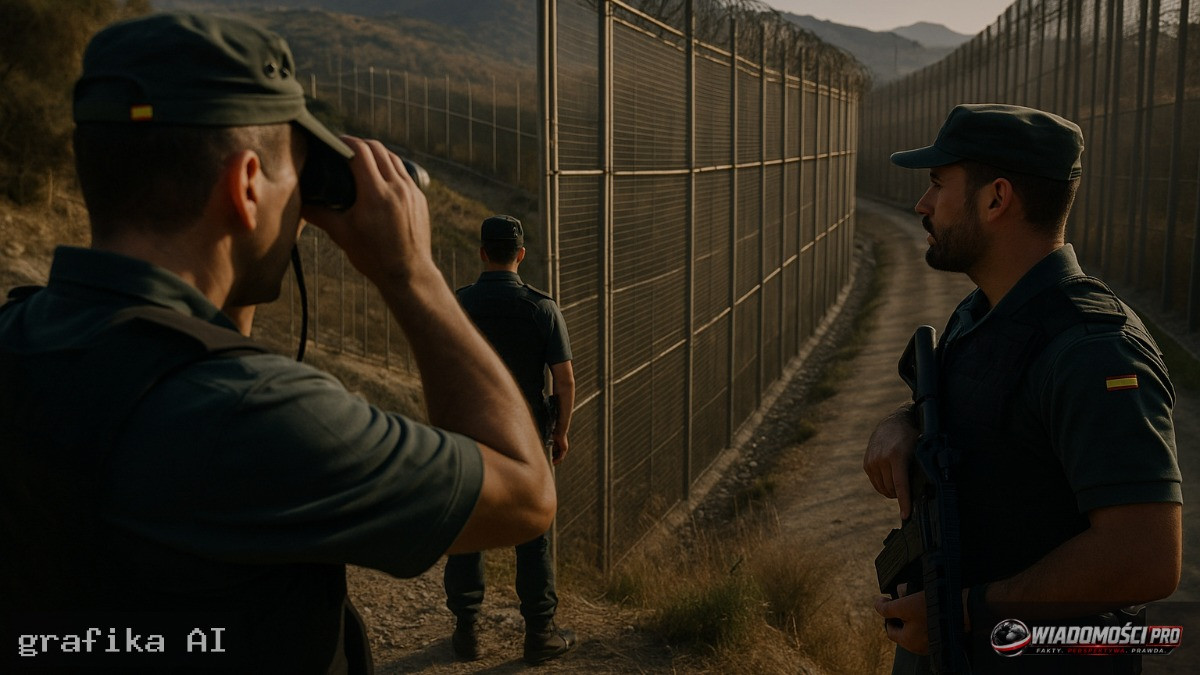
As a result of the migration crisis in Ceuta, the death of 72 people has been confirmed, which has prompted the Italian government to demand the suspension of Spain from the Schengen Area. This radical move by the Roman administration represents the most serious shock to the functioning of the Schengen Agreement since its inception. Italian authorities claim that the Madrid government has lost control over the external border of the European Union, which forces other member states to secure their own security interests at the expense of the freedom of movement.
The toll of 72 fatalities, confirmed by the Polish Press Agency on August 2, 2026, is not just a statistic. It is tragic proof of the failure of the current system for managing migration routes on the southern borders of Europe. The events in Ceuta have exposed that existing agreements between Spain and Morocco are insufficient to stop the wave of people attempting to cross the border illegally, which in effect leads to recurring human tragedies.
Italy, which has itself been struggling for years with immense migration pressure in the Mediterranean, has decided to radicalize its message. Rome points out that according to Articles 25–28 of the Schengen Borders Code, every member state has the right to restore controls at internal borders in situations threatening public order or national security. However, Italian diplomats are going a step further, demanding the suspension of Spain's privileges resulting from its membership in the passport-free zone. They argue that since Madrid is unable to ensure the integrity of the external border in Ceuta, it automatically becomes a link threatening the integrity of the entire area.
For a citizen traveling around Europe, a potential suspension of Spain from the Schengen Area would mean a return to the reality known before 1995. In practice, this would mean the restoration of permanent border control points at all land crossings with France and the introduction of rigorous identity document verification for passengers traveling by air between Spain and the rest of the Schengen countries. Airports such as Madrid-Barajas or Barcelona-El Prat would have to be rebuilt to separate "Schengen" flight zones from "non-zone" ones. Passengers would face hours-long queues for passport checks, which during peak tourist season would lead to the total paralysis of air traffic.
The political consequences of this dispute go beyond the logistics of travel. Spain, as a founding country and a key player in Southern Europe, perceives Italy's demand as an attempt to exert pressure in the ongoing debate in Brussels over the reform of EU asylum policy. Madrid defends itself by pointing to the geographical specificity of Ceuta, which, as a Spanish enclave in North Africa, is a unique flashpoint incomparable to any other section of the EU border. The Italian diplomatic offensive, supported by arguments about national security, puts Spain on the defensive, forcing the government to explain every incident at the border.
The situation in Ceuta is spiraling out of control, as reported by numerous news outlets, including Onet in publications from August 2, 2026. Border protection mechanisms that were supposed to be an impassable barrier are proving to be leaky and ineffective. Italy, citing the principle of loyal cooperation within the EU, claims that Spain's current passivity regarding the security of Ceuta harms the security of the entire bloc. Italian border services point out that every person who illegally crosses the Spanish border becomes a potential threat to the rest of the zone if they are not immediately registered and processed through asylum procedures.
A legal analysis of available EU regulations shows that suspending a state from the Schengen Area is an extremely complicated process. There is no simple mechanism for "excluding" a member country, but there are procedures allowing for the extension of border controls indefinitely, which in practice makes the zone a fiction. Italy is striving for the European Commission to recognize the situation in Ceuta as a permanent threat, which would give the green light for the legal restoration of controls at borders with Spain by all other EU countries.
For business and transport logistics, such a scenario is a nightmare. Spain is one of the main exporters of food and industrial goods to the rest of Europe. Restoring customs and border controls would drastically extend delivery times for perishable goods, which would hit the supply chains of many European corporations. Costs of land transport would rise, and delays would become an everyday occurrence. Transport companies are already looking at the dispute between Rome and Madrid with concern, fearing that political emotions will outweigh economic common sense.
It is worth noting that the 72 victims reported by TVP Info are a symbol of a deeper humanitarian crisis that has been growing for years in the shadow of high politics. Tragic events, often linked to extremely dangerous attempts to cross the sea, are becoming a weapon in the hands of politicians. On one hand, we have governments that focus on hard border sealing; on the other, non-governmental organizations that point to human rights violations. Italy, using the tragedy in Ceuta as an argument in the dispute over Schengen, is part of a trend of politics based on fear, which is gaining increasing support in European societies.
The uncertainty sparked by this conflict affects the decisions of millions of Europeans. Should one plan a vacation in Spain? Will goods from the Iberian Peninsula arrive on time? The answers to these questions depend on whether Brussels can work out a compromise that satisfies both Italy and Spain. If, however, mediation fails, Europe could face its greatest integration crisis since the introduction of the common currency. Restoring borders within the Union would be a signal that national political interests are more important than the idea of a community.
The events of August 2026 show that the system that was supposed to unite nations is becoming a place of the most fierce disputes. Spain, finding itself under pressure not only from migrants but also from its own allies, must now prove its ability to manage its border. If it fails to do so, the 72 victims from Ceuta may become a tragically associated symbol of the beginning of the end of free travel across Europe. History teaches us that borders, once restored in the name of security, very rarely disappear for good.
Questions and answers
How many people died in Ceuta?
According to data from August 2, 2026, the death toll of the migration crisis in Ceuta is 72 people.
Why does Italy want to suspend Spain from the Schengen Area?
Italy argues that the situation in Ceuta has spiraled out of control and that Spain is failing to fulfill its duty to protect the external borders of the EU, which poses a threat to the security of other member states.
On what legal basis is Italy demanding changes?
Rome refers to the provisions of the Schengen Borders Code, which allow for the restoration of border controls in situations of serious threat to public order or national security, suggesting that Spain's failure in Ceuta is exactly such a threat.
What will be the consequences for the average traveler?
In the event of Spain's suspension from the Schengen Area, travelers will face passport controls at airports, longer waiting times at checkpoints, and the potential restoration of permanent border posts at land crossings.
Is the situation in Ceuta a new crisis?
Yes, data from August 2026 confirms an escalation of the situation, which is recognized by the media and EU governments as a critical point for the functioning of the European area of free movement.
Sources
- Death toll of the migration crisis in Ceuta has risen to 72 - Polish Press Agency SA
- Migration crisis spiraling out of control. New data on victims in Ceuta - Onet News
- Fatalities after events in Ceuta. Italy wants to suspend Spain from the Schengen Area - Wyborcza.pl
- Slaughter on a migrant boat. Over 70 people dead. The reason... witchcraft - TVP Info



Komentarze (0)
Ładowanie komentarzy...