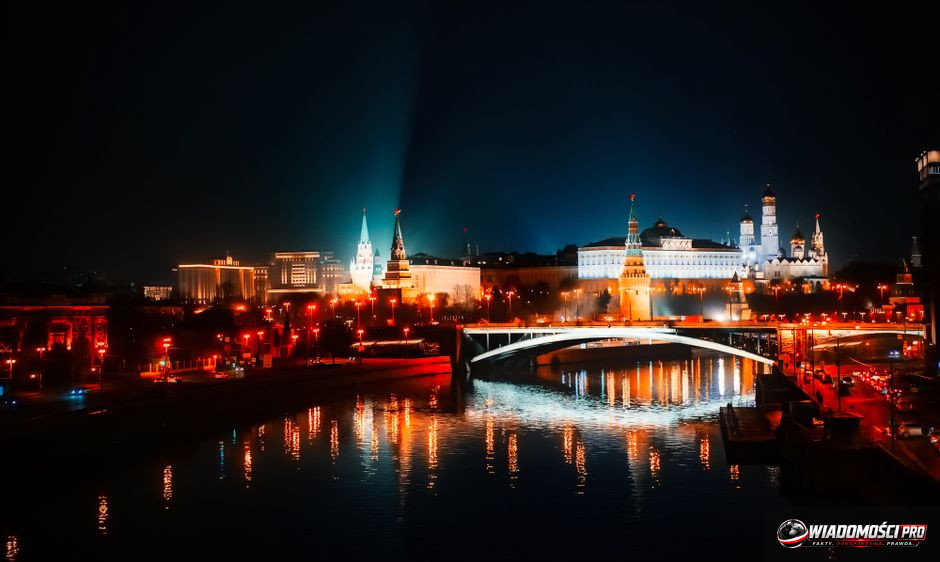
The Kremlin's alliance with the Chechen leader is in a phase of total decay, confirming that the arrangement has lost its reason for being. Since January 2026, we have been observing signs of the "Kadyrov project" being phased out and a crisis within the warlord's family, which is forcing the Russian elite to revise its policy toward the North Caucasus. Moscow has stopped viewing Ramzan Kadyrov as a guarantor of stability, recognizing him as an increasingly significant political and reputational burden.
The beginning of the end: Mechanisms of betrayal and lack of trust
The foundations of the agreement between Moscow and Grozny ceased to be a monolith long ago, even though official propaganda maintained the appearance of unshakeable loyalty for years. The process of eroding this arrangement was not sudden, but rather the result of a combination of decisions made by Kadyrov in isolation from Kremlin guidelines. A historic turning point was the participation of Chechen forces in the invasion of Ukraine in February 2022. At the time, it seemed that the warlord would become a key executor of Putin's will, but reality quickly verified those expectations. As early as June 2023, as reported by WP Wiadomości, Kadyrov openly sided with one of the factions in the internal disputes of the Russian elite, which was a clear signal to the Kremlin that the governor had ceased to act as a docile tool.
The tension grew exponentially. In October 2024, the situation became so unpredictable that WP Wiadomości noted public death threats made by Kadyrov in the context of internal friction in Russia. This was no longer just local politics, but an open demonstration of power that began to worry the security services in Moscow. In March 2025, TVP Info openly reported on the "end of the friendship" between the dictators, indicating that the Chechen leader was increasingly evading control. The trust that was the only glue of this alliance was permanently destroyed.
In April 2025, the matter took an even more serious turn. As Newsweek reported, Kadyrov was conducting complex intrigues behind Putin's back. Attempts to play his own game, although ultimately ending in failure, exposed the weakness of the surveillance system that had guaranteed peace in the region for years. Moscow realized then that it no longer had full control over what was happening in Grozny. From that moment on, the relationship between the Kremlin and Kadyrov ceased to be a partnership and became a zero-sum game in which each side was waiting for the other's mistake.
The year 2026: Crisis within the clan and political agony
January 2026 brought events that definitively sealed the fate of the "Kadyrov project." The facade of absolute control over the region cracked when the Chechen leader's personal problems began to affect the stability of the entire Caucasian system. On January 17, 2026, the WP Wiadomości service published reports about the "critical condition" of Kadyrov's son. In Russian political culture, this type of information is never treated as purely private. The illness of a successor or family member in circles of power is interpreted as a signal of the entire clan's weakness.
Two days earlier, on January 15, 2026, Onet, in its analysis, posited that the death or permanent incapacity of the warlord to exercise power would trigger a chain reaction in Chechnya. Experts rightly noted that the "Kadyrov" project had exhausted its formula and that Moscow must prepare for an emergency scenario. For Putin, reports of a crisis in Kadyrov's family became the perfect pretext for an audit of influence in the region. If the pillar upon which peace in the Caucasus was based begins to wobble for biological reasons, it means only one thing for the Kremlin: the necessity of phasing out the project before chaos spills over into neighboring republics.
The dynastic crisis exposed the helplessness of the structures that were supposed to guarantee peace. The arrangement, which until recently seemed unshakeable, lost its reason for being in the eyes of the Russian elite, who stopped seeing Kadyrov as a guarantor of security. Instead, they began to see him as ballast that could trigger an outbreak of separatist sentiment or power struggles at any moment. In this context, information from the beginning of 2026 was a signal to Moscow's decision-makers that the time for a change of manager in Grozny had arrived.
An arrangement that lost its reason for being
In April 2026, TVN24 explicitly announced that a power struggle was hanging over Chechnya and that the arrangement connecting Kadyrov with Putin had finally lost its reason for being. This statement is no longer just journalistic speculation, but a reflection of the moods within the Russian power structures. The Kremlin has stopped investing in the myth of a strong governor who holds the Caucasus with an iron fist. Instead, Moscow began preparing the ground for a new, more controllable administration that will not be burdened by the baggage of Kadyrov's personal ambitions.
Looking at the chronology of events, a clear phasing out of the existing order is visible. Earlier incidents, such as the aforementioned intrigues of 2025 or attempts to become independent in foreign policy, were merely a prelude to today's decay. Today, no one in Putin's entourage is asking whether the alliance will survive. The question is who will take control of the region when the warlord is no longer needed even as a tool to intimidate the opposition. Putin does not forgive weakness, and Kadyrov, drawn into a spiral of family troubles and political isolation, has ceased to be a guarantor of peace. He has become a burden that can no longer be financed, either politically or reputationally.
This situation is an existential challenge for the Kremlin. Losing control over Chechnya would be a far more painful defeat for Putin than any failure on the Ukrainian front. Therefore, the operation to "phase out" the Kadyrov project is being carried out methodically, using every available weakness of the clan. The family tragedy that has become the state of Kadyrov's son's health is merely a catalyst for a process that was triggered the moment the Chechen leader stopped understanding his subordinate role in the system.
Consequences: Who will gain from the warlord's fall?
The weakening of Kadyrov's position carries far-reaching consequences for the entire system of power in Russia. First, it creates space for factions within the FSB that have long sought to limit the Chechen leader's influence. For these groups, Kadyrov was always a foreign body, enjoying disproportionately large financial and political privileges. Their influence in Grozny could mean a drastic change in the republic's management model – from an autocratic clan model to a model of direct Moscow administration.
The second aspect is the issue of the stability of the North Caucasus. If the Kadyrov project is liquidated too abruptly, there is a risk of an open conflict breaking out, which Moscow will not be able to suppress without committing significant military forces. Putin is well aware of this risk, which is why the phasing-out process is so drawn out and based on gradual marginalization. Information about the critical health condition of Kadyrov's son, which appeared in January 2026, was used by the media as a warning signal for all who still counted on the continuation of dynastic power in Grozny.
The third, and perhaps most important element, is the image of Putin as a leader who still controls his governors. The fall of Kadyrov, if handled ineptly, could be interpreted by other regional leaders in Russia as proof that the center is losing control of the situation. Therefore, the Kremlin must ensure that Kadyrov's departure looks like a natural consequence of his own mistakes, rather than a result of Moscow's weakness. To this end, the narrative of the arrangement "losing its reason for being" is used, which allows for distancing from the warlord without having to admit to previous mistakes in personnel policy.
Editorial perspective: Why is this happening right now?
The key to understanding the current situation is answering the question of why the Kremlin allowed Kadyrov to balance on the edge for so long. The answer lies in the need to have a "bogeyman" who was useful during periods of greatest instability. However, in August 2026, in the face of depleted resources and the need to consolidate power before further challenges, Kadyrov is no longer needed. His personal ambitions and growing family problems have become a destabilizing, rather than stabilizing, factor.
For the reader observing these events, the conclusion is clear: the alliance that seemed like a monolith was, in reality, merely a business-political transaction. When the market value of the "Kadyrov product" fell and the costs of maintaining loyalty became too high, Moscow made the decision to withdraw from the investment. Every day of delay meant for Putin the risk of an uncontrolled explosion, the consequences of which could prove irreversible for the cohesion of the Russian Federation.
However, it is impossible to predict how the armed formations loyal to Kadyrov will react if they feel their leader is losing the Kremlin's support. This is the only element that neither Onet, nor TVN24, nor Newsweek can fully assess. History teaches that at such moments, it is not political calculations, but the loyalty of armed groups that decides the survival of regimes. Kadyrov, drawn into a spiral of isolation, is well aware that the moment he ceases to be useful to Putin, his life and assets will be in danger.
Ultimately, the decay of the alliance is confirmation of the thesis that in the system created by Putin, there is no room for independence, even for the most loyal executors of the Kremlin's will. Anyone who believes in their own agency must sooner or later face the wrath of the center. Kadyrov's case is just another, albeit exceptionally spectacular, example of this rule. The arrangement, which for years seemed to be the foundation of power in the Caucasus, has today become a symbol of its political shortsightedness. Moscow, forced to phase out the "Kadyrov project," shows that the only constant in Russian politics is the absolute dominance of the center, which tolerates no alternative.
Sources
- A power struggle is coming in Chechnya. "The arrangement has lost its reason for being" - TVN24
- Is the "Kadyrov project" coming to an end? Putin has reasons to worry. The death of the Chechen warlord will trigger a chain reaction [OPINION] - Wiadomości Onet
- Did Kadyrov act behind Putin's back? The Russian services' intrigue failed - Newsweek
- "Critical condition". New information regarding Kadyrov's son - WP Wiadomości
- The end of the dictators' friendship. Kadyrov is slipping away from Putin - TVP Info
- Kadyrov threatens death. Tensions in Russia - WP Wiadomości
- Live coverage - War in Ukraine - Wprost
- Kadyrov sided with one of the factions. Ominous words - WP Wiadomości

Komentarze (0)
Ładowanie komentarzy...