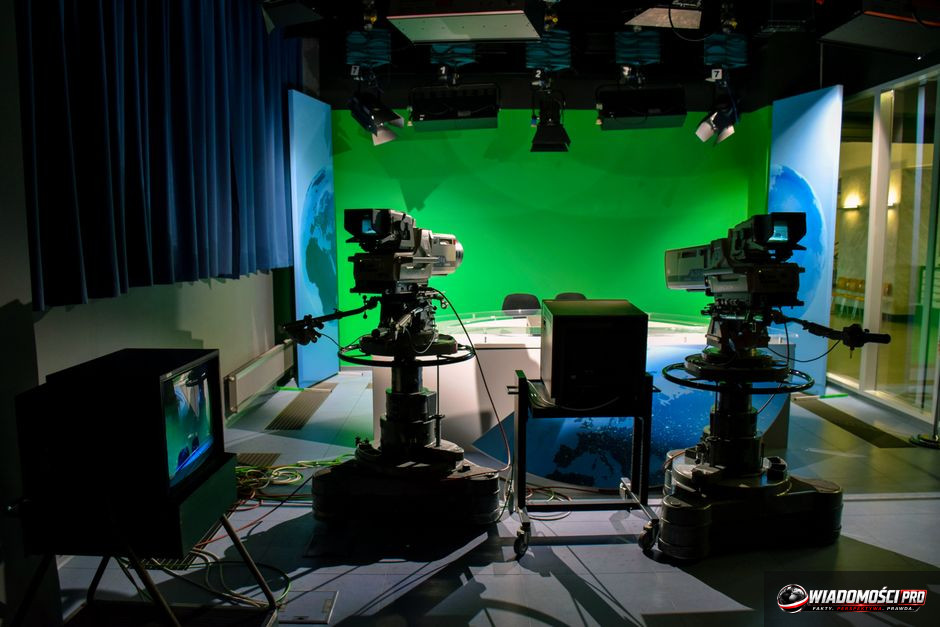
MP Kamil Wnuk was thrown out of the TV Republika studio by Miłosz Kłeczek on July 30, 2026, following a heated exchange, while the station grapples with accusations of product placement, including luxury watches, in its programs. This event marks the culmination of growing tension between representatives of the current parliamentary majority and the station's journalists, who increasingly take on the role of active participants in political disputes rather than serving as impartial moderators of debate.
Behind the scenes of MP Wnuk's expulsion from the studio
The course of the meeting on July 30, 2026, deviated from standard television procedures from the very beginning. Kamil Wnuk, representing the Sosnowiec district in parliament, accepted an invitation to the program, not expecting the discussion to be interrupted in such a radical way. Miłosz Kłeczek, the host of the broadcast, at one point in the conversation accused his guest of lying and deliberately misleading viewers. The exchange quickly moved from a substantive level to a personal one, which led to a direct order to leave the room.
The words "I invite you. The door is there" and the declaration "I don't want to talk to you anymore" uttered by the host became quotes that dominated news portals within hours. Interia, Fakt, Do Rzeczy, Goniec.pl, and Zero.pl devoted extensive reports to the incident, analyzing Kłeczek's interview technique. A common denominator emerges in these reports: an unwillingness to reach an agreement and a desire for total dominance over the guest.
For an outside observer, this situation is proof of a paradigm shift in Polish news television. The studio, which should be a place for clashing viewpoints, has become a space where the host has absolute power over whose statement will be completed. MP Wnuk became, in this case, a victim of a strategy in which kicking out a guest is treated as the ultimate argument in a political discussion. This is not an isolated case – as early as April 17, 2026, the station broadcast tense scenes involving the same politician, which suggests that a confrontational style of hosting programs is a conscious editorial choice.
The shadow of surreptitious advertising: Is TV Republika promoting watches?
Parallel to the political storm, questions about financial standards have hung over the station. Allegations regarding the surreptitious advertising of luxury watches, displayed in a way that suggests cooperation with specific brands, have become a flashpoint for media ethics circles. The mechanism is simple: during discussions of high political temperature, timepieces from brands whose market value often exceeds the average viewer's monthly earnings appear on the wrists of the interlocutors or hosts.
The lack of transparency in this regard is worrying. If a medium aspires to be an opinion-forming outlet, it must separate the informational sphere from the commercial one. In the case of TV Republika, this boundary has become blurred. Viewers are often unable to distinguish whether a given item is an element of clothing or the result of a sponsorship agreement. The lack of clear product placement labels, which are required by press law and KRRiT regulations, puts the station in a difficult legal position.
There is a hypothesis that the aggressive style of hosting programs is intended to distract from these financial doubts. When the public's attention is focused on a scandal in the studio, questions about advertising ethics take a backseat. This is an effective method of attention management, but in the long run, it destroys the trust that is the foundation of every editorial office. The loss of credibility in the eyes of the audience, who begin to treat the program as a sales platform hidden under the banner of patriotic journalism, is the price the station pays for short-term profits.
Image consequences for the guest and the host
After his visit to the studio, MP Kamil Wnuk had to face consequences whose scale surprised even his inner circle. Dziennik Zachodni and the local portal Sosnowiec Nasze Miasto noted that a massive wave of hate poured onto the politician after the program aired. Internet aggressors used the recording as a pretext for personal attacks, which is a typical phenomenon in the Polish digital space after such incidents.
It is worth asking whether MP Wnuk could have foreseen such a turn of events. Politicians often decide to participate in "difficult" programs, hoping to reach viewers with different views. However, in the case of TV Republika, these formats seem to be designed so that a guest from the opposite political option has no chance to present their arguments. Every question becomes a trap, and every answer – material to be cut and looped on social media, which brings the station measurable reach.
Kłeczek, on the other hand, once again proved that his role at the station goes beyond the traditional framework of journalism. He has become the face of a new quality in right-wing media, where emotions and confrontation are a commodity. For the station, this is a business success – high viewership and viewer engagement are crucial for survival in a difficult media market. However, for public debate, this is a regression. Instead of dialogue, we get a theater in which the actors play their roles according to an imposed script, and the viewers are left with a sense of dissatisfaction and growing frustration.
Mechanisms of polarization: From Putin to "comrade"
Arguments in the studio are often based on very specific vocabulary aimed at delegitimizing the interlocutor. In reports cited by Zero.pl, during the program with Wnuk, references to Vladimir Putin and terms like "comrade" were used. This is a language that in Poland automatically evokes associations with the times of the PRL (People's Republic of Poland) or national betrayal. The use of such phrases in a discussion about current politics serves to silence an opponent by accusing them of a lack of patriotism.
Such a rhetorical device makes a substantive discussion impossible. An MP who tries to defend their arguments faces a choice: either they enter this game, which automatically makes them a participant in the brawl, or they leave the studio, which will be perceived as running away. Both paths are beneficial for the station because they build an image of a "strong host" who is not afraid to "set a politician straight."
It should be noted that this strategy is extremely effective in solidifying the electorate. A viewer who identifies with the station's line feels satisfaction seeing their views being "defended" against the "lies" of an MP. This creates a strong emotional bond between the medium and the recipient. However, from a journalistic perspective, this is harmful. The journalist ceases to be a conveyor of information and becomes an ideological fighter. In the long run, this leads to the complete breakdown of public debate, in which, instead of arguments, only who shouts louder matters.
What this means for you
The whole situation shows that the media in Poland have entered a phase where ethical standards are often subordinated to political and business goals. If you notice that current affairs programs, instead of explaining reality, only obscure it through artificial conflicts and product placement, it is worth starting to verify your sources of information. The truth in the media is not always what shouts the loudest.
Questions and answers
Why was Kamil Wnuk thrown out of the studio?
The MP was asked to leave by Miłosz Kłeczek on July 30, 2026, after a heated exchange in which the host decided that the politician was lying and deceiving citizens.
What are the allegations regarding watches on TV Republika?
The station is accused of unethical product placement, including luxury watches, in its programs without clear advertising labeling, which raises questions about the broadcaster's financial transparency.
Was the incident of July 30, 2026, a one-time event?
No, the station had previously, among other times on April 17, 2026, broadcast tense discussions involving MP Wnuk, which proves an established, confrontational model of hosting broadcasts by Miłosz Kłeczek.
What were the social consequences of this event for the MP?
After the program aired, MP Kamil Wnuk became the target of a massive wave of hate, which was noted by local media, including Dziennik Zachodni and the Sosnowiec Nasze Miasto portal, which deal with the negative impact of such incidents on a politician's public life.
Sources
- "You are lying and deceiving citizens." Sharp clash, MP thrown out of the Republika studio - Interia Wydarzenia
- Brawl on TV Republika. Kłeczek threw an MP out of the studio. "I invite you. The door is there" - Fakt
- Shocking scenes on TV Republika. Kłeczek threw an MP out the door - Do Rzeczy
- MP thrown out of the Republika studio. "I don't want to talk to you anymore" - Goniec.pl
- "The door is there!". Brawl on TV Republika got out of control. Words about Putin and "comrade" were spoken - Zero.pl
- Kamil Wnuk from Sosnowiec asked to leave the Telewizja Republika studio. A wave of hate poured onto the MP - Dziennik Zachodni
- MP from Sosnowiec thrown out of the Telewizja Republika studio. "I don't want you here anymore" - Sosnowiec Nasze Miasto
- Telewizja Republika. . #PoliticalBattle | SHOCK! MP Kamil Wnuk flees the studio: Reaction of the Poland 2050 MP to the boards concerning the pedophilia scandal in the Civic Coalition | Michał Kowalski #TVRepublika #turnonthetruth - facebook.com
Komentarze (0)
Ładowanie komentarzy...