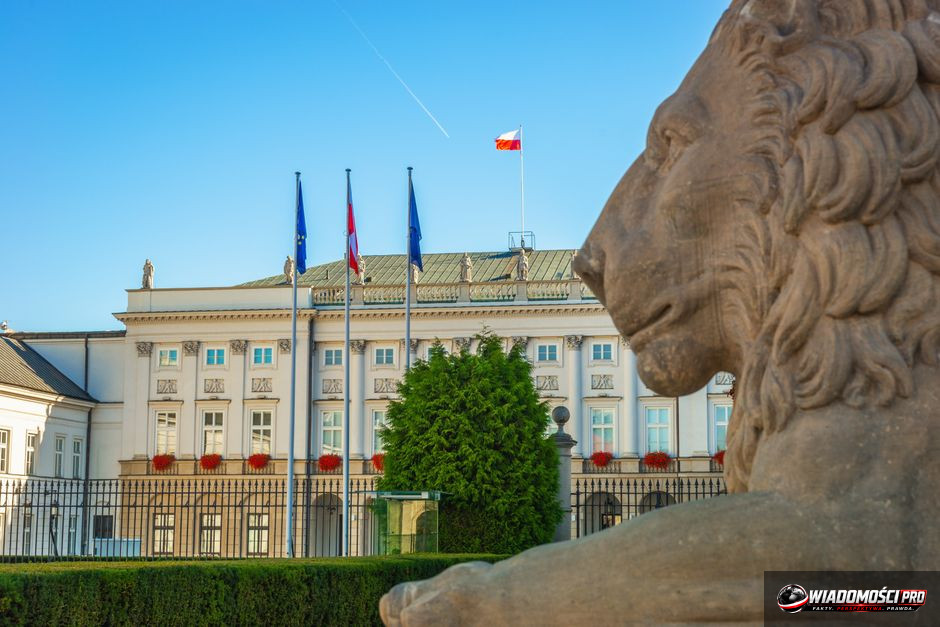
According to analyses by "Die Welt" and data from May 2026, the conflict between President Nawrocki and the government is leading to a systemic paralysis of the state, with public opinion remaining deeply divided on who is to blame for the situation. No one is emerging victorious from this clash, as decision-making mechanisms have reached a stalemate, and the country is losing international credibility and the operational efficiency of its army. The two main consequences are the freezing of certifications for defense contracts and a complete lack of information flow between ministries and the National Security Bureau.
The lack of fluidity in state management has specific dates and flashpoints. On March 2, 2026, President Nawrocki publicly described the government's actions as unacceptable. This statement became a turning point after which communication between the Presidential Chancellery and the Prime Minister's Chancellery was limited to the statutory minimum. From that moment on, every law requiring the President's countersignature or signature became a hostage to personal animosity. We are not talking about minor legislative adjustments here, but about legal acts that should regulate the economic and defense life of the country.
Military minefield: Nawrocki, Tusk, and London
The state security strategy has become the main arena for personal clashes, where substantive arguments lose out to political calculation. On May 28, 2026, Prime Minister Donald Tusk publicly rejected the presidential proposal to strengthen the military alliance with London. The head of government did not limit himself to a diplomatic refusal, publicly calling Nawrocki's concept a dangerous idea. This statement shattered the fragile stability in relations between the ministries. The ministries stopped coordinating actions in the area of defense procurement, which in practice means a suspension of certification for certain foreign contracts requiring the President's signature.
The tension moved directly to the Ministry of National Defense. On July 7, 2026, Marcin Przydacz, speaking on behalf of the Presidential Palace, openly criticized Minister Władysław Kosiniak-Kamysz. Przydacz questioned the condition of the Polish army, which for the Ministry of National Defense meant the necessity of delegating top officials to draft explanations instead of dealing with the modernization of units. Such actions paralyze the flow of information between the ministry and the National Security Bureau. As a result, key general appointments and decisions on troop deployment have become stuck in bureaucratic limbo.
The cost of this dispute is measurable in the time that commanders lose waiting for political resolutions. The President's London proposal, rejected by Tusk, created uncertainty among NATO allies. Does Poland have one defense strategy, or two contradictory narratives? This question remains open. The lack of consistency in messaging means that foreign defense contracts are being renegotiated because contractors fear a change in political will on the part of the Polish administration. Every week of delay in making decisions translates into concrete reputational and operational losses, as confirmed by foreign observers monitoring the Polish political scene.
Institutional paralysis: From the Constitutional Tribunal to government cabinets
The dispute between the President and the government goes beyond military competence and strikes at the foundations of the judiciary. The chaos surrounding the Constitutional Tribunal has become a symbol of decision-making impotence. On April 16, 2026, "Rzeczpospolita" published a ranking of those responsible for the mess in the Tribunal, which sparked a wave of commentary but did not lead to any legal change. Both sides of the dispute used the publication to shift responsibility for judicial appointments and the blocking of rulings.
The legal consequence is the freezing of work on legislative packages that require the President's signature, which the government is trying to push through despite the lack of acceptance from the Palace. The Constitutional Tribunal, instead of acting as an arbiter, has become a hostage to this conflict. Judicial appointments are blocked, and rulings are losing their significance, as each side questions the legitimacy of the people sitting on the adjudicating panels. In this area, the Polish state has stopped generating law and has started generating interpretative conflicts. Lower-court judges receive conflicting signals regarding the application of regulations, which leads to chaos in civil and criminal jurisprudence.
The lack of legal certainty hits entrepreneurs and citizens directly, as they do not know whether upcoming changes in the law will be respected by the other side of the dispute. On June 20, 2026, President Nawrocki chose a course of even sharper confrontation, which definitively closed the path to informal consultations. The Presidential Chancellery operates in isolation from the government, and the government, in turn, seeks paths to bypass the presidential veto through legal interpretations that are considered unlawful by the other side.
The voice of Poles and foreign assessment
The external view of the Polish political scene is increasingly pessimistic. On March 29, 2026, "Gazeta Prawna" warned that the President's actions are introducing confusion that hinders the management of state structures. Foreign analytical centers point out that Poland has ceased to be perceived as a predictable partner within the European Union. This image has a direct impact on Poland's negotiating position in talks about funds and common security.
Domestic moods are a reflection of these divisions. According to an Onet poll from May 7, 2026, voters do not point to a clear culprit, which testifies to deep polarization. Part of the electorate, identifying with the President's line, sees his moves as the only barrier against the government's arbitrariness. The other half of society, supporting Tusk's cabinet, accuses Nawrocki of deliberately blocking changes that Poles voted for in the elections.
This division makes it impossible to develop a national consensus on fundamental issues. The lack of a clear indication of the culprit in the eyes of public opinion means that politicians do not feel pressure to change course. Each of them has their own electorate, which rewards them for being uncompromising. As a result, the state becomes a hostage to lasting distrust. Poles observe this impasse, losing confidence in both centers of power, which in the long run leads to lower turnout in democratic processes and social apathy.
Forecast: Is a compromise possible?
Prospects for easing the dispute are close to zero. The analysis by "Die Welt" from May 8, 2026, pointing to systemic paralysis, has been confirmed by subsequent facts after several months. On June 20, 2026, President Nawrocki confirmed his course for confrontation, which in practice means that no concessions are expected on key constitutional issues. The government, holding a parliamentary majority, in turn, does not intend to give up on implementing its programs.
The forecast for the coming months assumes the maintenance of a cold war state within state institutions. We can expect increasingly frequent presidential vetoes, the referral of laws to the Constitutional Tribunal, and the blocking of ambassadorial and general appointments. This means that the administration will function in survival mode, not development mode. The lack of an external impulse – such as an international crisis requiring immediate agreement across divisions – will maintain this impasse.
Politicians on both sides have dug into their positions. For them, capitulation on even one issue means losing the support of their own radicalizing electorate. Therefore, every decision is preceded by long-term legal consultations, the goal of which is not to find a way out, but to protect oneself against the accusation of betraying party interests. The state is drifting, and its mechanisms, instead of solving problems, are becoming their source.
What this means for you
The analysis indicates that this conflict is not accidental. It is a zero-sum game, where every gain for one side is a loss for the other. For the average citizen, this means lower quality of public services, legal uncertainty, and a feeling that the state is ineffective in crisis situations. We all lose, because the institutions that should be stable have been drawn into the personal animosities of the people holding the highest offices in the state.
The average citizen, seeking protection under the law, hits a wall of impotence. When an official does not know whose directive to implement – the President's or the government's – administrative processes stop. This applies to both simple civic matters and decisions of strategic importance for the country's security. Every subsequent decision made in this climate is burdened with the risk of being undermined by the opposing side. This is not a dispute about the letter of the law, but about whether the state is capable of functioning at all under conditions of deep division of executive power.
Questions and answers
Why is President Nawrocki in conflict with the Ministry of National Defense?
The dispute stems from different visions of security policy and personal tensions, as evidenced by the criticism of Minister Kosiniak-Kamysz's actions by the President's associates, including Marcin Przydacz, on July 7, 2026. The lack of agreement translates into a blockade of general appointments and a lack of coordination within the National Security Bureau.
How do foreign media assess the President's stance?
The German press, including "Die Welt" from May 8, 2026, points out that President Nawrocki's actions deepen decision-making chaos and paralyze the efficient management of the country on the international stage. Foreign analysts emphasize that the lack of consistency in Polish defense policy affects the renegotiation of defense contracts.
Do Poles blame the President for the current mess?
According to an Onet poll from May 7, 2026, public opinion is deeply divided, and voters point to different sides of the conflict as responsible for the existing impasse, depending on their political preferences. The lack of social consensus reinforces the politicians' belief that confrontation is an electorally profitable strategy.
What are the legal consequences of the dispute for the Constitutional Tribunal?
The dispute has led to a permanent blockade of work on judicial appointments and the undermining of the legitimacy of rulings, as confirmed by data from April 16, 2026, regarding institutional mess. The institution that should be an arbiter has become a party to a political dispute, which leads to chaos in jurisprudence.
Is there a real chance to end the paralysis?
Current data, including the President's stance from June 20, 2026, indicate a constant course for confrontation, which excludes the possibility of a quick compromise without an external impulse forcing cooperation. Both sides are convinced that any concession will be perceived by their electorate as weakness, which makes the impasse a permanent feature of the current political scene.
In this situation, the state administration loses the ability to respond to challenges that require speed and precision. If the situation does not change, the operational costs, which reports from the spring of 2026 mentioned, will only grow, burdening the budget and the safety of citizens. In this balance of power, every state institution becomes a hostage to lasting distrust, and democratic processes are reduced to a permanent conflict over the right to exercise power. Observers note that without a change in approach, neither side is able to win this clash in the long run, because it is the state as a whole that bears the costs of this political paralysis.
Sources
- Nawrocki adds fuel to the fire. The President has chosen a course of confrontation with the government - Interia Wydarzenia
- Poles asked about Nawrocki's words. They indicated who is responsible for the political dispute - Wiadomości Onet
- Presidential Palace versus the Ministry of National Defense. Przydacz strikes at Kosiniak-Kamysz - Fakt
- German media: President Nawrocki is introducing confusion - Gazeta Prawna
- Military alliance with London threatened? Tusk counters Nawrocki: This is a dangerous idea - Wyborcza.pl
- Ranking of those responsible for the mess in the Constitutional Tribunal - Rzeczpospolita
- "Die Welt": Dispute between the President and the government is paralyzing the country - Do Rzeczy
- Hot on the line between the President and the government. Nawrocki: This is unacceptable - Dziennik.pl
Komentarze (0)
Ładowanie komentarzy...