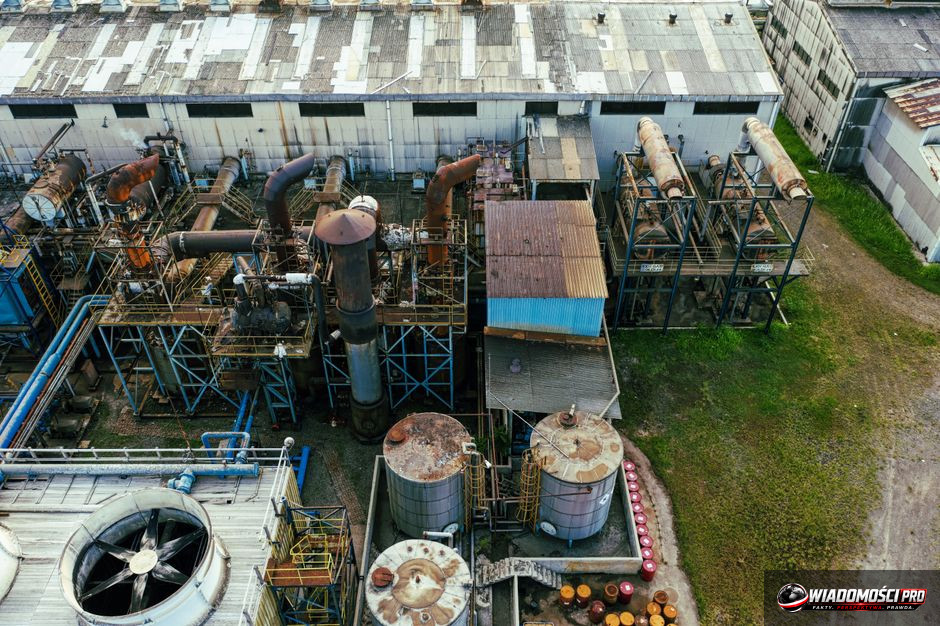
- The price of crude oil is currently hovering below 80 dollars per barrel.
- President Donald Trump described the talks with Iran as "good," which sparked optimism in financial markets.
- Despite progress in the talks, Senator Rubio emphasizes that there is still a lack of concrete arrangements regarding security guarantees in the Strait of Hormuz.
The oil market in anticipation of decisions
The crude oil market reacted with an immediate cooling of sentiment. On August 5, 2026, the price of the commodity fell below 80 dollars per barrel, which is a clear signal of relief among investors. The main fuel for these quotes became the rhetoric flowing from Washington. President Donald Trump publicly mentioned "good talks" with Iran, suggesting the possibility of breaking the impasse in relations between the countries.
Stock markets do not like uncertainty in the Strait of Hormuz, which is a bottleneck for global oil supplies. Every spark in this region has so far driven up the rates per barrel. Now, however, investors are grasping at hope for a lasting de-escalation. The President's words acted as a safety valve, although the market remains cautious.
From the perspective of analysts, however, the situation is far from full stabilization. Despite the optimistic rhetoric flowing from the White House, actual progress in the negotiations remains unclear. Rubio points to the lack of concrete arrangements regarding the strait itself, which forces one to ask: are we witnessing a real thaw, or just a tactical game of stalling before the next round of tensions?
For end consumers, the current price drop is good news, but short-term. Market stability is not based on declarations, but on hard security guarantees for transport routes. Until these are worked out, oil below 80 dollars may turn out to be just a momentary breath before further fluctuations. Investors, although satisfied with the rhetoric, are still keeping their finger on the pulse. They do not trust words without backing in documents.
State of negotiations: where are we?
State of negotiations: where are we?
The price of oil has fallen below 80 dollars per barrel. This is a direct effect of market optimism, fueled by reports of a possible agreement with Tehran. Investors are reacting to signals from Washington, where President Trump's administration is speaking increasingly loudly about the chances of de-escalating tensions.
Concrete details began to emerge on Tuesday, August 4, 2026. Senator Rubio officially confirmed that progress had been made in the talks with Iran. These are not just rumors from the sidelines, but information confirmed by politicians, which immediately hit speculative premiums in the fuel market. Oil is getting cheaper because the vision of an open confrontation in the Persian Gulf is beginning to lose its reality.
The devil, however, is in the details. Despite declarations of progress, the lack of concrete arrangements regarding the Strait of Hormuz remains the main critical point of the negotiations. This is where the fate of global energy security is being weighed. Without guarantees of the free flow of tankers, all optimistic announcements remain merely political declarations, not a hard treaty.
The market is currently a hostage to words. President Trump talks about "good talks," but investors should remain vigilant. History teaches that the lack of an agreement on strategic shipping routes means that current price drops may be just a temporary correction. Until Tehran and Washington put a concrete protocol regarding Hormuz on the table, the oil market will remain in a state of precarious balance. Every subsequent announcement from the Capitol could instantly reverse the current downward trend.
Geopolitics of the Strait of Hormuz and global prices
Geopolitics of the Strait of Hormuz and global prices
The Strait of Hormuz is not just a narrow waterway between the Persian Gulf and the Gulf of Oman. It is an arterial road for global oil supplies, the blocking of which causes immediate panic among investors. When the price of a barrel of the commodity fell below 80 dollars, financial markets sent a clear message: de-escalating tensions in this region is more important to investors than temporary fluctuations in demand in China or Europe. Every signal of progress in US-Iran negotiations directly lowers the so-called risk premium, which has so far been added to the price of every barrel passing through this strategic point.
The market's sensitivity to events in this region is drastic, which is confirmed by painful lessons from the past. It is enough to recall the attack of May 2026, which caused a violent stir on the stock exchanges and fears of a disruption in supply continuity. At that time, the markets reacted nervously, driving prices up, because every incident in Hormuz is treated as a real threat to global energy security.
The current optimism, fueled by the administration in Washington, is therefore cautious. Although investors see a chance for stabilization, oil trading still remains a hostage to political declarations. Even if the talks are ongoing, the lack of concrete arrangements regarding the safety of shipping in the strait itself means that the current price drop may turn out to be just a temporary correction, not a lasting trend. The market believes in diplomacy, but remembers how quickly the situation in the Gulf can get out of control.
Lasting agreement or just de-escalation?
The drop in oil prices below 80 dollars per barrel is a pure game of market expectations, not the result of a lasting geopolitical change. Investors are reacting to every communication from Washington, where President Donald Trump is fueling hopes for an agreement, but this enthusiasm is underpinned by the deep skepticism of analysts. The situation in the Strait of Hormuz remains a flashpoint, and the political declarations made so far do not translate into concrete, binding arrangements.
Financial markets are currently pricing in only the chance of avoiding the worst-case scenario, i.e., an armed conflict blocking transport routes. Stock market observers, however, point to an important detail: the commodity's price drops so far are not drastic. This is a clear signal that capital does not believe in a quick stabilization of the region.
An analysis of available information points to several key threats to the current optimism:
- Experts warn that the agreements being worked out may turn out to be only a temporary solution to the problem, not a guarantee of lasting peace in the Persian Gulf.
- Rubio emphasizes that despite progress in the talks themselves, there is still a lack of concrete arrangements regarding the status and safety of shipping in the Strait of Hormuz.
- The current drops in oil prices do not reflect a deep change in market fundamentals, but only a short-term reaction to political rhetoric.
The key question is what will happen when the enthusiasm for talks fades, and the same unresolved security issues remain on the table. Investors are buying time, but the real risk of a disruption in the supply of black gold still hangs in the air. Without long-term guarantees, the current price relief may turn out to be as fragile as the arrangements on which it is based.
What this means for you
For consumers, this means temporary relief at gas stations, however, investors remain cautious — the lack of a final agreement regarding the Strait of Hormuz means that the risk of a sharp price jump in the event of an escalation of the conflict still exists.
Questions and answers
Why did oil prices fall below 80 dollars?
The drop is the result of optimistic signals from US-Iran negotiations, which reduce investors' fears about supply disruptions through the Strait of Hormuz.
Is an agreement between the US and Iran already certain?
No, despite progress, Senator Rubio noted that there is still a lack of concrete arrangements regarding security in the Strait of Hormuz, which is key to oil trading.
How does the situation in the Strait of Hormuz affect the wallet of a Pole?
Stability in this region translates into lower oil prices on stock exchanges, which in the long term affects fuel prices at Polish stations.
Sources
- Donald Trump fuels hopes. Decisive days for the oil market - Business Insider Polska
- Rubio: progress in talks with Iran, but no concrete arrangements regarding Hormuz - Polish Press Agency SA
- Trump pushes for an agreement with Iran. He revealed what's up with the Strait of Hormuz - Polskie Radio 24
- Oil prices below 80 dollars per barrel. President Trump talks about "good talks" - xyz.pl
- US-Iran agreement near Hormuz: de-escalation of tensions or a temporary solution? - Vietnam.vn
- Optimism after Trump's words. Oil prices down in anticipation of an agreement with Iran - Interia Biznes
- Attack on Iran during peace talks. This is how the markets reacted - TVN24
- Oil is getting cheaper, but not drastically. A US-Iran agreement is not enough - Rzeczpospolita

Komentarze (0)
Ładowanie komentarzy...