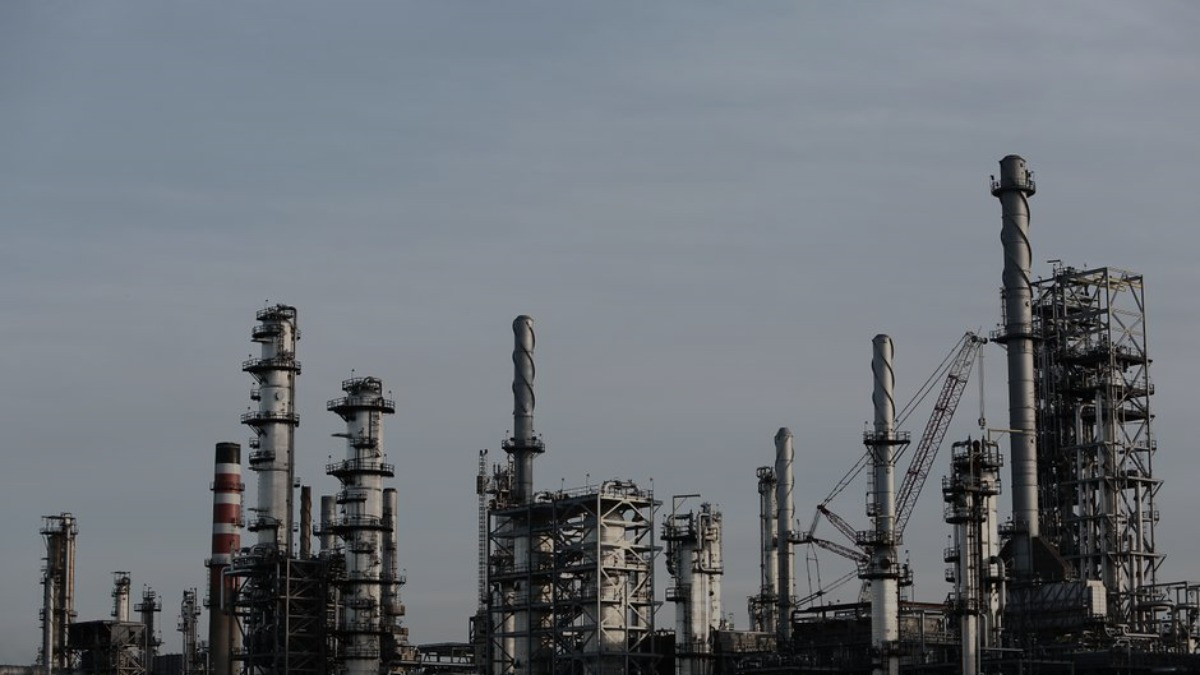
KGHM Polska Miedź currently holds 2nd place in the global ranking of silver producers, which is officially confirmed by the World Silver Survey 2026 report. This position in the global hierarchy is not a coincidence, but the result of the specific geology of the deposits in the Legnica-Głogów Copper District and decades of investment in technology for recovering the precious metal from concentrates. The Polish company maintains this status, outperforming giants operating in South America or China, even though for KGHM, silver remains a byproduct of copper ore mining.
The World Silver Survey 2026 report serves as the main reference point for commodity analysts regarding global metal supply. The runner-up position for KGHM signifies high efficiency in the precious metal separation process. The lack of publication of the exact number of tons mined in the company's April 2026 announcements does not stem from a lack of transparency, but from the fact that silver production is strictly correlated with the volume of copper mining. This dependency is technologically fixed, and data regarding the exact quantity of the metal are included in audited annual reports, which form the basis for market valuations.
The deposits in the LGOM are characterized by a high silver content in the copper ore. Unlike mines in other parts of the world, where silver occurs in veins requiring selective mining, in Poland, it is "embedded" in the copper-bearing structure. This geological feature allows for the extraction of the metal at relatively lower marginal costs than in the case of dedicated silver mines. KGHM does not need to open new shafts to increase production of the metal. It is enough to optimize processes at the smelters in Głogów and Legnica, where advanced electrorefining allows for the recovery of silver with high purity, valued by the electronics and photovoltaic industries.
The silver market in 2026 is in a phase of supply deficit. The photovoltaic sector, responsible for a significant percentage of industrial demand, forces producers to maintain high efficiency. For KGHM, this trend is favorable. The company does not have to compete on price because the demand for technical silver exceeds the mining capabilities of most market players. From a financial perspective, silver acts as a revenue stabilizer. When copper prices on the LME exchange show periodic weakness, silver sales allow margins to be maintained at a safe level, offsetting the impact of base metal price fluctuations.
The share of silver in KGHM's revenue structure is a significant element of the net result, although it is rarely separated in a way that would allow for a simple percentage calculation on a quarterly basis. However, stock market analyst estimates indicate that in periods of high metal prices, silver accounts for a significant portion of operating profit. At the same time, rising mining costs must be taken into account. Deep mining in Poland requires huge outlays on electricity, air conditioning for excavations, and logistical security for transporting ore from depths of over a thousand meters. These costs directly burden profitability, which means that maintaining the runner-up position requires constant cost discipline from the company's management board.
The market situation forces the corporation to balance between the scale of production and energy costs. Every meter of mining depth increases the demand for energy, which in the era of rising CO2 emission certificate prices poses a challenge to profitability. KGHM is optimizing mining processes, focusing on automation and the modernization of its machinery fleet. Investors are watching these actions with attention, treating the position in the World Silver Survey ranking as a signal that the company, despite high operating costs, remains at the technological forefront. However, there is a risk of volatility. If global production of photovoltaic panels slows down, global silver prices will see a correction, which will hit the company's financial results faster than changes in demand for copper.
KGHM's role in the raw materials economy goes beyond production statistics. The company controls the entire supply chain — from ore extraction, through concentrate, to refining. In an era of searching for raw material sovereignty by European Union countries, having such a significant silver producer within the community is a strategic asset. The automotive and energy industries need secure supplies of the metal, and Poland's political stability gives buyers a sense of security that is not guaranteed by countries with high geopolitical risk. This competitive advantage is often overlooked in simple stock market analyses, yet it forms the foundation of the company's long-term value.
For an industry analyst, KGHM's success is primarily a matter of recovery technology. Many mines around the world do not have the infrastructure to enable such deep separation of precious metals from polymetallic ores. KGHM has invested billions of zlotys in the modernization of smelters and the development of electrorefining technology, which is paying off today. The result of these investments is the high purity of the silver, which finds buyers in the most demanding markets. The quality of the product, not just its quantity, allows the company to maintain margins that are unattainable for many foreign competitors. Such a revenue structure is a rarity in the mining sector. Typically, companies specialize in either copper or precious metals. The Polish corporation combines these two worlds, which makes it very resistant to one-sided supply shocks.
The runner-up position, however, is constantly tested by competition from Mexico, Peru, or China. In these countries, open-pit mines are often exploited, which is much cheaper than working in Polish deep mines. The threat to KGHM is not a lack of metal, but cost pressure. If energy costs in Poland rise faster than silver prices on the London or New York exchanges, the profitability of mining may start to fall. The company's management must therefore balance between maintaining production volume and the financial discipline necessary for such a huge scale of operations.
For a stock market investor, the World Silver Survey 2026 report is a confirmation of the fundamentals. Investing in KGHM is playing on two pianos. Copper reacts to business cycles in the global industry, and silver acts as a safe haven. This combination makes the company's shares have a specific characteristic. It is not a typical growth stock, but a stabilizer that acts as a shield in the investment portfolio in times of market uncertainty.
KGHM remains a power that does not have to prove its strength at every step. The results from the 2026 report are a formal confirmation of the state of affairs resulting from decades of investment in Polish mining. The biggest challenge for the coming years will be maintaining efficiency in the face of rising operating costs and pressure for energy transformation. The Polish company has proven that it can manage resources in a way that allows it not only to survive but to win in global competition for strategic raw materials.
For investors, this means that KGHM is ceasing to be perceived solely as a copper producer. Silver has become a strategic asset that, in the face of a global shortage of raw materials, forms the foundation for the company's financial results in 2026.
Questions and answers
What place does KGHM occupy in the global ranking of silver producers?
According to the World Silver Survey 2026 report, KGHM Polska Miedź is the second-largest silver producer in the world.
Why is silver production so important for KGHM now?
KGHM benefits from the global silver shortage, which, according to 2026 analyses, significantly translates into the company's profitability and profits, allowing for revenue stabilization during periods of copper price fluctuations.
Where does the data on KGHM's position come from?
Information about KGHM's position comes from the World Silver Survey 2026 report and industry publications from April 2026.
Is the exact number of tons of silver mined known?
None of the cited sources provide a specific number of tons of silver mined in 2026. This data is published in the company's annual financial reports after the end of the fiscal year, as silver production is closely linked to the volume of copper mining.
Sources
- KGHM on a wave of silver boom. Global shortage helps - Biznes Alert
- KGHM Polska Miedź among the top global silver producers - Inwestycje.pl
- KGHM: 2nd place in silver production according to World Silver Survey - stockwatch.pl
- Polish corporation is the second-largest silver producer in the world - wnp.pl
- Not just copper. KGHM is the second-largest silver producer in the world - Bankier.pl
- KGHM is the second silver power in the world - World Silver Survey 2026 - Polski Przemysł
- KGHM again among the world leaders. Silver will bring high profits - Parkiet
- Silver laurel for KGHM - wGospodarce


Komentarze (0)
Ładowanie komentarzy...