In brief
- Krakow authorities have officially confirmed that there is no illegal mosque operating in the city.
- Protests under the slogan of opposition to "cultural expansion" concerned a place that, according to reports, was closing its operations anyway.
- Experts, including Dr. Karol Wilczyński, warn against the growing smear campaign against Muslims and disinformation on social media.
Political involvement and protests in the Podwawelskie housing estate
Political involvement and protests in the Podwawelskie housing estate
The peace of the residents of the Podwawelskie housing estate in July 2026 was brutally interrupted by a campaign by the Confederation party. Activists of the group, relying on the thesis of the alleged Islamization of Poland, turned a local facility into a political weapon. At the center of this turmoil was Piotr Bartosz, who publicly opposed the presence of a Muslim place of prayer. His rhetoric about "cultural expansion" quickly fell on fertile ground, mobilizing opponents of the location.
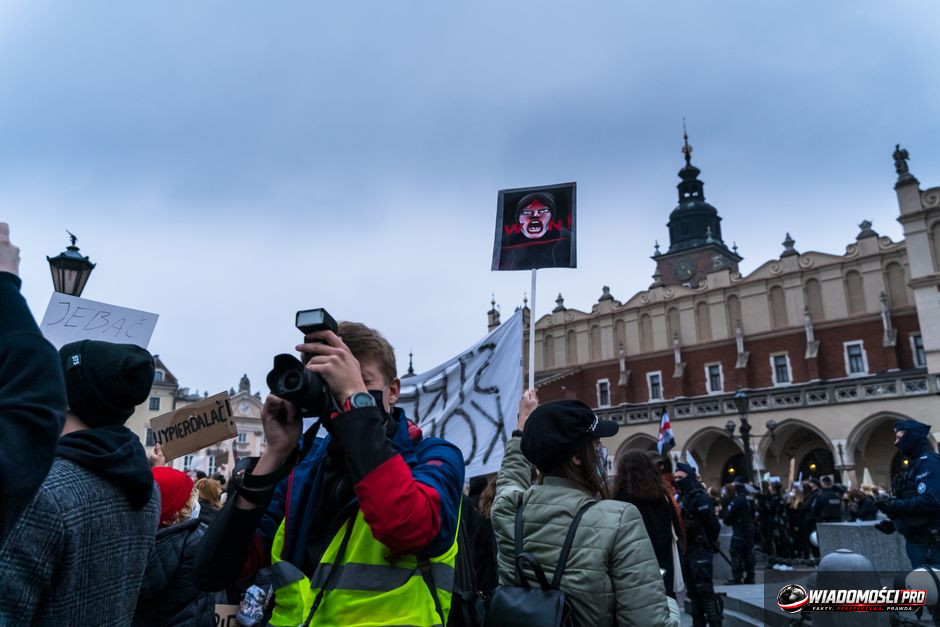
The situation escalated rapidly. On July 7, 2026, open protests took place, which required the intervention of law enforcement against counter-protesters. The atmosphere grew tense, and disinformation about the illegal nature of the facility spread on social media, fueling prejudices that Dr. Karol Wilczyński described as a phenomenon that has been growing for years.
For the local community, the whole row was a test of strength in which facts lost to political messaging. The Krakow authorities finally put an end to the speculation, unequivocally declaring that there is no illegal mosque in the city. Reports of such a facility in the Podwawelskie housing estate turned out to be completely untrue. Nevertheless, the determination of the protesters remained unchanged – they announced that they would block any attempt to create a similar place in another location. This shows that even after the official debunking of rumors by the city hall, the political capital born from the fear of the "other" is too attractive for some circles to give up. It was thus demonstrated that this clash was not about building law, but about the ideological polarization of the district.
What was actually located in the Podwawelskie housing estate?
What was actually located in the Podwawelskie housing estate?
The Krakow authorities definitively put an end to speculation regarding an alleged illegal mosque in the city. In an official statement on July 11, 2026, the city hall clearly stated that no such facility is operating in Krakow. The matter, which inflamed the emotions of the residents of the Podwawelskie housing estate throughout July, turned out to be the result of growing prejudices, about which Dr. Karol Wilczyński and others had warned, pointing to the scale of the smear campaign on the internet.
The confusion around the Podwawelskie housing estate was fueled by media reports and political activity. As early as July 6, 2026, in the middle of a heated discussion, information appeared that the place used by Muslims for prayers was disappearing from that location anyway. This fact, however, did not calm the mood. The local community remained deeply divided, which resulted in a series of protests. Demonstrations, in which slogans about "opposition to cultural expansion" were shouted – as postulated by Piotr Bartosz – became a field for political clashes, in which even counter-protesters were reprimanded by law enforcement.
The Confederation used the topic as a symbol of the alleged Islamization of Poland, building a narrative of threat around the local premises. The reality, however, was much more mundane and devoid of the signs of illegal religious activity that had been warned about. Ultimately, when the dust settled after the protests, it became clear that the political exploitation of the fear of the unknown proved more important than verifying facts at the city hall. Krakow did not become a place of illegal worship, but it did become an arena where politics effectively turned an ordinary premises into a source of social conflict.
Official position of the Krakow authorities: the end of rumors
Official position of the Krakow authorities: the end of rumors
The Krakow city hall finally cut through the speculation that had been polarizing public opinion for the past few weeks. On July 11, 2026, the office issued an official statement in which it unequivocally debunked rumors about an alleged illegal mosque operating in the city. The city authorities made the matter clear, stating directly: "There is no such place in the city."
The firm declaration by officials was intended not only to correct false information but, above all, to extinguish social emotions. The atmosphere around the Podwawelskie housing estate became exceptionally thick in July, fueled by reports of alleged "Islamization" and organized protests. Officials concluded that silence in the face of spreading disinformation was an acceptance of the further escalation of tensions. The official denial was an attempt to return to facts in a public debate that was too often based on assumptions rather than verifiable findings.
From the perspective of the city hall, the matter is closed. The lack of confirmation of the existence of any religious facility of a Muslim nature in the questioned location exposed the scale of misunderstandings that had grown around ordinary meetings of residents. Although the political exploitation of this thread brought measurable publicity to the organizers of the protests, the administrative reality turned out to be mundane. There is simply no underground mosque in the city, the presence of which was attempted to be proven on social media. This is a lesson in how quickly unverified rumors can become fuel for local conflicts, forcing officials to intervene in matters that, under normal conditions, would not require any explanation at all.
Sociological background of the smear campaign: expert opinion
Sociological background of the smear campaign: expert opinion
The situation around the non-existent facility in the Podwawelskie housing estate was not an isolated incident, but another stage in the escalation of social anxiety in Krakow. Experts have no doubt that behind the heated emotions of the residents lie deeper, systemic problems that go far beyond the issue of the mosque's location itself. In an analysis for Radio Krakow on July 1, 2026, Dr. Karol Wilczyński makes a diagnosis: prejudices against Muslims in Krakow did not appear in a vacuum; they have been growing for years.
The online smear campaign that has flooded Krakow discussion groups in recent weeks is a phenomenon independent of actual facts or the physical presence of any religious facility. The mechanism is simple and repeatable: fear of the "other" becomes fuel for political agitators who can turn a rumor into real street mobilization.
It is worth looking at the dynamics of this phenomenon through the prism of specific conclusions drawn from sociological observations:
- The online smear campaign is diagnosed by specialists as a systemic phenomenon that functions independently of the actual existence or non-existence of religious facilities in the urban fabric.
- Prejudices against Muslims, as pointed out by Dr. Karol Wilczyński, are not a new phenomenon, but a process with long-term dynamics that only finds an outlet in such incidents.
- The rise in social tensions is actively used by certain political circles as a tool to polarize the electorate, which effectively prevents a substantive discussion on the needs of minorities.
In practice, this means that even the official denial of the Krakow authorities, confirming the absence of an illegal mosque, does not calm the emotions. It serves only as another argument in an ongoing worldview conflict, in which facts lose to the need to build an enemy.
What this means for you
The case of the Krakow "mosque" shows how easy it is in the age of social media to transform a local ambiguity into a nationwide political topic. Politicians building capital on fear gain from this, residents exposed to unnecessary conflicts lose, and the actual situation of religious minorities takes a back seat.
Questions and answers
Is there any illegal mosque in Krakow?
No, the city authorities have officially confirmed that there is no facility in Krakow that could be considered an illegal mosque.
Why were there protests in the Podwawelskie housing estate?
The protests were triggered by reports of alleged "cultural expansion" and the presence of a Muslim place of prayer, which, however, did not have the status of a mosque and was to be liquidated anyway.
Who most publicized the topic of the alleged mosque?
The topic was actively taken up by circles associated with the Confederation and activists such as Piotr Bartosz.
Sources
- Confederation scares with an illegal mosque and the Islamization of Poland. We visit the Podwawelskie housing estate in Krakow - krakow.wyborcza.pl
- Online smear campaign against Muslims in Krakow. Dr. Karol Wilczyński: prejudices have been growing for years - Radio Krakow
- Protest against "mosque" in Krakow. Counter-protesters reprimanded - WP Wiadomości
- There will be no mosque in the Podwawelskie housing estate. There will be protests at every other location - KRKnews
- Krakow authorities cut off rumors about an illegal mosque. "There is no such place in the city" - krakow.wyborcza.pl
- Piotr Bartosz: "No to cultural expansion". A protest against the mosque location took place in Krakow - KRKnews
- Protest against the mosque in the Podwawelskie housing estate. Muslim place of prayer is disappearing anyway - KRKnews

Komentarze (0)
Ładowanie komentarzy...