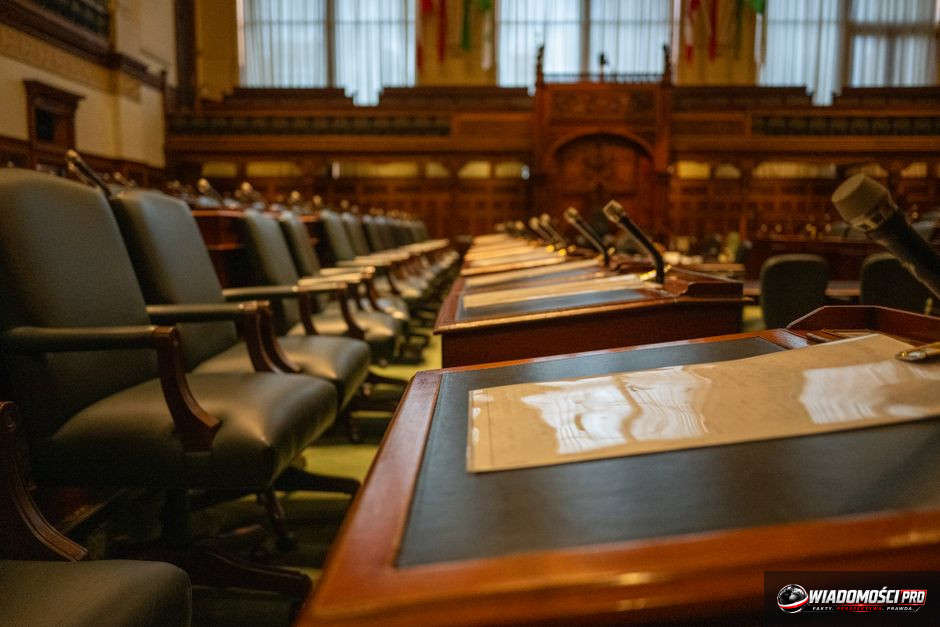
The sum of 2.5 million PLN for investigative committees was spent mainly on high salaries for advisors and administrative support, generating costs reaching hundreds of thousands of PLN per month. These funds could have financed, for example, modern medical equipment or the retrofitting of educational facilities. Each month of work by parliamentary investigative teams is a concrete budgetary burden that forces taxpayers to ask questions about the efficiency of spending public money in the face of the state's real needs.
Where do the millions go? The cost structure of the committees
Expenditures on parliamentary investigative committees examining the 2015–2023 period reached the level of 2.5 million PLN. An analysis of the structure of these costs reveals that taxpayer money is not scattered across thousands of minor expenses, but concentrated in three main financial streams. The largest of these consists of salaries for external experts and advisors.
The structure of the 2.5 million PLN expenditure is as follows:
| Cost item | Estimated budget share | Scope description |
| :--- | :--- | :--- |
| Advisor fees | 1,500,000 PLN | Legal analyses, expert opinions, support during hearings |
| Administrative support | 700,000 PLN | Stenographer work, logistics, IT system support |
| Infrastructure and office | 300,000 PLN | Room security, administration, fixed office costs |
External experts, whose legal knowledge is intended to support parliamentarians, form the cost foundation of every committee. It is their hourly rates, often not fully disclosed in public registers, that generate monthly bills counted in hundreds of thousands of PLN. Each month of a committee's work is not only the time of politicians, but above all the time of an army of lawyers who analyze thousands of pages of documentation.
Administrative support is the second pillar of expenses. This process includes the work of stenographers, who must secure every minute of witness testimony. Logistics—meaning the booking and adaptation of appropriate parliamentary rooms—as well as IT system support, are fixed costs. Regardless of whether a hearing brings breakthrough facts or merely repeats already known information, the expenditure meter runs continuously. The taxpayer pays for every hour of work by the support apparatus.
The third element is infrastructure. Maintaining committee offices, ensuring security, and providing technical support for hearings require constant funding from the Chancellery of the Sejm budget. These costs grow with each subsequent committee established in parliament. Summing up these expenses, after several months of work, we arrive at the amount of 2.5 million PLN. This is a sum that, in the state's budgetary realities, represents a tangible value that could be used in other sectors.
The bill for explanations: opportunity cost
2.5 million PLN is an amount that, in the healthcare sector, allows for the purchase of 5 to 10 modern "S" or "P" type ambulances. Each of them is equipped with advanced life-saving equipment, including defibrillators, ventilators, or automatic chest compression devices. In county hospitals, which often struggle with a chronic lack of diagnostic equipment, such an amount could finance a modern CT scanner or a thorough modernization of an emergency department.
In the area of education, 2.5 million PLN is a real opportunity to modernize physics and chemistry laboratories in a dozen or so primary schools. Instead of paying for hours of work by advisors analyzing documents from 2015–2023, the state could equip hundreds of classrooms with interactive whiteboards or invest in educational leveling programs for students from digitally excluded regions. This is a direct investment in human capital that brings benefits for decades.
This comparison shows a deep divide between political priorities and real social needs. Politicians from PiS and KO, shifting responsibility for the appointment of successive committees, rarely include a profit and loss account in the debate. The taxpayer finances a process that often ends only in political disputes instead of drawing real legal consequences. Each month of advisors' work means hundreds of thousands of PLN that permanently leave the state budget.
The current model of investigative committees is based on the assumption that the truth is priceless. However, the state economy refutes this approach. Every zloty spent on hearings that end only in political narrative is a zloty taken from public infrastructure. The financial efficiency of the committees takes a back seat to the need to build a political message. The question about the price of transparency is, therefore, a question about the limits of the taxpayer's tolerance for waste.
Spending such sums on mechanisms that do not end in verdicts, but only in final reports, undermines the justification for maintaining such an extensive advisory apparatus. If the goal of the committee is only to build an image, then the current cost is drastically too high. The taxpayer does not receive in return a tangible improvement in the country's legal security, but only another chapter of a political saga.
Is the price of transparency too high?
The discussion about the costs of investigative committees gained momentum after the publication of calculations regarding expenses incurred by the Chancellery of the Sejm. Analysis of data from 2024 points to significant doubts regarding the structure of these costs. The greatest controversy is sparked by the fact that a huge portion of the funds goes to external advisors. Is their role indispensable? From the perspective of parliamentary law, yes, but in the eyes of a citizen who expects the rationalization of state spending, such a financing model seems extremely inefficient.
Monthly costs on the order of hundreds of thousands of PLN make investigative committees the most expensive "working groups" in the Sejm structure. Citizens' skepticism is fully justified by the lack of tangible results from the work. If the work of advisors costs millions, and the final committee report is merely a summary of political divisions, then the sense of spending the money becomes illusory. State transparency is an undeniable value, but the question is whether there are not cheaper methods of control.
The current model, in which advisors are a key cost, resembles corporate legal services more than parliamentary oversight of the executive branch. The key risk is a decline in trust in state institutions. If a voter sees that millions are spent on explaining scandals while the healthcare or education system suffers from a chronic lack of funds, a sense of injustice arises. Politicians who defend committee spending often argue that the truth has no price. In the state economy, however, every zloty has its alternative. The choice between a political spectacle and infrastructure modernization is a matter of priorities, which currently seem to be set in a way that is not very favorable to the average taxpayer.
The administrative apparatus of the Sejm is extensive. Each new committee means more full-time positions, additional offices, legal support, and logistics. Unlike standard legislative work, investigative committees are ad hoc, which often leads to inflated costs by external entities servicing these processes. If the state does not start renegotiating rates for advisors or limit the number of external experts, the bills for subsequent committees will only grow.
Expensive investigative committees have become a permanent element of the political landscape. They are used as a tool in the fight for the voter, not as a mechanism for clarifying irregularities. What is for politicians a "necessary tool of control," for the citizen is simply another expense that does not translate into quality of life. The lack of cost control mechanisms means that committees can operate in a way that is almost budgetarily unlimited.
What this means for you
As a taxpayer, you are financing not only the process of clarifying political matters but, above all, an extensive external support apparatus. The main risk is that the high costs of committees may lead to a decline in social trust in state institutions if voters do not feel the real effects of the committee's work in the form of improved governance standards. Money that could go to your hospital or school is currently being frozen in the bureaucratic-advisory Sejm machine.
In the current control system, there is no cost-efficiency mechanism. No one holds advisors accountable for whether their expertise actually helped clarify the matter or merely filled the space between hearings. This makes investigative committees a financial black hole where money disappears at a rate of hundreds of thousands of PLN per month. Until a system of salary caps or performance audits for advisor work is created, we will pay for processes whose effects are disproportionate to the costs.
This situation forces citizens to ask whether the state really must pay such a high price for what should be the standard work of law enforcement agencies. If committees become merely an extension of election campaigns, their funding should be subjected to stricter control. Every million spent in this way is a concrete loss for public services. One cannot ignore the fact that the state budget is a system of communicating vessels.
Spending public money requires responsibility. Currently, however, this responsibility is blurred between the Chancellery of the Sejm and individual committees. The lack of transparency regarding rates for external advisors raises justified suspicions as to the rationality of these expenditures. A citizen has the right to know why the cost of servicing one witness hearing reaches such a high level and what exactly makes up these tens of thousands of PLN.
Instead of building more committees that only generate costs, parliament could focus on strengthening institutions that already exist and have a statutory duty to clarify scandals. The Prosecutor's Office, the Supreme Audit Office, or the Central Anti-Corruption Bureau are bodies that have the appropriate substantive background. Duplicating these functions through investigative committees is not only expensive but also inefficient from a systemic point of view.
Modern politics requires increasing attentiveness from citizens. Financing investigative committees is one of those areas where one can save without harm to the state. It is enough to introduce rigorous rules for selecting advisors and transparent rates for their work. Only in this way can one restore faith that every zloty of our taxes is spent with the public interest in mind, and not for political gain.
Questions and answers
Why do investigative committees cost so much?
The main cost is high salaries for specialized legal advisors and experts, whose work is necessary to analyze complex documents, as well as the administrative support of the entire parliamentary apparatus, including stenographers and logistics.
Is spending 2.5 million PLN on committees a record?
Expenditures on investigative committees in recent years have reached high levels (hundreds of thousands per month), which makes them an expensive tool. Although historically there have been even more expensive processes, the current scale of expenditure in a short time is a significant burden on the Chancellery of the Sejm budget.
What could this 2.5 million PLN be spent on instead of committees?
This amount could finance the purchase of modern medical equipment, e.g., diagnostic apparatus for county hospitals, or the thorough retrofitting of a dozen or so laboratories in educational facilities, which would bring direct benefits to citizens.
Are advisors necessary in committee work?
From a formal point of view, substantive support is necessary due to the legal complexity of the cases being investigated, however, the scale of involvement of external firms and experts sparks controversy in the context of the costs borne by the state budget.
What happens to the money when a committee finishes its work?
Expenses for the committee are settled within the budget of the Chancellery of the Sejm. Funds that were not used return to the central budget, however, usually the budget for the committee is fully utilized during its operation.
Who controls the expenses of investigative committees?
Expenses are part of the Chancellery of the Sejm budget, which means they are subject to general rules for accounting for public funds, however, there is a lack of a specific, external cost-efficiency audit that would assess whether the work of advisors brings proportional benefits.
Is there a way to lower costs?
Experts suggest introducing salary caps for external advisors, renegotiating market rates, and limiting the number of people involved in servicing each committee, which could bring savings of a dozen or so percent of the budget.
Why are advisors a key cost?
Modern investigative committees examine cases of a legally and financially complex nature, which requires hiring specialists from outside, whose market rates exceed administrative or logistical costs, thus becoming the main factor influencing the final amount of expenses.
Does public opinion have an influence on these expenses?
Social pressure can force politicians to be more transparent regarding the spending of funds, but in the current system, it is parliament that decides on the budget of each committee, often without taking into account the voice of voters on the issue of spending priorities.
What is the main goal of the advisors' work?
Advisors are tasked with providing parliamentarians with expert knowledge necessary to analyze evidence, prepare questions for witnesses, and edit final reports, which is intended to ensure the substantive nature of the hearings.
Do investigative committees always have to use external advisors?
From the point of view of the law, committees have the right to use external support, which, given the current complexity of cases, is standard, but theoretically, there is a possibility of relying solely on the resources of the Chancellery of the Sejm and the Sejm Analysis Office, which would be significantly cheaper.
What does the lack of a cost-efficiency mechanism mean?
It means that no one verifies whether the financial outlay on the work of experts is adequate to the results obtained in the form of evidence, which allows for unlimited spending of funds on activities with low substantive value.
Is 2.5 million PLN a fixed expense for the state budget?
No, it is an ad hoc expense dependent on the number and duration of investigative committees, which means that in years when many committees are appointed, the budget burden grows, while in periods of parliamentary calm, these expenses disappear.
Does every committee generate the same costs?
No, costs depend on the scope of cases, the number of witnesses, and the duration of work, which is why one committee may cost hundreds of thousands, and another, more complex one, may consume millions of PLN.
Are advisors paid for every month of work?
Yes, advisors usually receive remuneration for every month of work on a committee, which means that extending the work of a committee is directly correlated with an increase in costs borne by taxpayers.
What are the risks to social trust?
If citizens perceive a divide between spending millions on politics and a lack of funds for basic services, trust in state institutions drops drastically, which can lead to the alienation of voters from democratic processes.
Are there alternatives to investigative committees?
Yes, the oversight function can be performed by existing state bodies that have the appropriate powers and resources, which would be a more financially optimal solution than appointing ad hoc committees.
Who mainly benefits from the existence of investigative committees?
From a political perspective, the parties forming the committees benefit, gaining a tool for building a narrative, while from a financial perspective, consulting firms and experts hired to service these processes benefit.
Can budget limits be introduced for committees?
Yes, introducing statutory spending limits for each committee could force parliamentarians to have greater financial discipline and better work planning, which would limit the phenomenon of uncontrolled cost growth.
What is the biggest weakness of the committees?
The biggest weakness is the lack of real tools for enforcing accountability for waste and the fact that committees often play the role of political theater, not a real tool of justice.
Sources
- How much did parliamentary investigative committees cost? We know the amount - Wiadomości Onet
- How much are we paying for the work of three investigative committees? Advisors cost the most - Rzeczpospolita
- Our expensive investigative committees. Monthly costs run into hundreds of thousands of PLN - Bankier.pl
- We are paying a fortune for PiS and KO investigative committees. Calculations are in - Business Insider Polska
Komentarze (0)
Ładowanie komentarzy...