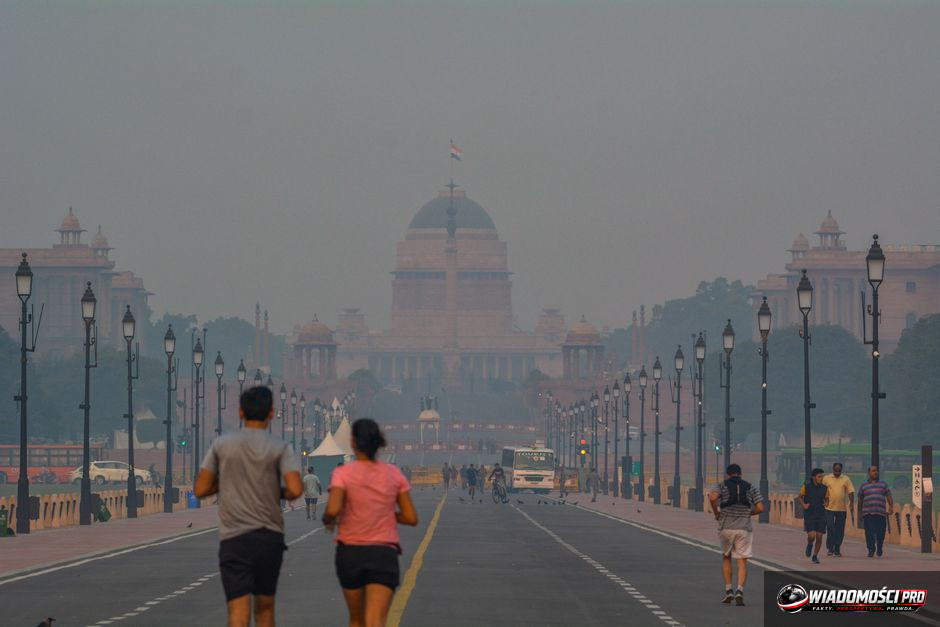
According to the 2023 IQAir report, out of 99 cities in Asia with the worst air quality, 83 are located in India. This concentration of pollution in one region is the result of decades of intensive industrialization that has not been balanced by adequate environmental standards. For the residents of Indian metropolises, smog is not a seasonal phenomenon, but a constant element of existence that significantly limits the length and quality of life for future generations.
The mechanism of the Indian disaster
Systemic failure in air quality management in India stems from several overlapping factors. The dominance of coal in the energy mix, heavy traffic in overcrowded cities, and the burning of agricultural waste in the suburbs create a mixture that, during windless weather, turns urban areas into aerosol traps. Local authorities have repeatedly announced plans to modernize transport and industrial infrastructure, but the pace of these changes remains far behind the dynamics of economic growth.
Companies operating on the subcontinent often choose to minimize operating costs at the expense of installing exhaust filtration systems. The lack of rigorous enforcement of environmental regulations means that PM2.5 and PM10 particulate matter emissions exceed WHO standards many times over. Residents of Delhi or Mumbai live in conditions where the concentration of pollutants in the air repeatedly exceeds permissible safety limits. This translates into a drastic increase in respiratory diseases, with asthma at the forefront.
European turning point: Krakow in the shadow of Asian records
For years, the view prevailed that the problem of extreme air pollution concerned only developing countries. This thesis collapsed on January 20, 2026, when Krakow, according to data cited by iMagazine, ranked 6th in the world ranking of the most polluted cities. This phenomenon showed that even European centers with a long-established urban tradition are not immune to the accumulation of harmful substances if a combination of meteorological conditions and local emissions reaches a critical point.
In the case of Krakow, the problem was intensified by geographical factors. Its location in a basin favors temperature inversion, which traps pollutants near the ground. Although extensive measures have been taken in Poland in recent years to eliminate so-called "smokers" (old coal stoves), the case from January 2026 proved that local stove replacements are only one piece of the puzzle. In the face of extreme weather events, even modern heating systems may prove insufficient if neighboring municipalities or regions do not pursue a coherent emission policy.
This event revised the European approach to air protection. Krakow did not suddenly become the most polluted city in the world permanently, but its presence in this ranking signaled that the boundary between the countries of the Global South and the northern hemisphere has blurred in an ecological context. Every resident of Poland should treat this signal as a warning against trivializing daily air quality sensor readings.
Health in the shadow of asthma: The price of breathing
The relationship between air quality and respiratory capacity is direct and undeniable. IQAir data from August 10, 2026, published in a report on the three worst cities for asthmatics, points to an alarming correlation between high concentrations of dust and the need for hospitalization of people with respiratory diseases. In many metropolises, asthma has become a lifestyle disease with an environmental basis.
Patients suffering from chronic lung diseases in cities with high levels of smog face the necessity of completely changing their lifestyle. On days when AQI indicators exceed safe levels, any outdoor activity becomes a burden on the body. In extreme cases, residents decide to purchase professional masks with HEPA filters, which become an essential piece of personal equipment. This problem particularly affects children and the elderly, whose immune systems are least efficient in dealing with toxins.
Healthcare systems in countries affected by this crisis are facing a massive financial burden. The costs of treating respiratory complications, absenteeism from work, and loss of productivity by patients outweigh the profits from the uncontrolled development of heavy industry. This is a vicious cycle in which a polluted environment generates expenses that could have been invested in clean energy.
Rankings 2024–2026: A lasting trend
Analysis of data from 2024–2026 indicates a lack of improvement in key urban centers. The IQAir report from June 2, 2025, listing the 5 most polluted large cities in the world, confirms that structural problems with exhaust and dust emissions remain unresolved. The same agglomerations appear regularly in these lists, which proves the lack of effectiveness of the remedial actions taken so far.
For an outside observer, these data are a stark record of the failure of environmental policies. Unlike short-term incidents, the presence of cities in IQAir rankings for three years in a row means that air quality has become a permanent state there, not an exceptional one. The lack of systemic action means that every subsequent winter or windless period brings the same health consequences for millions of people.
It is worth noting the role of technology in monitoring. Thanks to a dense network of IoT sensors, smog data is now more precise than ever before. This allows residents to make informed decisions about limiting exposure to harmful factors. Access to real-time data is the only weapon citizens have in the face of a lack of transparency in state administration actions.
How to protect health in Polish conditions?
Knowledge about air quality should translate into concrete actions in the daily life of every resident, including in Poland. The first step is to use reliable data sources. IQAir applications or official communiqués from the Chief Inspectorate for Environmental Protection allow for monitoring the concentration levels of PM2.5 and PM10 dust in the immediate vicinity.
On days with high concentrations of pollutants, the basic principle of health protection is to avoid physical activity in open spaces. Running or cycling in smog paradoxically harms more than a lack of exercise, because during exertion we inhale a much larger volume of toxic air, which penetrates deeper into the pulmonary alveoli. It is worth considering installing air purifiers with HEPA filters in homes and offices. These devices are effective in removing suspended particles, which is confirmed by numerous laboratory tests.
People who are particularly vulnerable, including asthmatics and allergy sufferers, should consider using FFP2 or FFP3 class anti-smog masks during periods when standards are exceeded. Ordinary surgical masks do not provide protection against suspended dust. It is also worth taking care to seal windows in apartments and avoid airing rooms during rush hours, when car exhaust emissions are highest.
Ultimately, the fight against smog requires commitment at the local level. Participation in public consultations regarding spatial development plans or supporting initiatives to replace heat sources are actions that realistically affect air quality in the long term. The awareness that air knows no administrative boundaries should lead to pressure on local authorities to tighten inter-municipal cooperation in the field of combating emissions.
Questions and answers
Is India the most polluted country in the world?
The 2023 IQAir report indicates that 83 out of 99 cities in Asia with the worst air quality are located in India, making this country a leader in infamous pollution statistics.
How does the situation in Poland look against the global background?
Poland, specifically Krakow, ranked 6th in the ranking of the most polluted cities in the world in January 2026, which was a signal that the problem also affects highly developed European countries.
Why is smog so dangerous?
Polluted air is a direct cause of respiratory problems, including asthma, as confirmed by IQAir data from August 2026. PM2.5 dust particles penetrate the bloodstream, causing chronic inflammation.
What are the most effective methods of protection against smog at home?
The most effective method is to use air purifiers with certified HEPA filters and monitor air quality before opening windows.
Was Krakow permanently the most polluted city in 2026?
No, Krakow's position in January 2026 was the result of a accumulation of unfavorable weather conditions and emissions, which does not mean that this situation persists throughout the year. However, it is a warning for European cities with terrain that favors inversion.


Komentarze (0)
Ładowanie komentarzy...