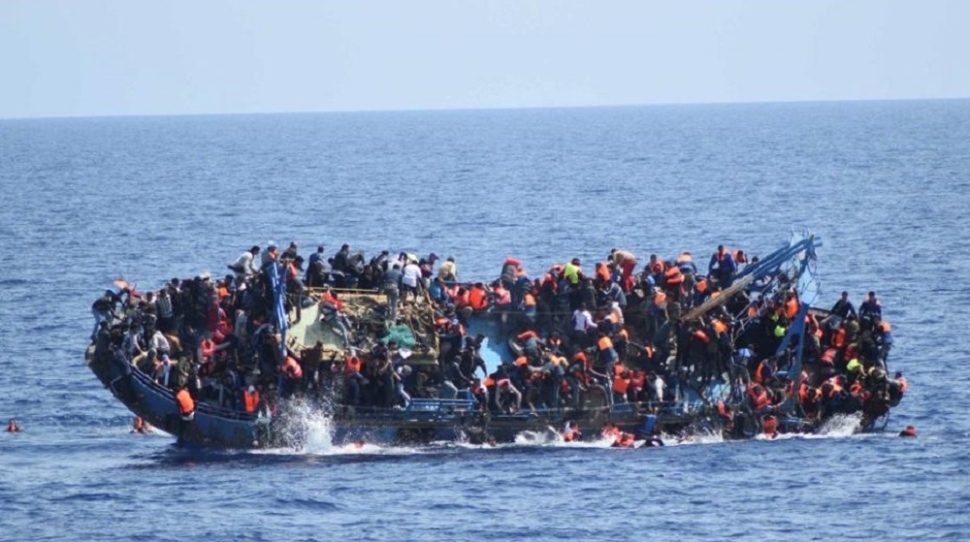
In 2024, 46.8 thousand illegal migrants reached the Canary Islands, and this problem is currently identified by Spaniards as the greatest challenge for the country. This massive wave of arrivals has led to the paralysis of local administration, forcing Madrid to enter into desperate negotiations with Brussels regarding the redistribution of asylum seekers. This situation has become the seed of a political conflict between the government and the regional authorities of the archipelago.
Record influx: Canary Islands in the heat of the crisis
The Canary Islands, traditionally associated with tourism, became the main transit point on the Atlantic migration route last year. The archipelago received almost 47 thousand people, which is a burden exceeding the capacity of the island's infrastructure. Hospitals, reception centers, and social services are working in emergency mode. Fernando Clavijo, President of the Canary Islands, has repeatedly appealed to Prime Minister Pedro Sánchez for urgent financial and logistical support, arguing that the islands cannot manage such a huge scale of arrivals on their own.
The Pact on Migration and Asylum, which the European Union has been working on, was supposed to be a remedy for similar situations, offering so-called voluntary solidarity. In practice, this mechanism is failing. EU member states show no willingness to take in migrants from the Spanish coast, fearing a rise in anti-immigrant sentiment within their own societies. As a result, the burden of supporting thousands of people falls on regional budgets, which causes budgetary tensions.
The costs of maintaining unaccompanied minor migrants, whose numbers in the Canaries have reached a level unseen in previous decades, are draining funds intended for education and healthcare for residents. This is not a temporary issue. This is a permanent process of demographic and economic restructuring of the region. Local authorities point out that without binding decisions at the European level, the situation in Gran Canaria or Lanzarote will lead to the total destabilization of the labor market and public services. Madrid is trying to negotiate changes to the law on foreigners, but the lack of consensus in parliament means that every attempt at a systemic solution hits a dead end.
Social boiling point: Immigration as the number one problem
In polls conducted in 2024, Spaniards unequivocally point to illegal immigration as the main source of social anxiety. It has overtaken issues of unemployment and inflation, which is a warning signal for the political class. The change in mood results from the direct collision of citizens with the realities of the crisis. In towns such as Arguineguín, where temporary camps have become part of the landscape, residents openly oppose further admissions of people, fearing for their safety and the quality of public services.
Political polarization on this issue has reached a critical point. The People's Party (PP) accuses the Sánchez government of a lack of control over the borders and of being too submissive toward the third countries from which the boats depart. In turn, the ruling coalition defends itself, claiming that the problem is global in nature and requires European solidarity, not just police actions. This debate is no longer just about election slogans. It concerns the real quality of life in Spanish border regions.
The economic consequences are felt in the tourism sector, which is the foundation of the archipelago's GDP. Concerns about the image of the islands as a safe place for vacation are affecting the mood of entrepreneurs. Hotel and restaurant owners fear that the prolonged crisis will discourage tourists from Western Europe, which would be a final blow to the local economy. Society demands specifics: secure borders, acceleration of deportation procedures for people without the right to asylum, and real support from other countries in the community.
Borders under fire: The role of Morocco and incidents in Ceuta
Relations with Morocco constitute the axis of Spanish migration policy. Rabat has for years played the role of "guardian" of Europe's southern flank, but it uses this position to exert pressure on Madrid and Brussels. When Spain needs support in curbing the influx of boats, Morocco expects political concessions – often regarding the issue of Western Sahara or economic cooperation. It is a system in which border security has become a currency in international relations.
Incidents in Ceuta show the scale of the organized practice. The arrest of 152 people in September 2024 for inciting an assault on the borders is just the tip of the iceberg. Smuggling networks operate with great precision, using social media to mobilize migrants. When one route is blocked by an increased presence of services, smugglers immediately direct the stream of people to a new place. The central Mediterranean route recorded a 35 percent drop in activity, but this effect is deceptive. People have simply switched to more dangerous boats sailing toward the Atlantic.
Cooperation with Frontex, the European border protection agency, is being intensified, but legal and political limitations mean that the agency does not have real agency within Morocco's territorial waters. Spain is dependent on the goodwill of Moroccan services. This dependence is the greatest strategic risk to the country's security. If Rabat decides to loosen control, a wave of migrants will immediately hit the Spanish coasts, which in the current political situation within the EU could trigger uncontrolled chain reactions.
Perspectives for the future: Will the EU manage the chaos?
The question about the future of Spanish borders finds no answer in diplomatic communiqués from Brussels. The Pact on Migration and Asylum, despite loud announcements, does not provide for the mandatory relocation of migrants, which makes it an insufficient tool in the eyes of Madrid. Spain remains trapped by its geographical location. As a country of first contact, it must process asylum applications that most member states prefer to avoid.
In 2024, almost 24 thousand people reached Europe on other routes, which, compared to nearly 47 thousand on the Canary Islands alone, shows the disproportion in the burden on Spain compared to the rest of the community. This is not a "European problem," it is a Spanish problem that is being ignored by partners from the north of the continent. If the Union does not develop a mechanism for the rapid deportation of people whose applications have been rejected, the pressure on Spain's social systems will only grow.
The catch in this puzzle remains the reluctance of voters in countries such as Germany or France to accept migrants from the south. Prime Minister Sánchez must balance loyalty to EU structures with the demands of his own society, which is increasingly skeptical. The lack of agreement on this matter means a further escalation of tensions. The situation on the islands is a test of the European Union's cohesion. So far, this test is ending in failure, and the residents of the archipelago remain alone in their daily struggle with the consequences of a migration policy that does not work.
For the reader, this means one thing: in the coming months, one should expect an intensification of political rhetoric in Spain. We can expect attempts to build new reception centers on the mainland, which will trigger protests from local communities. Every case of a mass influx will be used by the opposition to attack the ruling coalition, which will lead to decision-making paralysis in Madrid. It is a vicious circle in which every participant in the debate looks for someone to blame instead of focusing on solving the logistical and humanitarian problem.
What this means for you
The migration crisis in Spain is a signal that the existing models of cooperation between EU states and transit countries, such as Morocco, have exhausted their possibilities. For a European resident, this means that the issue of borders will dominate every election campaign for years to come. Dependence on third countries that treat migration instrumentally makes the stability of the southern border illusory. The economic consequences of this crisis, including the rising costs of maintaining social infrastructure, will sooner or later translate into taxes and public budgets across Europe.
Questions and answers
How many people reached the Canary Islands in 2024?
In 2024, 46.8 thousand illegal migrants reached the Canary Islands.
Why is immigration a key problem for Spaniards?
Due to the huge burden on local infrastructure, rising costs of public services, and a sense of lack of control over border security, which is confirmed by numerous polls.
What is Morocco's role in the current crisis?
Morocco acts as a border guard, but it uses this position to exert political pressure on Spain and the European Union, pursuing its own strategic goals.
What do the arrests in Ceuta mean?
They show the scale of organized crime and smuggling networks that are actively destabilizing the borders, using migration pressure as a tool of pressure.
Does the European Union really support Spain?
Despite the existing Pact on Migration and Asylum, real support in the form of redistribution of migrants is limited by the lack of agreement among member states, which leaves Spain largely alone with the problem.
Sources
- Canary Islands struggle with a large influx of migrants. Spain and the EU are looking for solutions - Rzeczpospolita
- Gran Canaria in the shadow of the migration crisis - InfoSecurity24
- Record number of illegal immigrants on the Spanish Canary Islands – 46.8 thousand arrived in 2024 - Kresy.pl
- Illegal immigration the most frequently indicated problem in Spain - GospodarkaMorska.pl
- Almost 24 thousand migrants have reached Europe since the beginning of the year. What is happening on the routes? - oko.press
- Morocco: "Guardian" of the EU looks after its own interests - DW.com
- Morocco: 152 people arrested for inciting illegal migration to Spanish Ceuta - PortalMorski
- Illegal migration to Europe via the central Mediterranean route fell by 35 percent - GospodarkaMorska.pl



Komentarze (0)
Ładowanie komentarzy...