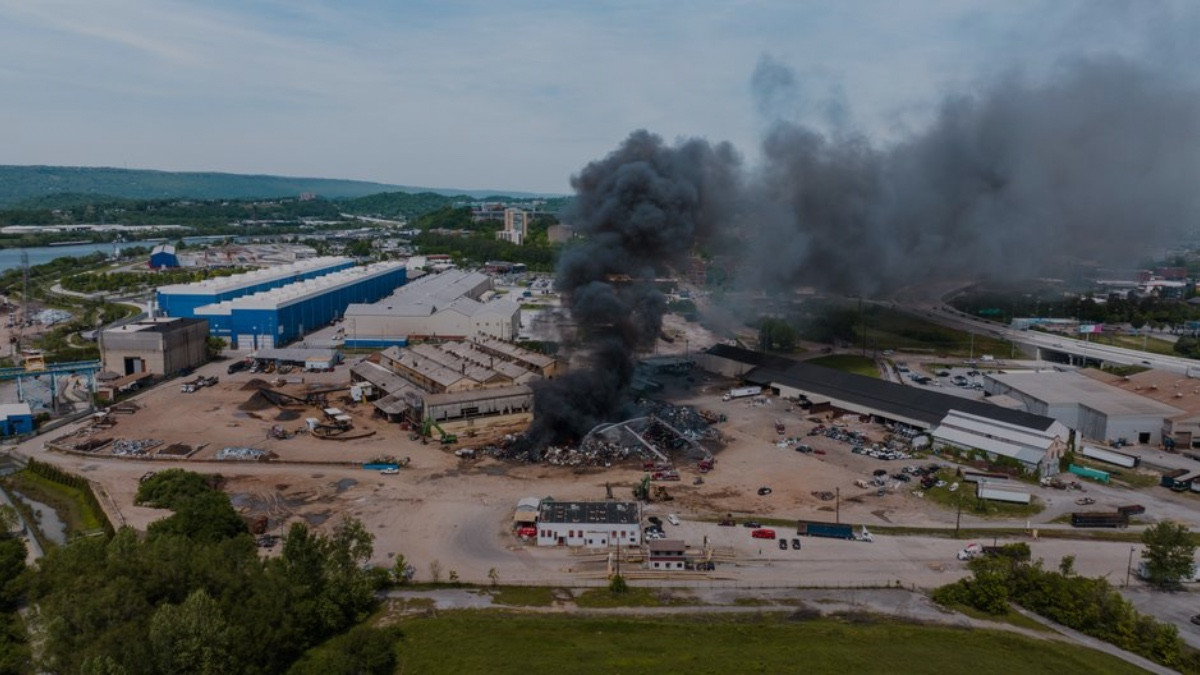
Drones struck, among other targets, a warehouse of the largest online retailer Wildberries and key fuel infrastructure, causing fires, fatalities, and damage to facilities located more than a thousand kilometers from Ukraine. As a result of the massive raids on July 18, 2026, civilians were killed, and losses in the e-commerce sector forced Wildberries management to raise logistics service prices by approximately 18 percent in the affected regions. The series of strikes, which lasted throughout the summer of 2026, exposed the deep inadequacy of Russian air defense in the face of integrated drone operations over distances exceeding a thousand kilometers.
Logistics under fire: attack on Wildberries warehouses
Operations conducted on July 18, 2026, permanently changed the way Russian supply chains function. The strike on the Wildberries warehouse was not an incident with limited reach, but a precise blow to the heart of Russian e-commerce. The company, which handles millions of transactions daily, lost operational liquidity in several key distribution centers. Structural damage that occurred during the attack on August 6, 2026, confirmed that the facades and load-bearing elements of warehouse complexes are vulnerable to kamikaze drone strikes.
For a company of this scale, any damage to a warehouse means the necessity of moving goods to alternative facilities, which extends the average delivery time of a package to the end customer by 4 to 7 business days. Consumers in the Moscow region and central Russia felt this directly in their wallets and in the waiting times for ordered products. Logistics costs have risen because the company had to increase spending on physical security for facilities and insurance for goods, which are no longer treated as safe assets in a zone threatened by air raids.
Wildberries facilities have become a symbol of the private sector's vulnerability to military action. The company's management has not publicly disclosed the exact amount of financial losses, but analysts point to the necessity of renegotiating contracts with thousands of external suppliers. Every interruption in the work of a transshipment terminal generates losses for micro-entrepreneurs who base their business on the reach of this platform. This situation forces investors to price in risk that was practically non-existent in Russia just a year ago.
Range of impact: strikes deep into Russia
The scale of drone operations has extended beyond border areas. Data from August 21, 2026, indicates drone activity in the European part of Russia, more than a thousand kilometers from the front line. This is a distance that poses a technical challenge for Russian air defense systems. Detecting small, low-flying objects requires a dense radar network, which is lacking deep within the country. Moscow and its immediate surroundings, previously considered a zone protected by advanced missile systems, have become the target of regular raids.
The chronology of attacks from July and August 2026 shows a clear escalation of activities:
- July 18: massive strike on fuel and warehouse infrastructure, resulting in fires at various points in the country.
- July 20: drones in the airspace of Moscow and the Moscow region, which forced authorities to issue an official statement regarding the safety of residents.
- August 21: confirmation of strikes at a distance of over a thousand kilometers from Ukraine, which definitively shifts the threat boundary.
Russian air defense, designed to repel large-scale missile attacks, is struggling with swarms of drones. These systems are expensive to maintain and ineffective against cheap unmanned units. Burning fuel terminals are proof that distance is no longer a protective barrier. Each subsequent wave of strikes exposes gaps in airspace monitoring, forcing the command to constantly move defense units from the front to the interior of the country.
Toll of victims and escalation of hostilities
Information from August 17, 2026, brought tragic confirmation: drone attacks are causing fatalities on both sides of the border. In Russia, the first confirmed deaths resulting from strikes occurred as early as July 18, 2026. The death of civilians as a result of attacks on warehouses or energy installations has changed the social perception of the conflict. The war has ceased to be a television event and has become a real threat to people in their workplaces or homes.
The growing number of wounded and killed has forced a reaction from the Kremlin. The official position, presented on August 24, 2026, announces a daily and nightly retaliatory campaign against Kyiv. This is an attempt to regain the strategic initiative and convince Russian society that the state is still in control of the situation. However, in practice, such actions only fuel the spiral of violence. The lack of political will for talks means that both sides are focusing on destroying the opponent's economic base.
The current situation in the labor market and the industrial sector is tense. Companies fearing further attacks are limiting investments in stationary infrastructure. Warehouse and refinery workers live in constant stress, and alarm systems have become an inseparable part of everyday life in many Russian regions. The economy, which was supposed to be resistant to sanctions and military action, is showing signs of paralysis resulting from uncertainty regarding the continuity of fuel and consumer goods supplies.
Retaliation strategy: Kremlin threats
On August 30, 2026, Moscow announced the start of a new phase of retaliatory actions for attacks on the fuel and energy sector. Energy infrastructure is the foundation of the Russian budget, and its damage translates into real declines in export revenues. The Kremlin treats these strikes as an act of aggression directly aimed at the country's economic sovereignty. The announcements from August 24, speaking of intense attacks on Kyiv every night, are intended to be a response to these losses.
However, retaliatory actions are not bringing the expected silencing of Ukrainian unit activity. Drones continue to penetrate defense systems, which calls into question the effectiveness of Russian warnings. Moscow finds itself in a difficult image situation. Every fire in a fuel terminal, every destroyed warehouse facade is a blow to the myth of an invincible power. The desperate rhetoric of the authorities will not replace a well-functioning anti-missile shield, but only raises the stakes in a conflict where civilians pay the main price.
The problem of the air defense system's leakage remains unresolved. The Russian command is unable to secure every strategic facility against drones with a range exceeding a thousand kilometers. The strategy of attacking the opponent's capital is intended primarily for propaganda purposes, aiming to calm internal moods. Meanwhile, the Russian economy is functioning in a state of permanent uncertainty, where every report of a drone attack triggers a chain reaction in the prices of raw materials and services.
What this means for you
The change in the nature of the conflict to a full-scale logistics war means an increase in the cost of living for the average observer. Russian trading companies, bearing huge expenses for the physical protection of their warehouses and insurance, pass these costs on to the end recipient. If you shop online, expect that the delivery of a package that once took one or two days may be extended to up to a week. Logistics companies are forced to bypass threatened zones, which complicates routes and raises freight prices by a dozen or so percent.
For the rest of the world, this is a signal that distance has ceased to be a guarantee of safety in modern armed conflicts. Drone technology has made civilian facilities legitimate military targets. If your company uses components produced in Russia or in areas subject to risk, you must count on the risk of supply chain disruption. Market predictability in 2026 is zero, and every strike on a warehouse or fuel terminal has an immediate impact on your operating costs.
Questions and answers
How far from Ukraine have the drones struck?
Drones have effectively hit targets located more than a thousand kilometers from the border with Ukraine, including facilities in the Moscow region.
Which sectors of the Russian economy have suffered the most?
The most serious effects were recorded in the fuel and energy sector and in the e-commerce industry, with particular emphasis on the infrastructure of the Wildberries company.
What is the Kremlin's reaction to these attacks?
The Kremlin has announced an official retaliation strategy, promising to intensify daily and nightly attacks on Kyiv in response to the destruction in the energy and logistics sectors.
Are the numbers of casualties known?
Confirmed fatalities in Russia were recorded on July 18, 2026. Data from August 17, 2026, indicate that human losses are occurring on both sides of the border, which testifies to the tragic scale of the escalation of hostilities.
Why are package deliveries taking longer?
The destruction of warehouses and the necessity of rebuilding supply chains in the face of attack risks force companies like Wildberries to move goods to safer locations, which extends order fulfillment time by 4 to 7 days.
Is Russia able to stop the drone attacks?
Russian air defense, designed to detect large missiles, shows glaring deficiencies in effectively detecting and neutralizing small unmanned units operating deep within the country.
What are the estimated financial losses in e-commerce?
The increase in logistics service costs in the affected regions is estimated at approximately 18 percent, which results from the necessity of increasing expenditures on security and property insurance.
Do attacks on fuel infrastructure affect prices?
Yes, attacks on the fuel and energy sector destabilize the raw materials market, affecting operating costs across the country and causing uncertainty among investors.
How is the strategy of both sides changing?
Both sides have moved to a fight to destroy the opponent's economic base, with Russia officially announcing a doctrine of daily retaliation, and Ukraine continuing attacks on the deep rear of Russian infrastructure.
Are the residents of Moscow safe?
Events from July and August 2026 show that the Moscow region has ceased to be a safe rear area, and residents must face regular air raid alerts.
Sources
- Russia has announced retaliation for attacks on its fuel and energy sector - Rzeczpospolita
- "We will attack Kyiv every day and every night". The Kremlin announces retaliation for Ukrainian drone attacks - Onet News
- Series of attacks over a thousand kilometers from Ukraine. Drones struck in the European part of Russia - Interia Events
- Fatalities in Russia and Ukraine. Drones struck on both sides of the border - Rzeczpospolita
- Drone attack on Wildberries warehouse in Russia. Damaged complex facade - Portal spożywczy
- Ukraine attacked fuel infrastructure. Fires broke out in Russia - PolsatNews.pl
- Hundreds of Ukrainian drones over Russia. Targets include the largest online store. There are dead - Gazeta
- Ukrainian drone attack on Moscow and the capital region. The Kremlin comments - Polish Press Agency SA

Komentarze (0)
Ładowanie komentarzy...