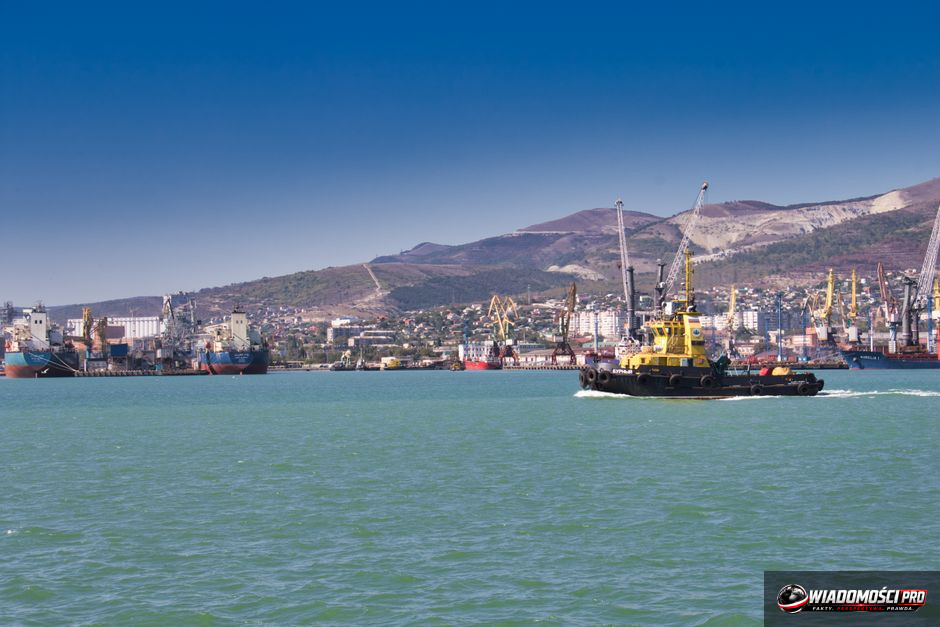
Yes, the August 2026 attack on the port of Novorossiysk was a precision strike that resulted in damage to key units of the Black Sea Fleet. This operation permanently disabled Kilo-class submarines, which is a direct blow to Russia's strike potential in this theater. This strike confirms Moscow's loss of the ability to safely base its own ships, even deep within territory previously considered an operational rear.
The events of August 2026 represent a logical continuation of the degradation process of Russian naval forces. An analysis of available data from 2022–2026 indicates Moscow's systematic withdrawal from positions that seemed unassailable only recently. The port of Novorossiysk, after Sevastopol ceased to be a safe deployment point, became the main hub for the Black Sea Fleet. The attack on August 12, 2026, showed that the Ukrainian command has the full capability to strike targets in this port using a combination of surface unmanned vessels and precision missiles.
Visual materials that appeared after August 13, 2026, document the condition of the damaged units. This is not a result of chance, but the effect of methodical reconnaissance and strike work. Russian anti-aircraft and anti-mine defense systems, which were supposed to protect port infrastructure, failed in the face of a drone swarm. For the Russian command, this means the necessity of redefining the entire base protection system. Ships that were supposed to dominate the Black Sea are becoming a burden that cannot be effectively hidden from an adversary possessing cheap but highly effective means of destruction.
The evolution of the threat to the Black Sea Fleet is visible in the chronology of events. As early as November 20, 2022, the first drone attacks on Novorossiysk signaled that the safety zone for Russian ships was shrinking drastically. It was a signal that Moscow either did not read or ignored, counting on the effectiveness of its defensive doctrine. Subsequent months, however, brought a series of strikes that exposed the weakness of the Russian navy.
In December 2025, a series of events occurred that shook the fleet's command structure. On December 15, 2025, Ukrainian special forces carried out an operation to blow up a Russian submarine. A day later, on December 16, 2025, a hit on another Kilo-class unit was confirmed. These two incidents in such a short time showed that Russian docks had ceased to be a sanctuary. Each subsequent unit of this type, hit or damaged, realistically reduces Russia's offensive potential. The Kilo-class is a submarine designed for stealth operations, but in the face of a threat in port, its advantages become useless.
April 2026 brought further confirmation of this trend. Reports from April 7, 2026, indicated successful strikes by surface drones, which directly affected the combat readiness of units stationed in Novorossiysk. The Russian fleet is not only losing ships, but above all, it is losing operational freedom. If a ship must remain in port to avoid detection on the open sea, and is attacked by drones while in port, it loses its reason for being as a tool of power projection.
Strategic analysis indicates that the current situation is the result of an asymmetry in warfare technology. Ukraine uses drones that are difficult to detect by traditional naval radars and surveillance systems. Russia, on the other hand, bases its defense on stationary installations and systems designed to fight large surface units or aircraft, not swarms of cheap, unmanned structures. This phenomenon creates a kind of stalemate from which Moscow cannot emerge without suffering further losses.
Novorossiysk serves as the last bastion of the rear. The loss of security in this port means for Russia the necessity of further withdrawing units deep into the eastern part of the Black Sea, which further limits their operational range. Submarines that cannot safely leave port are unable to conduct an effective naval blockade or missile operations. This means that the effectiveness of the Black Sea Fleet in the current conflict is decreasing every month.
The costs of maintaining the protection of the port in Novorossiysk are growing at a geometric rate. Every new defense system, every new anti-mine barrier, and every additional patrol require expenditures that could have been allocated to the modernization of the ships themselves. Instead of investing in the development of the fleet, Russia is investing in its survival in port docks. This is a defensive strategy that, in the long term, leads to the total marginalization of the navy in this theater of operations.
It is worth noting the psychological dimension of these operations. The Russian command is unable to guarantee the safety of its own crews and equipment in bases that are theoretically the most heavily guarded points in the region. Every successful drone attack on a submarine in port undermines morale and trust in fleet commanders. If the "unsinkable" pride of Russia becomes a target that can be hit using a simple surface construction, then the image of Russian naval power is undergoing permanent erosion.
The August 2026 strike is the culmination of a process that began at the end of 2022. Ukraine is consistently implementing a strategy of bleeding out Russian naval capabilities with minimal involvement of its own large units. This approach is extremely cost-effective. The destruction or serious damage of a Kilo-class ship is incomparably more expensive for Russia than the cost of producing and sending a swarm of drones by Ukraine.
For an outside observer, this situation is proof that naval warfare has undergone a transformation. Traditional concepts of dominance at sea, based on large battleships or destroyers, are giving way to unmanned technology. Russia, clinging to archaic command structures and outdated defense systems, is unable to keep pace with the changes. Each passing month brings new evidence that the Russian fleet in the Black Sea is no longer able to perform its primary function.
From a tactical perspective, the effectiveness of the attacks confirmed on August 12 and 13, 2026, indicates high precision in operational planning. The choice of targets is not accidental. The Ukrainian command strikes at those elements of Russian infrastructure and fleet that are the most difficult to replace. Submarines are strategic assets whose construction takes years, and their elimination in port is a blow to the Russian shipbuilding industry, the effects of which will be felt for a decade.
Russia faces a dilemma: leave the fleet in ports, where it is successively destroyed by drones, or send it to sea, where it will become a target for anti-ship missiles. Both options lead to the same result – the loss of control over the Black Sea. The August strike is confirmation that this process is irreversible. The Black Sea Fleet has become a hostage to its own helplessness, and the port of Novorossiysk – a place where its former power is slowly disappearing beneath the surface of the water.
For the reader following these events, one thing becomes clear: the Russian presence in the Black Sea has been reduced to a minimum, not by a great naval battle, but by persistent and precise attacks on critical infrastructure. This is a lesson that in a modern conflict, having the largest number of ships does not guarantee success if one cannot defend them against new types of threats.
Questions and answers
Was the August attack more effective than previous ones?
Yes, the scale of destruction confirmed on August 13, 2026, indicates precision hits on ship infrastructure, which permanently disabled Kilo-class units.
Which units are the most frequent targets of attacks?
The main targets are Kilo-class submarines, which have been regular victims of Ukrainian attacks since December 2025, losing operational capabilities.
Is the Russian fleet able to defend itself?
Russia is in a strategic stalemate; despite attempts to strengthen defenses, the port of Novorossiysk remains vulnerable to drone attacks, which forces the fleet into costly and ineffective point defense.
What does the loss of safe basing mean for the Black Sea Fleet?
It means that the Russian command is unable to conduct offensive operations in the Black Sea, as their ships become easy targets both in port and during attempts to patrol open waters.
Sources
- Ukrainian surface drones struck the Russian Black Sea Fleet again - Shipyard Portal
- Black Sea Fleet – symbol of Russia's fall - Defence24
- Polska Zbrojna - Polska Zbrojna
- Extraordinary footage from Novorossiysk. Ukraine launched a powerful attack - Onet News
- Hit, not sunk. New footage of the attacked "Warszawianka" - Center for Europe
- Serious blow to Russia. Black Sea Fleet ships hit - WP News
- Ukrainian special forces spectacularly blew up a Russian submarine (VIDEO) - GospodarkaMorska.pl
- Russian Black Sea Fleet in a stalemate. Drone attack on Novorossiysk - Defence24



Komentarze (0)
Ładowanie komentarzy...