Florida's 2023 law directly challenges a 2008 U.S. Supreme Court ruling, making the constitutionality of these sentences the subject of a sharp legal dispute. Currently, the state maintains these penalties, ignoring federal restrictions, which forces a wait for a final verdict from the U.S. Supreme Court. This situation poses a direct challenge to the supremacy of federal constitutional interpretation, forcing the judicial system to confront a statute that openly ignores standards of legal protection established two decades ago.
Mechanism of the legal conflict
The foundation of the current dispute is House Bill (HB) 1297, pushed through by the state legislature. This document restores the possibility of sentencing the death penalty for child rape. This action constitutes a deliberate break from the judicial line established in the case of Kennedy v. Louisiana. In those proceedings, federal judges ruled that the death penalty in cases where the victim did not die is contrary to the Eighth Amendment to the U.S. Constitution, which prohibits the use of cruel and unusual punishment.
Florida has made a precise political and legal calculation. Legislators assumed that the change in the composition of the Supreme Court in Washington created space for a redefinition of these limitations. The state judiciary began handing down death sentences, ignoring federal jurisprudence. This leads to a state of permanent tension between local law and the federal ban. In practice, this means that Florida is not only questioning the interpretation of paragraphs but is seeking to establish a new precedent that could permanently change the American legal landscape.
The Florida Supreme Court, in its recent rulings, has consistently upheld death sentences, completely ignoring the fact that they are in direct contradiction with a binding U.S. Supreme Court ruling. Such a stance puts defense attorneys for the convicted in a difficult position. Lawyers must prepare appeals based on a state where local courts ignore the national legal hierarchy. There are currently no official assurances regarding the date of a hearing before the federal Supreme Court, which would ultimately have to resolve this dispute. Readers must understand that the current sentences are suspended in a vacuum. Their execution depends on whether Washington deems state legislation an acceptable form of protecting minors or considers it a flagrant violation of the constitutional order.
Legacy of the Kennedy v. Louisiana case
In 2008, the ruling in Kennedy v. Louisiana seemed to close the debate regarding the limits of capital punishment. The Supreme Court ruled at the time that the death penalty for sexual offenses against children, if they do not result in the death of the victim, exceeds the limits of permissible punishment. The judges argued that the standards of a "civilized society" do not allow for such severe retribution. For fifteen years, this ruling served as an immovable barrier for all states that considered tightening criminal law in this regard.
Florida's current actions strike at this legacy. State legislators assumed that the eighteen-year time gap and changes in the composition of the U.S. Supreme Court judges give them a mandate to overturn that ban. This is an open confrontation. Florida is not trying to circumvent the law, but is directly declaring that the federal interpretation from 2008 is no longer adequate to the social realities of the 21st century. It is an attempt to force the judges in Washington to revise their own body of work.
The risk of this maneuver is enormous. If the Supreme Court maintains the 2008 line, all sentences issued under HB 1297 will become legally useless. Florida may be forced to re-sentence, which will generate huge costs for taxpayers and burden the state justice system. The lack of official data on the estimated costs of these potential revisions makes the debate surrounding the law largely speculative. It is only known that the state is acting in isolation, finding no imitators in other jurisdictions, which makes Florida a kind of testing ground for radical legal conservatism.
Political and social consequences
The decision to restore the death penalty for child rape does not stem solely from a concern for justice, but is an element of a broader political strategy. The state governor, along with the legislature, aims to show uncompromising stance toward sex offenders. In the face of growing social anger, such a stance builds political capital among conservative voters. This is a classic example of using criminal law as a tool in a worldview struggle, where federal supremacy becomes an obstacle that must be removed.
This strategy is based on several pillars:
- Utilizing social pressure that demands the highest possible penalty, ignoring constitutional limitations.
- Attempting to create a precedent that will force the U.S. Supreme Court to address this topic with a new, more conservative-friendly composition.
- Maintaining sentences in force to exert pressure on the federal judicial apparatus.
The lack of confirmation that other states plan to follow in Florida's footsteps suggests that this is a unique project. For the state's residents, it means functioning in a system where death sentences are handed down, but their execution remains uncertain. State law is in permanent conflict with the constitutional interpretation of the highest instance, which destabilizes the sense of legal security. Human rights defenders point out that such a situation is a dangerous precedent that could embolden other states to ignore federal guidelines in other areas, such as gun rights or reproductive issues.
Procedural impasse
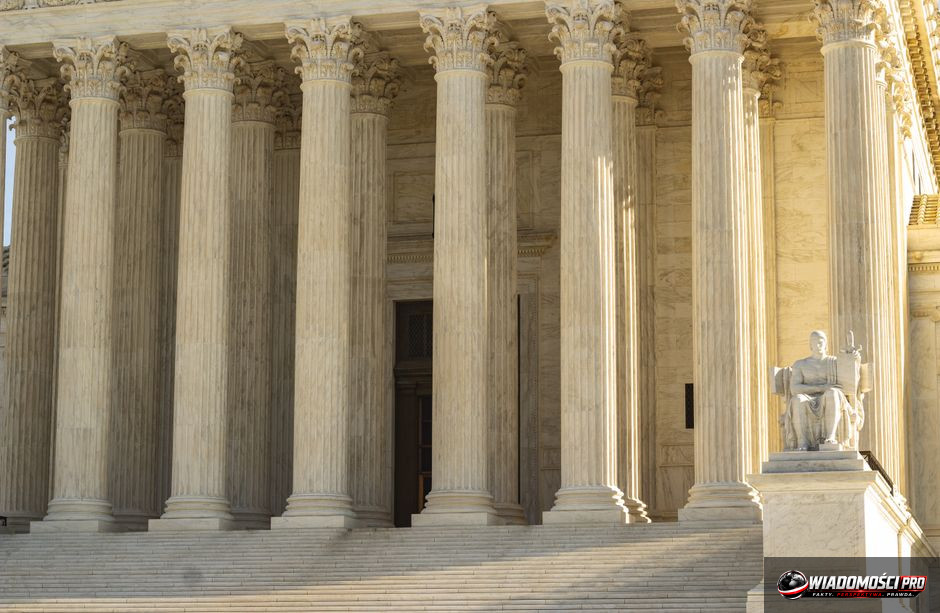
The state of Florida in 2023 is directly questioning the binding U.S. Supreme Court ruling from 2008. Governor Ron DeSantis and the local legislature have consciously challenged the federal interpretation of the law. They are counting on the current composition of judges in Washington to change the judicial line. At this moment, the state is keeping death sentences in force, completely ignoring the restrictions imposed by the Supreme Court nearly two decades ago. Such a strategy is a legal gamble. Observers are waiting for an appeal, which will inevitably reach the Supreme Court of the United States. It is in that building that it will be decided whether Florida has won a political bet on changing the law, or whether its actions will be deemed a flagrant violation of the constitutional order.
The fate of the convicted depends on the personal mathematics of the judicial composition. The possibility of changing the U.S. Supreme Court's judicial line is a decisive factor here. The conservative majority, including judges appointed in recent years, may want to revise the ruling in Kennedy v. Louisiana. However, if the court maintains the current line, Florida faces a series of costly sentence invalidations. At this moment, there is no official data on whether or when the Supreme Court will take up the case on its merits. Until then, the state remains in limbo, and executions remain a real, albeit legally risky, prospect.
What this means for you
The editorial board assesses that Florida is going all-in. If the U.S. Supreme Court does not intervene, the state will create a precedent that could destabilize the entire U.S. legal system regarding the punishment of sexual offenses. Conservative voters gain, human rights defenders lose, and the catch is the long-term appellate process, which could last for years. The real problem is not the penalty itself, but undermining the authority of the Supreme Court as the final arbiter. If state law can ignore federal rulings with impunity, the principle of constitutional supremacy becomes illusory.
It is worth noting that in the American legal system, state law often tries to get ahead of federal jurisprudence, but it rarely does so in such a direct way. Usually, states try to circumvent the law by creating loopholes in regulations. Florida, however, has chosen the path of head-on confrontation. This is a situation where one side must yield. Either Florida will withdraw from these regulations under federal pressure, or the federal Supreme Court will be forced to agree with the state, which would mean the formal death of the doctrine developed in 2008. Both paths carry unpredictable consequences for future criminal trials across the country.
Questions and answers
Is the death penalty for child rape currently being carried out in Florida?
Despite the upholding of sentences by the state court, appellate processes at the federal level are halting the actual execution of the sentences.
Why is Florida ignoring the 2008 ruling?
State authorities argue that the current composition of the U.S. Supreme Court is more conservative and may be ready to revise earlier rulings.
What if the U.S. Supreme Court does not take up the case?
This would de facto mean permission for the use of the death penalty for child rape at the state level, which would create legal inequality in the U.S., where standards of legal protection would depend on one's place of residence.
What are the chances of changing the 2008 ruling?
This is a subject of legal speculation. The conservative majority in the court gives hope to supporters of change, however, there are no official signals that the Supreme Court intends to address this topic in the near future.
Are other states planning similar steps?
It has not been confirmed that other states have decided on such a direct confrontation with federal jurisprudence in this regard. Florida remains alone in this action.
What impact does this have on the convicted?
The convicted are on death row, waiting for resolutions that could drag on for years. Their legal situation is uncertain, as it depends on decisions that will be made in Washington, not in the state capital.
Why was HB 1297 passed?
The law was a response to growing social expectations regarding stricter punishment for perpetrators of the most serious crimes against children and an attempt to test the limits of federal criminal law.
Who will gain and who will lose?
Politicians building their base on a tough approach to law gain, while human rights defenders and people whose sentences may be deemed unconstitutional lose, which will trigger the need for a long-term legal battle for justice.
What is Florida's constitutional status in this dispute?
This status is disputed. State law is in direct contradiction with a binding U.S. Supreme Court ruling, which puts the state in the position of an entity violating federal standards of legal protection.
Is there official data on the costs?
There is no official data that would clearly indicate the financial costs of the appellate process in this case, which makes a full economic assessment of Florida's actions difficult.
Is the Kennedy v. Louisiana case the only point of reference?
Yes, it is a key point of reference because it directly prohibits the death penalty for crimes where there was no loss of life, which is the essence of the current legal conflict.
What is next for the U.S. legal system?
The system is waiting for a resolution that will confirm or overturn the supremacy of federal law over state ambitions regarding the definition of cruel and unusual punishment.
Can we talk about a precedent?
Florida's action is attempting to create a precedent, but until the final decision of the U.S. Supreme Court, it remains only a state attempt to redefine criminal law.
Are executions certain?
No. Every attempt at execution based on this law will be challenged, making the actual carrying out of the sentence unlikely in the near future.
What is Florida's main argument?
The main argument is the state's right to protect its youngest citizens by all available means, regardless of federal restrictions from years ago.
What is missing in the current debate?
Above all, the official position of the U.S. Supreme Court and concrete data regarding the long-term legal consequences for perpetrators whose trials are currently suspended are missing.



Komentarze (0)
Ładowanie komentarzy...