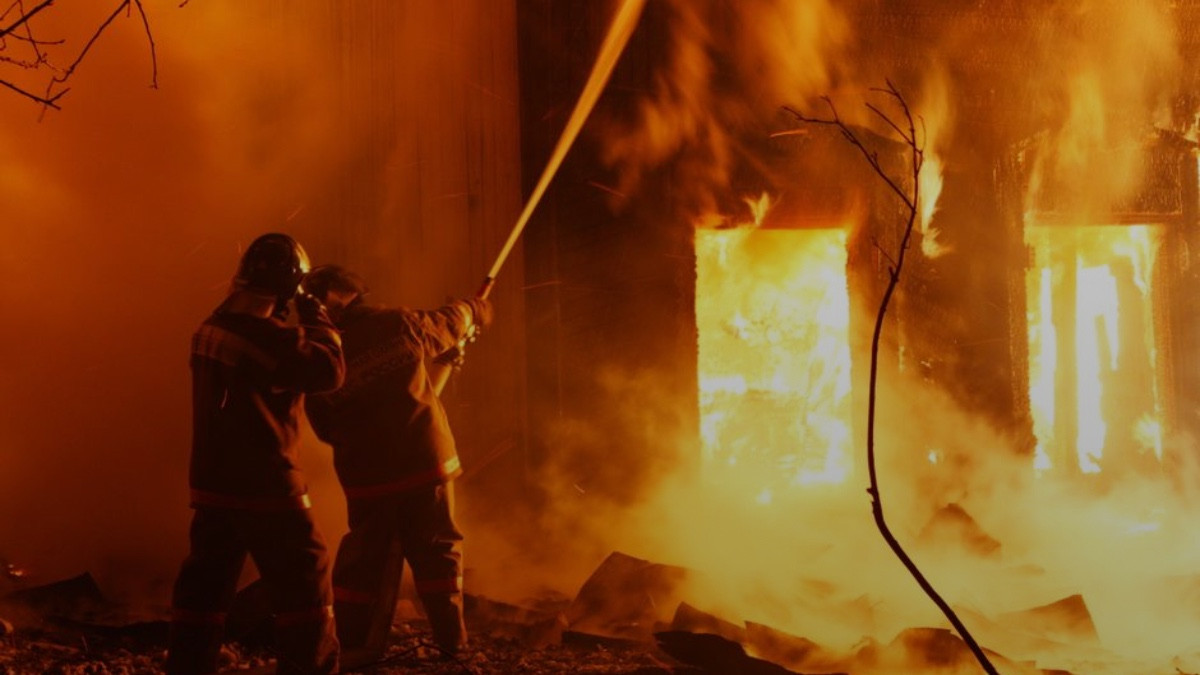
Services are investigating the thread of deliberate arson at facilities such as WB Electronics, not ruling out the involvement of foreign intelligence, although official confirmation of the participation of specific countries, including Ukraine, has not yet been presented. Investigators are analyzing the incident from August 31, 2026, as part of a broader diversionary operation aimed at critical infrastructure. Currently, links between the Polish fire and the thwarted sabotage attempt in Slovakia are being verified, which confirms the hypothesis of a coordinated attack on European unmanned system supply chains.
Mysterious fire at WB Electronics: Facts about the incident
On August 31, 2026, a fire occurred at the WB Electronics facilities. This company is a key supplier of solutions for the Polish army, including Warmate and FlyEye systems, which constitute the foundation of reconnaissance and precision strikes. Security services, including ABW units, secured the area immediately. According to our information, investigators have already ruled out the most trivial causes, such as electrical system failure or negligence in the production process. The focus has shifted to traces of accelerants found in storage zones.
WB Electronics has not yet published a detailed loss report, but unofficial data indicate the necessity of temporarily halting key assembly lines. In the defense industry, every day of downtime is not only a direct financial loss but, above all, a real risk of missing contract deadlines for the Ministry of National Defense. The scale of the incident rules out an accident. The fire broke out in a place where semi-finished products of strategic importance for the production of strike drones were stored.
The Slovak lead in the investigation
Events in Poland are being analyzed in close connection with an incident that took place five days earlier across the southern border. On August 26, 2026, Slovak security services detained three people planning to set fire to a drone factory. Information provided by RMF24 indicates that the perpetrators were well-prepared logistically and possessed materials necessary to initiate a fire in a way that makes it difficult to quickly detect the source of the blaze.
A comparison of the methodology of both attacks suggests that we are dealing with the same group or subcontractors using an identical operational manual. Slovak services have not yet revealed the identities of those detained, but it has been confirmed that their actions were aimed at immobilizing the production line. If the Polish investigation confirms an analogous modus operandi at the WB Electronics facilities, it will be proof of the existence of an organized diversionary network operating in Central Europe. Poland and Slovakia are currently the main hubs for the production of unmanned equipment for NATO's eastern flank, which makes them a natural target for hostile intelligence agencies trying to weaken our defense capabilities without triggering an open war.
Impact on the stock market and operational security of companies
The reaction of investors to the news of the fire was immediate, though suppressed by an information embargo imposed by the services. Shares of defense companies on the WSE reacted with declines, reflecting uncertainty regarding production continuity. The market fears not so much the material losses themselves, but the long-term costs: the necessity of increasing expenditures on physical security, cybersecurity, and audits, which must be conducted on an ongoing basis in facilities of this rank.
Every defense company in Poland is currently facing a new reality. Company boards have had to shift funds from technology development investments to perimeter security. WB Electronics, as an industry leader, sets the standards here, yet even their protection systems proved insufficient against sabotage-type actions. The cost of facility protection has risen by tens of percent over the last few weeks. Stock market investors are monitoring company announcements, looking for confirmation that security audits will not affect delays in the execution of key defense contracts. The lack of clear communication from the board only fuels speculation, which negatively affects market valuations.
Sabotage as a tool of hybrid warfare
Sabotage in drone factories is not a coincidence, but a calculated strategy. Eliminating the production of equipment that allows for precision targeting is more profitable for the adversary than attempting to destroy the finished product on the front line. The cost of recruiting a local contractor to set fire to a facility is many times lower than the cost of any missile system.
Often, people from the social margins or hired mercenaries who have no idea who they are working for are used for this. This method of so-called "hired hands" means that investigators lose months building a chain of connections that leads nowhere. The lack of hard evidence of a specific country's involvement does not mean that such a country is not behind the attack. In today's operational realities, attribution of an attack is almost impossible to carry out in a legally binding manner. This gives the perpetrators room to maneuver and a sense of impunity, which only encourages further actions. Each subsequent arson is a signal to the market and the military that the current infrastructure is unable to provide full protection to strategic facilities.
Security procedures in the defense industry
After the fire at WB Electronics, factory boards received guidelines that change the way facilities operate. The priority has become the total elimination of risk inside the facility. Rigorous verification procedures for suppliers, subcontractors, and external service employees have been introduced. Video monitoring supported by real-time image analytics has become the norm, not an option.
Special services require defense companies to isolate every production zone from the rest of the facility using automatic fire bulkheads and chemical detection systems. The state treats the drone industry as a front where a real battle for security is being fought. Companies that do not meet the new guidelines risk losing security certificates, which in practice means exclusion from tenders for military supplies. This is a huge burden on the financial balance sheets of smaller entities, which must now invest in protection systems that were considered an unnecessary luxury just two years ago.
Challenges for investigators: Why is the truth so hard to establish?
Investigating fires in defense facilities is a race against time. High temperatures destroy chemical traces of incendiary substances, and structural damage to halls often makes it impossible to precisely reconstruct the course of the event. Experts in fire chemistry must work in conditions where any disturbance of the fire site can destroy priceless evidence.
An additional problem is the exchange of information between countries. If the Polish investigation is to be effective, it must work closely with Slovakia and likely other NATO countries. Differences in regulations on the protection of classified information often block the rapid flow of data on suspects or attack methods. Every day of delay in exchanging information is time during which saboteurs can prepare the next blow. Efficient action requires not only advanced equipment but, above all, the political will to break down bureaucratic barriers between the services of different countries.
Editorial angle: What does this mean for the Polish industry?
These incidents are hitting the Polish defense industry at the moment of its greatest expansion. NATO's adversaries are gaining from this, while companies are losing, having to deal with production paralysis and rising protection costs. For the end customer, which is the military, this means a threat to the timeliness of deliveries of modern equipment. This situation calls into question existing infrastructure protection models, which proved effective in peacetime conditions but fail in the face of hybrid-type actions. Poland must develop a new doctrine for protecting strategic facilities before a series of incidents leads to a permanent reduction in the country's defense capabilities. It is not a question of "if," but "when" the next attack will occur.
Questions and answers
Has the fire at WB Electronics been officially recognized as arson?
The investigation is ongoing, and arson is one of the main hypotheses due to the nature of the event, the regional context, and the lack of other probable technical causes.
What connects the Polish fires with the situation in Slovakia?
Both countries are key hubs for drone production for Ukraine, which makes them strategic targets for groups conducting sabotage; services are analyzing the links between these events in terms of a coordinated diversionary campaign.
Is Ukraine's involvement in the sabotage confirmed?
No, this is one of the hypotheses being investigated by the services, which currently lacks hard evidence confirming authorship; official confirmation of the participation of specific countries, including Ukraine, has not yet been presented.
What steps have defense plants taken after the incidents?
Increased operational procedures have been implemented, access control and video monitoring have been tightened, and security audits have been conducted in accordance with state service guidelines, which generates additional operational costs.
Has the stock market felt these events?
Yes, investors are reacting to the risk of production paralysis and rising protection costs, which translates into volatility in the share prices of defense sector companies on the WSE.
Why is identifying the perpetrators so difficult?
Fire destroys physical evidence, and perpetrators often use methods that hinder attribution, which, combined with the need for international cooperation between the services of different countries, lengthens the investigative process.
The current situation in the Polish defense sector requires company boards not only to care about product quality but, above all, about the integrity of the production lines themselves. Investments in security systems have ceased to be an optional expense, becoming the foundation for the functioning of defense enterprises. In the face of the threat of sabotage, companies must operate in a state of heightened operational readiness, which means the necessity of continuous staff training in identifying suspicious behavior.
Special services indicate that the methods used by saboteurs are evolving. Instead of openly attacking infrastructure, the perpetrators choose methods aimed at causing chaos and uncertainty in the production process. This is a long-term strategy aimed at exhausting the financial resources of defense companies by forcing them to continuously invest in protection. If the industry does not develop effective prevention methods, every subsequent production hall could become a target.
The Polish government, aware of the threats, has increased funding for units responsible for protecting critical infrastructure, but the real responsibility rests with company boards. They must balance the need to maintain the pace of production with ensuring the safety of employees and equipment. This is a difficult task, requiring full transparency in communication with law enforcement agencies. This situation reminds us of the need to maintain the highest discipline in the circulation of classified information, which is crucial for the success of any intelligence operation.
For observers of the defense market, it is obvious that the current incidents are only the tip of the iceberg. This sector has become a testing ground for hybrid operations. The success of the saboteurs in Slovakia, even if it was stopped at the last moment, showed that there are gaps in protection systems that can be exploited. WB Electronics, as a market leader, has become a testing ground where the security measures that other companies must face are being tested.
There are many indications that in the coming months, we will witness further audits and inspections in production facilities across the country. The state cannot afford to lose production capacity in the area of unmanned systems, which have become a key element of modern warfare. Therefore, any, even the smallest, irregularity in security will be treated by the relevant authorities as gross negligence. Companies must be prepared for the fact that their operations will be under constant surveillance by services, which, although burdensome, is necessary in the face of the current threat.
In summary, the fight for the safety of drone factories is a fight to maintain a technological advantage on the battlefield. If the Polish defense industry does not learn from recent events, it risks not only losing contracts but, above all, losing the trust of the customer, which is the military. This trust is the most important capital of any company in the defense sector. Rebuilding this trust after the fire at WB Electronics will be a long and demanding process, but necessary for the stability of the entire state. In this game, there is no room for mistakes, and every subsequent failure in a factory will be analyzed through the prism of sabotage. The responsibility for ensuring security no longer rests only on the shoulders of the services, but on every person involved in the production process of modern military equipment. This is a new standard that we must face to survive as a key producer in Europe.



Komentarze (0)
Ładowanie komentarzy...