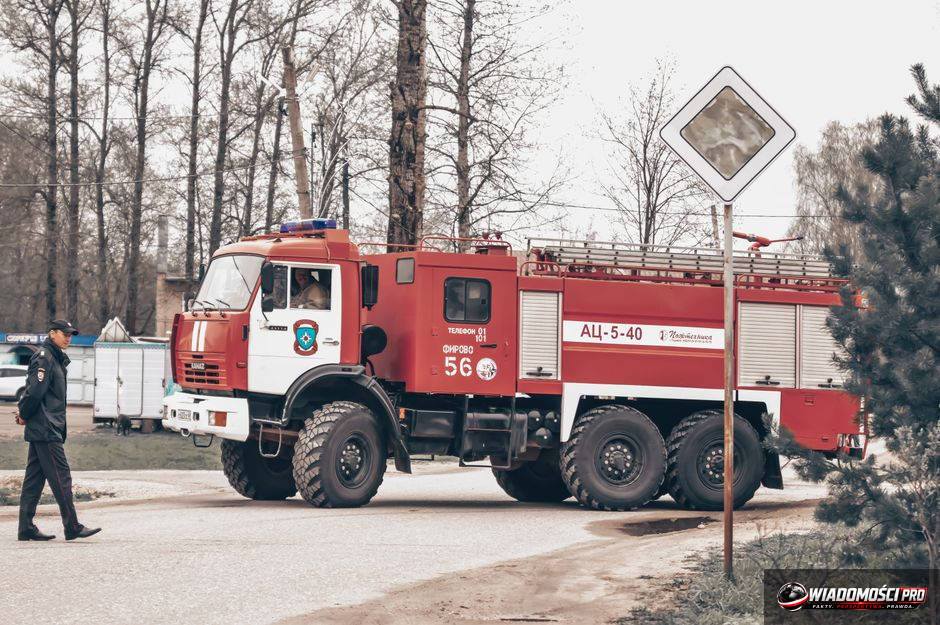
As a result of the explosion at a Moscow restaurant, three people were killed, but the status of General Alexander Chaiko remains a subject of intense media speculation. The incident took place on Sunday, August 2, 2026, at a venue located in the very center of the Russian capital. The detonation, which shook this part of the city, led to an immediate intervention by emergency services and the complete isolation of the area by special units of the Federal Security Service.
Course of the attack: A birthday trap in the heart of the capital
August 2, 2026, was supposed to be a day of celebration for General Alexander Chaiko, but the atmosphere at the venue drastically changed into a scene of investigative operations. The explosion interrupted a party that was intended to be private. Emergency services working at the scene confirmed a tragic toll: three people died on the spot. The force of the blast was so great that the destruction inside the restaurant made immediate identification of the victims difficult. A police cordon tightly surrounded the building, excluding access to unauthorized persons, and technical teams began the arduous task of securing traces of explosives.
The information chaos that has taken over Russian social media channels makes it difficult to establish the actual course of the attack. Channels such as Baza or Mash, which often publish unofficial information from sources within security structures, provide conflicting data regarding the general's presence at the restaurant. Russian law enforcement remains silent on the identity of the fatalities, which only fuels a wave of theories. It is unclear whether Chaiko was the main host of the event, merely an invited guest, or perhaps someone who changed their plans at the last minute.
Restaurants in the center of Moscow, which until now were considered safe enclaves for military personnel and high-level officials, have now become high-risk areas. This attack, regardless of the final findings regarding the general's health, strikes at the sense of security of the Russian elite. The question of the perpetrators of this attack remains unanswered. Investigators are analyzing surveillance footage, looking for individuals who may have left the explosive device inside the venue before the party began.
Who is Alexander Chaiko? The shadow of Bucha over the general
Alexander Chaiko is a figure whose image within the structures of the Russian army is highly recognizable. President Vladimir Putin has repeatedly honored the general for his service, making him one of the main faces of the Russian war machine. For public opinion in the West and for many independent observers, however, the name Chaiko evokes completely different associations. Media attribute to him the direct command of units that occupied areas near Kyiv in the first months of the invasion of Ukraine. It is these units that are held directly responsible for the massacre in Bucha.
In this context, the attack takes on a symbolic dimension. If Chaiko was indeed the target, it was not just about eliminating a high-ranking commander, but about striking at a man whose image is inextricably linked to the darkest chapters of the current war. Regardless of whether the general survived or fell victim to the attack, this case raises uncomfortable questions about the security of the Russian elite. The lack of confirmation of his death only fuels the information chaos, in which the fate of one of the most controversial Russian commanders becomes a hostage to a political game.
Analyzing his career path, a clear pattern of promotions based on ruthlessness in achieving operational goals is visible. For the Russian state apparatus, Chaiko is a valuable asset whose loss could trigger a wave of anxiety within the Ministry of Defense. Every hour of the Kremlin's silence on this matter is interpreted by analysts as a sign of deeper divisions or problems with maintaining control over the situation within the country. Security services, which were supposed to guarantee immunity, must now face questions about their own effectiveness.
Wave of speculation: Who could have been after the general's life?
The authorities are silent, and the Kremlin has not issued any statement confirming the identity of the victims. This silence is not surprising. In a system where information is a weapon, the lack of an official position often means that officials themselves do not know what to announce, or are preparing the ground for a narrative about an unfortunate accident or a Ukrainian provocation. Reports of the attack have reached major newsrooms, building a picture of chaos within Moscow's security structures.
Media in Poland, such as PolsatNews.pl, Fakt, and Interia Wydarzenia, draw attention to the figure of the general himself, recalling his role in the invasion of Ukraine. Meanwhile, Do Rzeczy and wPolsce24 explicitly point out that the high-ranking military officer was the target of the operation, which suggests the planned nature of the attack. Newsmax Polska emphasizes that we are dealing with a bloody attack, which indicates the power of the charge and the potential number of witnesses. However, these reports should be distinguished from hard facts provided by local sources at the scene.
For political observers, this is a key moment. If Chaiko actually died, we are dealing with the biggest blow to the Russian army's command on its own territory in months. If he survived, his disappearance from the public eye may only be temporary. Regardless of the outcome, the fact that someone was able to plant a charge in a place where the Russian elite parties is a signal of a serious breach in the protection system. Security services have been ridiculed in the heart of the capital. Now, a race is underway to impose their own interpretation of these events before other intelligence agencies do so.
The situation in Moscow forces a revision of existing security procedures. Every move of the generals must now be analyzed through the prism of the threat of an attack, which drastically limits the freedom of action even for the most influential commanders. This is a paradigm shift that could lead to decision-making paralysis within Russian power structures.
Security of the Russian elite in question
The explosion at the Moscow restaurant is not just another bloody chapter in the ongoing conflict, but above all a warning signal for the Kremlin nomenclature. An attack in such a guarded place as Moscow suggests serious gaps in the protection of key regime figures. If the attackers were able to reach their target in the very center of the capital, then Russian special services are losing control over the security of their own people, even those of the highest rank.
For observers of the political scene, this incident is a clear message about the weakness of a security system that was supposed to be impenetrable. The effectiveness of the attack — regardless of whether the death of General Alexander Chaiko can be confirmed — strikes at the image of the elusiveness of Russian power. The information stagnation that followed the explosion only fuels chaos within the state apparatus. Official sources are silent, feeding public opinion only with scraps of data.
Is this the beginning of an open war within the elite, or a successful operation by external services? Moscow is not providing answers for now, but every hour of silence deepens the sense of uncertainty among Russian generals. Now, each of them must ask themselves whether their protection is just an illusion. In a system that relies on fear and hierarchy, the loss of a sense of security by commanders can lead to deep decision-making paralysis. Generals who until now felt safe behind the walls of their residences and in select venues are facing a completely new reality.
There are many indications that if Chaiko survived, his position in the army will change anyway. The question of whether he will be removed from command, or conversely – his rank will increase as a victim of an attack, remains open. Everything depends on how the Kremlin decides to play this incident in the media. The current silence is likely the result of factional infighting over who should take control of the narrative surrounding this event.
Further implications for the command
Analysis of available information indicates deep destabilization within the Ministry of Defense. If the attack was the result of internal scores being settled, it means that the struggle for influence in Russia has entered a phase of using direct violence. This is a phenomenon that has so far been marginalized in official state rhetoric. Now it is becoming a fact that all loyalists must face.
Observers point out that the lack of official statements on General Chaiko's health is symptomatic of modern crisis management in Moscow. Instead of transparency, a wait-and-see tactic is used, aimed at calming social emotions. However, in the era of digital information transmission, completely blocking news is impossible. Every subsequent day without an official position from the Kremlin increases the scale of speculation, which strikes at the authority of the central government.
For military analysts, the Chaiko case is also a test of the endurance of command structures. If one of the main architects of war operations becomes the target of a successful attack in the very heart of the country, then the Russian army must verify plans for protecting its highest-ranking officers. This is a costly, time-consuming action that requires huge human resources. Russia, being involved in a large-scale armed conflict, cannot afford decision-making paralysis resulting from the paranoia of its own commanders.
It is worth following the reactions of other high-ranking military officers, who may limit their presence in public places in the coming days. This will be the most tangible proof of the scale of fear that this attack has caused. If there are reshuffles at the top of the army in the near future, it will mean that the incident at the restaurant had a deeper basis than just the physical elimination of a target.
Questions and answers
Has General Chaiko's death been confirmed?
At this moment (August 2, 2026), there is no official confirmation; it is only known that there are three fatalities from the explosion, and the general's status remains undetermined.
Why is General Chaiko such a controversial figure?
The general is linked by the media to commanding the massacre in Bucha, which makes him one of the most hated Russian military figures by public opinion.
Was the attack in Moscow a surprise?
Yes, an attack in the heart of the capital during an event testifies to a serious breach of security and potential conflicts within the Russian power apparatus, which until now seemed impossible in such a guarded place.
Which news channels are reporting on the attack?
Information about the explosion appeared in media such as PolsatNews.pl, Fakt, Interia Wydarzenia, Do Rzeczy, wPolsce24, and Newsmax Polska, although details are still being verified by independent sources on social media.
What does the Kremlin's silence mean?
The lack of an official statement in Russian conditions usually means either a lack of full knowledge by decision-makers, or an ongoing process of establishing a version of events favorable to the state's image.
Further analysis of the situation
The events in Moscow on August 2, 2026, pose a series of questions to the Russian public, the answers to which may never be given. The way the attack was carried out suggests precise preparation. The choice of a place that was supposed to guarantee safety for the elite is the most painful element of this attack. Moscow, aspiring to the role of an unconquerable fortress, suddenly turns out to be a space where every meeting can end tragically.
It should be noted that every attempt to impose a narrative by state media meets with resistance from independent information channels. This clash of interpretations will shape the perception of this attack in the coming weeks. If General Chaiko actually died, the Kremlin will have to decide whether to make him a symbol of a "martyr" for the cause, or rather to silence the whole story to avoid questions about gaps in the security system.
In the history of armed conflicts, the elimination of operational commanders on one's own territory has always been a turning point. It may be no different in this case. If the safety of generals is no longer guaranteed, the entire command structure may be re-evaluated. This is a situation where fear becomes the main factor influencing strategic decisions.
For external observers, it will be crucial to watch for changes in President Putin's inner circle. If there are purges in the special services, it will mean that the Kremlin is looking for those to blame for what happened at the restaurant. If, on the other hand, the situation is hushed up, it may indicate that the Chaiko case has become an inconvenient burden that the authorities want to get rid of from the media space as quickly as possible.
Ultimately, the fate of General Alexander Chaiko remains a symbol of the deep crisis in which the Russian military elite finds itself. Regardless of whether he was a direct target or a random victim, his case shows that no figure in the current power hierarchy can feel completely safe. This is a new reality to which the Russian command will have to adapt, regardless of its previous beliefs about its own untouchability in the heart of the capital.
Every subsequent day brings new speculation, but the lack of specifics from the special services only reinforces the conviction of deep problems within state structures. Moscow is facing a challenge it cannot currently meet – regaining control over the security of its own elite at a time when each of them could become the next target. This is the most dangerous phase of the conflict, in which the front line of the fight moves to restaurants and meeting places of those who until now gave orders from a safe distance.
Sources
- Explosive birthday of a Russian general. There are fatalities - PolsatNews.pl
- General who commanded the massacre in Bucha, target of an attack. Three people are dead - Fakt
- Wave of speculation after the explosion in Moscow. General Chaiko the target of the attack? - Interia Wydarzenia
- Thousands of people at the loud World Pride in Amsterdam - OKO.press
- Attack in a Moscow restaurant. The target was supposed to be a high-ranking general - Do Rzeczy
- Attack in the center of Moscow! The target was an important Russian general - wPolsce24
- Bloody attack in the heart of Moscow. New facts - Newsmax Polska
- Thousands of people at the loud World Pride in Amsterdam - OKO.press

Komentarze (0)
Ładowanie komentarzy...