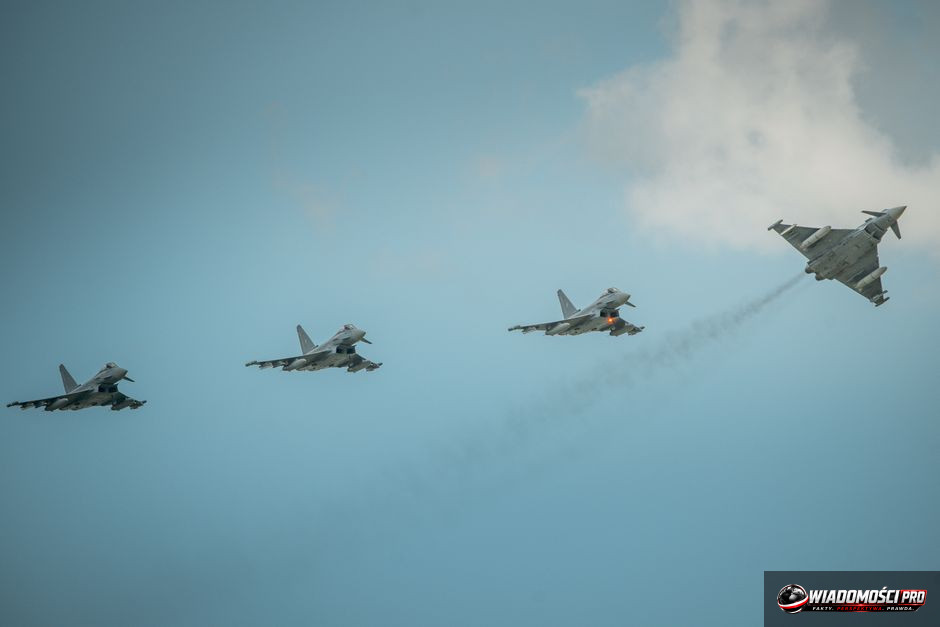
As of July 28, 2026, there is no confirmed intelligence data indicating direct preparations by Russia for an invasion of the Baltic states, and the security of the region relies on the presence of NATO forces as part of the eFP. However, this stability does not stem from a lack of intent on the part of the Kremlin, but from the physical presence of international battalions, which serve as a human shield on the eastern flank. Residents of Vilnius, Riga, and Tallinn live in the shadow of uncertainty, where every movement of troops within Russian military districts triggers an immediate reaction from general staffs.
In brief
- No confirmed troop movements suggesting an invasion in 2026.
- High readiness thanks to military modernization and the permanent presence of NATO battlegroups.
- Priority status of the Suwałki Gap in the Alliance's operational planning.
Readiness status of NATO forces in the Baltic region
The foundation of the security of Estonia, Latvia, and Lithuania remains the presence of battlegroups stationed in the region on a permanent rotational basis. These units serve as a physical barrier of deterrence, intended to raise the cost of potential aggression to a level unacceptable to decision-makers in Moscow. NATO's defense architecture has undergone a thorough overhaul in recent years, moving beyond the symbolic gestures known from the previous decade. Decisions made during the summits in Madrid and Vilnius forced a real strengthening of the eastern flank, transforming it from a "trip-wire" concept into an actual rapid response system. Currently, the Alliance maintains 300,000 troops in readiness, which represents a qualitative leap compared to earlier defense plans.
However, the military reality remains brutal. Despite expanded structures, the ability to rapidly transport heavy equipment deep into the Baltic states remains a bottleneck that is being discussed more and more openly behind the scenes. Analysts from the Atlantic Council point out that the main logistical problem is the lack of compatibility of railway infrastructure. The Baltic states still use a broad gauge (1520 mm), which necessitates the transshipment of heavy military equipment, such as Leopard or Abrams tanks, at the border with Poland. There is a shortage of flatbed wagons adapted for the transport of heavy weaponry in this standard. The throughput of ports in Klaipėda or Riga, although being modernized, could be paralyzed in crisis conditions by kinetic or cyber attacks, which would prevent the rapid unloading of maritime supplies. The reaction time of the command in the face of a possible "fait accompli" remains an unknown that keeps operational planners awake at night. Official statements about readiness are necessary for market stability and morale, but it is logistics that define the real security of the region.
Kaliningrad as a flashpoint: facts and myths
The Kaliningrad Oblast functions as the most militarized patch of land in this part of Europe. The exclave serves as a forward bastion, saturated with A2/AD (anti-access/area-denial) systems that create a so-called security bubble. The operational problems resulting from this location are well known to the NATO command. The arsenal invariably includes Iskander-M ballistic missiles, capable of striking targets deep within the territory of neighboring countries, which forces the Alliance to include the variant of losing air superiority over part of the region.
The fear of using Kaliningrad as a springboard for an invasion of Lithuania, Latvia, or Estonia is a constant element of political narrative. A cool analysis of data from July 2026 does not confirm fears of a sudden escalation. Intelligence has not recorded any troop movement in the oblast that would suggest preparations for an open conflict. The size of the contingent in 2026 remains at a level similar to previous years, with no signs of an offensive concentration of forces. The security of the region does not rely on the lack of Russian technical capabilities, but on the presence of NATO forces as part of the eFP. International battalions constitute a barrier, the crossing of which would automatically drag the Alliance into a direct conflict. The Russian military presence in Kaliningrad therefore functions as a tool of political blackmail, rather than operational readiness to occupy the Baltic states. Skepticism toward alarmist reports is advised, as technical potential does not automatically translate into attack plans.
Hybrid warfare: the main tool of pressure
Moscow does not need tanks on the border today to realistically influence the temperature of disputes in Riga, Vilnius, or Tallinn. The Russian strategy is based on constantly maintaining tension, using methods aimed at the social fabric and administrative efficiency of the Baltic states. Instead of a kinetic attack, we are observing daily, minor strikes aimed at exhausting the opponent.
Here are the main vectors of actions that have been burdening security services in the region for months:
- Regular disinformation campaigns aimed at undermining trust in state institutions and deepening ethnic divisions in societies.
- DDoS attacks aimed at critical digital infrastructure and state administration websites, momentarily paralyzing access to public services.
- Deliberate use of migration pressure on the external borders of the European Union as a tool of political destabilization and a test of border guard resilience.
For the average resident of the region, this means a state of permanent vigilance. Security services, such as the Estonian KAPO or the Lithuanian VSD, do not report groundbreaking discoveries, but the scale of incidents remains high. The Kremlin's strategy is to accustom Baltic societies to the feeling of being under constant fire. The method of small steps proves effective in that it can be escalated at any moment if the Russian authorities deem it profitable. Currently, the line between annoying provocation and open conflict remains intact. The region is in a clinch that exhausts resources, although it does not lead to open war.
Investments in defense: national plans of the Baltic states
Lithuania, Latvia, and Estonia have stopped relying solely on allied guarantees, moving to a phase of actively building their own deterrence capabilities. National defense budgets suggest that the governments in Vilnius, Riga, and Tallinn are preparing for a variant of self-defense in the first hours of a potential conflict. The scale of financial commitment is impressive, although the pace of equipment deliveries remains a mystery. All three countries maintained defense spending exceeding 3 percent of GDP in 2026, which puts them at the forefront of NATO countries in terms of financial effort.
Comparison of financial commitment (data based on reports from the ministries of defense of individual countries):
- Lithuania — 3.25% of GDP (Ministry of National Defence of Lithuania)
- Latvia — 3.15% of GDP (Ministry of Defence of the Republic of Latvia)
- Estonia — 3.4% of GDP (Ministry of Defence of the Republic of Estonia)
These expenditures are not just a statistical record. Funds are flowing primarily into medium-range air defense systems, including NASAMS and IRIS-T sets, which are intended to fill a critical gap in airspace coverage. At the same time, the arduous expansion of border infrastructure and electronic surveillance networks is underway. These actions are aimed at the earliest possible detection of a hybrid threat, which, in the assessment of experts from the Polish Institute of International Affairs (PISM), remains a more likely scenario than a classic conventional strike. However, it should be noted that the declared percentages of GDP do not always translate into ready combat units. Supply chains for air defense systems are overloaded, and delivery dates for equipment are sometimes delayed. Money is available, but hardware arrives slowly, which creates a gap between ambitions and real firepower on the battlefield.
What this means for you
Editorial angle: For readers, this means that although the situation is stable, the "new normal" requires constant vigilance. Companies in the defense and cybersecurity sectors, which are fulfilling contracts for the modernization of Baltic armies, are gaining; meanwhile, financial markets sensitive to war rhetoric, where every hybrid incident triggers a momentary panic, are losing. Investors should take into account that the region will remain an area of increased political risk for the coming years. The lack of a direct invasion does not mean a lack of costs, which are borne by all citizens in the form of higher inflation caused by increased spending on armaments and the need to maintain a high level of digital security.
Questions and answers
Is there a real risk of an attack on the Baltic states in 2026?
There is currently no confirmed intelligence data on the planning of an invasion; NATO deterrence remains an effective barrier.
Why is the Suwałki Gap so important?
It is the only land connection of the Baltic states with the rest of NATO in Europe, the blocking of which would cut these countries off from the land support of allies.
What can citizens do in the face of a threat?
Analysts from the IISS think-tank suggest remaining calm, using official government communications, and building resilience to disinformation by verifying sources of information in crisis situations.


Komentarze (0)
Ładowanie komentarzy...