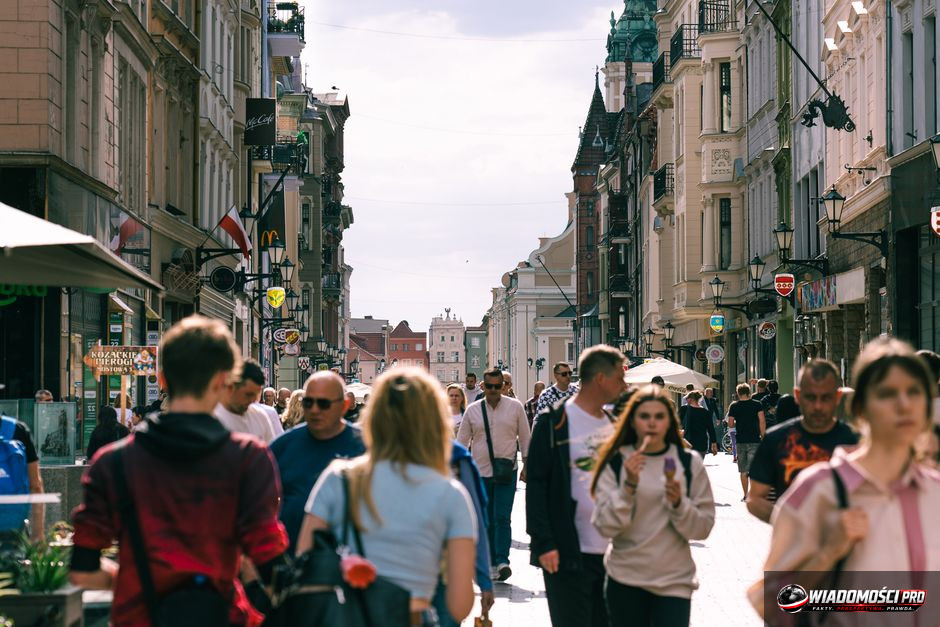
Yes, Poles increasingly feel like second-class citizens, which is a direct result of the state's asymmetric policy in the face of the migration crisis. The sense of marginalization stems from the "ruthless operation" conducted by Ukraine against Poland, which experts warned about in "Rzeczpospolita" on July 27, 2026, compounding frustration over the perceived favoring of newcomers at the expense of one's own citizens. This mechanism is fueled by a disparity in treatment – Poles, struggling with inflation and queues for specialists, see systemic facilitations for newcomers that, in practice, limit their own access to public services.
The policy of "playing" Poland: How does Kyiv influence our mood?
Polish-Ukrainian relations in mid-2026 have ceased to be a matter of solidarity and have become a field for a ruthless game of interests. On July 27, 2026, a diagnosis appeared in "Rzeczpospolita" that shook public opinion: Ukraine is conducting an information and political operation against Poland, in which our country plays the role of a subject being played. Kyiv is no longer asking for support, but is imposing a narrative in which Polish assertiveness is automatically stigmatized as an unfriendly or even hostile attitude.
A day later, on July 28, 2026, the same source clarified that the narrative has become the most effective weapon in the hands of Ukrainian decision-makers. For the average resident of Warsaw, Krakow, or Rzeszow, this means a state of permanent defense. When the media is dominated by a message forcing concessions under the guise of humanitarianism, the voter perceives the objectification of their own state. This is not a diplomatic dispute at the highest levels of power. It is a conflict whose effects are visible in household budgets and the sense of security.
An analysis of the actions taken by Kyiv shows that every attempt by the Polish side to look after its own national interest is immediately neutralized by a counter-narrative. Poland is positioned as "guilty" or "ungrateful." This mechanism makes the Polish citizen lose faith in the declared friendship, seeing it only as a facade for Ukrainian political interests. When the leaders of a state to which Poland has provided enormous support take actions contrary to Warsaw's interests, social trust collapses. This is not a matter of a lack of empathy. It is a reaction to a lack of reciprocity.
The feeling of being "second class": Where does the frustration of Poles come from?
The feeling of being a second-class citizen does not come from a vacuum. It is the result of a culmination of events that the Portal Obronny warned about on June 30, 2026. The analysis indicated that the ground for the radicalization of sentiment was prepared by disinformation combined with daily difficulties in accessing public services. When a Pole, waiting in months-long queues for specialists or struggling with rising living costs, sees systemic facilitations for newcomers, a natural question arises about the priorities of their own government.
A concrete example of favoritism that sparks the most opposition is the prioritization of social benefits and access to medical care, where citizens of Ukraine, often based on simplified procedures resulting from still-binding special acts, gain priority in a system that is inefficient for Poles. Instead of civic equality, we are dealing with a hierarchy in which the interest of the newcomer has become more important to public administration than the long-term stability of the country. Financial support, which initially had a humanitarian dimension, after two years of conflict has become a burden that the state cannot transparently account for.
The lack of transparency in state spending exacerbates anger. Poles ask: why are our resources directed to external support while domestic infrastructure requires urgent investment? Incidents mentioned by the media become a symbol of a broader phenomenon – the conviction that the law in Poland is not applied equally to everyone. In such a climate, even a minor neighborhood misunderstanding is projected onto the state level, which creates a toxic atmosphere in which each side feels aggrieved. The Polish state, instead of conducting a policy based on hard data, has become bogged down in defensively explaining every decision.
From the demonstration in Rzeszow to Tusk's reaction: A spiral of tensions
The situation in Rzeszow, reported on August 6, 2026, exposed deep social polarization. The demonstration against hate towards Ukrainians, although intended to calm the mood, in reality became a catalyst for further tensions. On one hand, we have a group of activists trying to maintain a solidarity narrative, and on the other, an increasingly large group of citizens who feel ignored in their dissatisfaction.
Prime Minister Donald Tusk's reaction on August 3, 2026, in which he condemned violence against Ukrainians, was an attempt to impose a top-down moral order. In practice, however, such declarations had the opposite effect. For many Poles, they sound like lecturing rather than an attempt to understand the source of the problem. Instead of addressing the causes of frustration – that is, the feeling of being a second-class citizen – the government focused on fighting the symptoms, which are manifestations of aggression or resentment.
Comparing the calendar of events:
- June 30, 2026 – warning about disinformation and a change in perception.
- July 27, 2026 – diagnosis of Ukraine's "ruthless operation" against Poland.
- August 3, 2026 – government reaction to violence.
- August 6, 2026 – demonstration in Rzeszow.
This calendar shows that Polish policy on this issue is extremely reactive. The government does not set the agenda, but only reacts to subsequent crises, which confirms the citizens' conviction that the state has lost control. In this arrangement, every subsequent intervention by the Prime Minister is perceived by a part of society as taking the side of "foreign" interests against one's own voters. This creates a dangerous loop in which every attempt to dampen the mood, in reality, fuels it.
The future of relations: Can what is broken be fixed?
Restoring trust requires moving away from emotional rhetoric towards a pragmatic approach. An article from June 25, 2026, on edgp.gazetaprawna.pl points out that building relationships in times of crisis requires foundations based on measurable benefits. If Polish diplomacy does not start setting hard conditions that will be understandable to the average citizen, the current tensions will become a permanent element of the political landscape.
The international reception of these tensions, as mentioned by Wiadomości Onet on July 21, 2026, in the context of German assessments of Zelensky's decisions, shows that Poland is perceived as a weak link in the decision-making process. If our internal problems become the subject of analysis by foreign centers, it means that we have lost control over our own image. Germany or other EU countries, observing our struggles with the presence of Ukrainians, draw conclusions regarding the stability of our state, which negatively affects our position in European structures.
The crack in Polish-Ukrainian relations is not a defect that can be fixed with declarations of "friendship." A deep revision of bilateral agreements, transparency regarding the costs of support, and a clear definition of where humanitarian aid ends and Kyiv's political interests begin are needed. If the Polish authorities do not decide to be assertive, social frustration will grow, and the capital of trust in state institutions will fall to a level from which it will be difficult to recover.
Conclusions
The current situation is not an accident, but the result of a deliberate game in which the Polish citizen has become a pawn. Social polarization serves external centers of influence that want to weaken Poland's position in the region. The catch is that the Polish state has ceased to act as an arbiter ensuring internal peace and has become an executor of someone else's interests. For you, this means that your daily problems – lack of access to a doctor, inflation, a sense of injustice – will not be solved until the government stops treating the needs of its own citizens as secondary to foreign policy goals. You are witnessing a systemic sell-off of social capital that has been built over years. Who will gain from this? Certainly not you, who have to face the consequences of these decisions every day.
Questions and answers
Why do Poles feel like second-class citizens?
This stems from the conviction that in the face of an economic crisis, state policy prioritizes the needs of newcomers at the expense of its own citizens, which has been signaled by the media for months.
What is the main reason for the rise in hostility towards Ukrainians?
The main cause is a mixture of growing disinformation and daily difficulties that change the perception of newcomers from people in need of help to a privileged group, which is confirmed by the Portal Obronny analysis from June 30, 2026.
What is the role of the government in the current social conflict?
The government tries to suppress manifestations of hatred through the Prime Minister's interventions, however, these actions are perceived as a lack of understanding for the voters' frustration, which causes further polarization and loss of control over the narrative.
Is the situation in relations with Ukraine just a diplomatic dispute?
No. Experts from "Rzeczpospolita" indicate that we are dealing with a "ruthless operation" of influence, which realistically translates into the daily life of Poles and the social stability of the country.
Do demonstrations like the one in Rzeszow solve the problem?
No, as the example from August 6, 2026, shows, such events often only expose deep polarization instead of addressing the actual sources of citizen dissatisfaction, which leads to further aggravation of the situation in the public space.
What are the long-term effects of the current policy for Poland?
As Onet reports from July 2026 indicate, the international reception of our internal problems makes Poland perceived as an unstable state, which weakens our position in the EU and affects the assessment of our agency in the region by other member states.
Can this trend be reversed?
Reversing the trend would require a complete change of strategy: from emotional solidarity rhetoric to a cold, pragmatic model based on clear bilateral agreements, which, however, would require the current authorities to have the courage to set conditions for Kyiv.
Is the current state permanent?
If the Polish authorities maintain the current defensive course, social frustration will grow, which may lead to a permanent decrease in trust in state institutions and the radicalization of sentiment in the coming months, which is confirmed by the Portal Obronny analysis.
Why is the Ukrainian narrative so effective in Poland?
It exploits the existing sense of guilt in Poland and the fear of being accused of a lack of solidarity, which effectively paralyzes public debate and prevents a reliable assessment of the costs of the current policy by those in power in Warsaw.
What is the biggest threat to Poland in this context?
The biggest threat is the loss of sovereignty in shaping one's own internal policy and the deepening social division, which is used by political forces to build capital on Polish dissatisfaction, which in effect weakens the foundations of the state.
Sources
- Is Zelensky's attitude reflecting on Ukrainians in Poland? "It pisses people off more" - Polskie Radio 24
- "Ukraine is conducting a ruthless operation against Poland." Expert says we are being played - Rzeczpospolita
- A demonstration against hate towards Ukrainians will be held in Rzeszow. Have Poles had enough? - Rzeszów News
- Beyond emotions and history. What really builds relationships between Poles and Ukrainians - edgp.gazetaprawna.pl
- How Zelensky was assessed in Germany after the decision regarding Poland - Wiadomości Onet
- Growing hostility towards Ukrainians in Poland. How do disinformation and daily situations change perception? - Portal Obronny
- Tusk reacts to the wave of violence against Ukrainians. "We will not allow hatred" - salon24.pl
- "The point is": How are Ukrainians playing us? Narrative is a weapon today - Rzeczpospolita
Komentarze (0)
Ładowanie komentarzy...