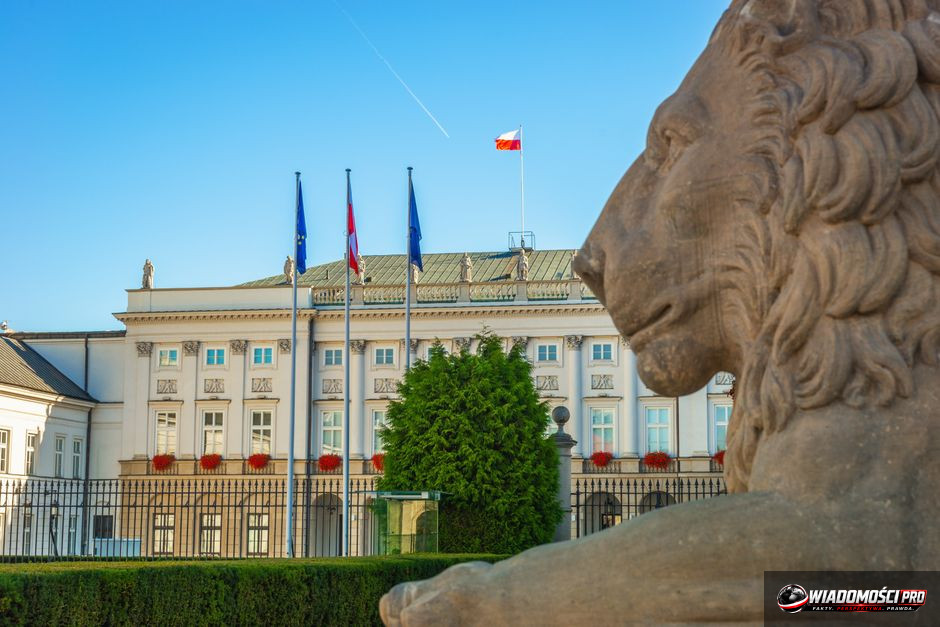
Poland has secured 43.7 billion euros from the SAFE program, and the first tranches reached the budget on May 29, 2026. These funds are officially earmarked for armaments; however, the dispute over their transparency and the alternative "0 percent" plan pushed by NBP Governor Adam Glapiński and Karol Nawrocki is sparking huge controversy. Control over these billions has become the axis of a conflict that goes beyond a simple discussion about defense spending, touching upon the foundations of the state's financial sovereignty.
From veto to billions: A chronology of the political dispute
It all began on March 13, 2026, when President Andrzej Duda decided to veto the bill on the SAFE program. This step was not merely an act of formal opposition, but a signal that a struggle over the shape of army financing was taking place within the ruling camp and state institutions. The presidential veto froze the legislative process, forcing the government to engage in a series of informal negotiations with the Presidential Palace. For the following weeks, the country watched a stalemate where the future of military modernization, valued at 43.7 billion euros, was at stake.
It was not until May 7, 2026, that "Gazeta Prawna" revealed that negotiations had entered a decisive phase. Just a day later, on May 8, the agreement was officially signed. Donald Tusk, commenting on this moment, emphasized its historical dimension for Poland and its relations with the European Union. However, in the shadow of official announcements, questions remained about the conditions under which these funds were granted. The first tranches that bolstered the budget on May 29 became a fact, but they did not close the debate over whether the way these funds are spent will be subject to the rigors imposed by Brussels or kept within the framework of national strategy.
The dispute over SAFE is not just a technical accounting process. It is a clash of two visions of managing state finances in the face of a threat. On one side, we have a government model based on an EU fund, and on the other – a proposal that was intended to make Poland independent of external financial dictates. Understanding this conflict requires looking at the mechanisms that were supposed to be behind the alternative "0 percent" plan.
Where will the 43.7 billion euros go? The truth about spending
The official announcement of May 29, 2026, confirmed the booking of the first tranches from the SAFE program. The entire amount, i.e., 43.7 billion euros, is theoretically intended for the modernization of Poland's defense potential. In practice, however, the Ministry of Finance is facing immense social pressure regarding the transparency of these expenditures. Official government rhetoric points to priority armaments, but the lack of a detailed spending schedule raises distrust among analysts and the opposition.
The problem is not the fact of having the funds, but the way they are distributed. Will the billions go to domestic defense plants, or will they be spent on purchases from foreign corporations, which in practice would mean transferring this money back to Western economies? This question remains unanswered. The government maintains that the procedure is transparent, but the lack of a publicly available list of projects makes the billions of euros a subject of political speculation.
The structure of expenditures, if one is to believe the assurances of the Ministry of Defense, is to include the purchase of missile systems, the modernization of the air fleet, and the expansion of logistical support. Each of these items is a huge undertaking that requires not only capital but also precise planning. The lack of full parliamentary control over these funds, which critics called for during the March debates, means that these funds could become a tool for ad-hoc budgetary needs rather than a long-term defense strategy.
The Nawrocki and Glapiński alternative: The "0 percent" plan
A key element of the confusion surrounding SAFE was the proposal presented on March 10, 2026, by Karol Nawrocki and Adam Glapiński. The "0 percent" plan is not just a catchy slogan, but a concrete proposal for a financial mechanism. The authors of the project assumed that Poland should finance armaments based on its own reserves and debt instruments issued within the country, instead of using the EU's SAFE mechanism, which involves specific political requirements and debt service costs.
The "0 percent" mechanism assumed the use of specific NBP tools that would allow for the financing of defense investments at zero interest costs in the initial phase or at a minimal service cost, significantly lower than the market interest rates accompanying international loans. Glapiński and Nawrocki argued that financial sovereignty in security matters is more important than EU subsidies, which in the future could become a hostage to political disputes with the European Commission.
During a meeting with Prime Minister Tusk in March 2026, supporters of this plan pointed out that this model protects the Polish economy from currency risk. Instead of indebting the state in euros and being subject to exchange rate fluctuations and the dictates of Brussels, the "0 percent" proposal relied on local bond issuance supported by liquidity provided by the central bank. Although the government ultimately rejected this concept, choosing the safer EU path, this proposal has permanently entered the debate about how much the state should rely on external sources of financing in matters fundamental to security.
Is the SAFE program a financial trap?
Poland ultimately secured 43.7 billion euros from the SAFE program, but the price of this success remains a subject of analysis. The main argument of opponents of the current model is the cost of servicing the debt incurred under EU programs. Although the money reached the budget on May 29, 2026, no one has publicly presented a simulation of the costs of repaying these funds over the next twenty years. The parliamentary opposition accuses the government that under the guise of modernizing the army, the country is being pushed into long-term dependence on EU financial mechanisms.
The atmosphere surrounding these billions is tense for another reason. The sovereignty of financial decisions, which Nawrocki and Glapiński spoke about so loudly, is partially limited in the SAFE model by the requirements that Poland had to accept in exchange for the funds. Every expenditure from this pool must be in line with EU standards, which for some politicians is an unacceptable compromise. However, if the "0 percent" alternative was realistic, why wasn't it implemented? The government responds that the SAFE program offers guarantees that a national model would not be able to provide in such a short time.
The risk is that the 43.7 billion euros will become "cheap cash" that will make reform processes within the army lazy. Instead of optimizing purchases, the Ministry of Defense may succumb to the temptation of spending funds on less important goals, just because they are "available." History teaches that funds from external sources are rarely managed with the same discipline as funds generated within the country. It is precisely this lack of discipline that worries observers of public life, who fear that after a few years we will wake up with modern equipment, but also with a debt that will limit our room for maneuver in other areas of the economy.
What this means for you
As a citizen, you should look at these billions not through the prism of a negotiating success, but through the prism of the costs that will be spread across future generations of taxpayers. The injection of 43.7 billion euros is a huge opportunity, but without rigorous social control and full transparency of expenditures, this money could be wasted in a bureaucratic process. If the SAFE program is not subjected to real verification, every inefficiently spent zloty will be fuel for political disputes, which will effectively weaken trust in state institutions. The real test for the current coalition will come not at the moment of the transfer, but on the day we start paying the first installments of this historic debt.
Questions and answers
Is the money from SAFE going only to the Polish army?
Officially, the funds are dedicated to armaments, however, the lack of detailed guidelines in the agreement leaves room for interpretation, which raises concerns about the possibility of using the funds for purposes indirectly related to defense, rather than for direct modernization of the army.
Why did the president veto the SAFE bill in March 2026?
President Andrzej Duda raised arguments regarding the procedure for passing the bill and the lack of sufficient guarantees of sovereignty in terms of fund management, which became the spark for the conflict with Donald Tusk's government.
How does the Nawrocki plan differ from the SAFE program?
The "0 percent" plan was a concept of basing defense financing on domestic debt instruments and bank reserves, which was supposed to allow for avoiding the external political and financial conditions that are embedded in the EU's SAFE program.
When exactly did Poland receive the funds from the SAFE program?
The first tranches of funds from the SAFE program reached the Polish budget on May 29, 2026, which ended a several-month period of political and legal uncertainty surrounding the financing of army modernization.
Was the "0 percent" proposal a realistic alternative?
Experts point out that the proposal by Adam Glapiński and Karol Nawrocki was an attempt to change the financing model from external to internal, however, its implementation would have required government approval and full coordination with the Ministry of Finance, which was ultimately not achieved during the negotiations.
Sources
- SAFE agreement signed. Here is what signing the agreement means for Poland - Onet News
- SAFE program. Poland signed the agreement. Tusk: This is a breakthrough moment in the history of Poland and the EU - Wyborcza.pl
- President vetoes SAFE bill. What is this program and how does it work? [EXPLAINED] - TOK FM
- Poland to sign agreement on SAFE program. 43.7 billion euros at stake - Gazeta Prawna
- First money from SAFE reached Poland - TVN24
- Polska Zbrojna - Polska Zbrojna
- Karol Nawrocki with an alternative to the SAFE program. Details revealed. "There is no longer any talk" - Interia Events
- "Polish SAFE 0 percent." Glapiński and Nawrocki have a plan for billions for the army. Meeting with Tusk - Rzeczpospolita
Komentarze (0)
Ładowanie komentarzy...