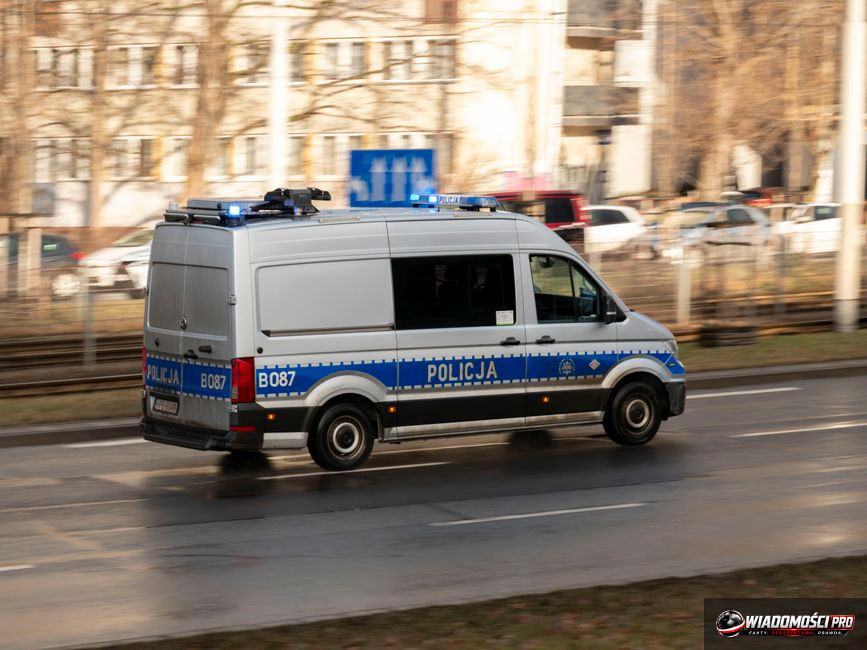
The government is introducing a two-year probationary period for young drivers and drastically tightened penalties for recklessness, including the lifetime loss of a driver's license for street racing. The new regulations aim to eliminate dangerous behavior on the roads starting in 2026. This mechanism is becoming the foundation of the Polish road safety system, changing the rules of the game for anyone planning to obtain a license.
Probationary period: A new reality for young drivers
Every driver who receives their first document authorizing them to drive vehicles after January 1, 2026, will be subject to rigorous two-year supervision. The system does not provide for exceptions. For 24 months, a young driver will be under the scrutiny of officers in a central register. If they commit gross violations during this time, their license will be revoked.
The legislator defines a gross violation through the prism of life-threatening danger. Exceeding the speed limit by more than 50 km/h in a built-up area, causing an accident while under the influence of alcohol, or participating in illegal races will result in the immediate confiscation of the document. There is no room for a return via clemency. After the two-year probationary period, the driver enters the standard mode, provided they have not exceeded the permissible point limits.
The draft amendment to the Act on Vehicle Drivers closely integrates supervision with the CEPIK system. Every traffic intervention is entered into the database in real-time. This means that a police officer during a check can see the driver's history from the moment they obtained their license. If the system shows recidivism, the consequences are inevitable. While there are no exact tables for fine amounts in the amendment yet, the Ministry of Infrastructure announces their dynamic adjustment to the degree of danger the perpetrator caused on the road.
Throughout this period, young drivers must exercise extreme caution. Every offense that was previously treated as incidental now affects their future. The legislator has decided that education through strict restrictions is more effective than previous prevention methods. A young person, knowing that their driver's license is in a test phase, is expected to demonstrate a higher culture of driving. Will it work? The Ministry is counting on a psychological effect that will force a change in driving style.
Lifetime loss of license and prison for recklessness
The harshest sanctions await those who treat public roads like a private racetrack. According to the regulations that entered the full implementation phase in 2026, participation in illegal street races is classified as a crime. It is no longer just a traffic offense for which one pays a fine. It is an act punishable by absolute imprisonment.
Judges have received guidelines to impose a mandatory lifetime driving ban on race organizers and participants. If the perpetrator causes a fatal accident during such an event, the prosecutor's office will bring charges of murder with eventual intent. This is a huge change compared to previous years, when perpetrators often avoided prison, receiving only suspended sentences.
The amendment also clarifies the definition of drastic speeding. The 50 km/h limit above the allowed speed in a built-up area is a red line. After exceeding it, an officer is required to seize the driver's license on the spot. In the case of recidivism – i.e., being caught for the same offense within two years – the driver loses their license indefinitely. The legislator leaves no room for interpretation. If a driver speeds at 100 km/h where the limit is 50 km/h, they automatically become a threat to the lives of others, which justifies radical legal measures.
Additionally, the police have gained the right to secure vehicles used for illegal races. The car can be confiscated toward future financial penalties or as evidence in a criminal case. For young people who often invest in tuned cars, the loss of the machine is more painful than the fine itself. This action strikes at the very heart of road pathology – the tool with which the driver breaks the law.
Exams under scrutiny: Stricter assessment rules
Driving Examination Centers across the country have returned to assessment standards that were considered a thing of the past until recently. Since January 2024, and with full force from 2026, examiners show no leniency for technical errors. Pass rates in many provinces have dropped by several percentage points. This is the result of strictly enforcing every point of the examination regulation.
What exactly does "tightening criteria" mean? First and foremost, a return to the rigorous treatment of errors on the maneuvering area. If a student stalls the engine while starting on an incline, it is treated as an error that may result in the termination of the exam. Previously, examiners often allowed for a retake. Currently, if the student does not perform the maneuver smoothly, it is considered that they do not possess sufficient skills to move safely in city traffic.
Another disqualifying element is incorrect road observation. Examiners pay attention to every head movement. If the candidate does not check their mirrors before changing lanes or does not react in time to a yield sign, the exam ends immediately. Minor errors that were previously recorded as "to be corrected" or "second attempt" are now treated as a safety hazard. The introduction of these changes was intended to filter out people who have not mastered driving technique to an automatic degree.
Road traffic in 2026 poses challenges that old training methods could not handle. Examiners have received instructions to focus on a defensive driving style. If a student shows aggression, e.g., cuts off a cyclist or does not maintain a safe distance, the exam is terminated without discussion. This approach is controversial because students feel like hostages of a system that aims for a zero pass rate on the first attempt.
Street racing as a crime
The end of the era of night rallies through city centers is a fact written into the penal code. From 2026, illegal racing is treated by the prosecutor's office with the same seriousness as theft or robbery. Perpetrators must count on criminal charges that go on their record. This means that a person who wants to work in uniformed services, transport, or logistics in the future may close their career path forever due to one evening spent at an illegal race.
The police conduct operational activities in places known for so-called meets. The use of drones, unmarked police cars, and advanced urban monitoring systems allows for the identification of every participant. Even if the driver flees the scene, high-resolution camera footage allows for consequences to be drawn after the fact. The law is structured so that the race organizer is responsible for all offenses committed by its participants.
This situation changes the balance of power. Until now, young drivers often felt unpunished, believing that the police could not catch all rally participants. Currently, thanks to close cooperation with the prosecutor's office, every identified participant receives a summons for questioning as a suspect. This is not a warning; it is a criminal proceeding. The severity of these regulations is a direct response to a series of tragic accidents in 2024 and 2025, in which innocent road users were killed.
The state has stopped treating racing as youthful recklessness. It is now a matter of public safety. Anyone who decides to organize or participate in such an undertaking takes full responsibility for any damage. If road infrastructure is damaged during an illegal rally, the perpetrators are charged with repair costs, which, in the case of mass meets, can reach tens of thousands of zlotys.
Impact on current drivers – what is changing?
The amendment to the act affects not only debutants but also drivers with many years of experience. Everyone must prepare for stricter road checks. The police have received new guidelines regarding the verification of the technical condition of vehicles, especially those that look modified. If a car has exhaust or suspension modifications that are not entered in the registration certificate, the driver loses the right to continue driving.
For people who have held a driver's license for years, the changes mean the need for constant continuing education regarding regulations. The fine tariff, which has been updated in recent years, remains strict. Exceeding the speed limit by 50 km/h still carries a high financial penalty and penalty points, which very quickly lead to a referral to a re-education course. In 2026, the point system works mercilessly – exceeding the limit of 24 penalty points (or 20 in the case of young drivers) means the need to retake the theoretical and practical exam.
It is worth looking at the data that shapes the current road landscape. A comparison of regulations from 2024–2026 shows a clear trend: the state is withdrawing from warnings in favor of administrative penalties. There is no leniency for "hurry" or "lack of awareness." A driver is treated as a professional, regardless of whether they have been behind the wheel for a year or thirty years.
Skeptics point out that such a rigorous approach may lead to decision-making paralysis among drivers. Instead of focusing on traffic flow, drivers are constantly checking their speedometers, which in emergency situations can distract from what is happening on the road. However, the Ministry of Infrastructure maintains that this is the only way to reduce the number of fatal accidents by another 20-30 percent per year.
Preparing for changes: How to avoid problems?
People who are just planning to start a driving course should do so without delay. Every month of delay increases the risk that further, even more restrictive implementing regulations will come into force during training. Automotive market experts emphasize that the current examination system is the most difficult in a decade. To pass it, it is not enough to know the regulations – one must demonstrate the ability to anticipate threats.
If you are facing an exam, focus on technique. Examiners in 2026 pay attention to how gears are operated, the use of engine braking, and the smoothness of merging into traffic. Many people fail because their driving is "uncertain." This subjective criterion has become a real reason to terminate the exam. Do not risk taking the exam if you do not feel fully confident in each of these issues.
Here are the key steps to take before the exam in the new legal reality:
- Choose a training center that offers additional driving hours in difficult urban conditions.
- Analyze the latest examination guidelines that Driving Examination Centers (WORD) publish on their websites.
- Do not underestimate the theory. Exam questions are regularly updated with new regulations regarding the two-year probationary period.
- Take care of your mental condition. The 2026 exam is not just a test of skills, but above all a test of stress resistance under conditions of absolute assessment.
It is worth remembering that a driver's license is a privilege that in 2026 becomes harder to obtain and easier to lose. If you manage to pass on the first try, do not rest on your laurels. Only then does the real probationary period begin, in which every offense is recorded in the system. Your goal for the first two years is not only to drive according to the regulations but, above all, to avoid any situations that could arouse the interest of police officers.
What this means for you
The editorial team assesses that the amendment to the regulations will hit inexperienced people the hardest, for whom the two-year probationary period will become a time of constant pressure. All road users will benefit due to greater discipline on the roads, but the catch is the risk of losing one's license for mistakes that were previously treated more leniently. The system is becoming airtight, which means the margin for error has ceased to exist. For a young driver, this means the need to be perfect from the first day behind the wheel.
Questions and answers
Does the probationary period apply to people who already have a driver's license?
No, the probationary period applies only to people who obtain their license for the first time after the amendment comes into force. Holders of licenses issued before 2026 are not subject to these specific restrictions, although they are still subject to the general tightened traffic regulations.
Will I always lose my driver's license for speeding?
For drastic speeding, defined as exceeding the limit by more than 50 km/h in a built-up area, mandatory suspension of the driver's license is threatened. In the case of recidivism, the consequence is the lifetime loss of the license, in accordance with the new, tightened government regulations.
Where can I find the full text of the new regulations?
The full text of the amendment to the Act on Vehicle Drivers and the implementing acts regarding examinations are available in the Journal of Laws and on the official government websites of the Ministry of Infrastructure. It is recommended to follow updates in legal services, as implementing regulations are successively clarified in 2026.
Why have exams become more difficult if traffic regulations have not changed?
The change does not concern the traffic regulations themselves, but the guidelines for examiners regarding the assessment of driving technique. A more rigorous approach to minor errors that were previously treated leniently has been introduced to eliminate people who do not possess full proficiency in operating a vehicle from traffic.
Sources
- Examiners are failing students again for minor errors. Strict rules have returned - Rzeczpospolita
- New regulations 2026: Lifetime loss of driver's license, prison for recklessness, racing ban - gazetaprawna.pl
- Driving test 2024. New regulations introduced significant changes - Dziennik.pl
- New regulations will hit young drivers. Better to get a driver's license quickly - Interia Motoryzacja
- Changes in driver's license. New regulations are coming - PolsatNews.pl
- New rules for driving tests. Changes already on January 1, 2024 - Dziennik.pl
- Driving test rules at the last minute - Rzeczpospolita
- You will lose your driver's license for this offense. There will be new regulations - TVN24
Article prepared by the Wiadomości PRO editorial team with the support of artificial intelligence. Facts come from the sources listed above.

Komentarze (0)
Ładowanie komentarzy...