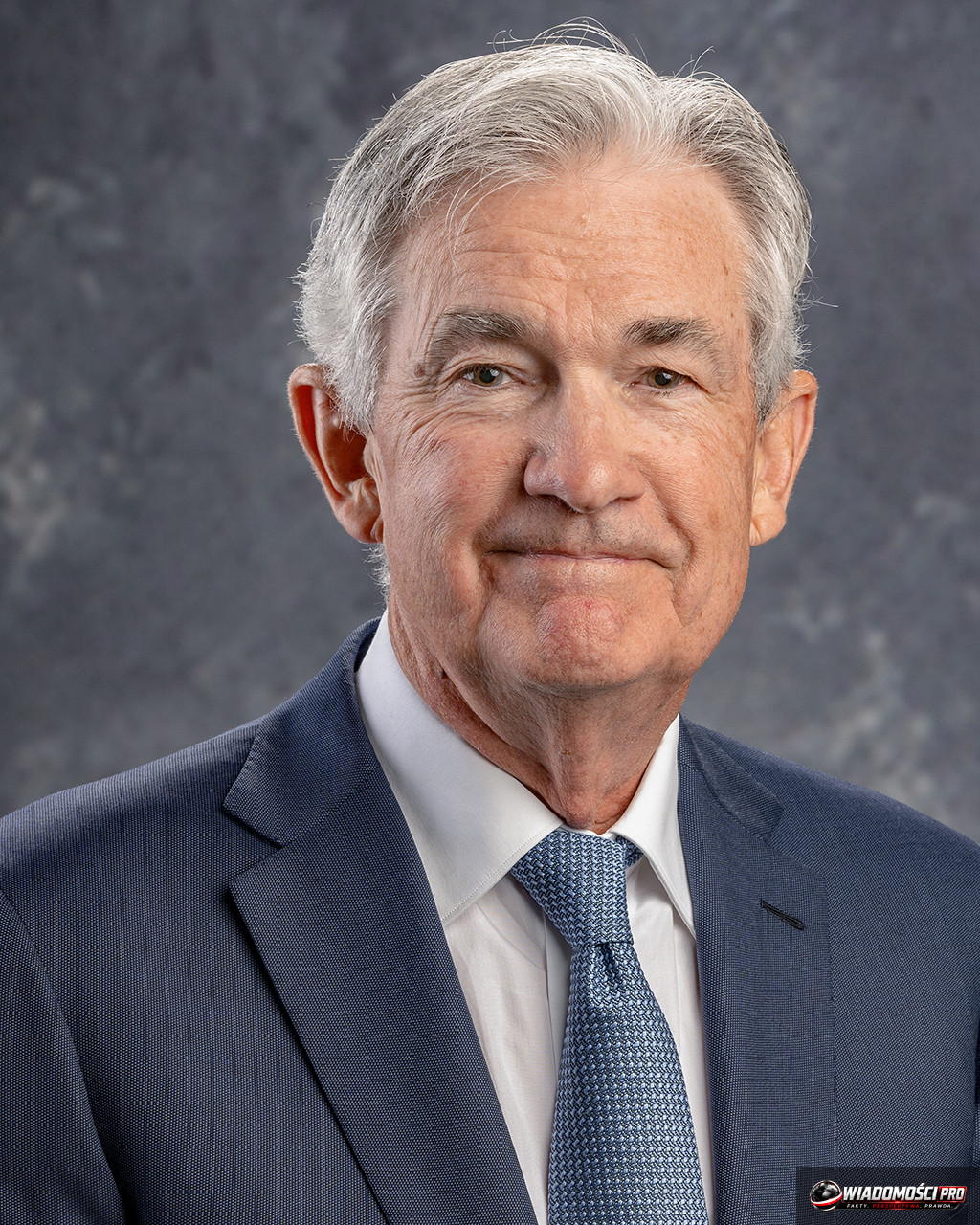
The Federal Reserve has lowered interest rates by 50 basis points to a range of 4.75-5.00%, which triggered immediate volatility on stock markets and a clear weakening of the zloty against the euro. For your wallet, this means higher costs for vacations in Europe and the need for a quick revision of investment plans in foreign currencies. Every loan installment in euros taken out by Polish companies or private individuals suddenly becomes more expensive because the weakening zloty loses its purchasing power in relation to the EU currency.
Details of the FOMC decision: Why 50 basis points?
The September 2026 meeting of the Federal Open Market Committee (FOMC) ended with a move that many analysts saw as a warning signal. Setting the interest rate range at 4.75-5.00% is an attempt to save the American economy from a hard landing scenario. Instead of the standard quarter-point move, Jerome Powell opted for a double dose, which in theory is meant to be a stimulus for industry and consumption. In practice, however, such a step is an admission that macroeconomic data from the US looks much worse than the Fed maintained even a quarter earlier.
American policymakers rarely choose such a path without a clear reason. In the archives of monetary decisions, half-percentage-point moves are reserved for crisis periods or moments when the risk of recession becomes more likely than the continued fight against persistent inflation. Investors who were counting on a slow adjustment process were forced to instantly recalibrate their portfolios. This is not a cosmetic correction, but a deep change in direction that will affect the valuation of US Treasury bonds over the coming months.
For a Polish investor, this situation is a direct source of anxiety. When the American central bank makes such a sharp maneuver, foreign capital begins to flow out of emerging markets toward safe havens, mainly the dollar and American debt. The zloty, as a higher-risk asset, loses its attractiveness. Every fluctuation in the zloty exchange rate against the euro of five groszy is a real change in the average Pole's household budget. For example, with a monthly expenditure of 1,000 euros on loan installments or imports of goods, a currency weakening of 20 groszy generates an additional cost of around 200 zlotys per month. This is an amount that is not negligible for a household budget.
The situation remains fluid as the market awaits further communications from Washington. If it turns out that this is the beginning of an aggressive easing cycle, we will have to prepare for periods of high volatility on the USD/PLN and EUR/PLN pairs. Investors who held cash in anticipation of stabilization must now face the fact that their purchasing power in foreign transactions is melting at a rate that no mathematical model predicted.
Financial market reaction to the Federal Reserve's move
Stock markets around the world responded to the FOMC decision with a wave of volatility that resembled chaos in the first hours of trading. Indices of major exchanges in the US fell into a spiral of nervous valuations, trying to answer the question of whether the Fed knows something that others do not. Institutional investors began selling off shares of technology companies, fearing that even such a deep cut would not stop the coming slowdown. In turn, the bond market reacted with a sharp drop in yields, which for debt holders is a signal to flee into safe assets.
Uncertainty about the future direction of monetary policy has become the main factor driving valuations. Every speech by FOMC members is now being scrutinized by algorithms for clues regarding the pace of further cuts. If the American central bank maintains such an aggressive pace, we can expect further weakening of the dollar against other currencies, which paradoxically may slightly relieve countries indebted in the American currency. However, for Poland, where trade is based mainly on the euro, this mechanism works in reverse.
Capital, withdrawing from emerging markets, does not choose Poland as a place to invest. Instead, we are observing an outflow of funds, which translates into declines on the Warsaw Stock Exchange. For the individual Polish investor, this means a difficult period. Valuations of dividend-paying companies, which until now seemed like a safe choice, are beginning to lose their luster in the face of rising currency risks. If volatility on the stock markets continues for the coming weeks, rational investment planning will become impossible.
It is worth noting that financial markets do not like such large surprises. An aggressive rate cut, unsupported by earlier signals, is perceived by hedge funds as a signal to attack weaker currencies. The Polish zloty has found itself in the crossfire between a global sell-off of assets and local budget problems. From the perspective of the average wallet, this means an increase in the cost of imported living – from fuel to electronics, which are priced in dollars or euros.
Zloty under pressure: Euro at its most expensive since 2024
The Polish currency reacted to the Fed's decision in a way that was a shock to many. The euro exchange rate shot up, reaching its highest levels since the end of 2024, which directly hit the purchasing power of Poles. The zloty, which for a long time remained in relative equilibrium, lost its footing in the face of such a drastic move in the US. Foreign investors, selling assets in Poland, automatically exchange zlotys for euros or dollars, which further deepens the depreciation of our currency.
Domestic importers found themselves in a trap. Orders for goods from the European Union, paid for in euros, became more expensive overnight. In the case of small trading companies, operating margins, which often oscillate between 5-10%, can be completely wiped out by the increase in currency exchange costs. This phenomenon will soon translate into retail prices in Polish stores. The consumer, buying imported equipment or food, will pay more – not because of local inflation, but because of global monetary policy conducted across the ocean.
This situation is particularly acute for people with savings in zlotys. While interest rates in Poland remain unchanged, the purchasing power of these funds in relation to foreign goods is falling drastically. This is a classic example of "exporting inflation." Polish households that planned vacations in the eurozone or purchases of luxury goods must now either limit their spending or dig deeper into their pockets.
In this game, the Polish zloty is losing its previous advantage of stability. Investors, seeing sharp moves in the US, do not think about the fundamentals of the Polish economy. All that matters to them is the difference in interest rates and market liquidity. For the individual Polish investor, this is a lesson in humility. It turns out that even if the local economy is doing decently, global capital flows can at any moment undo years of work on strengthening the national currency. We are waiting for the reaction of the Monetary Policy Council, however, after such a radical step by the Fed, the room for maneuver for the NBP seems very limited. Raising rates in Poland to defend the zloty could stifle domestic economic growth, which puts policymakers before an impossible choice.
A challenge to credibility: Kevin Warsh's voice
The choice of the Federal Reserve, which decided on such a deep cut on September 21, 2026, sparked a wave of criticism among the most experienced market observers. One of them is Kevin Warsh, whose voice in the debate about the credibility of the central bank is of great importance. Warsh publicly questions the sense of such a maneuver, suggesting that the Fed is putting its reputation on the line, trying to save a situation that may only be a temporary economic fluctuation.
According to Warsh, defending the credibility of the central bank should be a priority, even at the cost of a temporary slowdown on the stock markets. In his opinion, aggressive easing while inflation indicators are still high is a gamble that could lead to a loss of control over inflation expectations in the future. If the Fed is not seen as a stable and predictable institution, the market will begin to discount the risk, which will translate into higher bond yields, and consequently, more expensive credit for the whole world.
The discrepancies between the FOMC's actions and the experts' warnings are clear. While the official statement speaks of "adjusting policy to economic conditions," voices of panic are coming from behind the scenes. This is not a technical correction, but a strategic pivot that many assess as dangerous. Investors, listening to such authorities as Warsh, are beginning to doubt the sense of holding assets in dollars, which further complicates the situation on currency markets.
For Poland, Kevin Warsh's voice is important in the context of the predictability of global markets. If the Fed's credibility is permanently damaged, capital will begin to flee to safe havens faster than forecasts assume. As a result, the market is no longer pricing in just interest rates, but above all the political capital of trust, which currently seems to be the weakest link. The Polish investor, listening to these warnings, should prepare for the fact that volatility on the stock markets may remain with us for longer.
The end of QT and a new paradigm of monetary policy
The Fed's decision to cut rates is only one side of the coin. Equally important, and perhaps even more so, is the signal regarding the end of the quantitative tightening (QT) process. Jerome Powell, by ending this process, is opening a new chapter in the history of modern economics. Over the last few quarters, QT acted like a vacuum cleaner, sucking liquidity out of the banking system. Now that vacuum cleaner has been turned off, and more cash will remain in the system.
For investors, this is a signal that the Fed has stopped draining the system of excess capital. The change in approach means that the central bank is no longer actively reducing its asset holdings, which in practice ends the period of "sucking" capital from the private sector. This is a fundamental paradigm shift that could lead to an increase in asset prices, especially those that suffered the most during the restrictive policy. However, from the point of view of the exchange rate, the situation remains ambiguous.
More liquidity in the financial system usually means a weakening of the national currency. This is exactly what we are observing in the case of the dollar, which is losing against the euro, and ricocheting to hit the zloty. Capital that was previously "trapped" in bonds is starting to look for opportunities in the stock markets, which generates volatility. Markets reacted nervously to this, which can be seen in the clear weakening of our currency against the euro. The "carry trade" mechanism, i.e., earning on interest rate differentials, is starting to break, which for investors from Poland is a signal to exit positions.
Skeptics note that ending QT while simultaneously cutting rates by 50 basis points is a risky mix. The Fed is trying to avoid a hard landing for the economy, but at the same time is opening the door to the return of inflation. For the average investor's portfolio, this is a signal that the volatility we saw after the announcement of the decision is not an anomaly, but a new daily reality. The days of predictable, slow tightening are over. We are now entering a phase in which liquidity will determine trends on the stock markets more often than the financial results of the companies themselves.
Investment strategies in the face of volatility
Previous textbook investment scenarios are no longer a guarantee of safety. Investors who relied on interest rate stability in their strategy must now verify their approach. In an environment where the Fed makes such aggressive moves, it is necessary to pay attention to several key areas. First, monitoring FOMC communications has become more important than technical chart analysis. Every word of Jerome Powell now weighs more than employment data.
Second, it is worth paying attention to inflation risk. Lowering the cost of money at a time when price pressure has not yet faded creates room for unexpected twists. For an investor, this means the need for portfolio diversification. Shares of highly indebted companies may gain from the lower cost of debt servicing, but on the other hand, they may suffer due to the falling purchasing power of consumers. Gold and other precious metals may prove to be a better haven than Treasury bonds in a period when central banks are losing control over inflation.
Liquidity is now becoming the most important asset. The desire to quickly "make up" for losses on stock market lows may turn out to be a costly trap if volatility on the EUR/PLN pair remains at a high level. Protecting capital from inflation, while simultaneously dealing with currency volatility, requires more flexibility than even a month ago. Now it is not about looking for opportunities, but about surviving a period in which the American central bank is testing the limits of its credibility in the eyes of global markets.
Individual investors should also pay attention to indirect costs. Every currency transaction in a period of high volatility involves a higher spread, which directly depletes capital. It is worth considering using online currency exchange offices or currency platforms that offer more competitive rates than traditional banks. At a time when the Fed is deciding the fate of the global economy, every zloty saved on currency conversion is worth its weight in gold.
What this means for you
The Fed's decision to cut rates is a signal that the American central bank is prioritizing supporting economic growth over fighting inflation. Borrowers in the US and investors in stock markets will gain from this, but holders of emerging market currencies, such as the zloty, will lose. For you, this directly means higher costs of imported living and the risk of higher inflation in Poland if the weakening of the zloty persists for a longer time. The catch is the risk of inflation returning if policy that is too loose is maintained for too long, which will consequently force central banks to tighten policy again at the least expected moment.
Questions and answers
How did the Fed's decision affect the zloty exchange rate?
The decision caused a clear weakening of the zloty against the euro, which caused the EU currency to reach its highest levels since the end of 2024.
By how many basis points were rates lowered?
The Federal Reserve decided on a cut of 50 basis points, setting the range at 4.75-5.00%.
Why are analysts warning against this decision?
Experts, including Kevin Warsh, are worried about the credibility of the central bank in the context of persistent inflationary pressure and the risk that such an aggressive rate cut carries in the face of uncertain macroeconomic data.
Does the end of the QT process matter for your portfolio?
Yes, the end of QT means that more liquidity will remain in the financial system, which may affect the volatility of asset prices in which you invest your savings, and increase pressure on the weakening of emerging market currencies.
What should an individual investor do in this situation?
The investor should focus on greater portfolio diversification, limit currency risk, and carefully monitor FOMC communications, which will shape global financial trends in the near future.
Sources
- Fed raises interest rates. Kevin Warsh bets on defending credibility despite analysts' warnings - strefainwestorow.pl
- FED meeting September 2026: FOMC calendar and forecasts - rankia.pl
- Fed raises rates, and the zloty falls on its face! Euro most expensive since the end of 2024 - FXMAG
- Volatility reigned in the markets after the Federal Reserve's decision to raise interest rates. - Vietnam.vn
- Fed cut rates and announces end of QT - Bankier.pl
- How will markets react if the Fed returns to rate cuts - Analizy.pl
- RPP did not change interest rates in September '24 - Financial Monthly BANK
- Risky FED maneuver: Cutting interest rates with high inflation - Super Biznes
Article prepared by the Wiadomości PRO editorial team with the support of artificial intelligence. Facts come from the sources listed above.


Komentarze (0)
Ładowanie komentarzy...