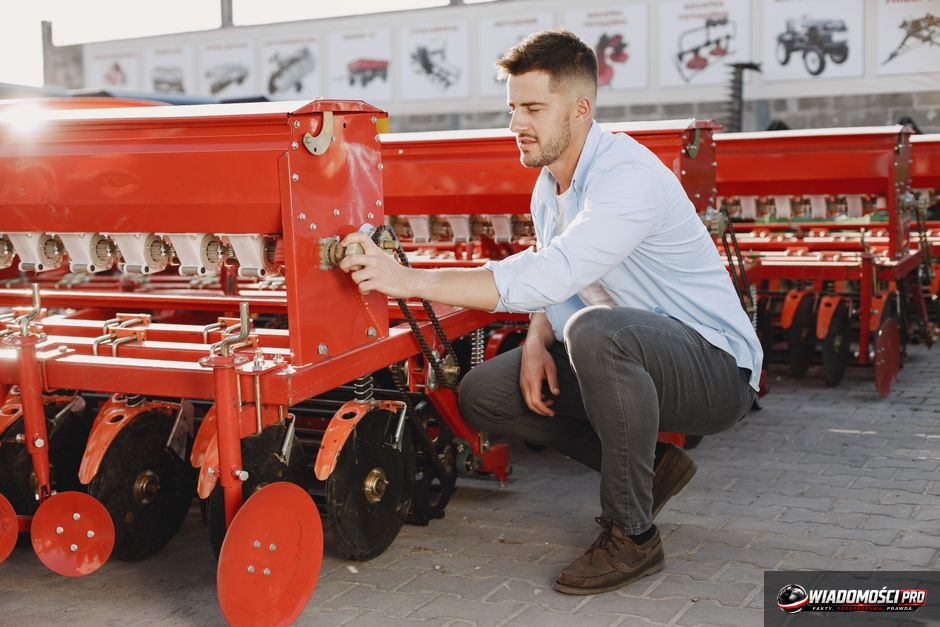
The AgroSysIT project won the national stage of the James Dyson competition; however, detailed technical data, implementation costs, and the full device specifications have not yet been officially released by the creators. The lack of transparency in the face of success on such a prestigious stage raises questions about whether the system is a real tool for farmers or merely a theoretical engineering model. The agrotechnical market has grown accustomed to projects that shine in competitions only to disappear into technical documentation without a trace.
Victory for Polish technical ingenuity: AgroSysIT on the podium
The jury's verdict on September 21, 2026, elevated AgroSysIT to the rank of one of the most important engineering achievements of the season in Poland. The project, which aims to bring agricultural diagnostics directly to the field, has received a pass to the international stage of the competition. This success, however, is not solely a matter of aesthetics or the innovation of the presented concept. It is, above all, confirmation that the sector needs solutions that bridge the gap between the physical state of the soil and the decision to fertilize.
Currently, a farmer who wants to check the soil's content of nitrogen, phosphorus, or potassium must take samples, pack them into appropriate containers, and send them to a certified chemical-agricultural station. The waiting time for results is usually from a few days to as long as three weeks. During this time, weather conditions can change drastically, and the optimal window for fertilizer application can pass irrevocably. AgroSysIT, in its promise, solves exactly this problem. Instead of waiting for a courier shipment, the operator would receive the result in real-time.
Despite the win, the team of creators has not decided to disclose the key parameters of the device. From the perspective of an agricultural practitioner, this approach raises concerns. Investing in technology whose efficiency, measurement error threshold, and operating cost remain unknown is fraught with huge risk. In agriculture, an error of a few percent in fertilizer dosage over several hundred hectares of crops translates into real financial losses and a drop in yields. Success in a competition is only the first verification—one that evaluates an idea on paper. The real test will take place in the field, where the equipment must withstand variable weather conditions, tractor vibrations, and dust.
What is the AgroSysIT diagnostic laboratory?
The essence of AgroSysIT boils down to an attempt to miniaturize a full-scale chemical laboratory into a portable device. This idea is extremely attractive in theory. In practice, however, every analytical technology—whether based on near-infrared spectroscopy (NIRS) or electrochemical sensors—requires precise calibration. For the system to be useful, it must handle immense soil variability. The characteristics of sandy soils are different from those of clay or peat soils.
The lack of information about the measurement method makes it impossible to assess the device's reliability. If AgroSysIT uses vision algorithms, the question arises about the impact of external lighting on the reading. If, on the other hand, it uses chemical sensors, we do not know their lifespan. In a field environment, sensors degrade due to moisture and corrosive agents contained in mineral fertilizers. Without data on the resistance of components to these factors, it is impossible to determine whether the device is suitable for daily work or requires service after every measurement session.
The project creators have also not presented the software architecture. Does the system integrate with popular Farm Management Information Systems (FMIS)? Is data processed locally, or does it require cloud connectivity, which remains unstable in many rural regions? These questions remain open. The competition jury appreciated the innovative potential, but from the point of view of agricultural engineering, AgroSysIT remains a "black box." In this sector, transparency is not just a matter of good practice, but the foundation of trust. When a farmer buys a device, they are also buying a promise of precision. Without insight into the technical documentation, this promise is based solely on trust in the project team, not on hard data.
The project's potential for Polish agriculture
Polish agrotechnology is currently at a turning point. Large-scale farms are increasingly reaching for precision agriculture solutions, but the cost of diagnostic systems is often an insurmountable barrier for smaller entities. AgroSysIT, if it proves to be an affordable device, could significantly impact fertilization efficiency. Currently, farmers often apply fertilizers "by eye" or based on averaged soil fertility maps, which leads to over-fertilization in some places and deficiencies in others.
The potential cost reduction through precise dosing of plant protection products and fertilizers is measurable in thousands of zlotys per hectare. If AgroSysIT provides reliable data in real-time, it will allow for the creation of application maps with unprecedented accuracy. However, this is an optimistic scenario. The reality is that technology that has not been tested in extreme conditions often fails at the least expected moment.
The AgroSysIT competition entry suggests that the team is aware of the problems farmers face. Nevertheless, without publishing the results of field tests that would confirm the repeatability of measurements, this project remains at the conceptual stage. In agriculture, every innovation must travel a long road from prototype to implementation. This requires not only capital but, above all, hundreds of hours of work in various weather conditions. Does the AgroSysIT team have the facilities to allow for such verification? This question remains unanswered. Currently, we are observing a situation where the prestige of winning a competition overshadows the lack of technical specifics. For the industry, this is a signal to remain cautious and not treat the prototype as a ready-to-use tool for the upcoming growing season.
How AgroSysIT technology works: analysis of assumptions
IT-based diagnostic systems require a solid physical layer. In the case of AgroSysIT, the key element is the interface between the soil sample and the data processor. Based on publicly available assumptions, one can only presume that the system is intended to automate processes that previously required laboratory work. The problem is that in precision agriculture, the biggest challenge is not the measurement itself, but its representativeness.
Taking a sample from one point in a field does not provide a picture of the entire field. For the device to be effective, it must be mobile and allow for rapid data aggregation. If the creators of AgroSysIT have designed a system that requires manual preparation of each sample, its utility drops drastically. A farmer will not find time for complicated chemical operations during field work. The device must therefore be "maintenance-free" to a degree resembling the operation of a smartphone.
The lack of information about the calibration method is the most worrying. Every chemical sensor loses sensitivity over time and with the number of measurements performed. Does AgroSysIT have an auto-calibration system? Does it require expensive reagents that need to be replenished every season? These are fundamental issues that determine the Total Cost of Ownership (TCO). Without this data, the project remains in the realm of academic theory. Investors who could support commercialization will expect, above all, a business model based on predictable operating costs. For now, apart from an enthusiastic description of the idea, we have not received any information that would allow us to assess the feasibility of this task on an industrial scale.
The road to the international final
The international final of the James Dyson competition is a place where the world's most sophisticated engineering projects meet. There, evaluation standards are much higher than at the national stage. The jury will no longer judge the concept itself, but the Technology Readiness Level (TRL). To count in this competition, AgroSysIT must move beyond the "nice-looking prototype" stage.
International competition is also a confrontation with teams that often have the support of large technology corporations or world-renowned universities. There, every element—from the device casing to the data processing algorithms—is documented in a way that leaves no doubt about its operation. For the Polish team, this is a critical moment. If they maintain a strategy of silence, their chances for international success will drop drastically.
Many observers are asking themselves whether the authors' "silence" stems from a lack of intellectual property protection. Filing a patent application is a time-consuming and expensive process. However, in the world of engineering, it is impossible to build a position for long without revealing at least the framework performance parameters. If AgroSysIT is to realistically influence agriculture, it must come out of the shadows. The international jury expects numbers, charts from comparative tests with traditional laboratory methods, and a clear strategy for scaling production. Without these elements, the success in Warsaw will remain just a pleasant memory, and the project will be forgotten in the thicket of other similarly promising but unfinished visions.
Challenges before commercialization: what still needs to happen?
Implementing AgroSysIT into mass production requires overcoming a series of technological and market barriers. The first is durability. Agriculture is an environment where equipment is treated brutally. Dust, moisture, vibrations, extreme temperatures—all this must be taken into account in the device's design. If AgroSysIT is to be a tool that lasts five or ten years of work on a farm, it must undergo rigorous certification tests.
The next challenge is the business model. Do the creators see AgroSysIT as a one-time purchase of a device, or as a "Hardware as a Service" model? In agriculture, the subscription model is becoming increasingly popular, but it requires the provider to ensure continuity of support and software updates. If the system is to be integrated with modern tractors, it must have open data exchange protocols (e.g., the ISOBUS standard).
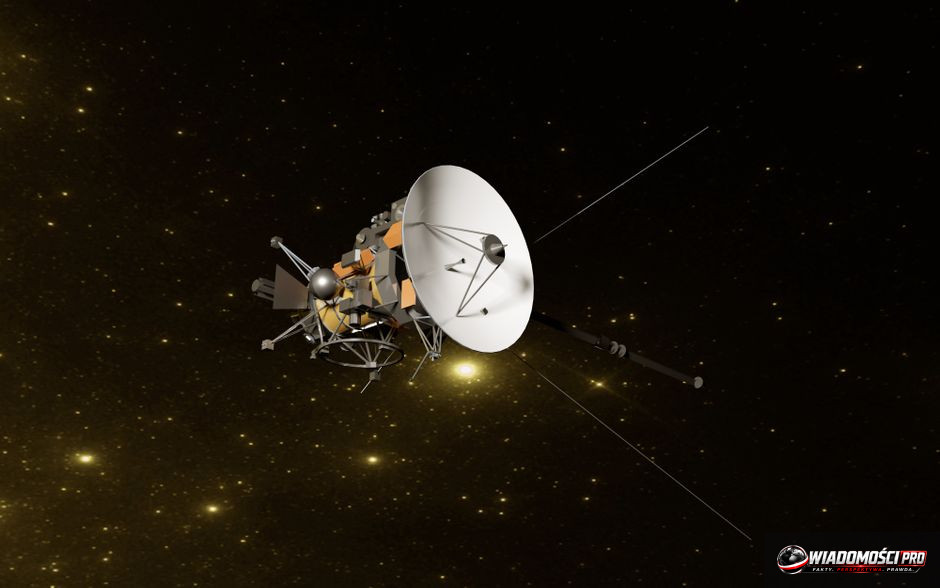
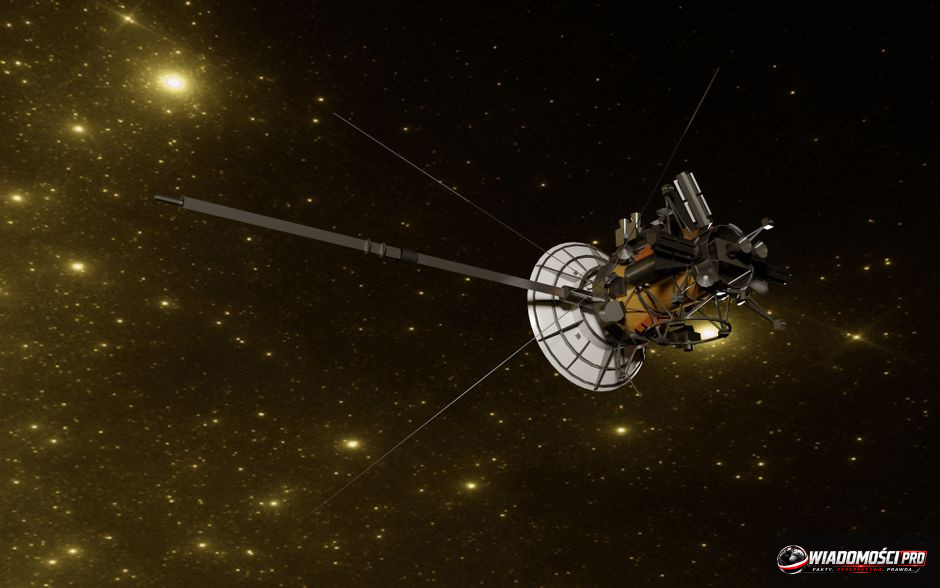
Until the creators answer these questions, AgroSysIT remains merely a curiosity. Industry skepticism stems from the fact that we have already seen too many projects that ended their life after receiving a grant or winning a competition. To avoid this fate, the team must now focus on transparency. 3D visualizations are no longer enough. Evidence is needed: test results, production costs, and a clear product development roadmap. Only then will this project become a real support for farmers, and not just another line item on the creators' CVs.
What this means for you
The success of AgroSysIT is undoubtedly a reason for pride for Polish engineering, but from the practitioner's point of view, the key remains the question of real utility value. As an editorial team, we believe that until we know the technical specifications and the expected implementation cost, AgroSysIT should be treated as a promising laboratory concept, not a tool ready for field work. For a farmer planning investments, the lack of this data is a barrier preventing any decision-making. We are waiting for a move from the creators, who must prove that behind the impressive project lies equally solid technology.
Questions and answers
How much does the AgroSysIT device cost?
As of September 21, 2026, the price of the device has not been made public. The creators have also not shared information about estimated production costs or the planned sales model.
When will the product go on sale?
The launch date for AgroSysIT has not been announced by the creators. The project is currently at the competition stage, which means it still requires work on industrial implementation.
Is the project available to every farmer?
No. The project is currently a competition prototype. There is no information about plans for mass production, component availability, or the service infrastructure necessary to maintain the equipment under farm conditions.
What measurement methods does AgroSysIT use?
Official sources, including competition documentation, do not specify the analytical methods used in the device. It has not been confirmed whether the system is based on spectroscopy, electrochemical sensors, or other research techniques.
Does AgroSysIT require specialized knowledge to operate?
The creators have not released an operating manual or assumptions regarding the user interface, so it is impossible to determine the competency requirements for the device operator in field conditions.
Where can you see AgroSysIT in action?
Currently, the device is not being presented in open field demonstrations. Available information is limited to promotional materials related to the James Dyson competition.
Article prepared by the Wiadomości PRO editorial team with the support of artificial intelligence. Facts are derived from the sources provided above.
Komentarze (0)
Ładowanie komentarzy...