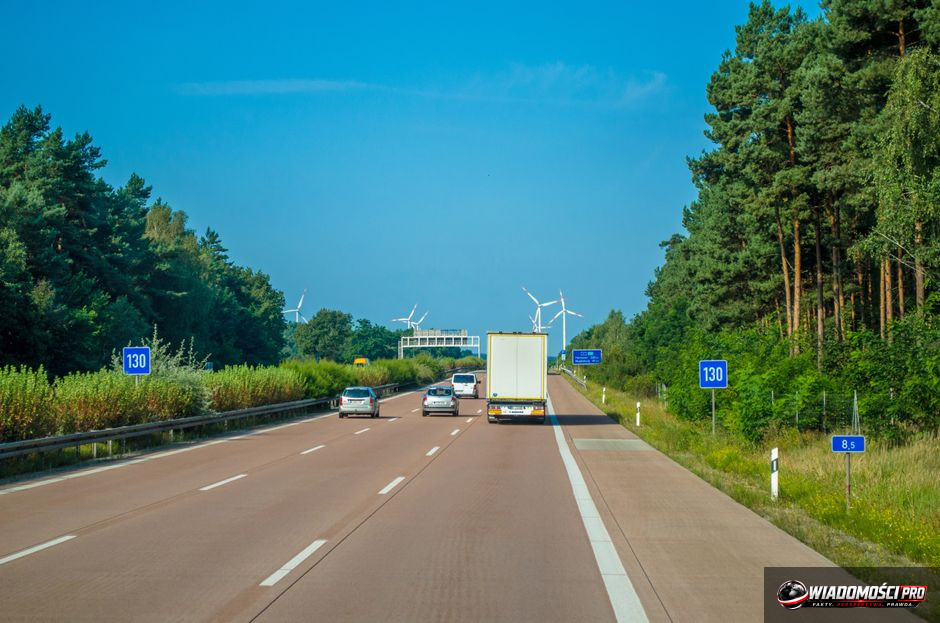
The removal of toll booths, including the plaza in Żernica, allows for smooth travel without stops, which reduces travel time by 5 to 10 minutes and increases motorway capacity. For light vehicles, travel remains free, and drivers gain an additional traffic lane where the old booths once stood. The liquidation of this physical barrier significantly improves travel comfort on a key section between metropolitan areas.
Technical challenges of demolishing a toll plaza
The liquidation of the toll plaza in Żernica is a complex engineering operation that goes beyond simply removing barriers. Road crews first had to take individual lanes out of service, which forced the narrowing of the roadway and speed restrictions for the duration of the work. This process included dismantling canopies, demolishing concrete islands separating the lanes, and milling the asphalt-concrete surface. In places where the foundations of toll booths were located, it was necessary to construct a new sub-base capable of withstanding the loads generated by transit traffic.
Engineers had to ensure the structural continuity of the roadway. Old concrete surfaces at toll plazas often had different parameters than the main motorway line, which necessitated the laying of new binder and wearing courses. A challenge was installing drainage, as the layout of gutters inside the former plaza was adapted to a completely different cross-profile of the road. After removing the barriers, the road geometry was rebuilt to allow for a smooth transition from a multi-lane layout to the standard width of the motorway.
Asphalt mixtures with high resistance to rutting were used. This is essential because, after opening additional lanes where the old booths were, the intensity of heavy goods vehicles is distributed evenly across the entire width of the road. Before the modernization, trucks often moved in designated lanes, which led to faster degradation of the surface in those specific spots. Now, thanks to the leveling of the surface along the entire section, the distribution of axle loads is closer to the design standards for class A roads.
Work completed in May 2026 allowed for the full opening of all traffic lanes. The lack of a need to change lanes before entering the toll zone significantly simplifies maneuvers. The former islands, which forced a slalom, have been completely leveled, eliminating the risk of side collisions during sudden maneuvers during rush hour. The horizontal and vertical signage used is now consistent with the rest of the route, which increases the readability of the road for drivers using it occasionally.
Evolution of payment systems: from e-TOLL to the total abolition of fees
The transition from a manual system to full digitization was a phased process. The launch of the e-TOLL system in December 2021 was meant to be the beginning of the end for manual ticket issuance. Despite the implementation of modern electronic gates, physical barriers still existed, which prevented the full utilization of the route's capacity. Drivers still had to slow down to avoid hitting a barrier, even if they used automatic payment.
The June 2023 decision to introduce free motorways for light vehicles was a turning point. From that moment on, the existence of toll plazas became illogical from an economic point of view. The costs of maintaining lighting, power systems, physical security, and servicing recording devices for passenger cars outweighed the benefits of maintaining this infrastructure. The process of phasing out manual toll collection for heavy vehicles was delayed, but for the majority of users, the route became a toll-free transit corridor.
The legal situation after 2023 forced road managers to adapt quickly. Many state-owned sections of the A2 and A4 underwent a transformation where the removal of "concrete relics" was a key element. The choice of the liquidation date for the Żernica plaza in 2026 resulted from the need to synchronize work with renovation plans along the entire A4 route. The road administration tried to avoid accumulating repairs during holiday periods, which influenced the demolition schedule.
For the transport industry, it remains significant that heavy goods vehicles with a gross vehicle weight exceeding 3.5 tons are still subject to the e-TOLL system. This means that although the physical booths have disappeared, the obligation to pay for travel remains. This system works in the background, using satellite positioning, which eliminates the need to stop. Control is carried out using radio gates (DSRC) placed above the roadway, which do not require drivers to reduce speed.
Impact on capacity: data and facts
Increasing capacity is the main argument for removing toll plazas. Before the modernization, at the site of the Żernica plaza, capacity was limited by the number of available toll booths. During peak hours, even with full staffing, the capacity was about 1200–1500 vehicles per hour per lane in the booth zone. After removing the obstacles, the theoretical capacity of the motorway increases to 2000–2200 vehicles per hour per lane.
This difference translates into a concrete time gain. Drivers traveling during morning and afternoon rush hours save an average of 5 to 10 minutes on each such section. This time results from eliminating the need to slow down from motorway speed to 20–30 km/h and accelerating again after passing through the booth. On an annual scale, for people commuting to work every day, this saving is measurable and contributes to lower fuel consumption, which is highest precisely during the vehicle acceleration phase.
Traffic intensity analyses indicate that before the changes, the most burdened lanes before the booths generated traffic jams ranging from 500 meters to even 2 kilometers during holiday periods. The liquidation of physical obstacles meant that the flow of cars is distributed evenly. There is no longer a "wave" effect, where the braking of the first vehicle before the barrier triggers a chain reaction among hundreds of drivers behind it.
Importantly, capacity is currently limited not by payment infrastructure, but by motorway interchanges and urban infrastructure into which the motorway introduces traffic. The removal of booths in Żernica has shifted the critical point of traffic flow further towards the main communication hubs of the Silesian agglomeration. This, in turn, forces road managers to make further investments in interchange infrastructure to avoid shifting traffic jams from one place to another.
Economic and social perspective: who gained and who lost?
The decision to remove the booths is a response to social pressure that had been building for years. Drivers of light vehicles, who make up the vast majority of A4 users, did not accept the necessity of paying for travel for which they were already paying indirectly through road taxes and fuel excise duties. The abolition of fees was part of the government's policy, which aimed to standardize the rules on state-owned motorway sections.
The social gain is clear. Reducing time spent in traffic jams is not only a convenience but also a measurable reduction in exhaust emissions. Vehicles idling before the booths emitted significant amounts of carbon dioxide and nitrogen oxides. The elimination of stops directly affects the improvement of air quality in the immediate vicinity of the motorway.
The catch, which experts often mentioned, concerns maintenance costs. Since passenger car users do not pay directly for travel, the maintenance of the surface, safety systems, lighting, and winter road maintenance are financed solely from the state budget and revenues from the e-TOLL system for heavy vehicles. There is a fear that in the face of rising costs of building materials and energy, the pace of modernization of subsequent sections may be limited by the availability of funds in the National Road Fund.
Not all A4 sections are state-owned. Fragments managed by private concessionaires still maintain toll collection systems, which creates a duality of the system. A driver traveling across the country may encounter sections without booths, only to enter a fragment requiring a stop at a booth a moment later. This inconsistency is one of the biggest problems of the Polish transport system, requiring a systemic solution in the future.
Technical challenges: what is happening under the asphalt?
Modernization after removing the booths is not just about laying a new surface. Under the roadway at the site of the former toll plaza, there is a complicated network of installations. Power cables for barrier control systems, fiber optics transmitting data to traffic management centers, and visual monitoring systems had to be secured or permanently disconnected.
During the demolition in Żernica, road crews encountered remnants of old drainage systems. This required earthworks at a depth of up to two meters to ensure proper drainage of the new, wider roadway. Errors at this stage could lead to water pooling in winter, which, combined with road salt, is deadly for freshly laid asphalt. Therefore, the quality of earthworks was monitored by external auditors.
The surface at the site of the former booths is exposed to greater stress. During braking and acceleration, the horizontal forces acting on the bituminous mass are significantly higher than when driving at a constant speed. Therefore, technologies for reinforcing the sub-base with geosynthetics were used, which prevent the "keying" of concrete slabs and minimize the risk of reflective cracking.
For traffic maintenance engineers, the challenge was also to organize work in a way that was non-invasive to traffic flow. Every narrowing generated a risk of accidents. The use of real-time traffic management systems, including variable message signs (VMS), allowed for informing drivers about changes in traffic organization on an ongoing basis. Thanks to this, despite the ongoing work, it was possible to maintain the passability of all lanes during peak traffic hours.
The future of motorway traffic management
The liquidation of booths in Żernica is part of a broader strategy for the modernization of the Polish motorway network. The goal is clear: to create a uniform, maintenance-free travel system that will be fully automated. In the future, monitoring systems based on artificial intelligence will analyze vehicle flow in real-time, automatically detecting traffic incidents and optimizing traffic control at interchanges.
The e-TOLL technology is to be expanded with more advanced data analysis modules. Thanks to this, road services will be able to predict congestion in advance, informing drivers about it via mobile applications and satellite navigation systems. Integration with Connected Car vehicles will allow for the automatic sending of incident messages directly to car dashboards.
Despite these innovations, the physical limitations of roads remain. Even with perfectly smooth travel, a motorway has its maximum capacity. In the face of a constantly growing number of cars, the challenge will be not so much removing booths as expanding infrastructure with additional traffic lanes on the most burdened sections, especially around the Silesian and Warsaw agglomerations.
Road workers point out that modernization after manual toll collection is a continuous process. Every removed toll plaza is a step towards European standards, where traffic flow is a priority. Skeptics, however, point out that without a systemic reconstruction of interchanges, the mere liquidation of booths on the main route will only be a partial solution to the problem. The Polish motorway network now needs investment in bottlenecks at city entrances, which become new critical points after eliminating obstacles on the motorway artery.
Questions and answers
After removing the booths in Żernica, do passenger car drivers still need to use any payment application?
No, for light vehicles (passenger cars and motorcycles), travel on state motorways is completely free, which means there is no need to have the e-TOLL application or a motorway ticket.
What specific benefits will a driver feel in their daily commute after this modernization?
The driver primarily gains driving smoothness, which shortens travel time through the interchange by about 5 to 10 minutes during peak hours, and eliminates the stress associated with sudden braking and the need to choose the correct lane before the barrier.
Is there a different speed limit now at the site of the former booths in Żernica?
Currently, the standard speed limit for motorways applies on the rebuilt section, i.e., 140 km/h, unless road signs state otherwise. Drivers no longer have to slow down to 20-30 km/h, which was necessary during the time the plaza was in operation.
Why did the modernization take so long, since the electronic system was introduced as early as 2021?
This process required not only turning off manual payment systems but, above all, carrying out complex construction work involving rebuilding the road geometry, dismantling heavy concrete infrastructure, and adjusting underground installations, which, for traffic safety reasons, could not be done in a short time.
Does the disappearance of the booths mean that the A4 motorway has become fully free along its entire length?
No, only sections managed by GDDKiA are free. Fragments of the A4 motorway managed by private concessionaires are still subject to separate regulations and may require fees to be paid in accordance with the price lists in force there.
What are the further plans of GDDKiA regarding infrastructure after manual toll collection?
Road workers plan to continue the process of optimizing capacity on the country's main arteries, which includes not only the liquidation of remaining toll collection points but also the modernization of motorway interchanges to minimize the phenomenon of shifting congestion from the main route to access roads.
Do heavy vehicles benefit from the changes in the same way as passenger cars?
Heavy vehicles still have to pay tolls, but thanks to the liquidation of physical booths, this is done in a maintenance-free manner via the e-TOLL system. Truck drivers also benefit from traffic smoothness, as they do not have to stop at booths, which translates into lower fuel consumption and faster delivery times.
Can we expect further work on the A4 in 2026 related to removing the remnants of the booths?
Liquidation processes are carried out successively in accordance with the GDDKiA schedule, so drivers should follow traffic announcements, as modernization work at selected interchanges may last throughout the year, aiming to finally close the free travel system for passenger cars.
Will the removal of physical booths increase the risk of accidents on the motorway?
On the contrary – studies indicate that the elimination of places where frequent speed changes, slowing down, and sudden braking occurred significantly improves safety and reduces the number of rear-end collisions, which were the bane of toll plazas.
How can a driver make sure if they are driving through a toll-free section?
The road manager regularly updates information on the e-TOLL website and in road services, indicating sections covered by the exemption from fees. It is worth using official GDDKiA maps before planning a longer trip to avoid surprises on paid concession sections.
The modernization of the A4 is proof that technology combined with the right political decision can change the everyday life of millions of travelers. Although the physical traces of toll booths are disappearing and concrete rubble is being removed from construction sites, road network managers in Poland face the challenge of maintaining this capacity in the face of constantly growing traffic. What we have gained as drivers is primarily regained time and mental comfort, which could not be bought for any money in a queue to a barrier. Now, all eyes are on how quickly it will be possible to clear congestion at transfer points where the motorway connects to urban traffic. That is where the next battle for the smoothness of Polish transport will be fought.
Sources
- The end of booths on the A4. Liquidation of the Żernica Toll Plaza to start soon - katowice24.info
- Booths will disappear, and drivers will gain an extra lane. Changes on the motorway - Portal Samorządowy
- Paid sections on the A4 – check where and how much you will pay in 2026 - Rankomat
- Booths will disappear from the A4 motorway. Road workers indicated the dates - wnp.pl
- How and where to pay for motorway travel from December 1st - Rzeczpospolita
- Abolition of toll collection for light vehicles - e-TOLL
- New rules on motorways. The end of booths on state-owned sections of the A2 and A4 - Business Insider Polska
- Free motorways from July. "The government is giving drivers a carrot" - Money.pl
Article prepared by the Wiadomości PRO editorial team with the support of artificial intelligence. Facts come from the sources listed above.

Komentarze (0)
Ładowanie komentarzy...