At a glance
- The total cost of the Europa Clipper mission is 5 billion dollars.
- The probe was launched into space in October 2024 aboard a Falcon Heavy rocket.
- The device's main task is to study the chemical composition and thickness of the icy shell of Jupiter's moon.
Budget and funding: 5 billion dollars for the search
Budget and funding: 5 billion dollars for the search
The truth about the Europa Clipper mission's budget is ruthless to the American taxpayer's wallet. The total cost of the project, which has fueled the imaginations of NASA engineers for years, amounted to 5 billion dollars. This is a gigantic sum, even by the standards of a space agency accustomed to multi-billion dollar expenditures. This money did not disappear into a black hole of bureaucracy. It was precisely divided into three pillars: designing and building the advanced probe, creating precise research instruments, and the complex logistics of the launch.
Every dollar from this pool must now deliver results. The primary goal is simple to define but extremely difficult to implement. NASA wants to verify whether conditions conducive to the emergence and maintenance of life actually exist beneath the thick, icy shell of Jupiter's moon. This is not a cheap excursion. It is technology that must survive the extreme radiation in the vicinity of Jupiter and operate flawlessly for years while being billions of kilometers away from maintenance crews.
It is worth asking whether this 5 billion is the final amount. The history of space missions has shown many times that costs can dangerously inflate during a project. In this case, the agency closed the budget during the preparation phase, but the actual operating costs that will arise during the multi-year data collection may still strain the original assumptions. For the taxpayer, this is an expense of about a dozen dollars per head. For science, it is an investment in answering the question of whether we are alone in our Solar System. If Europa Clipper returns empty-handed, 5 billion dollars will become a symbol of one of the most expensive mistakes in the history of space exploration. However, if it finds traces of life, this price will cease to have any meaning.
Launch technology: The role of the Falcon Heavy rocket
Launch technology: The role of the Falcon Heavy rocket
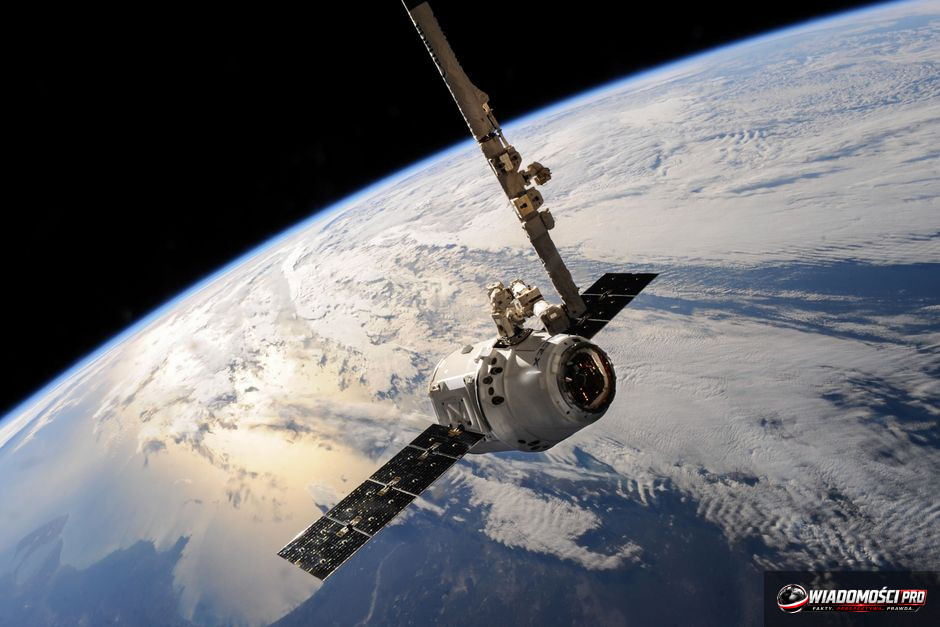
The Europa Clipper probe began its multi-year journey toward Jupiter using a Falcon Heavy rocket, manufactured by SpaceX. This launch platform proved to be an essential link in the entire operation. The decision to choose this specific system enabled the efficient and timely initiation of the mission in October 2024, which was a necessary condition for maintaining NASA's tight schedule. Engineers had to be sure that the heavy payload, which the probe is, would be launched into the correct trajectory without unnecessary delays.
The question of the justification for such a huge expenditure, however, remains open. The entire undertaking costs 5 billion dollars. This is an astronomical amount, even by the standards of space agencies, and it sparks discussions about priorities in deep space research. Funding of this scale must yield concrete answers. The main goal of the scientists is to check whether conditions conducive to the emergence and maintenance of life exist beneath the thick, icy shell of Jupiter's moon. We are not looking for the organisms themselves yet, but for an environment in which they could survive.
Falcon Heavy did its job by launching the probe into space, but the real challenge began after leaving the atmosphere. Now, the equipment, weighing nearly six tons, is dependent on precise maneuvers and electronic life-support systems. If the instruments fail, those 5 billion dollars will be the most expensive calculation error in history. From the perspective of the taxpayer who is paying this bill, success is the only acceptable option. There is no room for corrections when the object is hundreds of millions of kilometers from Earth. We can only wait for data that will confirm whether the invested capital will change our understanding of extraterrestrial biology.
Mission schedule: From launch to research
Mission schedule: From launch to research
The Europa Clipper project consumed a budget of 5 billion dollars. This is a huge sum behind which lies a specific goal: verifying whether conditions conducive to the emergence and maintenance of life actually exist beneath the icy shell of Jupiter's moon. It is not just about finding microbes, but about checking whether the ocean hidden under kilometers of ice possesses the right chemistry and temperature.
The implementation of such a costly undertaking requires precisely planned logistics that span years. Here is the chronology of this flight toward the Jovian system:
- October 2024: The mission launch took place. The probe left Earth, beginning a long journey toward the outer regions of the Solar System.
- Flyby stage: The current status of the probe involves heading toward the target to eventually conduct a series of precise flybys over Europa.
During the close approaches to the moon, onboard instruments will study the structure of the ice shell and attempt to peer into the interior of the ocean. NASA opted for flybys instead of a landing, which is a safer solution but also demanding for the research equipment. It must capture data in the blink of an eye while racing through the radiation-contaminated environment of Jupiter.
Skeptics note that the high cost of the mission generates pressure for results. The agency cannot afford a failure or the collection of data that will be ambiguous. From the taxpayer's perspective, these 5 billion dollars are an investment in answering the question of whether we are alone in our cosmic neighborhood. If it turns out that Europa does not have conditions for life, the failure will be not only scientific but also a reputational one for the entire American deep space exploration program. We can only wait for the first hard data from the flybys.
Why Europa? The biological potential of the moon
Why Europa? The biological potential of the moon
The American agency NASA invested 5 billion dollars to check whether something more than just dead rock is actually slumbering beneath Europa's icy shell. This is an astronomical amount behind which lies a specific goal: verifying data suggesting that a salty ocean is hidden under a thick layer of ice. For astrobiologists, this is the most promising environment in the entire Solar System. It is not about finding ready-made forms of life, but about checking whether the chemical composition of this hidden reservoir can support them at all.
The mere presence of liquid water is not enough to declare success. Europa Clipper is tasked with investigating whether processes known from Earth's depths, where life develops without access to sunlight, occur in this oceanic environment. Scientists are looking for concrete evidence of the existence of organic compounds and energy that could fuel the metabolism of potential organisms. Without this, the ocean will remain just a gigantic, salty puddle.
However, it is worth cooling the emotions prematurely fueled by space travel enthusiasts. Even if the probe confirms ideal conditions, it will not be synonymous with detecting living beings. This is a reconnaissance mission, not direct contact. NASA is relying on precise measuring instruments that are to transmit data over millions of kilometers. If the mission does not provide unambiguous evidence of chemical oceanic activity, 5 billion dollars may turn out to be the most expensive lesson in humility regarding the limitations of our technology in history. The question remains whether humanity is ready for an answer that might be: "the conditions are perfect, but no one is there."
Competition and cooperation: Americans on the way to Jupiter
Competition and cooperation: Americans on the way to Jupiter
The Europa Clipper mission is not only a scientific challenge for NASA, but above all a financial and reputational commitment worth 5 billion dollars. The agency has made this project an absolute priority of the current decade, committing huge resources to be the first to answer the question of whether conditions conducive to the emergence and maintenance of life actually exist beneath the icy shell of Jupiter's moon.
The Americans do not hide their ambition to outpace the competition in the race to Europa. NASA is leading the project, clearly distancing other space agencies in terms of the pace and scope of preparations for the exploration of this specific object. This is not a PR project, but a hard competition for primacy in astrobiological research. Will this approach bring measurable scientific benefits, or will it only strengthen US dominance in deep space?
The scale of financial outlays alone, reaching the aforementioned 5 billion dollars, raises questions about the justification for such costly undertakings in the face of the agency's tight budget. However, no one in Washington is backing down from this investment. Europa Clipper is intended to be proof that the American space sector can independently carry out missions of such high complexity, even if it requires long-term planning and a huge burden on taxpayers.
In the shadow of this race remains the question of international cooperation. Although NASA officially emphasizes openness to cooperation, the actual course of operations shows that the main decision-making axis remains in the hands of American engineers and scientists. Other agencies, observing the progress of the project, must increasingly accept the role of observers, while Washington consistently builds its position as a leader in the search for traces of life beyond Earth. Each subsequent stage of the mission is a manifestation of American technological power.
What's next? Perspectives for science
What's next? Perspectives for science
The investment of 5 billion dollars that the American space agency has allocated to this project sets an extremely high bar for researchers. This did not just buy equipment, but above all time, which will allow for a precise check of whether conditions conducive to the emergence and maintenance of life are actually hidden beneath Europa's icy shell. This is no longer a matter of science fiction, but of hard data that will flow into research centers over the next few years.
The scientific community, however, does not expect ready-made answers to questions about the existence of extraterrestrial organisms right away. The ambitions reach deeper. Scientists hope that the research instruments on board the probe will provide information that will revise existing theoretical models regarding the outer parts of the Solar System.
Expectations for the mission are focused on specific areas:
- Data transmitted by the probe will allow for a better understanding of the evolution of Jupiter's moons, which is crucial for explaining geological processes occurring on such a large scale in extreme conditions.
- The mission's results may change the definition of habitable zones in the Solar System, forcing astronomers to change their approach to selecting targets for future space expeditions.
The question is whether, after spending such a gigantic amount, space agencies will be able to maintain the pace of funding for subsequent stages of exploration. The success of Europa Clipper will open the way for further missions, but in the case of ambiguous results, the lobby of opponents of such expensive NASA projects will be given strong arguments. For the world of science, this is a moment of trial. It will be decided whether Europa is just a geological curiosity or actually a place where biology could have survived in the darkness under the ice.
What this means for you
The Europa Clipper mission is a huge step for astrobiology. Scientists and humanity gain by receiving answers to fundamental questions, while the budgets of other NASA projects, which had to be limited for the sake of this ambitious undertaking, lose out. The catch is the huge distance and the difficulty in transmitting data from such a remote place in real time.
Questions and answers
How much did the Europa Clipper mission cost exactly?
The cost of the mission was estimated at 5 billion dollars.
When did the probe launch?
The probe launched in October 2024.
What is the main goal of this mission?
The main goal is to study conditions conducive to life beneath the icy shell of Jupiter's moon, Europa.
Sources
- Europa Clipper probe will search for life on Europa - Urania - Polish Astronomical Portal
- Start of the Europa Clipper mission [BROADCAST]. Americans will outpace Europeans in the search for life on Europa - Wyborcza.pl
- Europa Clipper probe will search for life on Jupiter's moon, Europa - Wszystko co najważniejsze
- Beginning of the Europa Clipper mission - Kosmonauta.net
- They are looking for life in the Solar System beyond Earth. NASA sends a mission - Geekweek Interia
- NASA sends a probe to Europa. Europa Clipper mission has launched - WP Tech
- Flight to Jupiter for 5 billion dollars. Europa Clipper launch aboard Falcon Heavy - Benchmark.pl
- Flying to search for life. NASA mission launch in just three weeks - Antyweb
Article prepared by the Wiadomości PRO editorial team with the support of artificial intelligence. Facts come from the sources provided above.

Komentarze (0)
Ładowanie komentarzy...