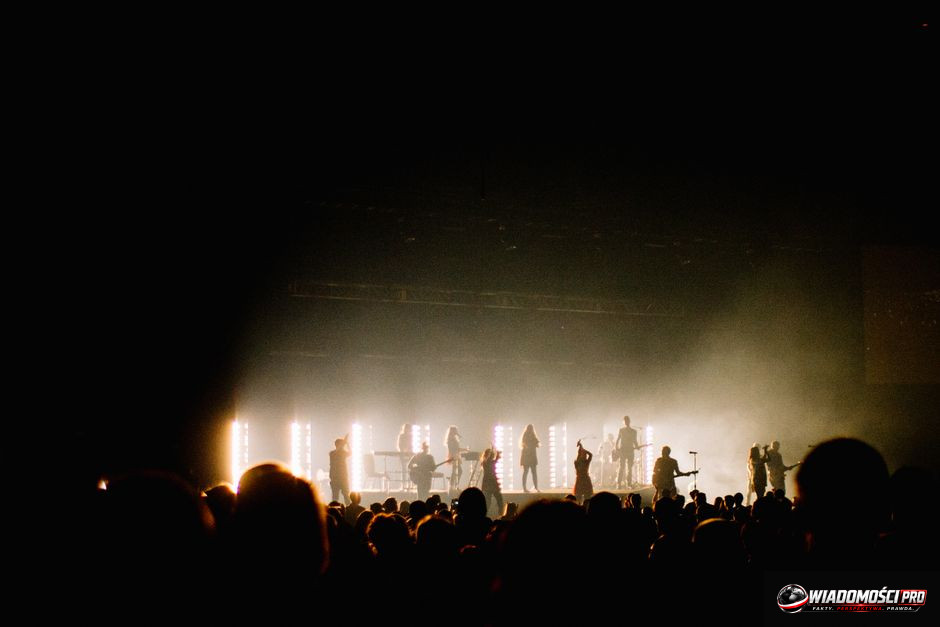
As part of the "Obrotowy Tour 2026," Dawid Podsiadło performed in cities including Gdańsk, Chorzów, and Warsaw, gathering a total of over 300,000 fans during the largest stadium concerts in Poland. Although the exact number of tickets sold remains a secret kept by the organizers, the scale of attendance at stadiums in the largest cities confirms the artist's dominance in the Polish concert market. The venture, inaugurated with announcements in December 2025, has become a logistical benchmark for future stadium productions in our country.
Logistics of large arenas
"Obrotowy Tour 2026" was primarily a complex process of space management. The choice of venues in Gdańsk, Chorzów, and Warsaw was dictated by the availability of the largest arenas in Poland. Each location imposed different technical conditions. Providing adequate stadium sound reinforcement while maintaining sound quality close to studio conditions was the greatest challenge for the production crew.
The Silesian Stadium (Stadion Śląski) in Chorzów hosted the artist twice. The double performance allowed for full amortization of the stage design construction costs. The technical crew did not have to dismantle the structure after the first night. This is a standard working model in the global show business, which only gained significance in Poland thanks to such extensive tours. A similar solution was implemented in Warsaw.
Managing stadium entry points required precise planning. With tens of thousands of fans per venue, every minute of delay at the gates generates massive security problems. Reports from the tour confirm high organizational efficiency. Traffic paralysis around the venues, which often happens at events of this scale, was avoided.
The table below presents the main points of the tour and the characteristics of the venues used:
| Location | Venue | Number of concerts | Characteristics |
| :--- | :--- | :--- | :--- |
| Chorzów | Stadion Śląski | 2 | Largest capacity arena in Poland |
| Warsaw | National Stadium | 2 | Main center for stadium events |
| Gdańsk | Stadion Gdańsk | 1 | Facility with high technical throughput |
| Attendance data | Total | 5 | Over 300,000 viewers (estimated) |
Sales dynamics and ticket strategy
The ticket sales process was initiated on December 3, 2025. Even then, the first additional dates at the Silesian Stadium were announced. The organizers adopted a strategy of releasing ticket pools gradually. This move extinguished early speculation on the secondary market and allowed for real-time reactions to demand.
The final batch of tickets went on sale on March 26, 2026. This moment exhausted the interest of industry analysts who had predicted market saturation. Systematically adding dates proved to be the foundation of the attendance success. Dead spots in the calendar were avoided, ensuring full occupancy of the stands during each of the five concerts.
People trying to purchase tickets faced long waits in virtual queues. The scale of interest exceeded the capacity of the ticketing systems. From a business perspective, this strategy was highly effective. It allowed for selling out stadiums without running aggressive discount campaigns, which is rare for events of such a large scale.
New single as a driving mechanism
The premiere of the song "na błysk" took place on June 3, 2026. It was a key element of the promotional strategy, executed just before the start of the tour. Releasing new material a few days before the first concert is a move that combined interest in the music with the need to purchase a ticket. In the music industry, tour promotion usually lasts many months, so this timing was unusual.
Podsiadło used his media reach, transforming the single's premiere into an event accompanying the tour. "Na błysk" functioned as a marketing tool that sustained discussion on social media. Fans, anticipating a live performance of the song, gained an additional argument for attending the stadium show.
Musically, "na błysk" fits into the artist's modern style. With stadium arrangements, the song gained a new dimension. Podsiadło did not base the tour solely on nostalgia. Maintaining current contact with the audience through new material shows that the artist treats the tour as a living organism.
Quality of the spectacle against the backdrop of the Polish scene
Reports from the performance in Gdańsk on June 21, 2026, confirm that the production quality of the concert exceeded the standards of many other Polish productions. Precision in lighting selection and visual consistency made the concert a project bordering on visual arts.
Many reviewers noted the artist's ability to establish contact with a crowd of tens of thousands. In huge venues, the loss of intimacy in the message is a common problem. Podsiadło maintained a balance between the scale of the spectacle and direct communication. The use of modern stage technologies supported the musical message instead of overwhelming it.
The concert industry had to verify its own plans. The standard set by Podsiadło – based on a high technological level – became a benchmark. Every performer planning a stadium tour must reckon with the expectations of an audience that has already seen a world-class show.
Economic impact on the concert market
The success of "Obrotowy Tour 2026" brought tangible benefits to local service markets. Stadium concerts generate massive traffic in the hotel, catering, and transport sectors. Gdańsk and Chorzów recorded a significant increase in tourist activity during the concert dates.
The model used by the organizers shows high resistance to economic fluctuations. Focusing on the largest venues and maximizing profit by adding dates allows for effective management of fixed costs. This is a model that may become the dominant form of organizing large events in Poland.
However, there is another side to the coin. Concentrating such a huge number of fans in a few selected points makes smaller music centers lose significance. The market is becoming polarized. On one hand, we have gigantic stadium tours; on the other, niche club events. The market for mid-sized concerts in arenas is feeling pressure from the stadium giants.
Infrastructure and technological challenges
When planning the tour, the biggest challenge was the logistics of transporting equipment between the Silesian Stadium and the venues in Warsaw and Gdańsk. Each stadium has different structural specifics. The technical crew had to show flexibility in assembling the stage design. This is not simple work, considering the need to maintain identical sound quality in each of these places.
The technology used during the tour included advanced sound systems that allowed for an even distribution of sound intensity in the stands. Viewers in the furthest sectors could experience quality similar to that offered by a mix on the main floor. This achievement is crucial in the era of stadiums, where reverberation often destroys artistic impressions.
Energy management was a constant element of preparations. A stadium, as a facility requiring massive power, had to be prepared for the needs of "moving head" lighting and powerful LED matrices. This required coordination with energy suppliers and local facility managers. This is a process invisible to the viewer, yet it determines the safety of the venture.
Sociological context of the phenomenon
Podsiadło's attendance phenomenon can be viewed in sociological terms. For the generation of 20- and 30-year-olds, the artist has become a figure connecting different environments. At the stadiums in Gdańsk or Chorzów, fans of alternative music and mainstream listeners met. This universality of the message is why it was so easy to fill venues with capacities of tens of thousands of people.
Experiencing music together at a stadium has become an important ritual for this group. In the age of streaming, physical presence at a stadium concert is gaining value. Podsiadło sensed the need to return to the communal experience of sound.
The artist consistently builds his image as an authentic person. Combined with the stadium scale, this creates a fascinating contrast. Fans see him as "one of their own," who, despite reaching the peaks of popularity, remains faithful to his musical sensitivity. This trust is a lasting capital that the artist has accumulated over years of his career.
The future of the stadium model in Poland
Is "Obrotowy Tour 2026" the peak of the Polish concert market's potential? Demand for tickets suggests that the market is capable of absorbing even more such events. However, the number of stadiums meeting the technical requirements for productions of this class is limited in Poland.
A likely scenario for the coming years is the evolution of a model in which the artist offers an entire experience around the performance. This could be the development of apps dedicated to concerts, augmented reality at stadiums, or greater personalization of ticket offers. With his 2026 performances, Podsiadło showed that the boundary between music and technology is blurring, creating a new quality that will be a standard for future generations of musicians.
The issue of ticket prices, which must be calculated accordingly for such high-quality production, remains significant. Despite high costs, fans were willing to pay for attendance, which shows that the quality of the spectacle is their priority. The concert industry will have to answer the question of whether this trend will persist in the event of an economic slowdown, or if the stadium market will become a luxury good.
Competition analysis and the artist's position
In 2026, many artists on the Polish concert scene tried their hand at the stadium format. However, it was Dawid Podsiadło who dominated the media space. His advantage lay in his ability to manage fan expectations. While other artists announced tours too early or too late, Podsiadło set a pace that was difficult to keep up with.
Skeptics accused him of excessive commercialization, but the attendance results in Gdańsk or Warsaw dispel these doubts. The audience does not vote for an image, but for an experience. If a show is worth its price, fans return. Podsiadło has developed a system in which musical quality goes hand in hand with technical professionalism, which makes him unrivaled in the current decade.
The competition will have to draw conclusions from "Obrotowy Tour 2026." Just going on stage is no longer enough. It is required to think about the concert as a holistic project, where every detail – from the moment of purchasing a ticket, through logistics at the stadium, to the setlist itself – matters. This is a lesson the music industry will not soon forget.
Questions and answers
Where did Dawid Podsiadło play in 2026?
The artist performed at the largest Polish arenas, including the Silesian Stadium in Chorzów and venues in Warsaw and Gdańsk.
Were tickets for the tour easily available?
Demand was so high that tickets sold out quickly, forcing organizers to gradually release additional dates and ticket pools.
What new song promoted the tour in 2026?
The tour was promoted by the single "na błysk," released on June 3, 2026, shortly before the start of the stadium concert series.
What sales strategy did the organizers adopt?
The strategy was based on rationing ticket availability and adding concerts in response to real demand, which helped avoid chaos on the secondary market.
Did Podsiadło perform in Chorzów only once?
No, the artist decided on a double hit at the Silesian Stadium, which allowed for better optimization of the technical logistics of the entire show.
What distinguished these concerts from other tours?
Critics and fans emphasized world-class production quality that combined the intimacy of the message with stadium grandeur, which is a rare achievement in Polish conditions.
When were the first additional concerts announced?
The first announcements regarding additional dates, including at the Silesian Stadium, appeared on December 3, 2025.
Did the tour affect the music market in Poland?
Yes, the tour set a new organizational standard, forcing other performers to raise the bar in terms of technical and logistical quality for stadium concerts.
How were the performances rated in terms of sound?
Reports from the concerts confirmed high sound quality, which, at the stadium scale of events, was one of the biggest challenges for the artist's technical crew.
Was every concert completely sold out?
According to available information and the organizers' strategy, all stadiums were filled, which confirms the power of the Podsiadło name in 2026.
Deeper analysis: Technological processes
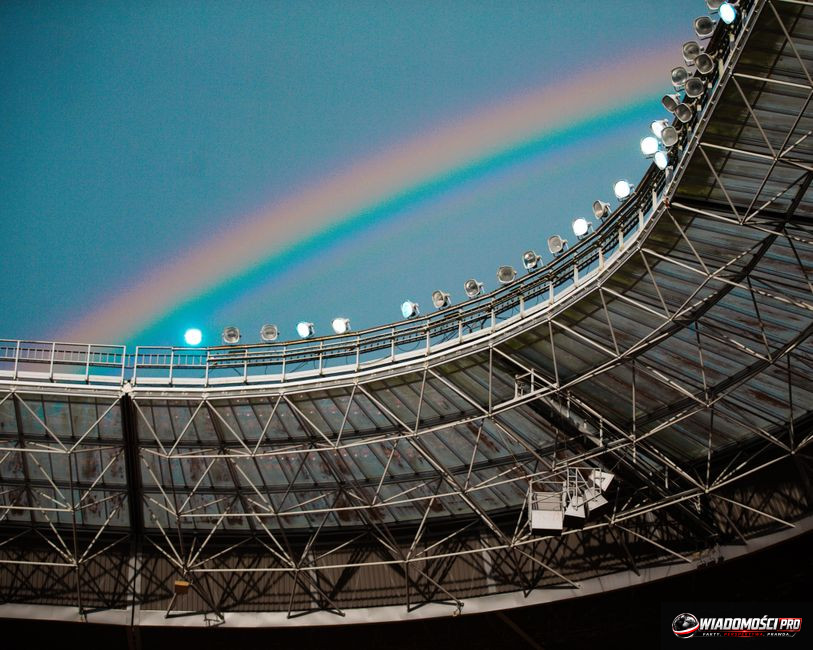
The scale of "Obrotowy Tour 2026" forced organizers to cooperate with companies specializing in stadium infrastructure. Stage assembly is not just steel structures. It is primarily power systems that must withstand the load of "moving head" lighting and powerful LED matrices. In Gdańsk, the challenge was the acoustics of the opening roof, which, if calibrated incorrectly, can distort sound. Podsiadło's crew used advanced signal processors. These allowed for the reduction of sound reflections from the metal elements of the roof structure.
The logistics of transporting equipment itself was a military operation. Technical teams worked in a shift system. After the end of the concert in one city, the equipment was immediately dismantled and loaded onto dozens of semi-trailers. Each element of the stage design had its own digital identifier. This allowed for tracking the location of each module in real-time. Such an approach eliminated errors during assembly in subsequent cities.
In Warsaw, at the National Stadium, special attention was paid to the logistics of fan flow inside the facility. Monitoring systems based on image analysis were used, which informed security in real-time about crowd density in specific sectors. Thanks to this, security services could react in advance. This solution helped avoid incidents that often happen at large mass events.
Finance and risk management
Financing a stadium tour involves huge risk. Fixed costs include venue rental, insurance, security, and salaries for hundreds of technical workers. The organizers of "Obrotowy Tour 2026" opted for a profit-sharing model with strategic partners. Thanks to this, they managed to keep ticket prices at a level acceptable to the market, despite rising organizational costs.
Risk management also included weather issues. In the case of stadium concerts, rain or strong wind can force the performance to be interrupted. Podsiadło secured himself with contracts that provided for appropriate compensation in the event of random incidents. Additionally, each facility was checked by independent safety auditors 48 hours before the gates opened.
It is worth noting that the attendance success allowed for the financing of additional elements of the show. They were not planned in the initial budget. Expanded stage design and additional special effects were added during the tour. This shows the financial flexibility of the project. The artist did not skimp on quality, which translated into a positive reception from fans.
The role of new media in the tour's success
Building tension around the tour did not happen only through traditional channels. Podsiadło used social media mechanisms to engage fans in the process of creating the show. Each post informing about subsequent concerts was analyzed for reach. This data was used to optimize advertising budgets in specific regions.
Fans, by posting photos and videos from concerts, became a free marketing force. The organizers facilitated this by creating special spots with good lighting, intended for recording content for platforms like TikTok or Instagram. This is a well-thought-out strategy. A user who posts a report from a concert is the best brand ambassador.
In 2026, the artist's communication with fans became more direct. Podsiadło gave up intermediaries in the form of traditional interviews in favor of his own communication channels. Thanks to this, the message was consistent and authentic. Fans felt they had access to the "real" Dawid, and not to a created media image. This trust built over years paid off during the ticket sell-out in March.
Summary of the stadium model
The model that Podsiadło presented in 2026 goes beyond the framework of ordinary touring. It is a hybrid of entertainment, technology, and relationship marketing. The music industry in Poland received a clear signal. The audience is ready for large events, provided they are professionally prepared.
For future organizers, the lesson from 2026 is clear. Scale cannot come at the expense of quality. Every element must be designed with the end-user in mind. From the convenience of purchasing a ticket, through safety at the stadium, to the sound quality itself. If this standard is maintained, the concert market in Poland will continue to grow.
Can we expect more tours of a similar scale? Everything depends on the availability of stadiums and the potential of artists. Podsiadło showed that the Polish market has sufficient absorption for this type of venture. The question remains about other performers. Will they be able to repeat this success? Time will tell, but the bar has been set extremely high.
Viewer perspective – emotions and expectations
For the average viewer, the concert in Gdańsk or Chorzów was an event to be remembered for years. A stadium show is not just music. It is a sense of belonging to a large group of people with similar interests. Podsiadło, despite the huge scale, was able to make everyone feel part of the spectacle.
Interactions with fans, often improvised, added freshness to the concerts. In the era of choreographed performances, where every second is planned, such moments are worth their weight in gold. Fans appreciated the artist's authenticity. It was this, alongside technical quality, that was the foundation of success. People come to a concert for the music, but they stay for the emotions.
In summary, "Obrotowy Tour 2026" is a project that redefined the concept of success in Polish show business. The combination of hard logistics, intelligent sales strategy, and authentic contact with the recipient created a mixture that is hard to resist. This is not just an attendance success, but above all, proof that the Polish concert market has matured to the highest global standards. The future of live Polish music looks bright, provided this level of professionalism is maintained.
Sources
- Dawid Podsiadło for several hundred thousand fans. Two concerts each in Chorzów and Warsaw - rp.pl
- Dawid Podsiadło Obrotowy Tour 2026 – the biggest concert tour of the year - kulturalnemedia.pl
- Dawid Podsiadło captivated crowds in Gdańsk. He showed how to do a world-class show - Trojmiasto.pl
- Dawid Podsiadło with a new single "na błysk". Announcement just before the stadium tour - Kultura Onet
- Dawid Podsiadło announces another concert in 2026! - ebilet.pl
- Dawid Podsiadło adds another stadium concert in 2026 [DATE, TICKETS] - Open FM
- Dawid Podsiadło released the last tickets for his stadium concerts - cgm.pl
- Dawid Podsiadło will play two concerts at the Silesian Stadium. Tickets will go on sale soon - Dziennik Zachodni
Article prepared by the Wiadomości PRO editorial team with the support of artificial intelligence. Facts come from the sources provided above.
Komentarze (0)
Ładowanie komentarzy...