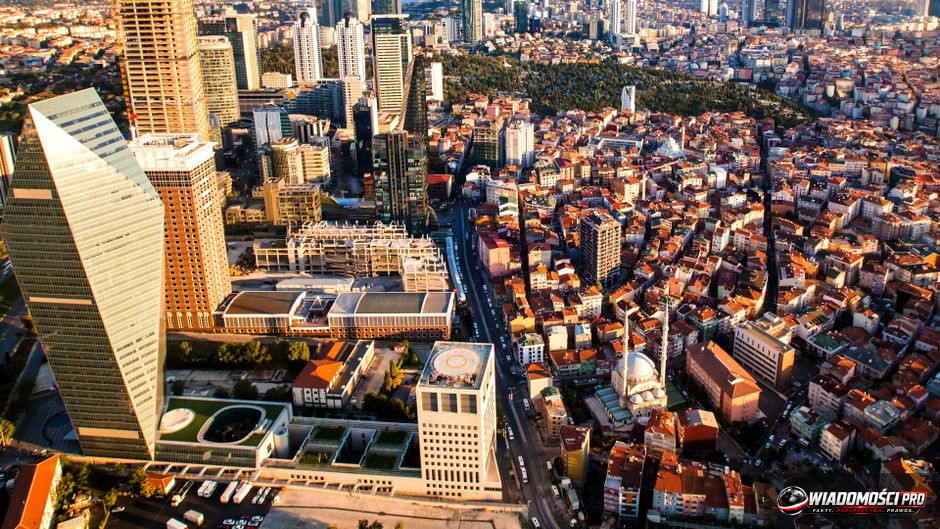
Is it worth investing in Turkey? Liquidation of 130 funds
Investing in Turkish funds currently carries a very high risk, as evidenced by the forced liquidation of 130 entities by the regulator after the detection of manipulation, including a fund showing unrealistic returns of 66,000 percent. Such a scale of intervention by the Sermaye Piyasası Kurulu (SPK) serves as an unprecedented warning signal for anyone considering placing capital on the Bosphorus. The systemic pathology that led to the erasure of such a large number of funds from the registers casts a shadow over Turkey's entire financial market, forcing investors to revise their portfolios and exit strategies.
The genesis of the scandal and mathematical fiction
The detection of an entity declaring an annual profit of 66,000 percent became the direct trigger for the actions of the Turkish supervisory authority. In the world of professional finance, such a value is not an anomaly – it is mathematical proof of the complete fiction of the underlying assets. A fund that generates a result of this scale does not trade stocks or commodities. It merely conducts an accounting illusion designed to attract the capital of people who, in pursuit of quick profit, abandon elementary risk assessment. The lack of any market justification for such a rapid increase in asset value was a signal to the SPK that we are dealing with a mechanism resembling a financial pyramid. In fair stock trading, even with massive volatility, jumps of this scale are impossible to maintain without a drastic increase in risk exposure, which in this case was not demonstrated in any audit documentation.
The regulator conducted an audit that revealed systemic abuses across the entire segment of collective investment products. The result was a verdict: the forced liquidation of 130 entities. A market in which the supervisor must wipe such a huge number of players off the map in one move has ceased to be a place where one can safely place savings without advanced knowledge of local realities. If a fund promises profits that sound like a lottery win, it is likely a lottery with no winners. Financial supervision determined that the listed entities pose a real threat to the stability of the entire system, which has almost completely destroyed trust in Turkish collective investment instruments.
Supervisory mechanisms: The role of the SPK regulator
Sermaye Piyasası Kurulu, the Turkish equivalent of the Polish Financial Supervision Authority, had to switch to emergency mode. The decision for forced liquidation is not a routine market review, but a signal that manipulations have been detected in the system that called into question the integrity of the entire sector. The scale of the irregularities is shocking even under the conditions of high volatility of the Turkish lira. Among the entities slated for closure were funds that declared results in their annual reports that were detached from any market logic. This is an impossibility that, under normal conditions, should have triggered an alarm immediately after the publication of the first prospectus.
The SPK's supervisory actions focused on several priorities intended to stop further capital flight and restore remnants of trust. First, there was an immediate halt to the operations of 130 entities to secure the remaining investor funds from being siphoned off. Second, a detailed verification of portfolios has begun, which is intended to show whether the declared assets even exist in reality. Third, compliance with regulations, which had previously been routinely bypassed by the creators of these funds, is being checked. The Turkish financial market currently requires foreign investors to exercise not just technical analysis, but detective-like vigilance. If a regulator has to liquidate such a large group of entities in one fell swoop, it means the hole in supervision was gigantic.
Risks of investing in emerging markets
Investing in the Turkish fund market has ceased to be a high-stakes game and has become an open systemic risk. The problem is not limited to a few fraudsters. The Turkish market is extremely sensitive to inflation and rapid changes in monetary policy, which directly translates into fund valuations. When the Turkish lira loses value, foreign capital flees in a panic, causing sharp outflows. Funds that do not have adequate liquidity become traps at such moments. Investors are left with papers that cannot be sold at a real price.
A lack of transparency remains the greatest sin here. Many entities operated in a gray area, reporting profits that had no basis in company fundamentals or bonds. The regulator has not publicly released a list of all fund names or the specific mechanisms these entities used to falsify results. This makes searching for a safe haven in Turkey currently resemble Russian roulette. For an outside investor who has no insight into local books, verifying the authenticity of such funds is practically impossible. This market today requires not so much optimism from capital as surgical caution. The current situation is a hard lesson that where profits look improbable, they are usually simply untrue.
What happens to investors' money?
The situation of unit holders in the 130 liquidated entities is currently in the phase of legal proceedings. The Turkish supervisory authority, the Capital Markets Board of Turkey (SPK), has not published a precise schedule for payouts or guarantees of full capital recovery. Liquidators appointed by the state have begun the procedure of securing assets, which in practice means freezing accounts until audits are completed. Each case is analyzed individually, which means investors must arm themselves with patience. No one has provided a specific date for the return of funds.
The capital recovery mechanism differs drastically depending on the fund's structure. In the case of closed-end funds, the process is long-term and dependent on the sale of non-financial assets, such as real estate or shares in private companies, which, in the face of turmoil in the Turkish market, may mean having to accept deep discounts. Open-end funds, in theory more liquid, have portfolios of stocks and bonds. Here, liquidators sell securities on the stock exchange, but with such a large scale of market exit, selling pressure further lowers valuations, depleting the final amount that will reach participants. There is a lack of hard data regarding the costs of the entire liquidation process, which will be borne by investors. It has also not been confirmed whether there are reserves sufficient to cover claims in the case of funds where manipulation was detected.
If you have funds in Turkish funds, you must take specific steps. First of all, contact your broker or financial institution through which you purchased the units to obtain official confirmation of your fund's status. It is also worth regularly monitoring the SPK website, where lists of liquidated entities and instructions for foreign investors regarding filing claims are published. Do not wait for an automatic return of funds. Verifying status in the regulator's registers is currently the only way to obtain reliable information on whether your fund is on the list of liquidated entities.
A lesson for investors: How to avoid being scammed?
The situation in Turkey is a reminder that the promise of above-average profits almost always ends in capital loss. The market regulator in Ankara had no choice: the forced liquidation of 130 funds is an admission of systemic pathology. Investors who lost their savings could have protected themselves from disaster by applying elementary safety rules, which we often forget in the pursuit of easy money. A lack of transparency is the greatest enemy of a portfolio.
The principle of diversification is fundamental. If all capital goes into one exotic fund, the risk of total loss increases exponentially. True security is built by spreading assets across different markets, sectors, and instrument classes. Another issue is the verification of historical results, which must be done in relation to market benchmarks. If a fund declares results several hundred percent higher than major stock indices or risk-free rates, it is not an investment opportunity, but a warning signal of manipulation. External audits provide a necessary barrier to abuse. An investor should check who provides the opinion on the fund's finances. Is it a reputable, independent firm, or an entity capital-linked to the managers? In the case of Turkish funds, the lack of credible external certificates had been visible for months, although official data on auditors were not fully made public by the regulator.
The future of the Turkish financial sector
Investing in Turkish funds has become playing with fire. The scale of the irregularities is shocking even to regular observers of that market. This is not a system error; it is proof of systemic gaps in supervision. For a foreign investor, the regulator's decision to shut down such a mass of funds means a sharp retreat from risky assets. Trust in financial institutions in Istanbul has crumbled, and rebuilding a reputation will take years. It has not yet been confirmed whether and when the SPK will announce new, stricter reporting standards for newly created funds, although the market expects a tightening of capital requirements as early as the next quarter. Without hard evidence of transparency, foreign capital will give this market a wide berth.
The long-term consequences for liquidity on the Istanbul Stock Exchange are worrying. The outflow of funds from "high-yield" funds, which largely drove turnover in less liquid companies, could lead to the paralysis of many local instruments. Investors who counted on a quick profit have been left with frozen assets and no clear path to capital recovery. Currently, there is a lack of official data regarding the total value of funds trapped in the 130 liquidated entities, which only exacerbates the panic. In this situation, Turkey ceases to be an exotic opportunity and becomes a market where every cent requires triple verification, if such an investment makes any economic sense at all.
Analysis of the structure of these funds indicates serious shortcomings in liquidity risk management. Many of them based their operations on a very narrow group of investors, which, when larger players attempted to exit the market, led to the immediate exhaustion of available funds. Turkish law provides for specific steps in the event of liquidation, however, in the current political and economic situation, this procedure may drag on for years. Foreign capital, which until now treated Turkey as a market with high growth potential, must now face the fact that supervisory institutions were unable to foresee the scale of the abuse.
It is worth noting that the Turkish stock exchange has recently recorded record index levels, which, given high inflation, could have been partly the result of capital fleeing bank deposits toward the stock market. This mass of capital was extremely susceptible to manipulation. Funds that promised returns exceeding inflation became the only salvation for middle-class savings. As it turns out, it was merely a mechanism for redistributing funds from retail investors to managers who exploited gaps in supervision.
What this means for you
For an investor, this means the necessity of exercising extreme caution: a profit of thousands of percent is almost always a signal of manipulation or a financial pyramid, not market success. The liquidation of 130 funds is a signal that regulators in Turkey have begun to aggressively clean the market of entities that could threaten the stability of the entire financial system. If you were considering entering this market, the current situation should be reason enough to halt all transactions. If you are already involved, verifying your assets with your broker should be a priority.
Investing in Turkey currently requires accepting the fact that reporting standards may be lower than in developed markets. This does not mean that every investment must end in a loss, but the risk of error in assumptions is drastically higher. Investors should focus on entities with an established position that have audits from reputable international firms, rather than local entities whose ties to the fund management may be unclear.
Questions and answers
Is my money in a liquidated fund gone?
The liquidation process assumes the valuation and return of remaining assets, however, in the case of detected abuse, recovering the full invested amount may be difficult and time-consuming. Much depends on whether the fund actually held any financial assets or if they were merely entries in the books.
Why are such high returns suspicious?
Such astronomical returns do not result from natural market processes and usually indicate manipulation of asset prices or the use of illegal leveraging strategies. Real financial markets operate based on the actual profits of companies, which rarely exceed several dozen percent per year, not thousands.
How do I check if my fund is safe?
You should check the fund's status in the SPK register, analyze audit reports, and verify whether the fund's results do not deviate drastically from the average for a given sector. It is also worth seeking information from local chambers of commerce, which may have knowledge about the history of the managers of a given entity.
Is investing in Turkey completely written off?
No, this market still offers exposure to specific industries, but it requires the investor to have a much higher level of commitment to risk analysis than in the case of developed markets. Limiting investments to the largest, publicly traded entities may be a safer alternative than using "high-yield" funds.
Where to seek legal help if my funds have been frozen?
Help should be sought from law firms specializing in Turkish law and international law. It is also worth contacting the supervisory authority in your country of residence, which may cooperate with the Turkish SPK in cases involving cross-border financial fraud.
In summary, the situation with the liquidation of 130 funds in Turkey is a brutal lesson in humility for the capital market. Investors who sought quick profits paid the highest price for them, and the repair process in the Turkish financial system will take a long time. Anyone planning investments in this region must now approach offers with extreme skepticism and precede every decision with a thorough check of the legal status of the asset management institution. Capital security now depends solely on your vigilance and ability to verify data provided by managers.
Article prepared by the Wiadomości PRO editorial team with the support of artificial intelligence. Facts are derived from the sources provided above.

Komentarze (0)
Ładowanie komentarzy...