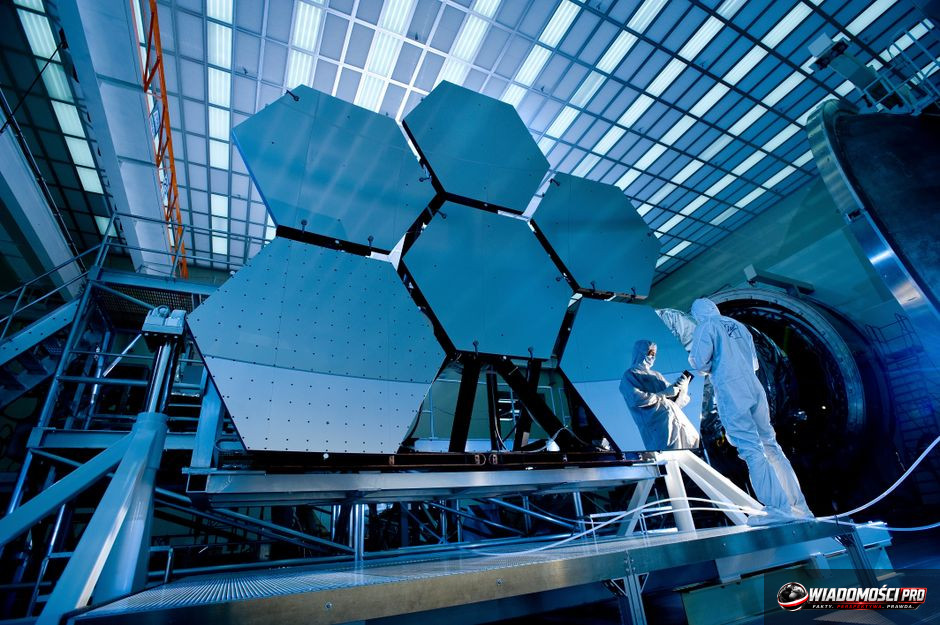
The projected profit of PLN 5 for every zloty invested stems from the multiplier effect in the high-tech sector and the development of the domestic space industry, which, thanks to KPO funds (PLN 2.8 billion), will gain access to the European IRIS2 constellation market. This mechanism is based on transferring capital directly to domestic companies specializing in precision optics, satellite control systems, and advanced communication management software. Replacing foreign suppliers with domestic entities allows for retaining margins within the Polish economy and building durable technological infrastructure that goes beyond one-off service orders.
IRIS2: European communication system under the Polish flag
The Polish Space Agency has finalized negotiations with the European Commission, guaranteeing domestic entities a share in the construction of IRIS2. This system represents Europe's answer to the dominance of the American Starlink, offering secure communication for government administration and uniformed services. The agreement, signed in July 2026, opens access to funding from the National Recovery Plan in the amount of PLN 2.8 billion. These funds are not merely a one-time subsidy, but targeted capital intended for the implementation of orbital technologies in Polish manufacturing plants.
Until now, the Polish space industry relied mainly on supplying niche components for larger European missions. Participation in IRIS2 changes this dynamic. Poland is responsible for the execution of approximately 10 percent of the entire program, which means the necessity of delivering highly complex components. Enterprises involved in the production of optical matrices, sensors, and satellite stabilization systems gain a guaranteed market. Instead of waiting for sporadic orders from ESA, companies are entering a permanent production cycle of European infrastructure.
Building the constellation requires precise coordination. Each IRIS2 satellite must possess advanced data encryption systems and resistance to signal jamming attempts. This opens a field for domestic IT companies that have previously developed software for the civilian sector and now must adapt their algorithms to rigorous telecommunications security standards. The success of the project depends on the pace of transforming these competencies from the prototype phase to mass production.
Financing from KPO: PLN 2.8 billion for a space-age technological leap
The budget for the operation is PLN 2.8 billion, which constitutes one of the largest single supports for Polish technology in recent years. Funds from the National Recovery Plan have been divided in a way that is intended to stimulate the development of the entire industry branch, not just selected research institutes. The mathematical mechanism behind the return forecast assumes that every zloty spent on developing a new optical sensor generates expenditures in cooperating companies: from composite material suppliers to assembly plants.
The multiplier effect in this sector results from high value-added. Unlike the food or clothing industry, where the margin is dispersed, in space technologies, the majority of costs consist of engineering work and intellectual property. If Poland produces its own communication modules, profits will remain in the country in the form of salaries for specialists and investments in machine parks. It is projected that PLN 2.8 billion will allow for financing the construction of at least three specialized assembly lines for medium-sized satellites.
The scale of Polish involvement includes:
- Financing 10 percent of the European IRIS2 constellation.
- Development of ground infrastructure necessary for controlling satellites.
- Technology transfer between scientific units and private enterprises.
The challenge lies in maintaining the pace of contract execution. The European Commission imposes rigorous delivery deadlines, which force Polish companies to scale production rapidly. If Polish enterprises fail to manage the logistics of component supply, the risk of losing contracts to companies from France or Germany is high. KPO money must be spent in a way that not only covers R&D costs but creates durable production capacities, resistant to market fluctuations.
The mathematics of profit: how did the government calculate PLN 5 from every zloty?
The ministries responsible for this project point to economic analyses that define the high-tech sector as the most profitable in relation to public expenditure. The calculation of PLN 5 for every zloty spent is not a random number, but the result of projected revenues from taxes, contributions, and the export of satellite services over the next ten years. These revenues are expected to come not only from the sale of equipment itself but also from maintaining and servicing European infrastructure after it is launched into orbit.
Invested public funds are redirected to entities that already possess the quality certificates required in the space industry. Thanks to this, these funds are not spent on basic science, but on concrete industrial implementations. Companies that win tenders must demonstrate the ability to produce components that will not fail in the extreme conditions of a vacuum. The value of these contracts translates into an increase in the valuation of Polish companies, which attracts further private investors.
Market analysts, however, point to variables that may affect the final result. The investment multiplier is effective only when Polish companies become primary suppliers, rather than just second or third-tier subcontractors. If a Polish entity supplies a screw for a satellite, the profit is minimal. If it supplies an entire data transmission module, the margin grows several times over. The government strategy therefore assumes moving Polish companies up the value chain, which is intended to ensure the realization of the assumed economic indicators.
It is necessary to monitor the so-called capital leakage effect. If components for Polish satellites are mostly imported from abroad, the profit multiplier will drop drastically. Therefore, a key element of the plan is building a domestic supply chain, from material production to advanced tests in vacuum chambers. Only full control over the product life cycle allows for the real generation of the announced returns.
National security: the country's satellite independence
Ministry of Interior and Administration documents define the satellite construction project as the foundation of the Polish security dome. Dependence on external suppliers, such as SpaceX, is assessed as a risk to the continuity of command in crisis situations. Possessing one's own satellites as part of the European IRIS2 constellation allows for independent data transmission that cannot be turned off by third parties. This is a strategic goal that goes beyond pure economic calculation.
Investment in satellite technologies is also about building resilience to cyberattacks. The infrastructure over which Poland exercises control is designed with the highest cryptographic standards in mind. Thanks to PLN 2.8 billion from the KPO, Polish services will gain access to dedicated communication channels that are isolated from the public internet. This solution significantly raises the quality of crisis management within the country, ensuring secure communication between headquarters and units in the field, even in the event of a total paralysis of the ground network.
It is worth noting that the operating costs of such an advanced system are high, but the alternative is complete reliance on someone else's infrastructure. The state is opting for a costly model of building its own capabilities because information security has become a scarce commodity. It is not just about protection against hacker attacks, but about ensuring the continuity of state services. IRIS2 satellites are intended to serve as a back-up for fiber-optic infrastructure, which is exposed to physical damage during conflicts.
The role of POLSA in the European puzzle
The Polish Space Agency acts as the main coordinator, tasked with looking after the interests of Polish companies in negotiations with the European Commission. It is POLSA that is responsible for ensuring that Polish entities are not pushed to the margins by giants of the space sector. The agency must balance the ambitions of Polish engineers with the country's real production capabilities. This role requires a constant presence in Brussels and lobbying for contracts that have a chance of being realized in Polish plants.
The mechanism intended to bring profit is based on the transfer of know-how. The Polish Space Agency forces European partners to cooperate with domestic enterprises within consortia. Thanks to this, Polish engineers learn satellite assembly from the best specialists from other EU countries. This is a process that takes years, but provides the foundation for future, independent missions. Without POLSA's supervision, KPO funds could be distributed among companies that only mediate in purchases, instead of building their own technologies.
The challenge for the agency is also the selection of projects. Not every idea for a satellite has a chance for market success. POLSA must distinguish technologies that are only theoretically correct from those that can actually earn money within the IRIS2 constellation. The agency conducts audits of companies, checking their production capabilities, financial stability, and innovative potential. This is a responsible task, because every failed investment lowers the credibility of the Polish space sector on the international stage.
POLSA's effectiveness will be measured by the number of contracts won by Polish companies in the third and fourth year of the project. If the agency does not maintain the pace, KPO money will be spent on equipment that will be obsolete after a few years. Therefore, it is crucial to constantly care for the quality of personnel. The Polish Space Agency is becoming a kind of hub where the paths of science and business cross, which is necessary for the efficient functioning of the entire communication system.
Perspectives for the Polish economy: what will companies gain?
The space sector in Poland is currently undergoing the most important test in its history. The investment of PLN 2.8 billion is an impulse intended to create market leaders in niche fields, such as optics or advanced control systems. Companies that decide to enter the IRIS2 supply chain must invest in the certification of their production processes. This is a costly procedure, but it opens doors to all projects carried out under the auspices of the European Space Agency.
For Polish entrepreneurs, this is a chance for stable contracts. In the high-tech industry, revenue predictability is a rarity, and satellite programs usually last from five to ten years. This allows for planning company development and investing in human capital. Instead of looking for orders from month to month, companies can build teams of specialists who will work on the same technologies for a long time. It is precisely this stability that is the key to building competitive advantages.
However, the risks cannot be ignored. The Polish economy is still struggling with a shortage of engineers with experience in space projects. Competition for specialists between companies in the space industry and the IT sector is enormous. Companies that want to maintain the pace of production must offer working conditions comparable to technological giants. The investment of PLN 2.8 billion must therefore also include training and scholarship programs that will allow for the education of personnel necessary to operate this technology.
Here is a summary of key financial data regarding the project:
- Value of investment in satellites from KPO — PLN 2.8 billion (data according to Portal mundurowy, 22.07.2026).
- Estimated return on every zloty invested — PLN 5 (data according to Bankier.pl, 20.09.2026).
- Polish declaration of financing the IRIS2 constellation — PLN 3 billion (data according to itreseller.pl, 22.07.2026).
- Funds for satellite communication converted to euros — approx. 600 million euros (data according to rp.pl, 21.07.2026).
What this means for you
Editorial angle: The investment in IRIS2 satellites is a risky but necessary game for technological sovereignty. The promise of a fivefold return on every zloty invested requires Polish companies to jump over a technological barrier in an extremely short time. If the transfer of knowledge from European research centers to our enterprises fails, instead of building a domestic industry, we will be subsidizing the success of foreign corporations that will take over the most profitable contracts.
Questions and answers
Where does the money for this project come from?
Funds in the amount of PLN 2.8 billion come from the National Recovery Plan (KPO).
What exactly is the IRIS2 system?
IRIS2 is a European satellite constellation providing secure communication for governments and services, constituting a sovereign answer to commercial systems such as Starlink.
Why does the government claim that every zloty will bring PLN 5 of profit?
This forecast results from the multiplier effect in the high-tech sector, where investments in space infrastructure stimulate the development of the domestic industry by generating high-margin contracts for equipment and software.
What is POLSA's role in this process?
The Polish Space Agency acts as a substantive partner that negotiates the terms of participation for Polish companies in the program and oversees the quality of implemented solutions so that funds are spent effectively.
Is Poland building its own satellites from scratch?
Poland is participating in the construction of the constellation by supplying components and software, which is an element of the European supply chain, rather than building the entire system in isolation from European partners.
Which sectors of the economy will gain the most?
The largest profits are projected for enterprises involved in optics, production of control systems, advanced software for communication management, and assembly of components with high resistance to space conditions.
What threats could affect the project's failure?
The main risks include: a shortage of qualified engineering staff, long investment return time, rigorous deadlines imposed by the European Commission, and the risk of losing contracts to more experienced entities from other member states.
Will the IRIS2 system be available to the average citizen?
IRIS2 is designed primarily as a system for the needs of state security and administration, although in the future it may offer services for the commercial sector if appropriate legal regulations are developed.
What will happen if Polish companies cannot handle the contracts?
In such a scenario, the capital from the KPO will be largely consumed by foreign entities, and Poland will not gain durable production capabilities, which will make the investment less economically profitable.
Does the investment include only equipment, or also people?
KPO funds have a broad application, covering both the purchase of modern machines and support for research and development teams as well as training for engineers in order to raise competencies in the space industry.
Sources
- Polish satellite dome. MSWiA project for PLN 2.8 billion from the National Recovery Plan - Portal mundurowy
- What is IRIS2? - Wszystko co najważniejsze
- Poland will take part in the construction of the European IRIS2 satellite constellation. Agreement with the European Commission signed. Special thanks to POLSA. - POLSA - Polish Space Agency
- Poland has an answer to Starlink. Almost 600 million euros for satellite communication - rp.pl
- Poland will finance 10 percent of the IRIS2 constellation: 3 billion for European satellites - itreseller.pl
- Poland will spend PLN 2.8 billion on satellites. The government talks about PLN 5 of profit for every zloty - Bankier.pl
- Poland has joined the IRIS² satellite communication program - Onet
- Poland will allocate PLN 2.8 billion for satellites in the EU IRIS2 system - Kresy.pl
Article prepared by the Wiadomości PRO editorial team with the support of artificial intelligence. Facts come from the sources provided above.


Komentarze (0)
Ładowanie komentarzy...