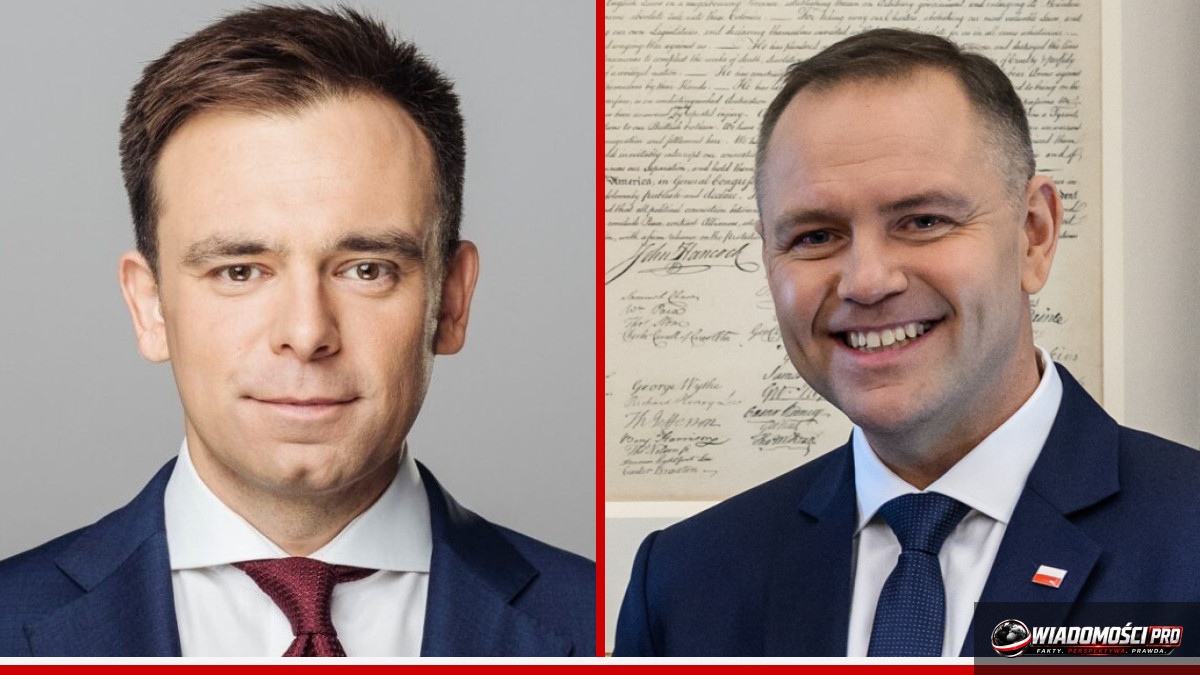
The Council of Ministers has adopted the 2025 budget draft with a record deficit of 289 billion PLN. This massive deficit forces the state to borrow heavily, which in practice means higher inflation, pressure for tax hikes, and a real risk of cuts in public services, such as healthcare. For the average Pole's wallet, this is a signal that the stability of the zloty and the purchasing power of money are becoming hostages to the rising costs of servicing public debt.
Mechanism for financing the record budget hole
The question of where the government will obtain the missing 289 billion PLN takes us beyond the sphere of parliamentary debates into the technical reality of the Ministry of Finance. The main tool for financing such a vast deficit remains the issuance of treasury bonds. The finance ministry, led by Andrzej Domański, must regularly go to the market for capital. In a situation where the state's borrowing needs exceed standard levels, investors demand higher yields, which directly translates into higher debt servicing costs.
This money does not come from a vacuum. The state is taking on obligations that will be repaid by future generations of taxpayers. Issuing bonds on the domestic market drains capital that, under normal conditions, could be used by the private sector for investment. Conversely, borrowing on foreign markets makes the Polish economy dependent on the moods of institutional investors and the exchange rate. Every fluctuation of the zloty up or down generates additional risks for the budget, which, given such a large scale of borrowing needs, creates a vicious cycle of financing.
In addition to issuing debt securities, the government must rely on tax revenues, which, in the face of an economic slowdown, are not growing at a pace sufficient to cover expenditures. As a result, the state faces a choice: either increase fiscal burdens or seek savings in rigid expenditures. The opposition calls this state of affairs financial vandalism, pointing out that the lack of transparency in expenditure planning makes it difficult to reliably assess how much the functioning of the state actually costs in 2025.
President Karol Nawrocki as arbiter of state finances
In the legislative process concerning the budget, the role of President Karol Nawrocki goes beyond the ceremonial signing of acts. The President has become the main point of reference for all sides of the conflict. In January 2026, in the face of ongoing work, the head of state's position on the assessment of public finances became one of the most commented-on topics in economic circles.
The President not only analyzes the expenditure provisions but openly criticizes the government's priorities. His warnings regarding the condition of healthcare have gained a political resonance that financial markets interpret as a signal of instability within the ruling camp. The scenario in which the President decides to veto or refer the act to the Constitutional Tribunal, although considered extreme by many, has for months paralyzed decisions on larger foreign investments in Poland. Capital does not like uncertainty, and a situation where the budget becomes a hostage to disputes between the Presidential Palace and the Ministry of Finance is a warning signal for investors.
Domański, gritting his teeth, must maneuver between hard macroeconomic requirements and the need to gain the President's approval. Any communication error in this dialogue could lead to an increase in bond yields, which means that Polish debt becomes more expensive to service. This is not a personal game, but arithmetic, where every day of delay in passing the budget costs taxpayers specific sums of interest on the obligations incurred.
Sejm votes on discharge
Votes in the Sejm on the discharge for the government have become more than just a technical confirmation of the execution of financial plans in the current term. It is a political plebiscite on the cabinet's credibility. Statements by opposition representatives about financial vandalism are not merely a rhetorical attack, but an attempt to draw attention to how a huge deficit changes the structure of state spending.
The processing of the budget in parliament shows a deep division over the direction of finances. On one hand, we have the ruling coalition, which argues that record spending is necessary for the country's security and the continuity of social benefits. On the other – the opposition, which accuses the government of hiding the real scale of debt in off-budget funds. It is these funds that stir the most emotion, as they allow for the circumvention of debt limits, which in the opinion of critics is a form of "creative accounting."
For the citizen, parliamentary battles over the discharge mean a state of permanent uncertainty as to whether the state will maintain financial liquidity. When MPs argue about figures, the question of the budget's real capacity in conditions where debt servicing costs are growing faster than GDP remains in the shadows. There is no talk of routine processing here; every budget session becomes a test for the stability of the entire fiscal system.
The healthcare sector in the face of the deficit
President Karol Nawrocki's criticism of the budget focuses largely on healthcare. The term "collapse budget" is not accidental. Medical facilities, which are already struggling with staff shortages and rising energy costs, face the prospect of further limiting access to specialists.
Financing healthcare is one of the most sensitive points in the budget. The government is trying to balance between the needs of hospitals and rigid financial frameworks, but with such a high deficit, every zloty spent on saving medical facilities must be found through cuts in other areas or by increasing debt. Medical experts warn that the current budget assumptions could lead to a situation where the quality of medical services falls below an acceptable level.
For the patient, this means lengthening queues and limited access to modern therapies. When the state faces a choice between servicing debt and investing in health, fiscal priorities usually win over social needs. It is this lack of balance that makes the debate about the budget no longer an abstract dispute of economists, but a problem that affects almost every household in Poland.
Impact on financial markets and the stability of the zloty
The quotations of the national currency are the best barometer of investor sentiment toward the Polish budget. The zloty, reacting to political uncertainty, is sometimes subjected to strong selling pressure. Foreign investors observe the situation from a distance, assessing whether Poland is able to keep the deficit in check without the need for drastic tax hikes in the future.
The capital market is already discounting scenarios in which permanent tension between the government and the President leads to legislative paralysis. If investors decide that the budget is unfeasible, they may demand a higher risk premium when purchasing Polish bonds. This directly translates into an increase in the costs of borrowing money, which, with a deficit of 289 billion PLN, is of huge significance.
The stability of the zloty depends on the credibility of the finance ministry. Andrzej Domański faces the task of convincing the markets that Poland has a plan to exit the high-deficit phase. Every piece of information about political disputes, threats of veto, or lack of agreement on budget issues is immediately priced in by the currency market. For the economy, this means that even without official decisions to withhold funding, the mere expectation of uncertainty can negatively affect inflation by weakening the zloty exchange rate and increasing the costs of imported goods.
Perspective for the citizen: what to expect?
For the average Pole, the record deficit is not just a number in the media, but a real factor affecting the cost of living. The state's high borrowing needs translate into inflationary pressure, because injecting such a large amount of borrowed capital into the economy with limited resources of goods and services favors price increases.
From the citizen's perspective, the important question is where the state is looking for savings. If it turns out that the finance ministry's forecasts were too optimistic, the necessity of making corrections during the budget year could hit public services. This means a risk that the modernization of infrastructure, investments in education, or the aforementioned healthcare will be pushed to the background.
Beneficiaries of social programs that have been permanently written into the budget may feel safe in the short term, but the long-term stability of these benefits depends on whether Poland will be able to keep debt servicing at an acceptable level. Every year with a deficit of 289 billion PLN limits the space for any future tax relief. Instead of cuts, Poles must reckon with the maintenance of high fiscal burdens to ensure the flow of cash into the budget.
Analysis of the state expenditure structure
Analyzing the expenditure structure for 2025, one should pay attention to rising military costs and debt servicing. Armaments, although necessary for geopolitical reasons, constitute a significant part of expenditures that must be financed from debt. Combined with the costs of interest on bonds, this creates a very rigid financial corset.
The government does not have an easy field of maneuver. If it decided on drastic cuts, it would risk social unrest. If it gave up some investments, it would risk slowing down GDP growth, which would further worsen debt-to-GDP ratios. This trap, in which the Ministry of Finance has found itself, is the reason why the discussion about the budget is so emotional.
An additional challenge is the fact that the Polish economy in 2025 must struggle with external turbulence. Energy prices, changes in EU climate policy, and fluctuations in the global supply chain further complicate budget forecasts. The finance ministry must therefore assume a margin of error, which, with such a high deficit, becomes extremely costly.
The role of the opposition and the debate on "financial vandalism"
The term "financial vandalism," used by the opposition, refers to the belief that the current government is pursuing a policy of "consuming" the future. Critics accuse the cabinet that instead of investing in innovation and productivity growth, it directs most of the funds to immediate needs that do not generate a return in the future.
This argument finds an audience in a part of society that fears that high debt will become the cause of a financial crisis similar to those that have affected other European countries in the past. The opposition points out the government's lack of a long-term strategy to exit the current state. According to them, the 2025 budget is an expression of helplessness in the face of the rising costs of maintaining the state.
It is worth remembering that political debate often ignores the technical aspect – borrowing in the current macroeconomic environment is a common practice in many Western economies. However, the scale of the Polish deficit is what distinguishes us from other countries in the region. The lack of consensus on whether 289 billion PLN is a safe amount remains the main axis of the dispute, which will likely dominate public debate throughout the coming year.
Questions and answers
Why is the budget deficit so high?
The deficit of 289 billion PLN results from the accumulation of spending on armaments, extensive social programs, and rapidly rising costs of servicing debt incurred in previous years.
Can President Karol Nawrocki block the budget?
Yes, the President has the power to veto or refer the act to the Constitutional Tribunal, which in the current political situation poses a significant risk to the state's financial liquidity.
What are the main accusations of the opposition against the government?
The opposition accuses the government of a lack of transparency in financial planning and "financial vandalism," claiming that the scale of debt is the result of irresponsible spending policy and a lack of discipline in managing public funds.
Where does the government get the missing billions to finance the deficit?
The main source of financing is the issuance of treasury securities (bonds), which are purchased by domestic and foreign investors, which increases state debt and its servicing costs.
What consequences does such a high deficit have for the citizen?
The most direct effect for the citizen is inflationary pressure, a higher risk of the need to raise taxes in the future, and limited space for improving the quality of public services, such as healthcare.
Why is healthcare mentioned so often in the context of the budget?
The opposition and medical circles point to the underfunding of facilities, which, in the face of a tight state budget, face the threat of cuts, which directly translates into longer queues for specialists and worsening patient care.
Can the situation on financial markets force the government to make changes to the budget?
Yes, if investors were to consider the Polish budget unreliable, the cost of borrowing money (bond yields) could rise to a level that would force the finance ministry to introduce radical spending cuts during the budget year.
Summary of the state of public finances
The adopted budget for 2025 is a document that defines the state of the Polish economy for the coming quarters. The record deficit is the result of a combination of external factors and internal political decisions. Regardless of whether we assess these actions as a necessity in difficult times or as irresponsible management, the numbers remain unchanged.
Poland is entering a phase where debt servicing costs are becoming one of the biggest challenges for the finance ministry. The stability of the zloty, future prices in stores, and access to public services will be directly dependent on whether the government manages to convince investors of the Polish financial plan. In the coming months, all eyes will be turned not only to the Sejm, but above all to the bond market, which will be the first to react to any sign of a lack of trust in the state's fiscal policy.
Managing such a large budget hole requires extraordinary discipline from the government, which will be extremely difficult in conditions of political polarization. Every spending decision will now be analyzed in terms of whether it deepens the crisis of confidence. For citizens, this means that 2025 will be a time of carefully watching their wallets, because the margin of error in Polish financial policy has practically ceased to exist. The 2025 budget is not just a record of expenditures, it is above all a test of the resilience of the Polish state in the face of mounting fiscal challenges.
The role of investors in risk assessment
Institutional investors, when analyzing the budget draft, look primarily at the so-called debt structure. They are interested in how much of the obligations are denominated in foreign currencies and what the average bond maturity is. In the case of Poland, the dominance of debt in zloty is an asset, but only as long as the currency exchange rate remains stable.
A high deficit forces investors to be cautious. If we see increased volatility in the PLN/EUR pair in 2025, it will be a clear signal that the capital market is starting to price in the political risk associated with the lack of agreement between the government and the President. This phenomenon, called the risk premium, is a hidden cost that we all pay as taxpayers.
For investors, political promises do not matter, only hard data on revenues and expenditures. If Andrzej Domański's government does not provide evidence that it can manage the deficit, we can expect capital outflows, which in the short term could lead to a weakening of the zloty. This, in turn, will drive up the prices of imported goods, including energy, which will fuel inflation. In this way, the circle closes, and the effects of budget decisions directly hit each of us.
Sources
- Discharge for the government granted. Opposition speaks of "financial vandalism" - Business Insider Polska
- Sejm has made a decision regarding the budget. The government received discharge - polskieradio24.pl
- Sejm voted on the budget. What about the discharge for the government? - Dziennik.pl
- President made a decision regarding the budget. "This is a healthcare collapse budget" - Rynek Zdrowia
- Polish budget in the hands of Karol Nawrocki. The decision could shake markets even without a veto - wnp.pl
- Budget in the hands of the President. Unexpected scenario on the table? - Money.pl
- Karol Nawrocki threatens the government over the budget. Domański gritting his teeth and waiting in tension - wyborcza.biz
- State budget for 2026. Government has made a decision - Interia Biznes
Article prepared by the Wiadomości PRO editorial team with the support of artificial intelligence. Facts come from the sources listed above.


Komentarze (0)
Ładowanie komentarzy...