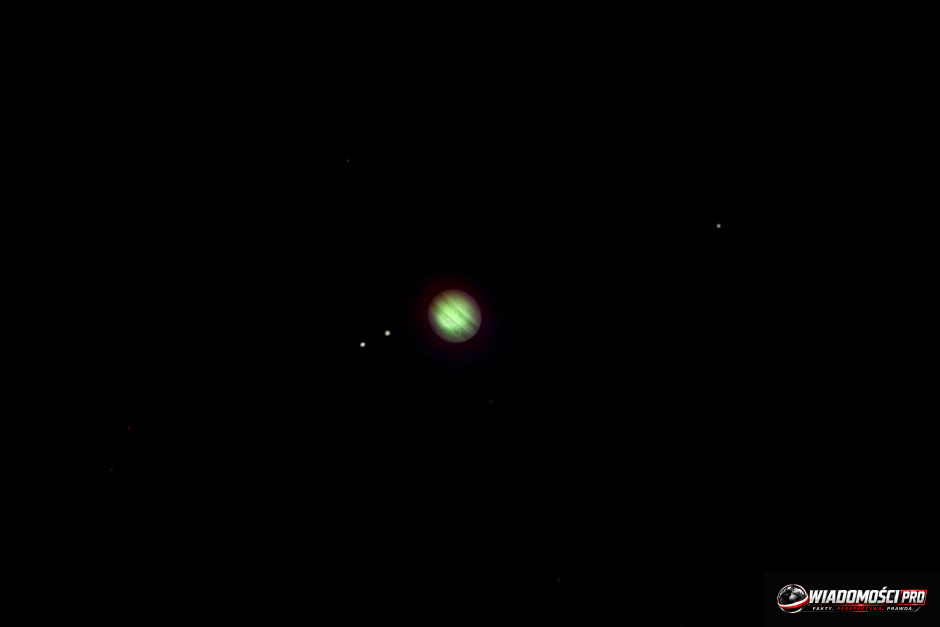
The Europa Clipper mission has consumed 5 billion dollars. Its primary goal is to conduct a detailed study of the environmental conditions prevailing beneath the icy crust of Jupiter's moon. The probe does not carry equipment capable of directly detecting living organisms, focusing instead on verifying the habitability of this distant world.
The choice of the Falcon Heavy rocket to launch this structure, weighing over six tons, was dictated by the need to achieve the necessary escape velocity. SpaceX, by handling this contract, enabled the dispatch of an advanced laboratory toward the Jovian system, where the probe will begin a multi-year process of data collection. Designers at NASA's Jet Propulsion Laboratory (JPL) had to take into account the fact that Europa is located in the heart of Jupiter's lethal radiation belt. Every component had to undergo resistance tests against high-energy particles, which rapidly degrade semiconductors and destroy power systems. The budget for this endeavor reflects the costs of defensive engineering. Special titanium and aluminum shields were used to act as armor for the onboard electronics.
The question of the justification for such high financial outlays arises regularly in decision-making circles. Supporters of the mission argue that the knowledge gained about extraterrestrial oceans is invaluable for understanding planetary evolution. Opponents point to operational risks. The research instrument systems must function flawlessly for years, and any potential failure in such deep space precludes any repair. There is no possibility of service intervention, which makes every technical decision fraught with immense pressure. Designing the probe required anticipating emergency scenarios that have not occurred in any other NASA planetary mission to date.
Understanding the mechanisms occurring beneath Europa's surface requires analyzing the chemical composition of the ice and assessing geological activity. This moon is constantly stretched by Jupiter's tidal forces, which generates internal heat. It is this heat that is responsible for keeping the water in a liquid state, despite the vast distance from the Sun. The probe has been equipped with a suite of instruments that will conduct a remote audit of this environment. Instead of landing, which would involve the risk of biological contamination and the need to meet rigorous planetary protection requirements, engineers chose a series of close flybys. The probe will approach the moon's surface as close as 25 kilometers, which will allow for extremely precise terrain scanning.
Instruments such as the REASON radar (Radar for Europa Assessment and Sounding: Ocean to Near-surface) are tasked with penetrating kilometer-thick layers of ice with radio waves to detect potential water pockets. Meanwhile, the MISE spectrometer (Mapping Imaging Spectrometer for Europa) will map the distribution of organic compounds and salts on the surface. Scientists hope that these data will help determine whether the ocean beneath the ice has contact with the moon's rocky mantle. Such contact is essential for hydrothermal processes to occur, which on Earth support ecosystems independent of sunlight.
The challenges faced by NASA engineers go beyond the construction of the apparatus itself. Power is also a challenge. Due to the significant distance from the Sun, the efficiency of solar panels is drastically lower than in the vicinity of Earth. Europa Clipper features some of the largest solar panels ever mounted on a planetary probe. Their span exceeds 30 meters, creating a massive sail surface that requires a precise stabilization system. Every maneuver near Jupiter must be calculated with consideration for the impact of radiation on the photovoltaic cells, which lose their efficiency over time.
The competition for primacy in exploring the Jovian system is gaining momentum. The European Space Agency is carrying out its own JUICE mission, which is also heading toward the gas giant, although it focuses on a broader spectrum of research on the Galilean moons. NASA, by sending a specialized apparatus, is attempting to dominate the area of Europa research. The Americans have focused on a specific goal, while Europe is conducting broader-scope operations. This difference in strategy shows a different approach to managing scientific resources. Washington has invested in the depth of analysis, hoping that Europa Clipper will become a source of data for generations of astrobiologists.
One cannot ignore the fact that for many scientists, this endeavor is only the beginning. Confirming the presence of the right chemical conditions – such as carbon, hydrogen, nitrogen, oxygen, phosphorus, and sulfur – is just the start of the road to determining whether life actually exists there. The probe will not find microorganisms in the literal sense. Instead, it will provide data on so-called biosignatures, i.e., chemical traces that can be interpreted as evidence of biological activity or purely abiotic geological processes. Distinguishing between these two states will be the greatest challenge for the teams analyzing the telemetry data.
The mission schedule is spread over years. After launching in October 2024, the probe is in a long process of interplanetary navigation. It uses gravity assists from Mars and Earth to gain the necessary momentum. Only in 2030 will the probe reach the Jovian system, where the phase of braking and entering orbit around the moon will begin. This is a critical moment. An approach that is too fast could mean the loss of the probe or an uncontrolled burn-up in Jupiter's atmosphere. Flight controllers will have to demonstrate precision that cannot be fully automated. Every radio signal sent from Jupiter to Earth will take about 45-50 minutes to reach the Deep Space Network receivers. This means that in emergency situations, the mission crew cannot count on an immediate reaction.
It is worth noting the role of spectrometric instruments, such as MASPEX. This gas mass analyzer will study the composition of Europa's atmosphere, specifically molecules ejected from the surface as a result of micrometeoroid bombardment or geological activity. If there are hydrothermal vents beneath the ice, their products may be brought to the surface. MASPEX will allow for an extremely accurate analysis of these gases, which may reveal the presence of complex organic molecules. For an astrobiologist, this is the most interesting element of the mission. The possibility of detecting complex chemical compounds in water vapor plumes would be a sensation that cannot be overestimated.
Critics often raise the issue of the lack of a lander. They argue that since such huge funds were spent, a landing should have been risked. However, NASA consistently rejects this concept due to radiation levels. A lander would have to have heavy radiation shielding, which would drastically increase the mass of the entire launch assembly and the cost of the mission. Instead, a "fly-by" approach was chosen. This allows for avoiding constant stays in areas with the highest radiation intensity, which extends the life of the probe by years. It is a rational compromise between scientific ambitions and the hard reality of space physics.
An important aspect of the mission is also studying the physical properties of the ice shell itself. The probe's instruments will measure the thickness of the ice and its dynamics. Is the ice static, or does it perhaps show features of plate tectonics, similar to the Earth's crust? Understanding this process will allow for better modeling of heat exchange processes between the moon's interior and its surface. If the crust is active, it means that nutrients from the surface can be transported deep into the ocean, which significantly increases the chances for the development of life. This is an issue that, until now, was the domain of pure theory, but will now become the subject of hard measurements.
Will we know more about our place in the universe after this mission ends? Certainly, yes. Even a negative result, i.e., not finding conditions favorable for life, will be a valuable lesson. Excluding Europa as a potential habitat for life would force scientists to look for answers in other places, such as Enceladus or Titan. Science often moves forward not only through discoveries but also through the elimination of incorrect hypotheses. Europa Clipper will provide data that will close certain chapters in astrobiology while simultaneously opening new questions.
The issue of costs, however, remains a constant element of public debate in the USA. The legacy of the mission will be measured not only by the number of published scientific articles but also by how the technology developed for this project will be used in the future. NASA has a long tradition of transferring technology from space missions to the civilian sector. Radiation-resistant components, precision positioning systems, and advanced signal processing algorithms created for this probe may find applications in other fields, from medicine to nuclear energy.
It is worth emphasizing the role of scientists such as Dr. Curt Niebur, who serves as the lead scientist for the Europa Clipper program at NASA headquarters. These are the people responsible for setting research priorities and coordinating the work of hundreds of engineers. Their decisions regarding the selection of instruments were crucial to the project's success. The choice of tools such as E-THEMIS (Europa Thermal Emission Imaging System) to study thermal anomalies on the surface will allow for the detection of areas where the ice is thinner or where water vapor is ejected. It is these details that testify to the high level of the mission's technological advancement.
Summing up the preparations to date, it should be noted that NASA has put everything best in American engineering thought into this project. The probe is not just a research device, but a symbol of ambition that goes beyond the borders of our planetary system. Europa Clipper is the result of decades of work, thousands of hours of simulations, and the belief that space still hides secrets that we can learn through engineering. Is this enough to change our definition of life? We will know the answer after 2030, when the data sent by the probe begins to be interpreted by research teams around the world. Until then, we are left to observe a journey that is already going down in history as one of NASA's most complex endeavors.
What this means for you
The Europa Clipper mission represents an unprecedented financial and engineering effort aimed at delving into the secrets of the most biologically promising moon in our system. For the average observer, this means that over the next decade, we will receive the most detailed maps and chemical data from Europa that have ever been obtained. Although the mission will not provide a direct photo of a living organism, it is the one that will create the foundation for decisions about future expeditions, including a potential landing on the surface of this globe. The catch remains the fact that in the face of tight federal budgets, every subsequent mission will have to prove its value in light of the success or failure of Clipper.
Questions and answers
How much exactly did the Europa Clipper mission cost?
The total cost of the Europa Clipper mission was 5 billion dollars.
When did the probe launch?
The probe was launched into space in October 2024.
Will the probe land on the surface of Europa?
No, the mission does not include a landing. The probe will conduct research from orbit, performing a series of close flybys to analyze the chemical composition and structure of the ice shell.
Why was a lander not chosen?
The main reason is the extreme radiation near Jupiter, which would require the use of heavy shielding for a lander, which would significantly increase costs and complicate the mission's design.
What are the key research instruments on board?
The probe has, among others, the REASON radar for studying the interior, the MISE spectrometer for mapping the surface's chemical composition, the MASPEX analyzer for studying gases, and the EIS camera system for taking high-resolution photos.
When can we expect the first results?
The main research phase will begin after the probe reaches the Jovian system in 2030 and enters orbit, after which there will be a multi-year period of collecting and sending data to Earth.
Sources
- Europa Clipper probe to search for life on Europa - Urania - Polish Astronomical Portal
- Launch of the Europa Clipper mission [TRANSMISSION]. Americans to overtake Europeans in the search for life on Europa - Wyborcza.pl
- Europa Clipper probe to search for life on Jupiter's moon, Europa - Wszystko co najważniejsze
- Beginning of the Europa Clipper mission - kosmonauta.net
- Searching for life in the Solar System beyond Earth. NASA sends a mission - Geekweek Interia
- NASA sends a probe to Europa. The Europa Clipper mission has launched - WP Tech
- Flight to Jupiter for 5 billion dollars. Europa Clipper launch on board Falcon Heavy - Benchmark.pl
- Flying to search for life. NASA mission launch in just three weeks - Antyweb
Article prepared by the Wiadomości PRO editorial team with the support of artificial intelligence. Facts are derived from the sources listed above.

Komentarze (0)
Ładowanie komentarzy...