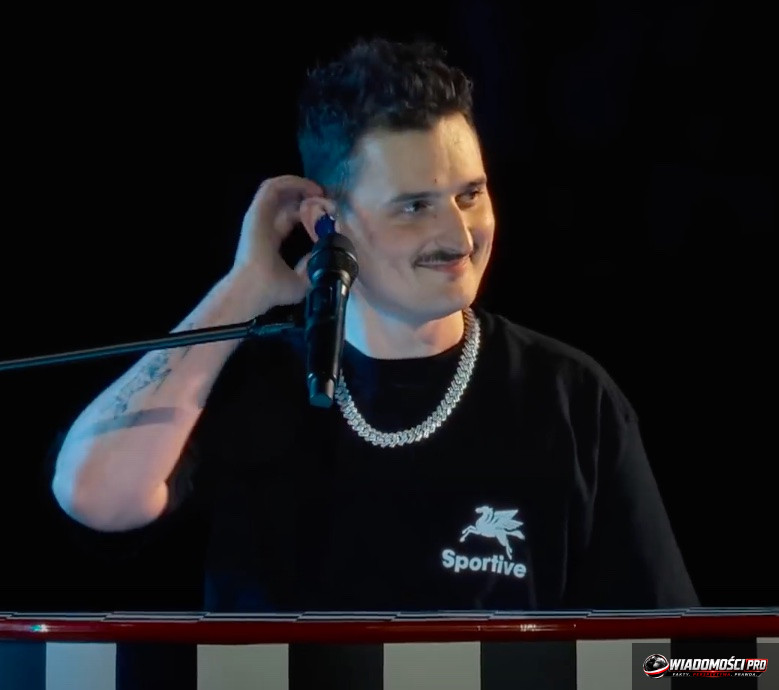
The "Obrotowy Tour 2026" included a series of stadium concerts in Gdańsk, Wrocław, Poznań, Chorzów, and Warsaw, attracting a total of several hundred thousand fans. The scale of this undertaking dominated the Polish music scene, pushing the boundaries of production capabilities for domestic performers. This event became not only a display of artistic power but, above all, a case study in managing massive stadium logistics under Polish conditions.
Stadium logistics: Precision behind the scenes
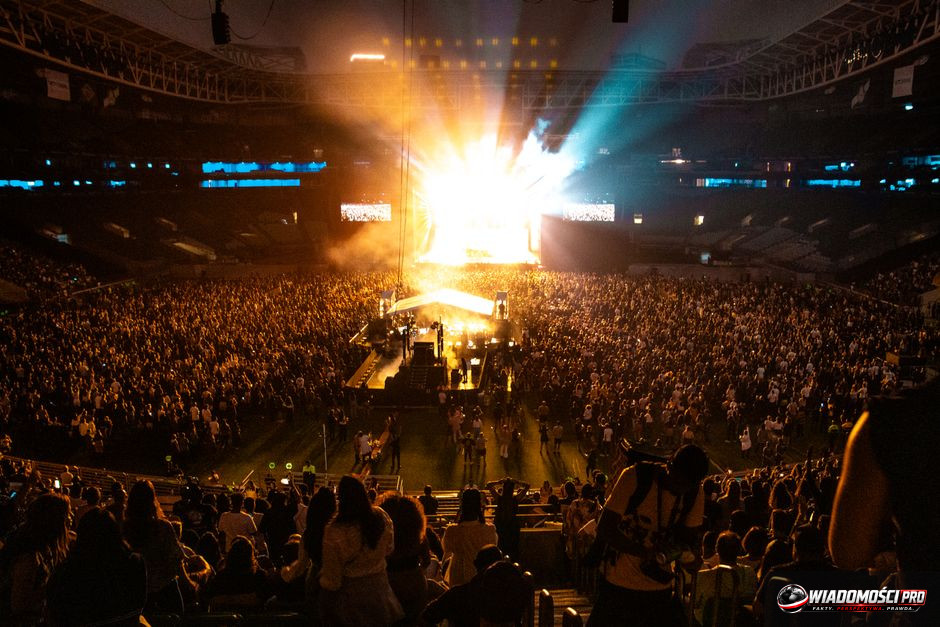
Preparing a tour of this magnitude required a shift from standard thinking about a musical event toward operational management. The choice of stadiums in Gdańsk, Wrocław, Poznań, Chorzów, and Warsaw was not solely due to their capacity, but their ability to handle complex technical productions. Each of these venues imposed different constraints regarding the time for stage assembly, access road capacity, and security systems.
Cities where the decision was made to hold double concerts proved to be a particular challenge. Chorzów and Warsaw became the central points of the tour, which forced technical crews to maintain the highest level of concentration for an extended period. In the case of the Silesian Stadium, the artist's two-day presence meant the necessity of securing the facility for several dozen hours and synchronizing equipment deliveries in a way that did not disrupt the city's functioning.
Stadium infrastructure requires the involvement of hundreds of people. A technical crew for a tour of this scale typically consists of two hundred to three hundred specialists responsible for sound, lighting, steel structures, and logistics. In 2026, Podsiadło's tour showed that Polish companies are capable of independently meeting requirements that were previously attributed only to foreign stadium productions.
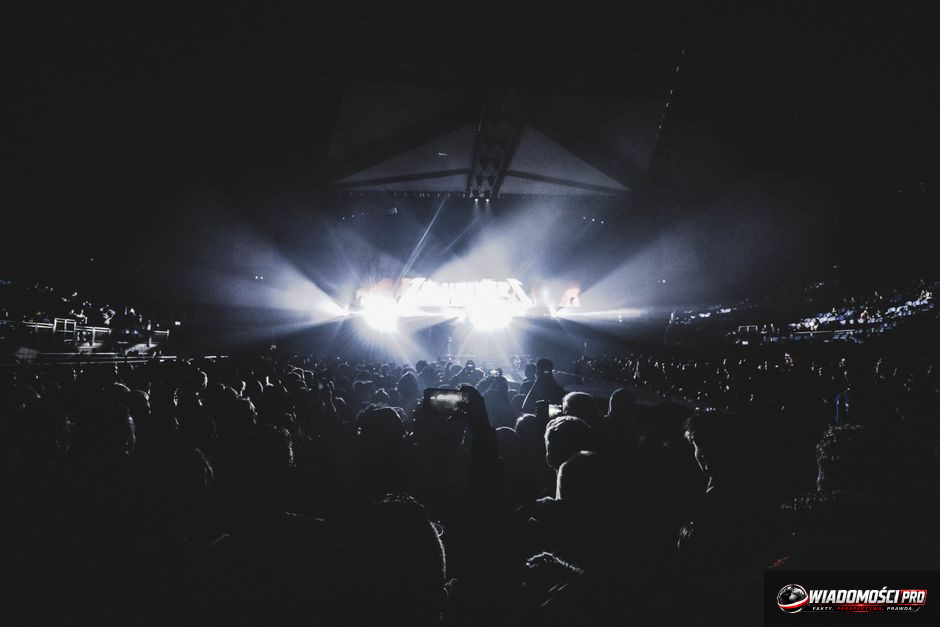
Stage assembly usually takes about four days, and dismantling after the event is another two days of intensive work. In the case of back-to-back concerts, as was the case in Warsaw and Chorzów, crews operated in a twenty-four-hour mode. A key element here was maintaining visual consistency between the concerts. The scenography of the "Obrotowy Tour" was based on advanced multimedia systems that required precise calibration for the acoustics of each venue.
This tour was a test of how to handle crowd accumulation. Schedules set months in advance did not allow for a margin of error. Any delay in the transport of stage structures or lighting installations carried the risk of a domino effect. The organizers had to ensure that the change in stadium configuration after the first concert proceeded transparently for the audience arriving for the next date.
The fixed costs of such an operation are gigantic. Maintaining stadium infrastructure in a state of readiness is an investment that only pays off with very high attendance. Podsiadło, deciding on such a form of presence in Chorzów and Warsaw, bet everything on one card. He risked that demand might not support the double number of seats. However, data from 2026 showed that the stadium format in Poland has become not just an option, but a necessity for performers of this scale of popularity.
Sales mechanics: From deficit to success
The ticket distribution process for the "Obrotowy Tour 2026" resembled a precisely designed market mechanism based on the rationing of information. This strategy proved extremely effective in building interest. It all started in December 2025, when the need to add more dates was officially announced. This decision was a direct response to the massive influx of requests from people who failed to secure their spot in the first pool.
The ticket sales system in 2026 was stretched over time, which allowed for maintaining a constant level of media attention. Instead of selling out all available tickets at once, which often ends in short-lived buzz, the organizers decided to open sales in stages. The last pool of tickets reached fans only on March 26, 2026. This approach forced the audience to constantly follow announcements.
From the perspective of the music market, this method of supply management is risky. If demand does not hold until March, the organizer is left with unfilled sectors, which in the case of such large venues generates huge losses. However, in the case of this tour, every subsequent batch of tickets found buyers at a lightning pace. This is proof that the stadium market in Poland has become mature, and fans are able to plan their expenses well in advance.
Ticket prices for this tour were not made public in a uniform price list for all sectors, which is typical for the largest stadium shows, where prices are differentiated depending on visibility and distance from the stage. This mechanism allowed for flexible revenue management. Fans had to reckon with costs typical for world-standard concerts, which in 2026 became the new norm on the Polish market.
Availability remains a point of contention. Is the system of added dates fair? On one hand, it gives a chance to people who missed the start of sales. On the other, it creates pressure to buy on impulse when a sudden announcement about a new pool appears. In 2026, this model became an industry standard, and the success of Podsiadło's tour convinced managers of other artists that this is the safest way to achieve full stadium capacity.
Promotion as a narrative: The role of the 'Mori' clip
The marketing campaign for the "Obrotowy Tour 2026" moved away from the traditional format of press releases in favor of building a narrative around the artist's work. The best example of this strategy was the event on December 5, 2025, when the concert clip for the song "Mori" was released. This video was not just a recording of emotions flowing from the stage, but a precisely planned promotional tool.
Releasing the material at this specific moment served as the official announcement of the second concert in Chorzów. Instead of publishing a dry announcement about seat availability, the artist's team provided fans with emotional context. The viewer, watching the clip, became part of the story themselves. This approach completely changes the dynamics between the artist and the recipient. Promotion is no longer imposing an offer, but an invitation to experience something that has been defined as a unique experience.
Contemporary music marketing in Poland is often based on aggressive advertising bombardment. Here, a different path was chosen. They focused on building scarcity and a narrative of greatness. Each announcement of an additional date was presented as a response to fans' requests, not as a pure business calculation. Such an image-building trick makes the artist appear as someone who listens to their audience, which is a rarity in the world of big show business.
International ambitions and their place in the tour
The "Obrotowy Tour 2026" set a new benchmark for how a Polish artist positions themselves against the global scene. On November 18, 2025, Dawid Podsiadło, along with Daria Zawiałow, appeared on one stage alongside an international star. This event, although episodic in the context of the entire tour, was of great importance for the perception of the Polish performer.
Such collaborations are often the result of complex negotiations and matching the schedules of the world's largest tours. For the Polish viewer, the presence of domestic artists in such an environment is a signal that the Polish music scene is ceasing to be an isolated island. Although no sudden expansion into foreign markets was announced after this performance, the event solidified Podsiadło's position as an artist capable of operating at the highest production registers.
Does this mean that Polish artists are ready to conquer European stadiums? For now, we remain in a phase of flirting with the big world. A stadium tour in Poland is the foundation on which recognition is built, but the real verification only happens outside the country's borders. Cooperation with international stars provides the necessary experience and an objective comparison of technical standards. Podsiadło used this capital to offer the Polish public a show in 2026 that, in terms of visuals and sound, was on par with productions we see at the largest venues in Europe or the USA.
The technical challenges that accompanied the "Obrotowy Tour" were directly correlated with European standards. The use of lighting systems with a power of several tens of thousands of lumens and line-array sound systems capable of handling stadiums with a capacity of fifty thousand people required the involvement of the best subcontractors in the country. It is unofficially said that the equipment supply chain was so tight that any failure of one of the structural elements could have stopped the entire production for several hours. This is a risk taken only with full optimization of technical processes.
Impact on the market: A new stadium era
The "Obrotowy Tour 2026" was more than just a series of concerts. It was a logistical challenge that forced the Polish music market to verify its capabilities. The attendance scale achieved in Gdańsk, Wrocław, Poznań, Chorzów, and Warsaw showed that there is a huge, unsatisfied demand for events of the highest technical standard.
The music industry in Poland received a clear lesson from Podsiadło. Success does not come by chance, but from consistent brand building, skillful management of ticket supply, and treating each concert as a separate, well-thought-out show. When the results of the two concerts in Warsaw and Chorzów were summarized in June 2026, it became clear that the market had reached a level that no one even dreamed of a decade ago.
The question remains about the durability of this phenomenon. Will the audience maintain such high enthusiasm for subsequent major tours? The answer depends on how quickly the industry learns from the success of the "Obrotowy Tour." If other names try to repeat this model, we are in for an era of stadium dominance that could permanently change the landscape of Polish entertainment. If, however, it turns out to be a one-time phenomenon, the market will quickly return to more conservative forms of concert touring. At this moment, Dawid Podsiadło remains the benchmark, and his tour – the gold standard to which all future stadium projects in the country will be compared.
From a technical perspective, a stadium is a ruthless environment. The acoustics of open-air venues, the need to ensure visibility from stands hundreds of meters away from the stage, and the logistics of evacuating thousands of people are variables that do not forgive mistakes. The organizers of the "Obrotowy Tour" had to implement systems that monitored the load on roof structures in real-time, to which tons of lighting equipment were suspended. It is these details – often invisible to the average fan – that determine whether a given artist is treated as a professional player in the stadium market or merely as a performer trying their hand at a large scale.
What this means for you
The success of the "Obrotowy Tour 2026" means that the Polish music fan must get used to the new rules of the game. Stadium dominance of domestic artists is, on one hand, pride in the quality of the shows, and on the other – the necessity of accepting a ticket sales system that relies on emotions and uncertainty. For the industry, this is a signal that investments in concert infrastructure in Poland are highly profitable, which in the long run should translate into greater availability of modern facilities.
The concert market in Poland underwent a transformation in 2026. The "Obrotowy Tour" was not just a series of performances by a singer, but a demonstration of the power of the Polish event sector. From the moment the stadium tours were announced in December 2025, the entire industry watched closely to see how Podsiadło would handle logistics on such a scale. Now that the dust has settled after the last concert in March 2026, it is clear that the bar has been set at a level unattainable for most performers.
For the fan, this also means a change in the way live music is consumed. A stadium concert has become an event that one must prepare for months in advance. The sales systems that debuted in 2026 require constant engagement from the recipient. There is no longer any talk of spontaneously buying a ticket a week before the event. This is professionalization that has its pros and cons, but it is a sign of the times.
Questions and answers
In which cities did Dawid Podsiadło perform in 2026?
The artist carried out a tour covering Gdańsk, Wrocław, Poznań, Chorzów, and Warsaw.
How many concerts took place in Chorzów and Warsaw?
Two stadium concerts were organized in both of these cities, which allowed meeting the huge demand for tickets.
When was the last pool of tickets for the tour made available?
The last tickets for the stadium performances went on sale on March 26, 2026, which definitively closed the distribution process for the entire tour.
What role did the clip for the song "Mori" play in promoting the tour?
The clip published on December 5, 2025, served as the official announcement of the second concert in Chorzów, building a narrative around the performance in an emotional, rather than purely sales-oriented, way.
What happened on November 18, 2025?
On this day, the Polish music scene recorded a non-standard event during which Dawid Podsiadło and Daria Zawiałow performed alongside a global star, which was an important element of building the artist's image on the international stage.
What were the key dates in the ticket sales process?
The most important moments were December 2025, when additional concert dates were announced, and March 26, 2026, when the sale of the last pool of tickets began.
Why was organizing the concerts in Chorzów and Warsaw a logistical challenge?
Choosing these cities for double concerts required organizers not only to secure infrastructure for a longer time but also perfect technical synchronization between consecutive days of performances, which, with such a large scale of production, was a logistical test for the entire concert industry.
How is the "added dates" sales strategy evaluated?
From an industry perspective, it is a model that builds high interest and tension, however, for some recipients, it is a source of frustration resulting from uncertainty about ticket availability. Nevertheless, in 2026, this model proved to be the most effective way to fill the largest stadiums in the country.
An added value of the "Obrotowy Tour" was also the impact on the economic environment of the host cities. Stadium concerts of such rank generate traffic in hospitality, gastronomy, and local transport. It is estimated that up to a thousand people work in concert-related sectors for each stadium concert. This is an economic impulse that city authorities cannot ignore. Dawid Podsiadło, by creating a tour of such reach, became not only an artist but also a key partner for urban logistics in the five largest centers in Poland.
Could fan frustration during sales have been avoided? The organizers did not provide detailed data on the number of unserviced requests, however, the scale of additional dates announced in December 2025 suggests that demand significantly exceeded the supply of seats at the originally planned venues. This is a classic market situation where the artist decides to maximize reach at the expense of distribution comfort.
The final piece of the puzzle is the role of technology in the production itself. The scenography of the "Obrotowy Tour," based on rotating structural elements, required advanced motion control systems, which are a rarity even in foreign productions. The engineers responsible for this project had to face challenges regarding stage balance, stability, and safety of working at heights. It is these technical innovations that made the "Obrotowy Tour 2026" remembered as the moment when the Polish concert market definitively said goodbye to amateurism and entered the era of large, flawless stadium productions that the world's biggest pop giants would not be ashamed of.
Ultimately, the "Obrotowy Tour 2026" is a lesson for anyone who wants to build a brand based on the stadium format. Without the right narrative, precise logistics, and readiness to take risks, such an undertaking is doomed to failure. Podsiadło proved that he has a team that can combine all these elements into one coherent organism. The market is now waiting for the rest of the industry's response. The coming years will show whether this was just an isolated peak or the beginning of a lasting change in how major entertainment is realized in Poland. The stadium is now the natural environment for the biggest domestic stars, and it is difficult to expect this trend to change anytime soon. All eyes are on the future, which for the Polish concert industry is painted in the colors of stadium spotlights and sound that carries for many kilometers beyond the walls of the venues.
Sources
- Dawid Podsiadło for hundreds of thousands of fans. Two concerts each in Chorzów and Warsaw - Rzeczpospolita
- Dawid Podsiadło Obrotowy Tour 2026 – the biggest concert tour of the year - Kulturalne Media
- Dawid Podsiadło announces another concert in 2026! - eBilet
- Dawid Podsiadło adds another stadium concert in 2026 [DATE, TICKETS] - Open FM
- Dawid Podsiadło released the last tickets for his stadium concerts - cgm.pl
- Dawid Podsiadło will play two concerts at the Silesian Stadium. Tickets will go on sale soon - Dziennik Zachodni
- Unbelievable! Daria Zawiałow and Dawid Podsiadło alongside a global star. Fans delighted - Fakt
- Dawid Podsiadło publishes concert clip "Mori". Announcement of the second stadium concert in Chorzów 2026 - Open FM
Article prepared by the Wiadomości PRO editorial team with the support of artificial intelligence. Facts come from the sources listed above.

Komentarze (0)
Ładowanie komentarzy...