The downgrade from A2 to A3 costs the Polish budget approximately 2.5 billion PLN annually in additional interest on public debt servicing. This decision, announced on September 18, 2026, is a direct response by Moody’s to the sustained deterioration of the country's fiscal condition. The loss of the previous rating after 24 years means the Ministry of Finance must offer investors higher bond yields, which effectively limits the room for state budget expenditures.
Institutional investors in Warsaw, London, and New York read this announcement as a warning signal regarding the erosion of the stability that has been built over the last quarter-century by attracting foreign capital. Poland is saying goodbye to its A2 rating after 24 years. This is not just a cosmetic change in rating agency tables, but hard evidence that the market has stopped believing in the previous narrative of the country's fiscal resilience. The market mechanism is triggered automatically. Demand for Polish treasury bonds, which until now served as the foundation of a safe portfolio in the CEE region, is becoming burdened with higher credit risk. In economic terms, this means an increase in the risk premium that debt buyers demand to even consider placing their funds in Polish securities.
The cost of borrowing: The price the taxpayer pays
The increase in bond yields translates into a specific sum in billions of zlotys that disappears from the state budget. Every basis point of yield increase is a challenge for the finance ministry when rolling over debt. If, at Poland's current debt level, valued in the trillions of zlotys, the market demands a higher margin, the annual cost of debt servicing rises by amounts that, under other conditions, would have allowed for the financing of key investments in infrastructure or the healthcare system.
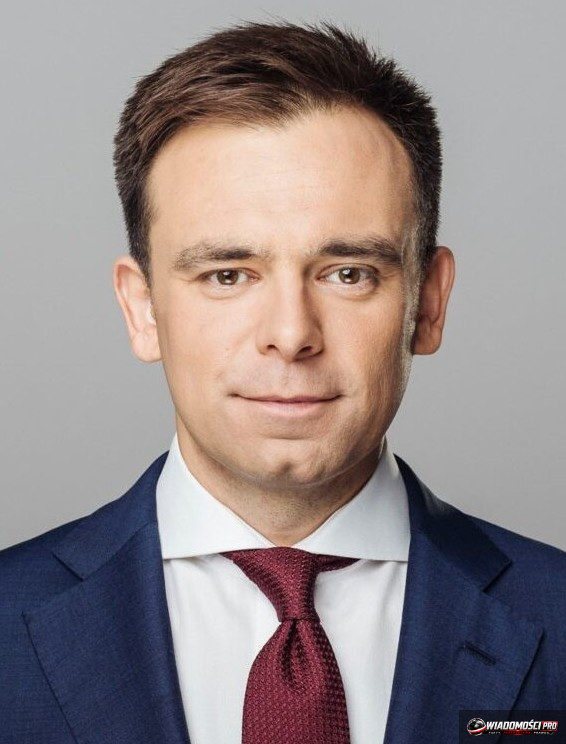
The Ministry of Finance, under the leadership of Andrzej Domański, is backed into a corner. The state budget's borrowing needs are not decreasing; in fact, they are growing in the face of geopolitical and social challenges. After September 18, the door to cheap capital has been partially closed. To attract investors, the ministry must offer higher interest coupons. This is math that cannot be bypassed by any press release. The taxpayer, who indirectly holds these bonds through pension or investment funds, will feel this in the long-term performance of their savings.
Financial market analysts point out that after the downgrade to A3, Poland joins a group of issuers whose bonds are more sensitive to global shocks. The previous A2 rating provided a margin of safety that protected Polish finances from sudden asset sell-offs. Now, that margin has become thinner. Any anxiety in global markets hits Poland with greater force, forcing the government into more expensive financial operations to maintain budget liquidity.
Why did the foundations of public finance fail?
Moody’s leaves no illusions in its justification. It points to a sustained deterioration of fiscal health. In practice, this means a lack of discipline in public spending, which has become a hallmark of economic policy in recent years. The dynamics of Poland's debt have ceased to be safely correlated with real GDP growth. The structural deficit, which for years was masked by a good economic climate, has now—under conditions of a slowdown—become a real burden.
Experts tracking the September 18 decision emphasize that the agency had been giving warning signals for a long time. Over the last few years, Poland increased spending outside the budget by using special-purpose funds, which allowed the actual level of debt to be hidden from the public. Moody’s does not look at creative accounting, but at the aggregate debt of the general government sector. It is precisely this approach that led to the rating revision. The financial stability that was boasted about for two decades has been put to the test by a policy of short-term electoral gains.
For financial markets, the most important question remains the future. Will the government present a credible fiscal consolidation plan? Will the rating cut prompt the finance ministry to make hard decisions, or rather to continue seeking funds through borrowing? Foreign investors will now be watching every move of the Ministry of Finance. The lack of a clear signal regarding the intention to reduce the deficit opens the door to further downgrades in the future. A3 is a level that still allows Poland to be an investment-grade country, but the margin to the "junk" group is no longer as safe as many politicians would like to believe.
Political reaction: Calm or ignorance?
The government's reaction to the Moody’s decision was predictable. Minister Andrzej Domański, in a statement to TVN24, assured of the seriousness of the situation but tried to remain calm. This is a standard message intended to avoid panic in the currency market. Behind the scenes at the finance ministry, the situation looks completely different. Officials know that a rating downgrade is a blow to credibility, which will take years to rebuild.
The opposition used this moment to attack, pointing to what it calls the erosion of the state under Donald Tusk's government. In media outlets such as wGospodarce, harsh accusations are being made about wasting 24 years of building Poland's brand as a safe haven for capital. Political dispute over the rating is inevitable, but emotions must be separated from facts. Regardless of who is in power, the math of debt remains the same. If the state spends more than it earns, and the market begins to notice this through a rating downgrade, the consequences are borne by all citizens, regardless of their political preferences.
The finance ministry did not present any counter-argument to Moody’s thesis about a sustained deterioration of fiscal health. Instead, the focus was on calming the mood. The lack of a substantive response to the agency's charges may be read by investors as a signal that the government has no recovery plan. In the world of finance, silence or vague declarations are often worse than admitting mistakes and presenting concrete corrective steps.
Impact on the zloty exchange rate and the daily life of Poles
The rating downgrade does not remain without impact on the zloty exchange rate. The national currency is directly linked to the perceived risk of the country. When a rating agency lowers its assessment, investors often reduce their exposure to assets denominated in that currency. A weaker zloty automatically means more expensive imports. In practice, this means higher prices for food, fuel, or electronics. For the average citizen who does not deal with the bond market, the Moody’s decision of September 18 may manifest in the coming months as higher imported inflation.
Poland is an economy strongly linked to global supply chains. Raw materials, semi-finished products, and finished goods that reach the Polish market are often paid for in foreign currencies. If the zloty loses value as a result of capital flight caused by the rating downgrade, companies must pass higher costs on to consumers. This is a vicious cycle that starts in the offices of rating agencies and ends at the checkout counter in a local store.
Additionally, higher debt servicing costs may force the government to increase fiscalism—that is, raising taxes or introducing new levies—to patch the budget hole. Such a solution hits household purchasing power directly. Although at first glance a rating downgrade seems distant from the citizen's life, in reality, it is one of the main factors shaping the standard of living in the long term.
Is this the beginning of a longer downward trend?
Debt market analysts, in their notes after September 18, are wondering if A3 is a stop or just another step toward further degradation. To answer this question, one must look at public debt forecasts in relation to GDP. If the current rate of liability growth is maintained, rating agencies will have no choice and may make further cuts within the next 12-24 months.
There is a conviction among experts that Poland needs a hard reset in fiscal policy. This is not about more social programs or investment promises, but about real spending cuts and a reform of the public finance system. Moody’s has sent a clear signal: investors' patience has its limits. If Poland does not show that it is capable of managing its debt responsibly, financing costs will grow exponentially.
The stance of other agencies, such as Fitch or S&P, also raises concerns. They often follow in Moody’s footsteps within a few months. If further decisions follow the downgrade to A3, Poland could lose its status as a safe issuer in the eyes of pension and insurance funds, which have statutory restrictions on investing in lower-rated bonds. This would mean a drastic outflow of capital and the need for deeper belt-tightening to attract speculative investors who demand much higher interest rates.
Summary: The price of irresponsibility
The Moody’s decision of September 18, 2026, is a maturity test for the Polish state. For years, we lived under the illusion that our economy was a safe haven that no crisis would touch. Today, that illusion is shattering. The cost of debt servicing has become the main burden on the budget, and the rating downgrade only deepens this problem. Taxpayers, the government, and investors have found themselves in a new reality where every billion zlotys spent on interest is a billion taken away from the real economy.
There are no easy solutions. The government must now balance maintaining social stability with the need to drastically limit spending. Every decision to cut will be painful, and every decision to continue borrowing will be risky. The choice facing Minister Domański's team will define the state of Polish finances for years to come.
One should follow the agency's announcements in the coming quarters. If we see even a shadow of improvement in fiscal discipline, markets may react with stabilization. However, if the policy of increasing spending continues, A3 may turn out to be not the last, but just another stop on the way down. Poland faces a challenge that requires moving away from the rhetoric of success toward hard financial calculation, the foundation of which is a balanced budget.
Questions and answers
What does a rating change from A2 to A3 mean?
It is a downgrade of Poland's creditworthiness, which for investors means higher risk, and for the state, a higher cost of taking on new debt, because creditors demand higher interest on treasury bonds.
Why did Moody's downgrade the rating right now?
The agency pointed to a sustained deterioration of Poland's fiscal condition and rising debt. This decision is the result of years of public spending growth that has ceased to be fully covered by economic growth.
Will the Moody's decision affect the zloty exchange rate?
Yes, a rating downgrade usually exerts pressure on the weakening of the national currency. Investors, perceiving Poland as riskier, may withdraw capital, which leads to the depreciation of the zloty and an increase in the prices of imported products.
What are the direct effects on the state budget?
The main effect is an increase in debt servicing costs. The state must pay higher interest on new bond issues, which means there are fewer funds left in the budget for investments, infrastructure, or public services.
Can the government reverse this decision?
Yes, but it requires long-term corrective actions. Rating agencies react to concrete numbers and long-term fiscal plans. Restoring a higher rating would require proving that Poland can effectively manage its deficit and curb the pace of debt growth.
What does this mean for the average citizen?
For the average Pole, this decision may mean higher living costs through the weakening of the zloty, and in the longer term—the risk of tax hikes or cuts to public services, resulting from the need to allocate increasing amounts from the budget to pay interest on state debt.
Investment perspective: The bond market in a new reality
The debt market is a system of connected vessels. When Moody’s changes its assessment, the entire yield curve of Polish treasury bonds changes. Previously, the yield of 10-year papers hovered around values that allowed for relatively cheap deficit financing. After September 18, we must expect an increase in yields by a dozen to over twenty basis points in the short term. For foreign investors who hold Polish debt in their portfolios, such a change means a drop in the valuation of their bonds and the need to rebalance portfolios, which further increases market volatility.
Experts emphasize that the Polish treasury bond market was previously considered deep and liquid. However, the rating downgrade is testing this liquidity. Funds that have clauses in their statutes regarding a minimum investment rating may be forced to reduce their exposure to Polish papers. This creates selling pressure that pushes yields even higher than would result from the risk assessment issued by the agency alone. As a result, the state pays a higher price for financing its needs, and capital that could have fueled Polish companies is absorbed by higher public debt servicing costs.
This is not an isolated phenomenon. It is worth remembering that in recent years, other economies in the region have also struggled with pressure from rating agencies. However, in the case of Poland, due to the scale of debt and the pace of its growth, the situation is more complex. Investors are no longer looking only at GDP, but increasingly at the structure of budget expenditures. If rigid expenditures, such as debt servicing, grow faster than tax revenues, investors lose confidence in the state's ability to maintain liquidity in the long term.
The role of the Ministry of Finance in the face of a crisis of confidence
The Ministry of Finance is currently under fire not only from the opposition but also from market analysts. The strategy of calming markets through verbal communication has ceased to be effective. The financial market needs specifics: a plan to reduce the deficit, a schedule for limiting off-budget spending, and hard numbers that will confirm that the government understands the gravity of the situation. The lack of such actions after September 18 deepens uncertainty.
Behind the scenes at the ministry, there are voices about the need to seek new sources of financing. However, with the current A3 rating, every new bond issue will be more expensive than it was just a week ago. This creates a vicious cycle: higher debt costs require more debt, which in turn can lead to further rating downgrades. To break this trend, a radical change of course is necessary. The question is whether the government will find the determination to introduce cuts that will be socially painful but necessary to stabilize state finances.
In the history of Poland's economic transformation after 1989, we have already had moments where creditworthiness was key to the survival of the system. Today, the situation is different—we are not fighting for entry into Western structures, but for maintaining our position within them. The loss of the A2 rating is a warning signal that says clearly: the development model based on continuous borrowing has exhausted its utility. Now we must prove that we can manage finances responsibly, even if it requires difficult political decisions.
Is "A3" the new normal?
The question of whether A3 will become the new normal is currently the most frequently asked question among economists. If the government manages to implement reforms that convince rating agencies of a return to the path of fiscal discipline, the downgrade to A3 may be just an incident. However, if the current policy is continued, there is a real risk of further degradation of ratings. The financial market does not forgive mistakes in budget management, and rating agencies are merely a mirror reflecting the actual condition of public finances.
In summary, the rating downgrade of September 18 is a signal that the era of easy money for the Polish budget has ended. Now begins a period in which every zloty spent from the budget will be carefully analyzed by financial markets. For the government, this is a test of its management skills under conditions of limited trust. For citizens—a signal that the coming years may involve the need for belt-tightening to avoid a deeper financial crisis. Everything depends on how quickly the finance ministry presents a real strategy for exiting the debt trap.
It is worth remembering that there is no vacuum in a market economy. If Poland does not offer investors appropriate rates of return and stability, capital will flow to other countries in the region that are better at managing debt. This threat is real and concerns every Pole, because the purchasing power of our earnings and the stability of prices in stores depend on the stability of the budget. A rating downgrade is not just numbers in agency tables—it is the real price of financial irresponsibility that we all pay.
Debt structure analysis: Why does it hurt?
The structure of Polish public debt is based largely on long-term treasury bonds. These are the ones most sensitive to rating changes. When Moody’s makes a cut, the yield of these bonds rises automatically because investors demand a higher risk premium for holding the debt of a country that, according to the agency, shows a "sustained deterioration of fiscal health." For the state, this means that at every subsequent bond auction, the budget is burdened with higher interest.
On an annual basis, with debt exceeding two trillion zlotys, even a small increase in yields—by the aforementioned 10-15 basis points—generates billions in losses for the budget. These billions are money that will not be spent on modernizing the army, building roads, or healthcare. This is the direct cost of the rating downgrade. The finance ministry must now decide: whether to increase the deficit to finance these costs, or to limit spending in other areas? Both options are politically difficult but mathematically inevitable.
Let us remember that institutional investors, such as hedge funds or foreign banks, operate based on algorithms that react immediately to rating agency announcements. When Moody’s announces a downgrade to A3, trading systems automatically start valuing Polish assets lower. This causes pressure to sell off the zloty and bonds. In such an environment, government or central bank interventions are costly and rarely effective in the long term. The only lasting solution is to change the fiscal foundations of the state.
What's next? Scenarios for the Polish economy
In the coming months, two factors will be key: the presentation of the budget for the next year and announcements from the Ministry of Finance regarding debt strategy. If the budget contains real spending cuts, markets may consider this the first step toward an improved rating. However, if the policy of increasing spending continues, the risk of a further rating downgrade becomes very real. Moody’s, Fitch, and S&P will be watching every move the government makes.
Foreign investors will also pay attention to institutional stability. A rating is not just numbers; it is also the belief that state institutions act in a predictable manner. Any signal of destabilization—whether political or economic—will be treated by agencies as a risk to debt servicing. In this sense, the decision of September 18 is a signal that Poland has lost its former status as a "safe island" and has become a country whose finances require constant monitoring.
Ultimately, Poland must prove that it can manage its debt in a way that does not threaten future generations. This challenge goes beyond parliamentary terms. It requires a consensus on the direction of economic policy. Is the Polish political class ready for this? We will know the answer to this question when the finance ministry presents its recovery plan after the downgrade to A3. Until then, uncertainty will remain the main factor shaping sentiment in the Polish financial market.
Sources
- Moody’s downgrades Poland's rating. Sources of the decision raise concern - Business Insider Polska
- Minister Domański on Poland's rating cut: we take this decision seriously, but remain calm - TVN24
- Moody’s rating lasted 24 years. Until Tusk got into power... - wGospodarce
- Moody’s agency downgraded Poland's rating. Warns of rising debt - pb.pl
Article prepared by the Wiadomości PRO editorial team with the support of artificial intelligence. Facts are derived from the sources provided above.



Komentarze (0)
Ładowanie komentarzy...