A budget deficit of 289 billion PLN is not a safe limit, but rather a breach destabilizing the foundations of public finance, which permanently limits the state's ability to respond to crises. Such a scale of debt forces the government to issue debt on an unprecedented scale, which directly translates into increased debt servicing costs and a reduction in funds available for investment purposes. This financial strategy limits Poland's budgetary sovereignty, making the stability of the zloty and the yield of Polish bonds dependent on the sentiment of foreign investors for years to come.
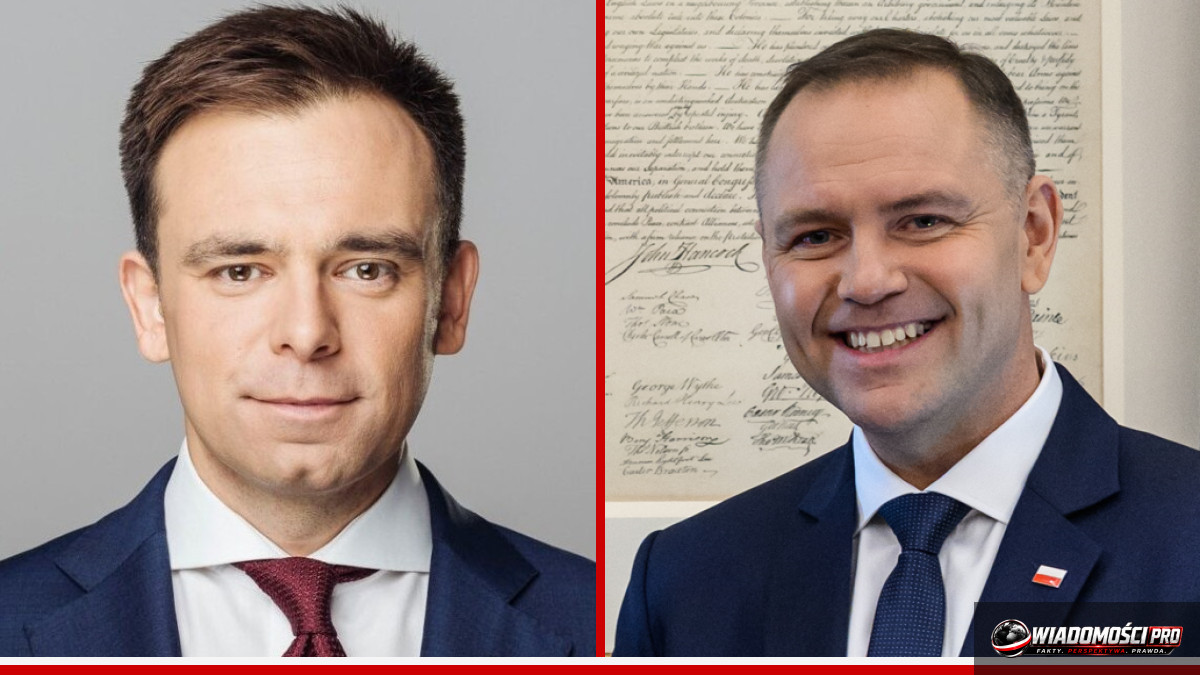
The structure of the 2025 budget is the result of a policy in which defense priorities and extensive social transfers collided with the hard reality of limited tax revenues. Minister Andrzej Domański is managing a budget in which every subsequent zloty borrowed on the financial market serves primarily to maintain the liquidity of the public finance sector, rather than to generate economic growth. Instead of building capital for the future, the Ministry of Finance is forced to put out fires in chronically underfunded areas. This mechanism creates a vicious cycle in which rising interest costs on debt consume the space for any real tax relief or infrastructure modernization.
The beginning of 2026 revealed the scale of tensions between the executive and the head of state, as the legislative process surrounding the budget act became a hostage to political games. As early as January 12, 2026, media reported on unexpected scenarios in which the president could block budget payments, which shook financial markets. Karol Nawrocki, then representing the hard line of the opposition, openly threatened the government with consequences for the adopted shape of expenditures, putting Minister Domański against the wall. Every day of delay in signing the budget act in January 2026 increased investor uncertainty, which directly translated into higher yields on treasury bonds, and thus higher debt financing costs for every taxpayer.
The President, analyzing every option – from sending the act to the Constitutional Tribunal to attempting to force departmental corrections – ultimately decided to sign the document, although he did not spare criticism. His statement on January 20, 2026, about a "budget of collapse in healthcare" accurately pointed out the real threats. The medical system, underestimated in the 2025 budget, found itself in a critical situation. Medical facilities, struggling with liquidity problems, became the first victims of such state finances. Patients felt this in the form of lengthening queues to specialists and rising costs of procedures that the National Health Fund was unable to fully cover. This was not just political rhetoric, but a diagnosis of the state of the country's critical infrastructure, which, in the face of a 289 billion PLN deficit, lost priority to debt servicing.
This situation forces us to ask about the long-term consequences of the decisions made in 2025. Every billion in debt incurred during this time poses a challenge for budgets for decades to come. The opposition, seizing every opportunity to attack, did not leave a dry thread on the government in July 2026. The debate of July 31, 2026, in which the accusation of "financial vandalism" was made, was not merely a theatrical parliamentary dispute. It reflected real fears about losing control over spending. Reports prepared by Business Insider Polska, Polskie Radio 24, and Dziennik.pl confirmed that despite the government being granted a discharge, the atmosphere in parliament was extremely tense. The ruling coalition's victory in the vote on the discharge was purely technical, failing to close the discussion on responsibility for state finances.
For the citizen, these disputes over numbers translate into the specific purchasing power of money. Increased debt issuance, necessary to cover the deficit, means that money that could fuel the development of modern technologies or education is permanently transferred to creditors in the form of interest. The financial management model we observed at the turn of 2025 and 2026 is based on a survival strategy from election to election. The government defended its decisions with strategic investments, which, however, largely remained in the realm of plans, while debt servicing costs became a hard accounting fact.
The healthcare sector remains the clearest example of the costs associated with a budget with such a huge deficit. Rynek Zdrowia in January 2026 accurately diagnosed that without radical changes in financing, the system would sink into permanent inefficiency. Promises of improvement, made at the time of the act's adoption, became impossible to fulfill in the face of rising debt. The National Health Fund, limited by rigid budgetary frameworks, had to renegotiate contracts, which for many hospitals meant the necessity of limiting highly specialized services. Patients, while paying contributions, received in return a system that, in the face of the state's financial collapse, ceased to guarantee access to key medical procedures.
It is worth recalling the dynamics of events from 2026 to understand how much the legislative process in Poland requires repair. The dates of January 12, January 20, and July 31 create a cause-and-effect sequence that leads to the conclusion that decision-makers ignored warnings coming from the market. Instead of a substantive discussion about the structure of spending, we observed a retreat into party trenches. Even the discharge granted to the government did not extinguish the fire, but only moved the discussion to the next stage. Poland needs a new financial strategy, as the current model of a permanent deficit is a dead end that, in the long term, leads to the necessity of renegotiating obligations or seeking new sources of financing, which, at current interest rates, will be extremely expensive.
A key problem remains investor confidence. Financial markets show no mercy to countries with such a high deficit. Every error in managing this mass of debt destabilizes the exchange rate of the zloty, which directly hits the pockets of Poles through import inflation and higher prices of goods. The government tried to hide the scale of the problems under a geopolitical guise, arguing that army spending must be implemented at all costs. However, the opposition accurately pointed out that even legitimate defense goals require rational financing, not just "financial vandalism," as the government's actions were described on July 31, 2026.
The discharge granted to the government on that day was only a formality that confirmed that the coalition has a sufficient majority to ignore substantive arguments about the threats stemming from such a large budget gap. The history of public finance teaches that numbers always eventually make themselves heard. No political ploy can hide the fact in the long run that a deficit exceeding the economy's capabilities must be repaid. One can only hope that in the future, the budget process will be more transparent, based on real calculations rather than the political rhetoric that dominated the Polish parliament in 2026.
Analyzing the events in which the president had to balance between the paralysis of the state and the acceptance of a flawed project, it is clear how limited the repertoire of tools of the head of state is in a clash with a government possessing an absolute majority. This shows the systemic weakness of Polish oversight institutions. If the budget, the most important document of the state, arouses such extreme emotions and requires threats of legislative paralysis, it means that control mechanisms have ceased to function in a predictable way. The citizen, observing these actions, has the right to feel lost. On one hand, they hear about "strategic investments," on the other, they see a real deficit that is eating up the state's savings.
What awaits us in the coming months? If the debt trend continues, Poland may face the necessity of painful cuts in social benefits, which will be even more difficult in the face of an aging society and rising costs of medical care. Every billion borrowed in 2025 is a burden that future generations will have to bear. This is the true price of the budget, which is so rarely mentioned in official government communications. The decisions made during that period were not just an accounting issue, but a fundamental choice regarding the direction of the country's development. A choice that, in the long term, may prove irreversible without a deep reform of the public finance system.
In the face of such a huge deficit, the question of whether the government received a discharge fades into the background compared to the question of the state's ability to survive without further, drastic borrowing. July 31, 2026, was the day the Sejm merely confirmed that it accepts the current economic model. Was this a responsible decision? The answer to this question will be provided by the coming years, when it comes time to pay interest on bonds issued in 2025. The financial market is already pricing in Polish risk, and every warning from rating agencies should be read as an alarm signal for politicians. Poland cannot live beyond its means forever, counting on the market to finance the deficit indefinitely.
In summary, the events of 2026 show that the budget has ceased to be a tool for development and has become a tool for debt administration. The parliamentary opposition, although accused of populism, was right to point out the lack of a long-term strategy for exiting the fiscal crisis. The government, defending itself against accusations, showed determination, which, however, in an economic context, may prove disastrous. One can only hope that the lesson of 2026 will become an impulse for a deep reform that will restore the financial stability of the state. Otherwise, in a few years, we will witness the necessity of introducing radical savings that will hit the weakest social groups, not the bureaucratic or political apparatus.
The fact that the president ultimately did not veto the budget was an act of extreme necessity, intended to prevent the paralysis of the state, but this does not mean that the act was good. On the contrary, it was an expression of helplessness in the face of the rising costs of the state's functioning. Every citizen should be aware that a 289 billion PLN deficit is not just a number in a table, but a real limitation on future economic growth. Poland needs an honest debate about priorities, not just political squabbling that solves nothing. The time for reflection on the state of public finance is now, before debt servicing costs become unbearable for the state budget.
In a historical context, the year 2026 will be remembered as the moment when Polish public finance found itself at a turning point. Decisions on the discharge, accusations of financial vandalism, and warnings about a collapse in healthcare are pieces of a puzzle that shows the state needs a new opening. Without deep expenditure optimization and an honest look at the real possibilities of the budget, we will be doomed to repeat the mistakes that led to such high debt. This is a challenge facing the entire political class, regardless of which side of the parliamentary hall they sit on. The citizen has the right to demand responsibility that goes beyond term limits and current political benefits.
Is a 289 billion PLN deficit safe? The answer is: no. It is a level that, under any normal economic conditions, would be considered a warning signal requiring an immediate course correction. Since, however, the government decided on such a path, we must all prepare for the consequences that will be felt for years. This is not pessimism, but a cold analysis of the facts that flow from economic reports and observations of the legislative process. Poland faces a choice: either reforms or further debt, which must eventually end in a way that is painful for the economy and society.
Finally, it is worth emphasizing that the discharge of July 31, 2026, does not end the matter, but only freezes it. The problems that lay at the foundation of the budget debate remain unresolved. The health sector continues to suffer, debt costs continue to rise, and trust in public institutions remains at a low level. This is the true image of Poland in 2026, in which politics took precedence over economics. The question remains whether future budgets will be created based on more reliable premises, or whether we will continue to witness a survival strategy from election to election. Only time will tell if Poland will learn from these difficult years or if it will continue to stumble toward a path that leads to a financial dead end.
Every person following these events should be aware that behind every political decision lies a real cost that we all pay. Regardless of the rhetoric of the government or the opposition, the numbers remain unchanged. A 289 billion PLN deficit is a sum that cannot be ignored, no matter how much it is covered up by propaganda of success. This is the most important lesson we can learn from the 2025 budget debate and the events of 2026. True financial stability of the state does not come from the assurances of politicians, but from reliable management of public funds, which has been extremely difficult in recent years. Poland deserves more than ad-hoc budgetary solutions that merely shift problems onto the shoulders of future generations.
Sources
- Government granted discharge. Opposition speaks of "financial vandalism" - Business Insider Polska
- Sejm makes decision on budget. Government granted discharge - Polskie Radio 24
- Sejm votes on budget. What about the discharge for the government? - Dziennik.pl
- President makes decision on budget. "This is a budget of collapse in healthcare" - Rynek Zdrowia
- Budget in the hands of the president. Unexpected scenario on the table? - Money.pl
- Budget act on the president's desk. "I allow for every possibility" - TVN24
- Karol Nawrocki threatens government over budget. Domański grits his teeth and waits in tension - Wyborcza.biz
- Budget for 2026. President decided on key act - Interia Biznes
Article prepared by the Wiadomości PRO editorial team with the support of artificial intelligence. Facts come from the sources provided above.


Komentarze (0)
Ładowanie komentarzy...