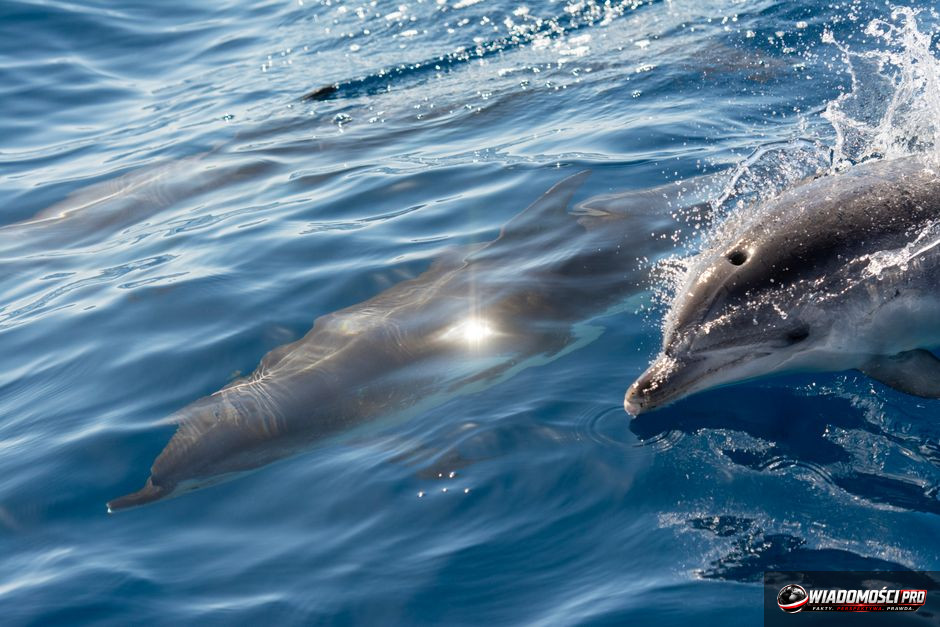
Dolphins use bullying through acoustic isolation and physical herding, which breaks up dense schools of fish and forces the prey to flee toward open water or a prepared trap. This aggressive strategy allows the predators to maximize caloric gain with minimal energy expenditure required for pursuit. This mechanism forms the foundation of bottlenose dolphin dominance in their ecosystems, transforming hunting from a chaotic chase into a precise tactical operation that eliminates the need for long-term pursuit of agile fish.
Hunting mechanics in Shark Bay
The waters of Shark Bay in Western Australia serve as the primary research site for understanding the behavior of bottlenose dolphins, and the work of Dr. Janet Mann provides hard evidence of how advanced this organization is. Field observations show that aggression here is not a result of chance. It is a planned process. A group of dolphins targets a school of mullet, which instinctively closes ranks in the face of danger, forming a dense defensive formation. Dolphins exploit this mechanism. They surround the fish, creating a physical cordon that cuts off escape routes.
A key element of this tactic is the use of sound. Dolphins emit series of high-frequency clicks. These signals are not used solely for echolocation. They act as an acoustic barrier that disorients the fish and forces them to change direction in a panic. This is where the bullying begins. Individual dolphins strike at selected fish, isolating them from the group. Once a fish loses the support of the school, it ceases to be part of the critical mass and becomes an easy target.
Studies in Shark Bay clearly indicate that the energy cost of hunting in open space is unprofitable for a dolphin. Chasing a fast fish burns more calories than the meal provides. Bullying solves this problem. Forcing prey into shallow water or a zone of limited maneuverability drastically lowers energy expenditure. It is estimated that dolphins using this technique record an increase in hunting efficiency of 25–30 percent. It is pure survival mathematics.
Social intelligence and the strategy of dominance
The social system of bottlenose dolphins, classified as fission-fusion, is based on fluidity. Groups break apart and merge depending on reproductive needs or resource availability. Within these groups, aggression serves as a tool of control. Males form lasting alliances that are not limited to hunting together. They use bullying to maintain their position in the herd's hierarchy and dominate access to females.
Cooperation within an alliance requires high cognitive abilities. Each male must anticipate the movements of his partners and the reactions of the prey. This is not instinctive behavior, but a learned skill passed on to younger generations through observation. Young dolphins accompany older ones during hunts, learning when to attack, how to block escape routes, and when to use sound signals to confuse the school.
This level of coordination shows striking similarities to the hunting techniques of chimpanzees. In the case of both primates and dolphins, success depends on the precise positioning of individuals in space. If a dolphin isolates a fish, it demonstrates its prowess to the other members of the pod. This is a social signal. Dominance in hunting translates directly into reproductive success. Males that more effectively intimidate prey enjoy higher status and reproduce more frequently.
Evolutionary costs and benefits
Analysis of dolphin populations in Shark Bay and off the coast of Florida confirms the repeatability of these mechanisms. Environmental aggression is directly correlated with food availability. In regions with high competition for resources, bullying becomes a primary survival strategy. Individuals that do not use these methods more often suffer from caloric deficits, which in extreme conditions leads to a weakening of their physical condition and lower offspring survival rates.
Acoustic communication in this process is a precise control tool. A dolphin, being an apex predator, does not hunt blindly. It manages the prey's behavior. Fish perceive the clicking sounds as a signal of approaching danger, which forces them to flee exactly in the direction where other dolphins are waiting. This resembles the work of a shepherd with sheep, although instead of herding for protection, we have hunting for consumption.
From the perspective of evolutionary biology, the dolphin brain is a machine for optimizing energy homeostasis. Every successful attack, preceded by a series of aggressive maneuvers, generates a reward signal in the predator's nervous system. This positive reinforcement solidifies the habit. The dolphin does not analyze the morality of its actions. It simply performs a sequence of actions that guarantees its survival with the least possible effort. Evolution does not reward empathy, but rather effectiveness in acquiring resources.
Mythology versus field facts
The image of the dolphin as an altruistic friend of man, created over decades in popular culture, is not supported by biological data. Medical documentation and field observations conducted over decades by marine mammal scientists debunk this myth. Infanticide, inter-individual aggression, and brutal hunting are constant elements of these mammals' lives. Bullying fish is merely the most frequently recorded manifestation of their predatory nature.
In Shark Bay, interspecies cooperation often occurs, which, however, does not result from friendship but from pragmatism. Seabirds, observing schools from the air, act as additional beaters. When dolphins push fish toward the surface, birds dive, further disorienting the prey and tightening their formation. Dolphins benefit directly from this, as a broken school becomes an easier target. In this arrangement, the dolphin remains the sole leader who controls the situation.
Applying human moral norms to these animals leads to erroneous conclusions. Dolphins are neither cruel nor fair. They are predators whose evolution has equipped them with an advanced social system and high intelligence, serving only survival. Their bullying is the peak form of adaptation to a difficult oceanic environment. Every individual that can force the environment into submission gains a genetic advantage. This is the law of the ocean, independent of our perceptions.
Perspective of evolutionary biology
The ability to use bullying requires a developed theory of mind, i.e., the ability to predict the reaction of another creature. A dolphin understands that cutting a fish off from the school will cause it to panic. It also understands that this panic will lead to predictable errors in maneuvering. This is knowledge that it uses in a cold and calculating way. Research by Dr. Janet Mann shows that these techniques are passed down matrilineally, which creates a unique hunting culture in individual pods.
Current pressure on marine ecosystems, caused by climate change and overfishing, is modifying these behaviors. In places where fish resources have dropped drastically, dolphins show increased aggression not only toward prey but also toward other mammals, including young porpoises. Bullying then ceases to be just a hunting technique and becomes a tool of territorial dominance. This is a warning signal for the entire ecosystem. Dolphins, as apex predators, are the first to react to environmental degradation by escalating intra- and interspecies violence.
For researchers, this means a need to revise standards of care for dolphins in captivity. These animals, deprived of the ability to use their natural, aggressive strategies, more often show signs of frustration, which in amusement parks are misinterpreted as "play" or "joy." Keeping dolphins in artificial conditions without intellectual and hunting challenges is harmful to them. We must accept that a dolphin is a predator that needs room to realize its brutal instincts to maintain mental health.
Context for the observer
Understanding that dolphins use advanced bullying strategies changes the way we perceive intelligence in nature. Researchers gain from this, receiving new data on the cognitive evolution of marine mammals. Those who were looking for a "good spirit" in the ocean lose out. Confrontation with the brutal nature of predators is a lesson in humility. Nature does not need our moral judgments to be fascinating.
Dolphins teach us that high intelligence is a tool, not an ethical value. The higher the level of cognitive ability, the more sophisticated the methods of manipulating the environment. If a dolphin can plan the destruction of a school through a coordinated attack, it means its world is much more complicated than the world of animals acting solely on the basis of simple reflexes. This is not a "bad" dolphin. It is a predator that has survived for millions of years thanks to its ruthless effectiveness.
The conclusions for modern biology are clear. We can no longer ignore the dark side of dolphins in the name of maintaining their image as ocean mascots. Their behavior is logical, measurable, and deeply rooted in their evolutionary strategy. Every interaction that serves to maintain energy homeostasis is rewarded by nature. Bullying is simply a way of life in a world where a mistake costs you your life.
Questions and answers
Is bullying in dolphins a behavior learned during life, or is it instinctive?
Research indicates that it is a learned behavior. Young dolphins observe older individuals and adopt hunting techniques from them, which makes this behavior an element of the "culture" of a given pod.
Does bullying in dolphins apply only to fish, or also to other mammals?
Although bullying is most often associated with hunting schools of fish, aggressive behavior toward other smaller marine mammals has also been observed, which results from competition for territory and resources.
Should people be afraid of dolphins while swimming in the sea?
Dolphins in the wild usually avoid humans or show curiosity, but it should be remembered that they are large predators. "Bullying" type aggression is directed at hunting prey and occurs extremely rarely in relations with humans, usually as a defensive reaction or a result of misinterpreting human intentions.
Why do scientists use the term "bullying" in relation to animals?
This term was borrowed from social psychology to describe the deliberate, repetitive herding and harassment of prey by a predator, which distinguishes this behavior from a random attack. This allows for more precise cataloging of hunting tactics in scientific literature.
Does every group of dolphins in the world use the same techniques?
No. Dolphin hunting strategies are strictly adapted to local environmental conditions. Dolphins in Shark Bay have different techniques than populations living in the coastal waters of South America, which proves their high ability to adapt.
Sources
Article prepared by the Wiadomości PRO editorial team with the support of artificial intelligence. Facts come from the sources listed above.



Komentarze (0)
Ładowanie komentarzy...