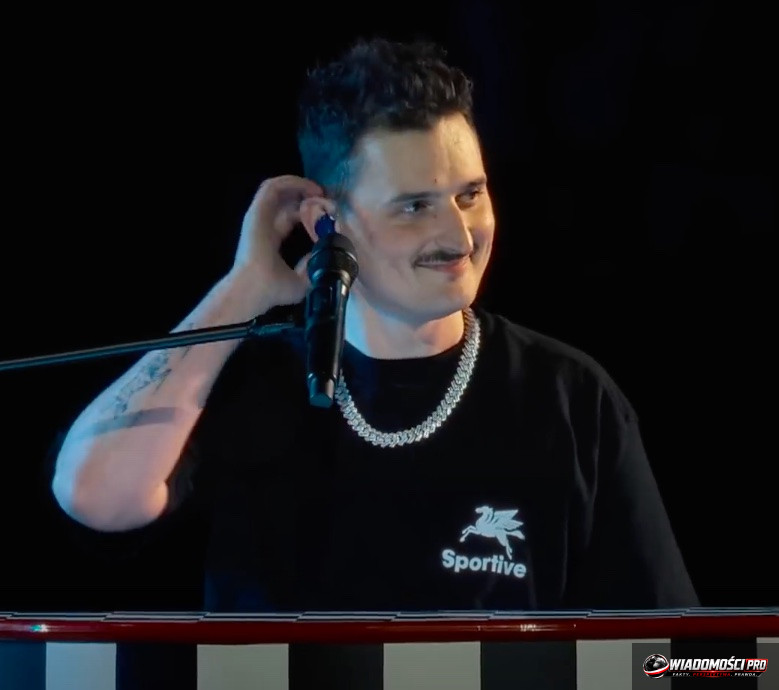
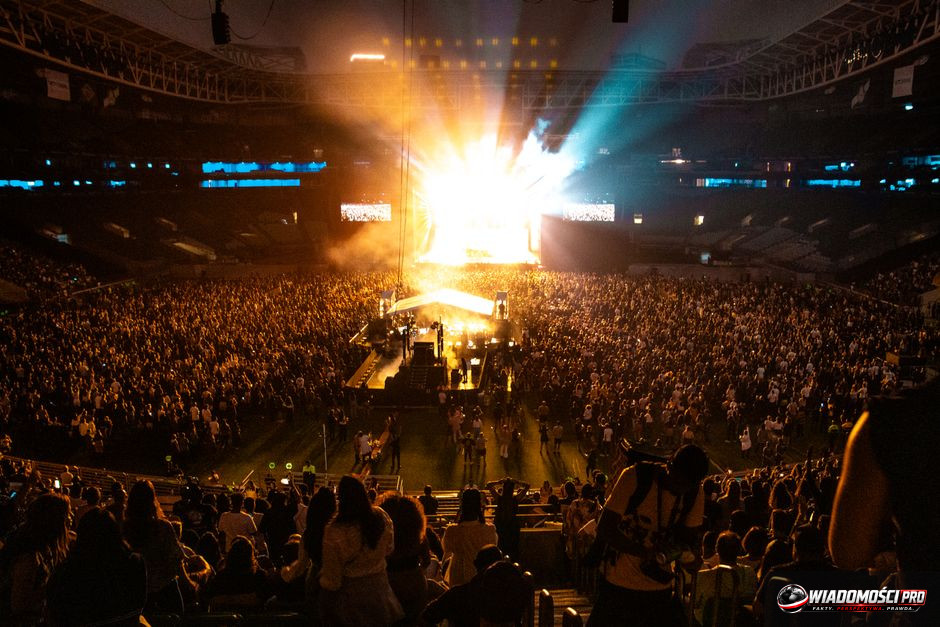
As part of the "Obrotowy Tour 2026," Dawid Podsiadło performed in Gdańsk, Wrocław, Poznań, Warsaw, and Chorzów, including two concerts each at the Silesian Stadium (Stadion Śląski) and in Warsaw for hundreds of thousands of fans. This was the largest concert undertaking in the artist's career to date, which permanently changed the perception of the possibilities of the Polish stadium market. The tour, announced well in advance, became a logistical benchmark for the entire entertainment industry, forcing organizers to move away from standard patterns of handling multi-thousand-person audiences.
Preparing the "Obrotowy Tour" was not limited to renting a venue and setting up equipment. The very name of the tour suggests the use of an advanced rotating structure, which is an engineering challenge in stadium conditions. Assembling a stage with such specifications requires precise planning of the work of dozens of technical crews, who must synchronize moving elements with the sound and lighting systems. Each of the concerts in Gdańsk, Wrocław, Poznań, Warsaw, or Chorzów was a separate logistical battlefield, where the margin for error in synchronizing stage mechanisms was practically non-existent.
Already in September 2025, Onet pointed to the artist's return to the stadium format, which was a signal for the music industry to mobilize. The concert market in Poland has evolved over the years, but "Obrotowy Tour 2026" defined a new level of expectations. It was not just about the number of tickets sold, but about maintaining the quality of the spectacle at such a large scale. The Silesian Stadium, with a capacity exceeding 54,000 spectators, and the PGE Narodowy in Warsaw, holding nearly 58,000 people, impose specific requirements regarding visibility and acoustics. Podsiadło, by deciding on double performances in these two locations, set himself the goal of filling nearly 220,000 seats in these cities alone, which, when combined with concerts in other metropolises, creates an impressive volume of participants.
The tour management strategy was based on precise dosing of information about ticket availability. As early as December 3, 2025, after the announcement of additional dates, it became clear that interest exceeded initial forecasts. Organizers, reacting to the ticket fever, added further dates to the schedule, which was confirmed by publications on the eBilet and Open FM websites. The decision to double the concerts in Chorzów and Warsaw was a pure response to demand, which in the case of this artist goes beyond standard frames of popularity. Fans who did not manage to purchase tickets in the first round waited for subsequent "batches" of tickets, which created a specific purchasing dynamic, stretched over many months.
The distribution process officially ended on March 26, 2026, when the cgm.pl website reported the release of the final pools of tickets. Such a long sales cycle, lasting from December to spring, is risky from a financial point of view, as it requires maintaining interest in the tour for half a year. Podsiadło, however, successfully managed media attention, and each subsequent piece of information about a sold-out ticket pool only fueled the narrative about the most desirable musical event of the year.
The logistics of organizing two concerts in a row at such massive venues is a test for urban infrastructure. Thousands of fans arriving in Warsaw or Chorzów are a challenge for transport, hotels, and security systems. In the case of the Silesian Stadium, which is a facility open to specific technical solutions, the crew assembling the rotating stage had to deal with issues of power supply and ground stability under the weight of the structure. These are not details discussed in reviews, but they determine whether the spectacle can take place in its full capacity at all.
The Gdańsk performance on June 21, 2026, described by Trojmiasto.pl, showed that even at multi-purpose facilities, one can achieve the effect of a world-class production. Reviewers emphasized that the artist avoided safe solutions, opting for scenography that interacted with the audience. This "stadium as an instrument" approach distinguishes him from performers who treat large venues only as a space to reproduce studio sound. Podsiadło used the potential of Gdańsk, Wrocław, and Poznań to create a unique atmosphere, which for thousands of viewers became the main reason for purchasing a ticket.
The economics of the "Obrotowy Tour" is also a lesson for other Polish promoters. It was proven that a Polish artist can function in stadiums as the main act, without needing the support of foreign stars to fill the stands. This changes the balance of power in the market, where until now stadiums were the domain of performers from the USA or Great Britain. When "Rzeczpospolita" summarized the tour in June 2026, it was emphasized that the hundreds of thousands of tickets sold were the result of work that began long before the first concert. This success was not a matter of chance, but the result of a consistent image and technical policy.
It is worth noting the aspect of "technical fatigue." Executing an advanced show in a "day-after-day" model in the same location requires unprecedented discipline from the technical staff. Every element of the rotating stage must be inspected after each use. The risk of mechanical failure with such an intensive schedule is huge, and a potential cancellation of the tour could have been a PR disaster. Nevertheless, Podsiadło's team handled this challenge, maintaining the continuity of the show in Warsaw and Chorzów. This is proof of professionalism that, until recently, was a rarity in the Polish concert industry.
The stadium format has its limitations. The biggest of these is the distance between the artist and the viewer. In the "Obrotowy Tour," attempts were made to bridge this distance through innovative scenography and the use of visual technologies that transferred emotions from the center of the stage to the furthest stands. This is not a perfect solution – there will always be those for whom the sound in a stadium will be too dispersed – however, in the context of attendance, it is the only way to reach such a wide audience. The Polish public, as seen in the 2026 sales results, accepted this compromise, prioritizing participation in a massive, spectacular event over intimate performances.
Analyzing the schedule, one can see a clear concentration on agglomerations that offer the best infrastructure. Gdańsk, Wrocław, Poznań, Warsaw, and Chorzów are cities where the logistics of handling tens of thousands of people are already well-developed. It is no coincidence that the tour bypassed smaller stadiums. The cost of bringing in such an advanced production as a rotating stage excludes facilities that cannot guarantee the appropriate number of spectators needed to cover high fixed costs. Each concert is an operation with a budget running into millions of zlotys, which makes the "Obrotowy Tour" a high-business-risk undertaking.
One cannot forget the role of fans in this process. Their determination in obtaining tickets, often involving hours spent in online queues, shows that Dawid Podsiadło's music serves as a social binder. A stadium concert becomes a ritual in which participation is just as important as the performance itself. National media, tracking ticket sales, often focused on the emotions accompanying purchases, which only strengthened the prestige of the event. For a fan, owning a ticket to "Obrotowy Tour 2026" became confirmation of belonging to an elite group of recipients who had the chance to see this spectacle live.
The impact on the Polish concert market will be felt for a long time. Promoters now know that the Polish public can generate enough demand to fill the Silesian Stadium twice in one season. This opens doors for other artists who until now were afraid to go beyond indoor concert halls. The "Obrotowy Tour" was not a "game changer" in an abstract sense, but it became hard proof that the barrier of venue size for a Polish performer has been permanently broken. Now, every subsequent stadium project will be measured by what Podsiadło achieved in 2026.
Not everything in this tour was perfect, however. Critics could point to issues of ticket availability or the frustration of those who failed to purchase tickets despite trying. This is a natural effect of scale – with such huge interest, sales systems will always cause controversy. However, from the organizer's perspective, the goal was to minimize losses and maximize reach, which was achieved one hundred percent. The final balance of the tour shows that even with complicated logistics and high technical standards, the stadium league is accessible to domestic creators, provided they have the vision and resources to execute it.
It is worth asking what awaits us in the coming seasons. Will the stadium model become the new norm, or might fans feel oversaturated after such an intense year? "Obrotowy Tour 2026" set a standard that will be difficult to surpass without introducing further innovations. The technology of the rotating stage, while impressive, may become repetitive after some time. Future tours will have to offer something completely new to maintain interest at such a high level. The artist who set the current boundaries now faces the challenge of maintaining the pace in the future.
In summary, the "Obrotowy Tour 2026" was not just a series of concerts in five Polish cities, but above all a demonstration of the strength of the Polish music industry. From Gdańsk to Chorzów, each event was a testament to the changes that have occurred in the way mass entertainment is organized. For hundreds of thousands of fans, these were hours spent in a crowd; for the industry, a lesson in managing a huge project; and for Dawid Podsiadło himself, a confirmation of his position as a leader of the scene. Regardless of individual artistic assessments, the scale and professionalism of this undertaking remain a fact that has gone down in the history of Polish music for years to come.
All the services mentioned in the source material – from eBilet, through Open FM, to Rzeczpospolita – unanimously emphasized that 2026 belonged to Podsiadło. Regional media, such as dziennikzachodni.pl, monitored the progress of preparations in Chorzów from the beginning, knowing that it was a key point on the map. In turn, Trojmiasto.pl rightly noted that the standard of the show in Gdańsk was what the audience had been expecting for a long time. This mutual fueling of media and fans created a phenomenon that cannot be repeated in any other configuration.
Finally, it is worth looking at the future of stadium performances. Is the market not saturated? The answer is: no, as long as demand is stimulated by appropriate quality. If Polish artists maintain the technical standards set by the "Obrotowy Tour," stadiums will continue to fill to the brim. If, however, the production becomes derivative, fans will quickly sense a drop in quality. Podsiadło set the bar very high, but the concert market is dynamic and does not forgive stagnation. Time will tell who will be the next to dare to take a similar step.
Questions and answers
In which cities did the Obrotowy Tour 2026 take place?
Dawid Podsiadło's concert tour covered five Polish metropolises: Gdańsk, Wrocław, Poznań, Warsaw, and Chorzów (Silesian Stadium).
How many concerts did Dawid Podsiadło play in Warsaw and Chorzów?
As part of the tour, the artist decided on double performances in both of these locations, performing a total of four concerts at the Silesian Stadium and in Warsaw.
When could the last tickets for these concerts be purchased?
The official ticket sales process for the stadium shows lasted many months, and the final pool of tickets was made available on March 26, 2026, which closed distribution before the start of the tour.
Why was organizing two concerts in one city a challenge?
The logistics of double stadium performances required not only great precision in assembling the rotating stage but also the continuous maintenance of a high technical level of the show for two evenings in a row, which was a heavy burden for the production crew and the infrastructure of the facilities.
Was the tour a commercial success?
Yes, "Obrotowy Tour 2026" was considered the biggest concert event of the year, attracting hundreds of thousands of fans and selling out tickets for the largest venues in Poland, which is confirmed by numerous media reports and sales dynamics since December 2025.
Sources
- Dawid Podsiadło for hundreds of thousands of fans. Two concerts each in Chorzów and Warsaw - Rzeczpospolita
- Dawid Podsiadło Obrotowy Tour 2026 – the biggest concert tour of the year - Kulturalne Media
- Dawid Podsiadło announces another concert in 2026! - eBilet
- Dawid Podsiadło adds another stadium concert in 2026 [DATE, TICKETS] - Open FM
- Dawid Podsiadło released the last tickets for his stadium concerts - cgm.pl
- Dawid Podsiadło will play two concerts at the Silesian Stadium. Tickets will go on sale soon - dziennikzachodni.pl
- Dawid Podsiadło returns to stadiums. "Obrotowy Tour" already in 2026 - Kultura Onet
- Dawid Podsiadło thrilled crowds in Gdańsk. He showed how to put on a world-class show - Trojmiasto.pl
Article prepared by the Wiadomości PRO editorial team with the support of artificial intelligence. Facts come from the sources listed above.

Komentarze (0)
Ładowanie komentarzy...