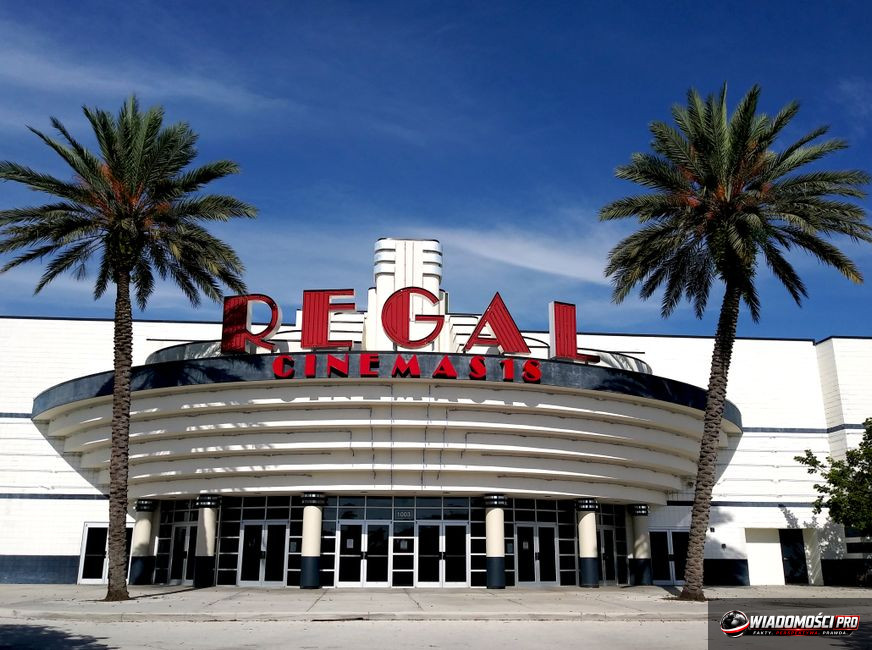
The film "Joker: Folie à Deux" earned only $40 million in its American opening weekend. Industry analysts, including the editorial teams at Deadline and Variety, unanimously classified this result as a financial failure, worse even than the opening of the film "Morbius." This is a brutal collision with Warner Bros.' expectations, especially since the previous installment from 2019 generated over a billion dollars in global revenue on a relatively low production budget.
Analysis of the financial crash
In the case of "Folie à Deux," the numbers tell a story of a spectacular disconnect from market reality. The production cost the studio about $200 million, to which at least $100 million in promotion and distribution expenses must be added. In the film industry, it is generally accepted that for a project to be profitable, it must earn two to three times its total budget at the box office. A debut at the $40 million level in the USA, combined with disappointing results in foreign markets, calls into question the recovery of production costs alone.
When data from the American box office came in during the first weekend of October 2024, consternation reigned at the studio's headquarters. Analysts from Variety pointed out that even the lowest forecasts predicted revenues in the range of $50-60 million. Reality proved to be even harsher. This result is a message from viewers who turned away from the brand almost immediately. The film industry had become accustomed to the "Joker effect," the belief that every subsequent installment of Arthur Fleck's story would be a magnet for crowds. Reality verified these assumptions in a brutal way.
The comparison with the production "Morbius" did not appear without reason. That title had functioned in the minds of viewers for years as a synonym for a comic book flop, both in terms of art and finance. The fact that the sequel to a film that became a global phenomenon in 2019 recorded a weaker start than the Sony production is evidence of a deep crisis of confidence. According to data published by Eurogamer and naekranie, the decline in interest after the premiere was unprecedented. "Folie à Deux" became a symbol of fatigue with material that just five years ago seemed like an inexhaustible source of income.
Why didn't the musical sell tickets?
The decision to transform a dark psychological drama into a musical was a risky move in the history of modern comic book cinema. Director Todd Phillips, supported by the main cast, bet on an artistic vision that in theory was supposed to refresh the formula. In practice, it turned out that fans of the first part were looking for a continuation of a raw story, not a complicated musical structure.
The audience expected a continuation of the dark study of an individual's collapse. Instead, they received a story that for many became an insurmountable barrier. Industry media, such as Interia Film, described this vision as an "unfunny joke," which in the eyes of potential viewers became a clear instruction: it is not worth wasting time or money. The music, which was supposed to be a carrier of emotion, combined with the cold reception from reviewers, only deepened the distance between the screen and the audience.
This situation shows that a brand, even one as strong as Joker, has its limits. The attempt to give it the features of an artistic experiment within high-budget entertainment cinema ended in failure. Viewers, accustomed to certain standards, could not be convinced of the new aesthetic. This is a lesson for Hollywood decision-makers that bold creative decisions must have a solid foundation in the needs of the audience, not just in the ambitions of the creators.
The scale of the collapse compared to other productions
When we compare the results of "Folie à Deux" with other comic book adaptations, the picture becomes even more drastic. In recent years, the market has seen many productions that failed, but none of them had such powerful backing in the form of the success of a previous installment. "Morbius" was a project doomed to failure in the eyes of critics from the start, while Joker was supposed to be a sure thing.
Analyzing reports from October 2024, it is clear that the decline in interest was unprecedented. Many Marvel or Sony productions, even the lowest-rated ones, managed to attract a wider audience to cinemas. This puts "Joker 2" in the infamous lead of the biggest disappointments of the decade. Losing to titles that have been mocked on social media for years is a slap in the face for the creators.
Investors read this as a warning signal. The DC brand, built over years with great momentum, is currently in a phase of strong verification. Viewers are no longer willing to pay for a name on a poster if the quality of the product does not meet their expectations. A financial failure of this scale forces studios to return to the drawing board and revise plans for the future. Will Warner Bros. be able to rebuild trust after such a painful loss? The first steps in this direction must be radical.
The role of public opinion and the media in the process of failure
The media's reaction to the opening results was immediate and extremely harsh. From the moment the first data appeared, headlines in Polish film websites, such as Filmweb, Interia Film, or naekranie, sounded like judgments. "Shocking debut," "Financial catastrophe," "Unfunny joke" – these are just some of the terms that dominated the narrative.
The media not only reported the numbers but also actively shaped the image of the failure. When critics' reviews coincided with the disastrous financial results, an avalanche of negative opinions was created online that could not be stopped. For the average viewer who had not yet managed to buy a ticket, these headlines became a clear instruction: it is not worth wasting time or money.
This phenomenon shows how important brand reputation is in the first days of release. In the age of instant information flow, the first weekend decides the "to be or not to be" of the entire project. "Joker 2" became a victim of its own fame. The high expectations that had grown over the years turned into harsh judgment as soon as the first cracks in the production's image appeared. For the creators, this is an extremely difficult situation, because once a viewer's trust is lost, it is extremely expensive to regain.
Has the comic book market reached a point of saturation?
The failure of "Joker 2" opens a discussion about the condition of comic book cinema in general. For the last two decades, this genre dominated the box office, guaranteeing billion-dollar revenues almost automatically. Today, there is a clear fatigue among the audience. Viewers are increasingly looking for freshness, not more variations on the same characters.
The comparison with plans for 2026, where "Toy Story 5" promises to be a box office record-breaker, shows that the audience is still hungry for entertainment, but of a different nature. Viewers choose productions that promise safe, proven quality. Dark, artistic experiments that do not give a clear promise of entertainment become risky. This is a paradigm shift that Hollywood will have to face in the coming years.
Decision-makers at Warner Bros. must answer the question of whether further exploiting known brands in such a risky way still makes sense. Perhaps it is time for a moment of breathing room and a change in strategy that will allow for the building of new, fresh stories. "Joker: Folie à Deux" will remain in cinema economics textbooks as an example of how even the greatest success of a predecessor does not guarantee safety in the future.
Impact on the strategy of future investments
For investors, the result of Joker 2 is more than just a loss of money. It is proof that the market has ceased to be predictable. The funds that flowed into Hollywood were based on the certainty of a return on investment in known franchises. Today, that certainty has disappeared. Every new project, even one with a huge budget, is now evaluated through the prism of potential failure.
Studios must now make more rigorous selections of projects. Budgets in the hundreds of millions of dollars will be harder to justify if they are not supported by a solid marketing plan and a clear message for the viewer. "Joker 2" shows that it is not enough to have a star-studded cast and a well-known title. Consistency is needed, which in the case of this film was simply missing.
For the competition, this is an opportunity to take over part of the market. Companies that can sense social moods and offer entertainment that hits the mark will gain an advantage. Warner Bros., after this lesson, will have to draw conclusions, perhaps limiting the number of experimental projects in favor of a more toned-down strategy. This does not mean the end of comic book cinema, but certainly the end of the era of uncritical admiration for every, even the weakest, project based on DC or Marvel licenses.
Analysis of long-term effects for the DC brand
The DC brand, being the foundation of many of the studio's plans, must go through a process of deep reform. The fall of Joker 2 is just one piece of the puzzle that shows the universe needs new energy. Viewers no longer want to watch dark, nihilistic visions that do not lead to any constructive finale.
The problem does not lie only in the film itself. It lies in the way of communicating with fans. When expectations are built on the basis of the success of the first part, and the final product is completely different, disappointment is inevitable. This is a brand management error that cost the studio millions of dollars. The future of DC depends on how quickly lessons can be learned from this.
The question remains whether the Warner Bros. board will be able to accept the fact that Joker is no longer a guarantee of profit. If so, future productions may be better adapted to the modern viewer. If not, we can expect further disappointments that will eventually lead to the loss of the market leader position.
Economic context: Costs vs. Profits
High production costs, fees for stars, salaries for the crew, and huge expenses for the promotional campaign mean that the break-even point is set extremely high. When a film does not reach this threshold in the first weeks, the chances of recouping losses shrink almost to zero. In cinema, where the life of a film is short, every day of delay in attracting viewers to the box office is a loss. "Joker 2" failed to maintain momentum, which meant that after the first weekend, interest almost evaporated.
This situation is a warning to all of Hollywood. Budgets must be rationalized, and risk should be spread in a more predictable way. There is no longer room for mistakes that cost hundreds of millions of dollars. Every funding decision must be supported by reliable analysis, not just hope for a repeat of the success of years past.
The modern cinema market is ruthless for productions that cannot define their target group. A production of such a large scale requires precise positioning. Warner Bros. made the decision to target the film at a niche audience while expecting mass revenue. This is a fundamental error in budget management, which at the scale of $200 million is unforgivable.
Evolution of the distribution model
Cinema distribution after the pandemic has changed beyond recognition. Viewers have become more selective. They choose only those titles that offer something unique or guarantee proven entertainment. "Joker: Folie à Deux" did not fit into any of these trends. It was neither a classic blockbuster with special effects nor light entertainment for the weekend.
Analysts from Deadline point out that viewers are increasingly less likely to decide to buy a cinema ticket if reviews on sites like Rotten Tomatoes are negative. In the case of the Joker sequel, disastrous critic ratings coincided with negative viewer reception, which created a snowball effect. As a result, interest in the film dropped drastically after the first preview screenings.
For decision-makers at studios, this is a signal that marketing based on a brand is not enough. If the product is inconsistent with fan expectations, even the most famous character will not save the film from financial catastrophe. This phenomenon was visible earlier, but Joker 2 became the most vivid example of this mechanism.
The future of the DC universe
Warner Bros. Discovery faces the challenge of rebuilding the DC brand. After a series of failures, including "Black Adam," "Shazam! Fury of the Gods," or "The Flash," the failure of "Joker 2" is particularly painful because it hits a foundation that seemed stable.
Planned changes, which are to integrate the DC universe under the guidance of James Gunn and Peter Safran, must take into account the conclusions from this financial fiasco. Budget stability, clarity of message, and understanding the viewer's needs are becoming priorities. There is no room for experiments that burden the studio's budget without clear business justification.
Successes of previous years, such as "The Batman," showed that viewers still want to watch dark stories in the DC world, as long as they are consistent and well-executed. The failure of Joker 2 shows that the line between artistic vision and financial catastrophe is extremely thin. The studio must find a golden mean that will allow for maintaining quality while simultaneously caring for profitability.
Market analysis: Have viewers turned away from anti-heroes?
In public discourse, the question often arises whether the era of anti-heroes in comic book cinema has come to an end. For years, characters like Joker, Deadpool, or Venom dominated cinemas, offering viewers an alternative to classic superheroes. However, the market seems to have shifted toward more traditional narrative structures.
Analyses on naTemat.pl suggest that viewers may be feeling oversaturated with the nihilistic approach to comic book characters. The successes of recent animated productions, such as "Spider-Man: Across the Spider-Verse," indicate that the audience appreciates innovation but still expects a certain level of heroism or at least a clear path of character development.
Joker 2, through its pessimism and lack of a traditional ending, may have exhausted the audience's patience. The financial failure of this production is not just the result of a weak script or the decision to make a musical. It is the result of a broader trend in which viewers look for hope and escapism in cinema, not a deepening of a depressive mood.
Summary of investment in the brand
The financial flop of "Joker: Folie à Deux" is a lesson in humility for the entire Warner Bros. production system. Every dollar spent on this film was an investment in a brand that, in a short time, lost a huge part of its market value.
From an economic perspective, the losses resulting from the low opening and poor ticket sales in subsequent weeks are impossible to recoup. Promotion costs, which in this case were spread over months, did not bring a return. This shows that even the strongest brand can be destroyed by one poorly managed project.
For future investors in the film industry, this case will serve as a case study of how not to manage a franchise. The risk that accompanied this film was too great in relation to the potential benefits. Every subsequent production from the DC universe will now be evaluated through the prism of this experience, which will certainly influence a more conservative approach to financing.
Conclusions for the film industry
Hollywood faces the necessity of redefining its business model. Successes from a decade ago, which were based on the easy translation of comic book popularity into box office revenue, are becoming a thing of the past. Today's market requires studios to have much greater flexibility and the ability to listen to viewers.
The failure of Joker 2 is not the end of comic book cinema, but certainly the end of the era of uncritical admiration for every, even the weakest, project based on DC or Marvel licenses. The studios that survive will be those that can combine artistic ambition with hard economics. Every project must be supported by reliable data, not just hope for a repeat of the success of years past.
Ultimately, it is the viewers who decide the success or failure of a film. Their voice, expressed at the box office, is the most important indicator of a brand's condition. "Joker: Folie à Deux" turned out to be a test that the studio failed, which leaves the door open for the competition and forces deep reflection on the future of the entire entertainment industry.
Perspectives for the coming years
Looking to the future, Warner Bros. will have to make difficult decisions regarding the direction in which their DC universe is heading. Will they bet on proven solutions, or will they continue to risk with niche projects? The answer to this question will define the studio's position in the market over the next decade.
The financial flop of Joker 2 is a signal to the board that it is time for radical changes. Will they be able to implement them? Time will tell. However, one thing is certain: the story of Arthur Fleck in this installment will be remembered as a warning that even the most brilliant creators and the most popular characters are unable to save a film if it lacks consistency and an understanding of the needs of the modern viewer.
The film market in 2024 showed that there is no longer room for mistakes that cost hundreds of millions of dollars. Every subsequent premiere will be watched with even greater attention, and expectations regarding the quality of production will only grow. For cinema fans, this is good news; for investors, it is a challenge that will be difficult to meet without a thorough restructuring of existing management systems.
Is the era of big franchises coming to an end?
The question about the future of big comic book franchises is more relevant today than ever. The financial results of "Joker 2" suggest that the audience is becoming increasingly resistant to marketing tricks and less willing to forgive mistakes.
If studios want to regain the trust of viewers, they must return to the basics: a good script, a clear vision, and respect for the viewer. Only in this way can a brand be built that will stand the test of time. Joker 2 did not meet these conditions, becoming a symbol of financial failure that will be talked about in Hollywood for a long time to come.
Every subsequent project from DC will now be measured by the scale of this failure. This is a huge burden for the creators, but also an opportunity to create something new that will attract viewers back to cinemas. Is it possible? Everything depends on the determination of the studio and the ability to draw conclusions from this painful lesson.
Sources
- Joker 2 is an unfunny joke at the box office. Results are even worse than assumed - Eurogamer.pl
- Box Office USA: Shocking debut of the film "Joker: Folie à Deux" - filmweb.pl
- "Joker 2" turned out to be a financial flop. Here are other films that had a painful fall - naTemat.pl
- "Joker: Folie a deux": Financial catastrophe of the second part of the cinema hit! - Interia Film
- What a failure for Joker 2! No other comic book film has recorded such a drop at the box office! - naekranie.pl
- This is how much "Joker: Folie à deux" earned in its opening weekend! A big flop for the creators and cast? - Radio ESKA
- Joker 2 lost even to Morbius. The worst Marvel and Sony films earned more - Gram.pl
- Box Office USA: Massacre of new releases. "Toy Story 5" is heading for a series record - filmweb.pl
Article prepared by the Wiadomości PRO editorial team with the support of artificial intelligence. Facts come from the sources provided above.



Komentarze (0)
Ładowanie komentarzy...