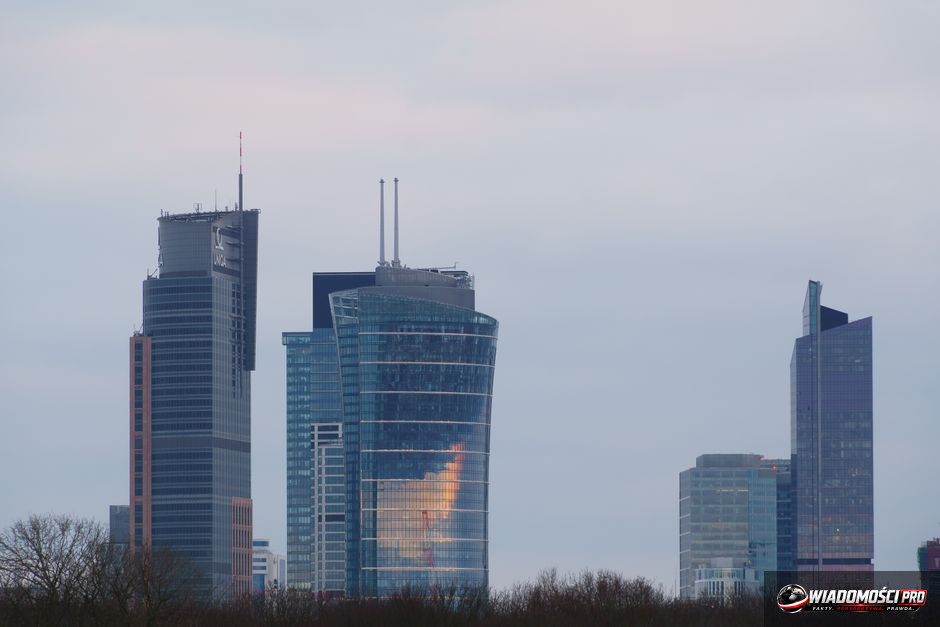
In November 2024, the Monetary Policy Council (MPC) maintained interest rates at 5.75 percent, responding to CPI inflation, which reached 5.0 percent year-on-year that month. This decision formed the foundation for the NBP's subsequent strategy, which evolved toward a cycle of cuts in the following years. This allowed for the shaping of market expectations during a period when the economy was struggling with price pressure while GDP growth dynamics were slowing down.
November freeze: Why didn't the MPC change rates in 2024?
The decision of November 6, 2024, widely reported by TVN24, was a signal to the market that the central bank was not planning any drastic moves in the face of moderate, yet still troublesome, inflation. Maintaining the main reference rate at 5.75 percent was the result of a risk calculation where stabilizing the inflation expectations of entrepreneurs and consumers became the priority. At that time, the dynamics of consumer price growth in Poland, hovering around 5 percent, ruled out monetary easing without the risk of a renewed surge in energy prices.
The Monetary Policy Council, by adopting a wait-and-see attitude, gained time to assess incoming macroeconomic data from the industrial sector. The stabilization of the cost of money was not a sign of a lack of decisiveness, but an expression of concern about the negative consequences of lowering rates prematurely. Had the MPC decided to move downward as early as November 2024, the zloty could have reacted with a sharp depreciation, which, in the face of the still uncertain energy situation in Europe, could have imported additional inflation.
For the Polish banking system, that freeze meant maintaining margins at a relatively predictable level. Borrowers with obligations based on the WIBOR rate felt relief compared to the years 2022–2023, however, the costs of debt servicing remained high. Commercial banks, taking advantage of stable conditions, gradually adjusted their offers, preparing the ground for future changes in the business cycle. The lack of a rate change in November 2024 was therefore a technical safeguard that allowed for avoiding a liquidity shock.
From stabilization to cuts: The breakthrough of 2025
In retrospect, 2025 turned out to be a period of the long-awaited turnaround in monetary policy. In November 2025, as noted by Bankier.pl, the Monetary Policy Council carried out its second autumn interest rate cut, which confirmed a shift in priorities within the decision-making body. This change was possible thanks to the gradual fading of pro-inflationary factors that had paralyzed any moves toward monetary easing just a year earlier.
However, this process was not rapid. A Forbes economist warned against excessive optimism in November 2025, pointing out that the road to reaching an optimal level for interest rates is a long-term process that would not end before the end of 2026. This caution was dictated by the condition of the labor market and still high service costs, which effectively hindered a quick return of inflation to the NBP's statutory target.
Borrowers, observing these moves, could count on a slow improvement in their financial capacity. The cuts from the autumn of 2025 brought measurable savings in mortgage installments, but the scale of these changes was limited by the Council's rigorous approach to the issue of money supply. The strategy of small steps became the hallmark of the NBP, which at that time tried to balance between the need to stimulate economic growth and maintaining the stability of the national currency.
The evolution of monetary policy in 2025 was therefore a rational one. Instead of risky leaps, the MPC opted for predictability. This approach allowed financial markets to price in future interest rates in advance, which stabilized treasury bond yields. Foreign investors, seeing professionalism in this action, maintained their commitment to Polish debt securities, which supported the zloty's exchange rate in a difficult international environment.
Geopolitics as a brake: The impact of the Iran-USA conflict in 2026
The year 2026 brought entirely new challenges that revised the initial assumptions regarding the pace of cuts. As indicated by the Innpoland.pl website in July 2026, the geopolitical situation in the Middle East became the main risk factor for the Polish economy. The escalation of tensions between the USA and Iran led to unrest in energy commodity markets, which directly translated into the exchange rate of the zloty and expectations regarding the path of interest rates.
Portal Samorządowy, citing analyses by the Polish Economic Institute (PIE), emphasized that further decisions by the Council would be largely dependent on the scale of the conflict. For an economy like Poland's, which is heavily dependent on the import of raw materials, every external price impulse is an alarm signal for the central bank. In July 2026, analysts at Parkiet.com openly debated the possibility of halting the cycle of cuts, and in extreme scenarios – even the necessity of a temporary tightening of monetary policy.
For the average credit holder, this situation meant a return to a state of uncertainty. Hopes for a quick reduction in installments, which seemed realistic as late as the end of 2025, were overshadowed by geopolitical risks. The market began to price in a so-called risk premium, which translated into higher financing costs for businesses. The zloty, under pressure from global capital, lost value, which forced the MPC to maintain rates at a level that could stop capital flight from the country.
It is worth noting that this defensive stance of the Council was the only available response to so-called imported commodity inflation. When the price of a barrel of oil reacts to every report of clashes in the Persian Gulf, the central bank cannot afford the luxury of lowering rates for the sake of stimulating consumption. This is precisely why, in July 2026, the debate shifted from the question of "when will the next cuts be" to "are current rates not too low in the face of a global threat".
Forecasts for borrowers: When will the cycle end?
Forecasting interest rate levels in 2026 became an extremely difficult task, as reported by Direct Money in an April analysis. The market stopped believing in a return to the era of cheap money that dominated in the pre-pandemic years. Analyses show that the "optimal level" mentioned by Forbes experts in November 2025 is shifting over time with each subsequent wave of unrest in the Middle East.
For the borrower, this means the necessity of long-term household budget management while taking into account current, relatively high debt servicing costs. If we accept the experts' assumptions that we will reach the optimal level at the earliest by the end of 2026, it means that full relief in installment payments is still ahead of us. However, every month without an escalation of the conflict is a chance to return to the baseline scenario assuming mild cuts.
It is worth paying attention to the structure of the credit portfolio in Poland. Most mortgages are based on a variable rate, which makes Polish debtors exceptionally sensitive to MPC decisions. In 2026, this sensitivity became even more visible. When reports of rising tension in the Iran region appeared in July 2026, forward rate agreement (FRA) quotes immediately recorded increases. This means that the market priced in the probability of keeping rates at a high level for longer.
For many households, this information is disappointing. However, from a macroeconomic point of view, maintaining rates at a level that allows for currency stabilization is key to protecting the purchasing power of money. Without this discipline, inflation could once again become the main threat to household budgets, which would be much more painful than a high loan installment.
Institutional stance: How do PIE and NBP view inflation?
The Polish Economic Institute, in its 2026 reports, consistently emphasizes that monetary policy cannot be detached from geopolitical reality. The NBP, meanwhile, in its communications after meetings in 2026, emphasizes so-called "variable uncertainty." This phrasing, although often criticized for a lack of specifics, perfectly describes the state in which the Polish economy finds itself.
In 2026, the main institutional challenge was defining the so-called "natural interest rate." In conditions of low economic growth and high external risk, determining this boundary became impossible. PIE indicates that the pace of further actions in monetary policy must be adjusted to the pace of energy price growth, which is directly correlated with the situation in the Middle East. Every dollar increase in the price of oil is a potential percentage point of additional inflation, which automatically limits the space for rate cuts.
Cooperation between analytical institutions and the central bank in 2026 took place in the shadow of uncertainty. While there was a relative consensus on the need for easing in 2025, July 2026 brought a clear division among analysts. Some of them, representing a more liberal approach, suggested that the economy required support even at the cost of a temporary weakening of the zloty. The other side, more conservative, argued that currency stability is sacred and cannot be sacrificed for short-term GDP growth.
The NBP, taking these opinions into account, adopted a "wait and see" strategy. The decision of November 2024, maintaining rates at 5.75 percent, proved over time to be an accurate foundation that allowed for building a safety buffer. Had aggressive cuts been decided upon then, the central bank would have had much less room for maneuver in 2026 in the face of a global energy crisis.
The zloty under pressure: Summary of the market situation in September 2026
In September 2026, the situation of the zloty is still tense. The national currency remains under the pressure of global risk, which effectively limits investors' appetite for Polish assets. As noted by wGospodarce in its July analyses, the situation of borrowers is inextricably linked to the valuation of the zloty. If the currency loses value, import costs rise, which automatically raises inflation and forces the NBP to maintain higher interest rates.
This is a vicious circle that the Polish economy has been struggling with for the better part of 2026. Although Bankier.pl noted optimistic signals in 2025, the current reality requires a cool head from decision-makers. Stabilizing rates at a level that is neither restrictive nor stimulating has become the new norm. The financial market has become accustomed to the fact that every MPC decision is preceded by an analysis of reports from Tehran, Washington, or Brussels.
For long-term investors, the current situation is a time for selection. Companies with strong fundamentals that are not dependent on revolving credit are doing much better than those that have to refinance their debt at current rates. The zloty, although still under pressure, shows some resilience, which testifies to confidence in the foundations of the Polish economy. Nevertheless, September 2026 is not a time for investment bravado.
In summary, the decision from two years ago to maintain rates at 5.75 percent was an expression of foresight. It allowed for a safe passage through the transitional period of 2025 and prepared the ground for crisis management in 2026. Although borrowers may feel disappointed by the pace of the decline in installments, from the perspective of the stability of the entire financial system, it was the only possible scenario.
What this means for you
The decision of November 2024, maintaining rates at 5.75 percent, was the most important turning point of recent years. Establishing this level as an "anchor" allowed the NBP to avoid destabilizing the zloty during moments of greatest geopolitical tension in 2026. For you, as a borrower, this means one thing: predictability has become more important than the speed of the decline in installments. Although the cycle of cuts began in 2025, it is an extremely slow process, and every subsequent decision by the Council depends on external factors over which Poland has no control. You must plan your household budget taking into account that the high cost of credit may remain with us longer than originally assumed, and any hopes for "cheap money" must be verified by current reports from the Middle East. The stability of the financial system is currently being protected at the cost of your higher installments, which is the price for avoiding a deeper currency crisis.
Questions and answers
Why didn't the MPC lower interest rates in 2024?
In November 2024, the Council maintained rates at 5.75 percent, responding to CPI inflation at 5.0 percent and a desire to stabilize inflation expectations in the face of an uncertain energy situation.
Are interest rates currently falling?
The cycle of cuts began in 2025, however, the pace of these decisions in 2026 was significantly slowed down by geopolitical tensions in the Middle East, which threaten the stability of the zloty and commodity prices.
When can we expect stabilization of the rate level?
According to expert forecasts cited in Forbes, we should reach the optimal level for the Polish economy at the earliest by the end of 2026, provided that the situation in international markets does not deteriorate further.
Sources
- MPC keeps rates unchanged – will the escalation in Iran bring hikes? (ANALYSIS) - parkiet.com
- See what happens with your loan! MPC has made a decision - wGospodarce
- USA and Iran are at daggers drawn, and the MPC is not cutting rates. Zloty under pressure - innpoland.pl
- PIE: further decisions on interest rates will depend on the escalation of the conflict in the Middle East - Portal Samorządowy
- Forecasts for interest rate levels in 2026 - Direct Money
- There is a decision regarding interest rates - TVN24
- Monetary Policy Council lowered interest rates. This is already the second autumn quarter - Bankier.pl
- The interest rate cut cycle continues, but it's too early to rejoice. Economist: "We will reach the optimal level at the earliest by the end of 2026" - Forbes
Article prepared by the Wiadomości PRO editorial team with the support of artificial intelligence. Facts come from the sources listed above.
Komentarze (0)
Ładowanie komentarzy...