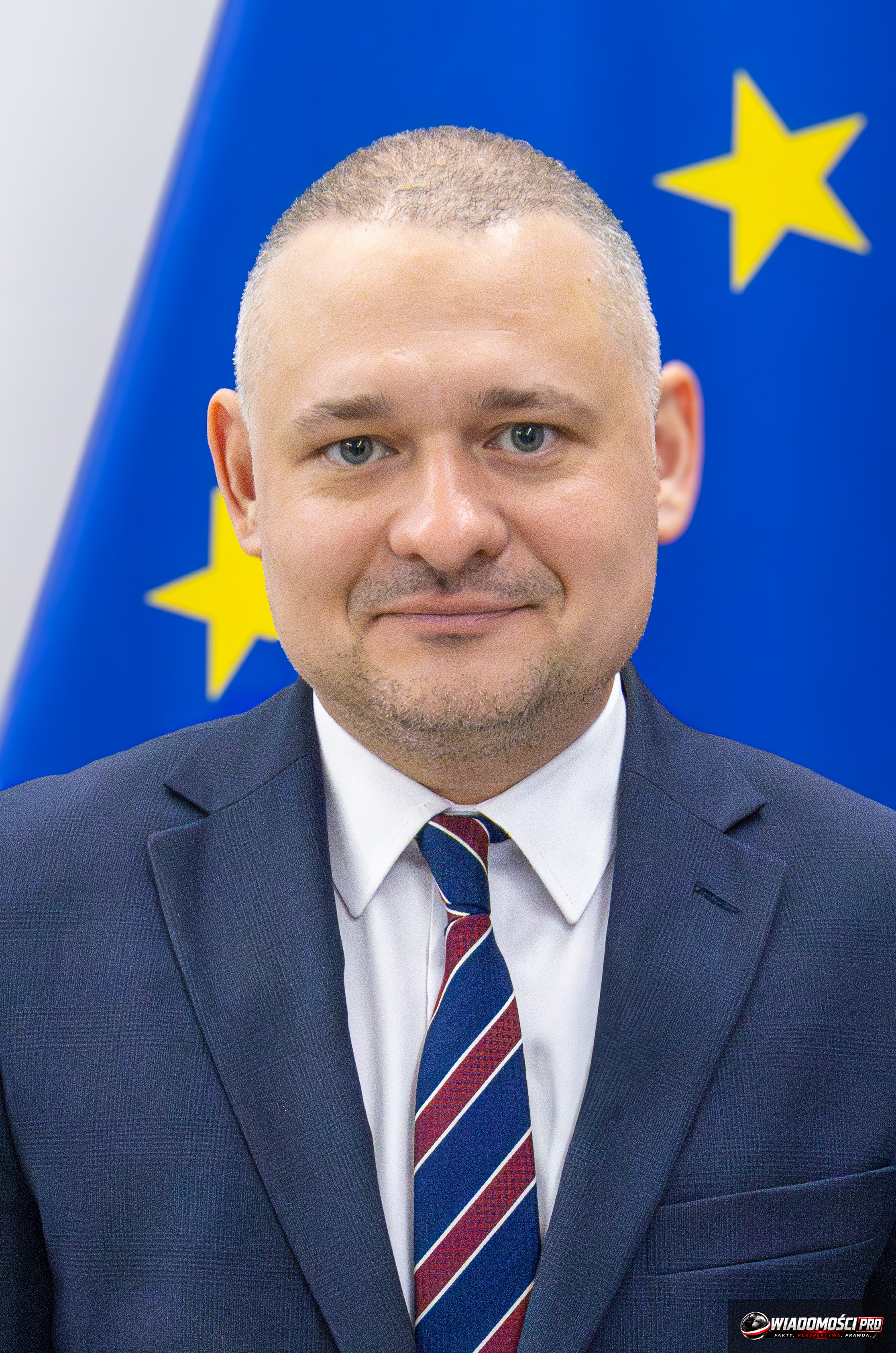
In brief
- The court ruled that the evidence presented by the prosecutor's office does not justify the use of the most severe preventive measure.
- The decision sparked immediate political protests, calling into question the efficiency of proceedings against individuals protected by immunity.
- The Król case fits into a broader context of disputes over the rule of law, recalling controversial decisions from the past, such as in the cases of Paweł T. or Marcin Dubieniecki.
Behind the scenes of the court's decision: Why did the arrest motion fail?
Behind the scenes of the court's decision: Why did the arrest motion fail?
The Regional Court rejected the prosecutor's motion for the temporary arrest of MP Wojciech Król, deeming the evidence insufficient for such a drastic preventive measure. A key argument of the judge was the assessment of specific premises, or rather their complete absence. The justification stated directly: the prosecutor's office failed to demonstrate a real fear of tampering with evidence or the suspect fleeing. It was precisely these two pillars, upon which an arrest motion is built, that proved exceptionally fragile in this case.
The judge also addressed the analysis of the gathered evidence in terms of the "high probability of committing a crime" required by law. In the court's opinion, although the material is extensive, it does not reach the threshold of certainty necessary to isolate the MP from society at this stage of the proceedings. Prosecutors did not present arguments that would convince the adjudicating panel that Wojciech Król could in any way influence the course of the investigation or attempt to leave the country. In this situation, arrest would have become a punishment rather than a security measure, which the law does not allow.
An important element that resonated during the announcement of the ruling was the reminder of the primacy of the presumption of innocence. The court emphasized that the use of temporary arrest in the Polish legal system should be a measure of last resort, used only when other methods do not guarantee the proper course of proceedings. Here, such evidence was lacking.
The situation was further complicated by parliamentary immunity. Although it is sometimes waived in cases of such a serious nature, in the eyes of the court, the mere fact of holding a parliamentary mandate, combined with the lack of hard evidence of a risk of obstructing the investigation, created an insurmountable legal barrier. The court could not ignore the MP's status in the context of legal protection, which is intended to prevent the instrumental treatment of the justice system by law enforcement agencies.
The rejection of the motion is a clear signal to the prosecutor's office that determination alone in seeking to punish a politician is not enough to convince judges. Now, investigators must either gather new, stronger evidence that will demonstrate a specific threat to the investigation or settle for non-custodial measures. For public opinion, this is a clear message: immunity and the presumption of innocence still work, and courts do not agree to be a "rubber stamp" for prosecutorial motions if they are not backed by hard facts regarding the intent to flee or tamper with evidence.
Parliamentary immunity: Shield or privilege?
Parliamentary immunity: Shield or privilege?
The court dismissed the prosecutor's motion for the arrest of MP Wojciech Król, definitively cutting off speculation about his immediate isolation. The key reason for such a decision was the lack of hard evidence of a real fear of tampering with evidence or the suspect fleeing, which in criminal procedure constitutes the foundation for applying the most severe preventive measure. The judges decided that the prosecutor's premises were too general and did not refer to specific actions that could hinder the investigation. In a clash with the constitutional framework of parliamentary immunity, a motion formulated in this way proved legally ineffective.
The institution of immunity in the Polish legal system is not an absolute immunity, but it requires law enforcement agencies to demonstrate above-average diligence in their argumentation each time. History shows that courts rarely decide to arrest individuals with immunity without overwhelming evidence. In 2018, the Court in Katowice refused to arrest former Deputy Minister of Treasury Paweł T. in the high-profile case of the privatization of the CIECH company, which shows that the high rank of an official or politician paradoxically raises the bar for the prosecutor's office. In turn, in 2015, Marcin Dubieniecki was arrested conditionally for three months, which was an exception confirming that when evidence is irrefutable, immunity ceases to be an effective barrier.
The current situation poses a difficult question for the justice system about the limits of parliamentary privilege. On one hand, we have the constitutional protection of a representative of the nation, and on the other — the social expectation of equal treatment of all citizens before the law. When the prosecutor's office does not provide the court with specifics, but only general fears about "influencing witnesses," immunity naturally becomes a convenient argument for the court to refuse to apply arrest. This is not so much a problem of protecting a politician as it is of the evidentiary quality of the prosecutors' work.
In this case, there was a lack of precise demonstration of why, in the case of MP Król specifically, an isolation-based preventive measure is necessary to secure the course of proceedings. The court does not operate in a vacuum and cannot base its decision on conjectures, even if the case is of a public nature. Without demonstrating a real risk of tampering, immunity remains inviolable. The prosecutor's office lost this stage of the clash not because the law is flawed, but because the prepared motion was, in the eyes of the court, insufficient. This is a clear signal to investigators: in political cases, every argument must be supported by a specific fact, not by a general thesis about a threat to the investigation.
Historical precedents: From Paweł T. to Marcin Dubieniecki
The court's decision in the case of MP Wojciech Król did not come from a vacuum. Jurisprudence in Poland has for years set a high evidentiary threshold for the prosecutor's office when individuals with immunity or high public status are involved. Judges are increasingly rejecting motions for temporary arrest if investigators do not present hard, almost tangible evidence that the suspect is actually tampering with evidence or planning to flee the country. The weight of the charges or the media buzz around the case is not enough for the court to deprive someone of their freedom before a verdict.
History knows cases in which courts approached the prosecutor's motions with great restraint, even with very serious accusations. Often, it was the failure to demonstrate a "real fear" that became the main obstacle for prosecutors. We remember situations in which big names faced justice but did not land in a cell immediately. The legal mechanism here is ruthless: if the prosecutor's office does not provide evidence of obstructing the investigation, the court cannot apply the most severe preventive measure.
Here is a summary of cases that shed light on the current judicial practice in similarly high-profile proceedings:
- Paweł T. — The Court in Katowice did not arrest the former Deputy Minister of Treasury suspected of irregularities in the sale of CIECH shares (dziennikzachodni.pl, 14.02.2018)
- Marcin Dubieniecki — The court decided on a conditional arrest for a period of 3 months (Bankier.pl, 26.08.2015)
These examples show a certain regularity. In the case of Paweł T., the lack of consent to arrest was a clear signal that the court did not find procedural premises, not a lack of evidence for the crimes themselves. In turn, the conditional nature of the arrest for Marcin Dubieniecki proves that judges look for intermediate solutions instead of immediately reaching for the most radical isolation measures.
For MP Król, such a turn of events is a victory on the procedural field, but this is only the beginning of the legal battle. The prosecutor's office, not obtaining consent for arrest, finds itself in a more difficult position. It must conduct the case under conditions of freedom, having against it not only parliamentary immunity but also – as seen by today's decision – very strict requirements of the court regarding evidence of tampering. This is a signal to investigators that in political cases, the margin for error is zero. Every stumble in the procedural documentation makes the arrest motion, in the eyes of the judges, merely an empty postulate. In this way, the Polish justice system, instead of succumbing to pressure, relies on a cold calculation of the provisions of the Code of Criminal Procedure.
Political reactions: Who wins, who loses?
The court's decision to refuse the arrest of MP Wojciech Król sparked immediate polarization on Wiejska Street. The ruling camp does not hide its outrage, openly accusing the justice system of applying a "preferential tariff" to representatives of the political class. Coalition politicians point out that the lack of arrest in the face of the charges brought is a signal of the state's weakness. In their narrative, the court's argument that the prosecutor's office did not demonstrate a real fear of tampering or a risk of flight sounds like a mockery of citizens who, in similar procedural situations, are deprived of their freedom without undue delay.
The opposition interprets the same decision completely differently. For them, the court's ruling is a victory for the rule of law. They argue that the prosecutor's office, which they believe is a political tool, has once again failed to meet elementary evidentiary requirements. Opposition MPs emphasize that the court had to stand guard over independence, reminding that parliamentary immunity is not just a privilege but a constitutional barrier against the arbitrary action of law enforcement agencies. They suggest that the entire case is purely procedural in nature, and the attempt to isolate MP Król was merely an attempt to eliminate him from public debate.
Those who have been thundering for months about the politicization of the prosecutor's office are the primary beneficiaries of this situation. Every day that MP Król remains free is for them confirmation of the thesis that the "good change" in the judiciary worked as a fuse. In turn, the Ministry of Justice suffers image losses. If the prosecutor's office does not provide hard, irrefutable evidence of an attempt to tamper with evidence in the coming weeks, this case will become a burden for the government that cannot be easily washed away.
In the background, however, a game with much higher stakes is being played. Today's decision shows that in cases involving parliamentarians, evidentiary standards are interpreted extremely rigorously. This, in turn, forces prosecutors to work under enormous pressure of time and public expectations. Every subsequent move by investigators will be analyzed by lawyers on both sides of the dispute, which guarantees that the trial of MP Król will not end in the courtroom but will continue in the media and in parliamentary corridors. Ultimately, it is not the court's ruling, but the ability to convince voters of the rightness of one's arguments that will decide who emerges from this clash with their face intact and who is left with an image defeat. For now, the stalemate continues, and immunity remains effectively blocked as a tool in the hands of the prosecutor's office.
Prosecutor's office under pressure: Was the evidence sufficient?
Prosecutor's office under pressure: Was the evidence sufficient?
The Regional Court in Warsaw rejected the prosecutor's motion for the temporary arrest of MP Wojciech Król, assessing the evidence as insufficient for such a drastic restriction of freedom. Investigators, bringing charges against the MP regarding abuse of power in connection with the supervision of state contracts, based their motion on an alleged fear of tampering. The reporting judge, in the oral justification, however, left no stone unturned regarding the presented argumentation, pointing out that the prosecutor's office did not present any specific facts indicating that MP Król could in any way influence the course of proceedings or hide from justice.
In the court's opinion, the gathered evidence – based mainly on secured electronic correspondence and the testimony of one witness – was circumstantial and did not form a logical sequence that would justify the use of the most severe preventive measure. Moreover, the court pointed out errors to the investigators in the procedure of gathering these documents, which further weakened the position of the public prosecutor. The failure to demonstrate a real fear of tampering or flight, in combination with the existing parliamentary immunity, created a barrier that the prosecutor's office failed to overcome.
This is a key moment for the entire case because it undermines the effectiveness of the prosecutors' actions from the very beginning. If the evidentiary foundations are so flimsy that the court rejects the arrest motion, the question arises about the sense of the entire proceeding. The justice system sent a clear signal: merely bringing charges against a politician, even serious ones, is not synonymous with automatic consent for isolation. Investigators found themselves on the defensive, and their previous strategy, based on media publicity and pressure for quick action, proved procedurally ineffective.
For public opinion, this decision is difficult to understand because the case of MP Król has been occupying the headlines of news services for weeks. From a lawyer's point of view, however, this is a standard verification. The court did not judge guilt, but only procedural premises, which in this case proved too weak. The prosecutor's office must now decide whether it will appeal this decision or look for new evidence that could strengthen their position. For now, however, they are losing the clash of arguments, and MP Król remains free, which, in the context of the gravity of the charges, calls into question the efficiency of law enforcement agencies' actions in cases concerning individuals protected by immunity.
Temporary arrest in Poland: Statistics and controversies
The court's decision in the case of MP Wojciech Król is not an isolated case in which the justice system shows restraint towards the use of the most severe preventive measure. The court dismissed the motion for arrest, arguing that the prosecutor's office did not demonstrate a real fear of tampering or flight, which, combined with parliamentary immunity, blocked the isolation measure. This resolution raises questions anew about the limits of civil liberty in a clash with the law enforcement apparatus, which in recent months has increasingly reached for temporary arrest in high-profile cases.
The institution of temporary arrest has been stirring huge emotions in Poland for years. On one hand, we have the pressure of public opinion for a quick and severe state response, and on the other – the brutal reality of cells where suspects often wait for a verdict for years. The system is overloaded, and every case in which an arrest ends tragically casts a shadow on the work of prosecutors and judges deciding on the deprivation of liberty. It is enough to look at the data, which show how varied judicial practice is depending on the weight of the act and the status of the suspect.
Here are examples showing how unpredictable the path from detention to an arrest motion can be:
- On August 28, 2026, the court arrested three people suspected of abuse in connection with funds intended for flood relief, even though in many regions the water did not even reach the places where aid was allegedly supposed to be provided.
- On July 8, 2026, a tragedy occurred in the detention center in Wrocław, where a father suspected of abusing his one-year-old daughter died, which sparked a wave of questions about the standards of medical care and supervision of detainees.
These events show that the Polish prosecutor's office does not hesitate to move for arrests in cases of high gravity, but in political situations – as in the case of MP Król – the evidentiary bar is set much higher. Judges are increasingly questioning the "presumption of guilt" hidden under the guise of fear of tampering, requiring hard premises, not just investigators' assumptions.
For the average citizen, this difference in the treatment of cases causes frustration. When immunity or high social status is involved, the court becomes extraordinarily meticulous. When the case concerns criminal offenses, isolation becomes the norm, sometimes leading to tragedies, like the one from the Wrocław detention center. This is not a coherent system, but a series of scattered decisions where the fate of the suspect depends on which judicial panel they happen to face. Ultimately, it is the lack of a uniform judicial line that remains the greatest challenge to trust in the judiciary.
Lawyers' perspective: Does the system need changes?
Lawyers' perspective: Does the system need changes?
The court dismissed the motion for arrest for MP Wojciech Król, arguing that the prosecutor's office did not demonstrate a real fear of tampering or flight, which, combined with parliamentary immunity, blocked the preventive measure. Lawyers point out that this resolution raises questions about the consistency of the Polish justice system. Experts remind that European standards regarding arrests are clear: isolation must be a last resort, not a tool of procedural pressure.
In the public space, two narratives have been clashing for months. On one hand, we have pressure to tighten regulations, which resonated particularly after the brutal assault on a doctor on April 29, 2025. Those events sparked a wave of demands for stricter health protection and faster isolation of perpetrators of crimes against life and health. On the other hand, in economic or political cases, courts often apply a very conservative approach.
It is worth comparing the decision regarding MP Król with other high-profile cases that stir social emotions. In July 2026, public opinion lived with the information that a father suspected of abusing his one-year-old daughter died in detention. It is difficult to escape comparing this fact with situations in which suspects of financial or corruption crimes, as in the case of former Deputy Minister of Treasury Paweł T. from 2018, remain free. For a citizen, such differences are illegible. It looks like a two-speed system.
Lawyers note that the prosecutor's office is increasingly losing in courts because arrest motions are sometimes prepared in a hurry or are based on premises that cannot withstand the criticism of defense attorneys. Parliamentary immunity in the case of MP Król acted as a shield, but it was the shortcomings in the substantive justification of the prosecutor's office that proved to be the key flashpoint. Judges do not want to be accused of political involvement, so they stick to the letter of the law in a rigorous way, which in the current political climate often leads to the overturning of motions for temporary arrest.
If the system does not start developing more uniform standards, trust in the courts will continue to fall. It is hard to be surprised by social frustration when in cases concerning the safety of children – as, for example, in the case of headlines about violence against minors from April 2025 – emotions are so strong, and in political cases, the procedure seems impenetrable and unnaturally lenient. The question is: is this a procedural error, or simply a lack of effectiveness of prosecutors in presenting hard evidence of the risk of tampering. At this moment, the answer remains uncomfortable for both sides.
What's next? Next steps in the case of MP Król
What's next? Next steps in the case of MP Król
The prosecutor's office does not intend to give up, even though today's court ruling constitutes a serious image and procedural blow for the investigators. According to our findings, prosecutors are already analyzing the written justification of the decision, preparing to file an appeal against the lack of temporary arrest. This is a standard procedure in cases of such political weight, where every hour of delay can be interpreted as a weakness of the state apparatus. Although the court pointed to the lack of premises regarding tampering or flight, prosecutors argue in unofficial conversations that the evidence they have gathered is strong enough to justify isolating the suspect.
Looking at the situation coolly, the case of MP Wojciech Król is now entering a phase of long-term fighting over motions and counter-motions. Investigators must now decide whether they will strike the same tone or perhaps try to expand the evidentiary material with new threads that could convince the court to change the decision in the second instance.
Here is what awaits us in the coming weeks:
- The possibility of appealing the court's decision by the prosecutor's office to a higher court within the statutory period of seven days from the date of the announcement of the decision.
- Further investigative activities in the prosecutor's office, which include questioning subsequent witnesses and analyzing secured financial documentation, aimed at strengthening the argumentation for the necessity of applying preventive measures.
The situation is a stalemate. On one hand, we have the prosecutor's office, which feels the pressure of time and public opinion, and on the other, parliamentary immunity, which in this specific procedural puzzle proved to be an insurmountable barrier for the court. The defense attorneys of MP Król will certainly use this time to secure the line of defense, suggesting that every subsequent action of the investigators is a political witch hunt. The key will be whether prosecutors manage to present new, irrefutable evidence to the higher court, or whether their argumentation remains in the sphere of conjecture. If no new, specific facts appear in the appeal, the appellate court will likely uphold the decision to leave the MP at liberty. For the justice system, this means a test of independence, and for the MP himself – a fight for political survival in the shadow of the ongoing proceedings. Every subsequent move by the prosecutor's office will now be observed through the prism of political utility, which in this case may paradoxically weaken the seriousness of the actions taken.
What this means for you
The court's decision is a political turning point: the government loses a tool of pressure on the opposition, and the opposition gains an argument about 'independent judiciary'. The catch lies in public perception: society is increasingly strictly judging the lack of arrests in high-profile cases.
Questions and answers
Can MP Król still end up in detention?
Yes, if the prosecutor's office presents new, stronger evidence or a higher court changes today's ruling.
Why does the case stir such great emotions?
Because it concerns the conflict between political immunity and the sense of social justice in the face of serious charges.
What are the main charges of the prosecutor's office?
The prosecutor's office accuses MP Król of abuse, but the court ruled that at the current stage, the evidence does not justify isolating the suspect.
Sources
- Wrocław. 19-year-old suspected of sexual offenses against children - TVN24
- The flood didn't reach there, but the money flowed. Three people arrested - Bankier.pl
- EAW against Zbigniew Ziobro? There is a new court decision - wiadomosci.onet.pl
- Wrocław. Father suspected of abusing his one-year-old daughter died in detention - TVN24
- Brutal assault on a doctor - TVP Info
- CIECH privatization: The Court in Katowice did not arrest former Deputy Minister of Treasury Paweł T. for the sale of CIECH shares to Jan Kulczyk's company - dziennikzachodni.pl
- The court arrested Marcin Dubieniecki conditionally for 3 months - Bankier.pl
- A half-naked girl ran through the city. She was raped. Her friend too - TVN24
Article prepared by the Wiadomości PRO editorial team with the support of artificial intelligence. Facts come from the sources listed above.


Komentarze (0)
Ładowanie komentarzy...