
The US Federal Reserve has lowered interest rates by 50 basis points to the 4.75-5.00% range, which is triggering volatility in currency markets and changing the cost of money for borrowers. Your loans in PLN will not automatically become cheaper following the move in Washington, and interest rates on deposits in Polish banks will likely start falling faster than would result from decisions by the Monetary Policy Council. The dollar is becoming cheaper, which is good news for those with debt in that currency, but for those with savings in zlotys, it means real exchange rate risk when shopping abroad or traveling.
In brief
- The Federal Reserve lowered interest rates by 50 basis points, which forced investors to revise their strategies.
- This decision weakened the zloty, which reached its worst performance against the euro since the end of 2024.
- Experts warn of the risk of central banks losing credibility in the pursuit of market expectations.
FOMC decision: New credit conditions
The Federal Open Market Committee decided on a sharp cut to the cost of money, ending a period of uncertainty that had dragged on through the final months of 2026. For the American consumer, this means cheaper mortgage and consumer loan financing. For the rest of the world, including Poland, the situation looks quite different. Global capital is reacting to American monetary easing by shifting funds in search of higher returns or fleeing to safe havens, which drastically changes asset valuations in retail investor portfolios.
Financial markets do not like surprises, and the scale of the September cut was a challenge for many analysts. When a central bank decides on such a bold move, it sends a clear signal: the economy requires immediate stimulation. But is this a signal of health or rather panic? The answer to this question will define the behavior of stock markets in the coming weeks. Investors who were counting on a smooth transition to a new phase of the cycle had to change their investment strategies in a single night.
For capital holders in Poland, this means the need to closely monitor the PLN/USD pair. When American rates fall, the dollar loses its attractiveness compared to other currencies, but this mechanism is not linear. The Polish currency, as a higher-risk asset, often reacts to such changes in a way contrary to expectations, losing value in the face of global capital withdrawal from emerging markets. You must prepare for greater fluctuations in your portfolio if you have any exposure to foreign markets.
Volatility in markets: First investor reaction
Stock markets reacted to the FOMC decision with sharp volatility, which exposed the weakness of investor sentiment. Just minutes after the announcement from Washington, the quotes of major indices began to resemble cardiac charts. Nervousness became the new norm, and capital began to flee from risky positions to fixed-income instruments. This phenomenon is not accidental. It stems from the deep disappointment of investors who expected a more conservative approach.
The instability stems from the fact that the market was pricing in a completely different scenario. When reality diverges from forecasts, trading algorithms take control, fueling chaos. From the perspective of an individual investor, such a situation is the worst moment to make emotional decisions. Any attempt to exit the market at the bottom or enter at the peak of volatility usually ends in a loss of capital.
Moreover, this volatility is spilling over into the bond market, which indirectly affects the yield of debt securities, including Polish treasury bonds. If you are planning purchases in this area, you must take into account that global shocks from Washington have a direct impact on what you see in your brokerage panel. There is no talk of calm until the dust settles after this decision and investors get used to the new level of interest rates.
Zloty under pressure: Exchange rates in the face of changes in the USA
The Federal Reserve's decision to lower the cost of money triggered an immediate sell-off in the domestic currency market. Institutional investors did not wait for long-term effects, instantly rebalancing their portfolios. The Polish currency, which seemed stable just recently, is now under strong pressure from sellers. The euro reached its highest levels since the end of 2024, which directly hits anyone planning to buy imported products.
The mechanism is brutal. When the American central bank loosens policy, global capital recalculates its positions. In this process, emerging markets like Poland lose their attractiveness, which leads to capital outflow. The result? A weaker zloty, more expensive imports, and higher cost-push inflation for Polish companies. For you, this means higher prices on store shelves in the coming months.
Here is what is happening on the charts:
- The zloty is losing ground, reacting to global capital flows triggered by the US decision.
- The euro has become the most expensive since the end of 2024, which increases the costs of vacations and purchases in the eurozone.
- The currency market is showing increased volatility, which makes stable planning of expenses in foreign currencies impossible.
This situation puts the National Bank of Poland in an extremely difficult position. If the zloty continues to lose value, the pressure to maintain high rates in Poland will become a fact, even if economic conditions suggest loosening them. Analysts point out that the current weakening is just the beginning of an adjustment process. You can expect that exchange rates will not return to equilibrium in the short term, which forces a change in the approach to saving in foreign currencies.
Central banker dilemmas: The perspective of Kevin Warsh
Kevin Warsh, a figure well-known in financial circles, pointed out the fundamental dilemma of the FOMC even before the September decision was announced. According to his analysis, the priority for an institution of this rank is not to adjust policy to current data, but primarily to firmly defend its own credibility. Market trust is the ultimate pillar of financial stability. If a central bank starts dancing to the tune of short-term volatility, it loses the ability to anchor long-term inflation expectations.
The decision to cut by 50 basis points was not obvious. The market was torn between conflicting scenarios, which created enormous pressure on policymakers. On one hand, weakening economic indicators were screaming for stimulation; on the other, the specter of losing control over inflation expectations kept conservative Committee members awake at night. Any error in communication or a move that was too sharp could be read as a capitulation to market chaos.
Warsh rightly notes that credibility is a scarce commodity. When an institution loses this trait, markets stop trusting it, which leads to even greater volatility. Ultimately, the Fed chose a path of compromise, which remains risky for many market participants. Volatility in currency markets is a direct reaction to this uncertainty. For borrowers, this means a change in the cost of money, but for investors, it is a clear signal that the Fed is entering a high-risk phase. Now everything depends on whether subsequent macroeconomic data will confirm the validity of this sharp turn or force policymakers into a painful strategy revision.
What does this mean for bank customers?
For the average bank customer who only follows media announcements about cheaper credit, the reality is much more complicated. The Fed's decision shakes the foundations on which commercial banks base their product strategies. The change in the cost of money hits wallets directly, though rarely in the way optimists would expect. Most bank customers will feel the negative effects of these moves much faster than market analysts assume.
The mechanism is predictable. In response to global changes, banks almost immediately begin revising their price lists. Interest rates on deposits and savings accounts will be cut, which will drastically lower profits from safe forms of capital investment. On the other hand, do not count on banks being equally quick to lower financing costs for borrowers. Margins will likely be maintained or even raised to compensate financial institutions for the decline in interest income.
The entire banking sector is entering a phase of high volatility. When the Fed makes such a sharp move, bank offerings cease to be predictable. Products based on variable interest rates become risky, especially in an environment where inflation can still surprise. This is not the time to celebrate cheap money. This is the beginning of a period where banks will care more than ever about their own margins at the expense of the customer. The flexibility of offers will be limited, and the main beneficiary of the changes will remain the financial institution, not its customer.
Forecasts for the end of 2026
Wall Street investors and analysts from around the world have fallen into a mode of feverish analysis. The question that dominates the notes from September 18, 2026, is simple: is the 50 basis point move a one-time gesture or a harbinger of a lasting cycle of cuts? The market does not like uncertainty, and recent years have provided more than enough evidence of how misleading forecasts can be. Experiences from the 2024–2025 period painfully showed market participants how difficult it is to predict FOMC moves. Back then, experts often assumed scenarios that fell apart at the first announcement from Washington.
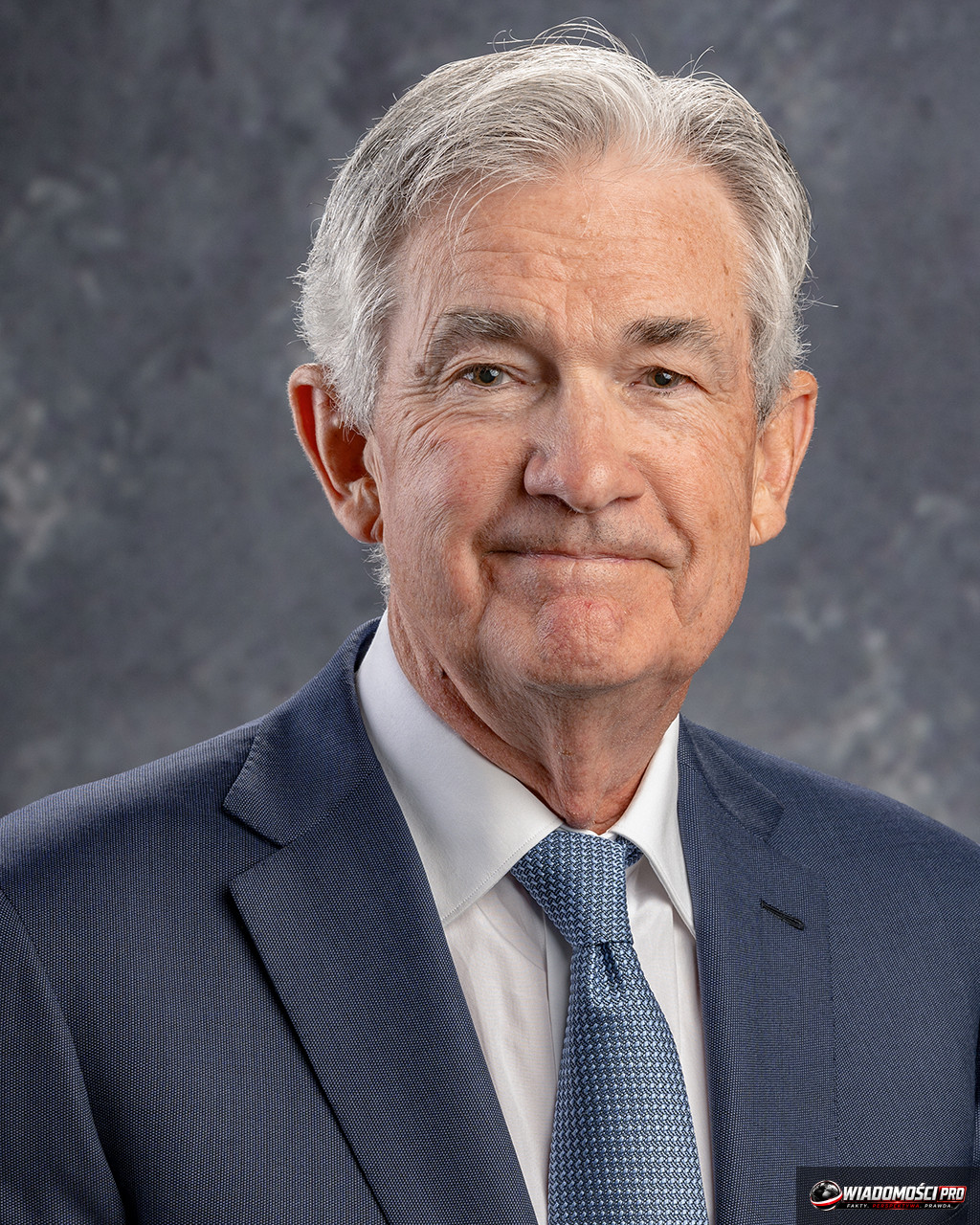
Today the situation looks similar. Analysts are parsing every syllable spoken by Jerome Powell, looking for clues regarding the pace of further easing. Economic stability in the coming months depends entirely on how precisely the Fed manages to communicate its next steps. The currency market has already reacted with volatility, which suggests that capital is looking for a safe haven, not being sure of the central bank's intentions.
Market expectations for the last quarter of 2026 are shaped around several key points of uncertainty:
- Investors are investigating whether the current cut is enough to avoid a recession, or if the FOMC will be forced to cut more aggressively before the end of the year.
- Skeptics point out that every attempt to predict the interest rate path after 2025 ended in errors, which makes current analyst forecasts have limited predictive value.
- Exchange rates, including the zloty reacting to global shocks, will remain hostages to Federal Reserve communications until the institution's long-term strategy becomes clear.
From the perspective of borrowers and entrepreneurs, this time is a period of suspension. Waiting for the next FOMC meeting can be costly, especially in an environment where the central bank's credibility is being tested and financial markets will not forgive any communication errors. If you run a business based on imports, currency hedging becomes almost a duty, not an option.
What this means for you
The Fed's decision to cut rates is a clear signal that the American economy requires stimulation. Dollar debtors gain from this, while people holding savings in currencies that are losing value relative to the strengthening euro lose out. The catch lies in inflation – cuts that are too fast could lead to its resurgence, which would force the Fed to change course in the future. Your task now is to minimize currency risk and review your own credit portfolio.
If you have a mortgage in zlotys, do not expect banks to lower margins in response to actions in the USA. If you invest in the stock market, prepare for a period of increased volatility, where company fundamentals may take a back seat to macroeconomic sentiment. The biggest threat right now is blindly following optimistic forecasts, which often ignore the structural problems of the global economy. Stay ready for a correction, but do not panic – volatility is a natural element of the cycle we have found ourselves in.
Questions and answers
How does the Fed's decision affect the zloty exchange rate?
The decision to cut rates in the US weakened the zloty against the euro, which caused the European currency to reach its highest levels since the end of 2024.
Why is a 50 basis point cut significant?
It is a significant move that directly affects the cost of money in global markets and changes the investment strategy of global funds.
Will bank customers in Poland feel these changes?
Yes, changes in Fed policy translate into global financial markets, which affects bank offerings in Poland – especially regarding deposit interest rates and debt service costs.
Does this mean the end of high interest rates?
Not necessarily. The Fed's decision is a reaction to specific conditions in the US, while the situation in Poland requires a separate analysis by the Monetary Policy Council.
What should I do with my dollar savings?
The situation requires caution; the drop in US rates makes the dollar less attractive compared to other assets, which may encourage diversification of your currency portfolio.
When will we know the next steps of the FOMC?
Subsequent announcements will depend on incoming macroeconomic data, and the market is waiting for a clear path of further actions, which currently remains uncertain.
Central bank decisions in 2026 show how difficult managing expectations in the global economy has become. After years of relative calm, we are entering an era where every FOMC meeting can trigger a wave of changes in currency and commodity markets. Your financial strategy must take into account not only local conditions but, above all, global capital flow. Do not be misled by press headlines suggesting a quick improvement in the situation. True market adjustment to the new reality will take months, or perhaps even quarters. During this time, liquidity and the ability to adapt quickly to changing market conditions remain key, without succumbing to emotions that often lead to poor investment decisions. If your savings are fully dependent on one currency, consider diversifying them, as exchange rate volatility has become a permanent element of the financial landscape for the end of the year. Remember that central banks rarely act in your direct interest – their goal is to stabilize the system, which is often done at the expense of the individual investor. Be vigilant, analyze data, and do not trust one-sided forecasts that appear right after a decision is announced. We will only see the true picture of the effects of the September move once the dust settles and we know the full path of the Federal Reserve's further actions. Until then, keep a cool head and focus on securing what you have already managed to build. The market does not forgive mistakes, and the current environment favors those who can look at finance through the prism of a long-term strategy, not momentary fluctuations on charts. If your finances are based on variable interest rates, check how your installments will change in a pessimistic scenario, because the market likes to surprise, especially when everyone is convinced of one specific direction of change. Be ready for every eventuality, because that is the only way to protect capital in such an uncertain macroeconomic environment as the one we found ourselves in mid-September 2026. Your financial future depends on how quickly you understand the new rules of the game that the Fed is now dictating to us. Do not wait for others to make the decision for you – take control of your finances today by analyzing the risks that such a sharp change in monetary policy in the world's largest economy carries. This is the most important lesson we draw from the events of the last days and weeks, which forever change the way we think about savings, loans, and investing in the global financial market, which never sleeps and does not forgive a lack of preparation.
Sources
- Fed raises interest rates. Kevin Warsh bets on defending credibility against analyst warnings - Strefa Inwestorów
- FED meeting September 2026: FOMC calendar and forecasts - Rankia Polska
- Most bank customers will not be satisfied. There is an important decision - Business Insider Polska
- Fed raises rates, and the zloty falls on its face! Euro most expensive since the end of 2024 - FXMAG
- Fluctuations took over the markets after the Federal Reserve's decision to raise interest rates. - vietnam.vn
- Fed cuts interest rates sharply. Economists, however, were wrong - Bankier.pl
- How will markets react if the Fed returns to rate cuts - Analizy.pl
- MPC did not change interest rates in September '24 - Miesięcznik Finansowy BANK
Article prepared by the Wiadomości PRO editorial team with the support of artificial intelligence. Facts come from the sources listed above.


Komentarze (0)
Ładowanie komentarzy...