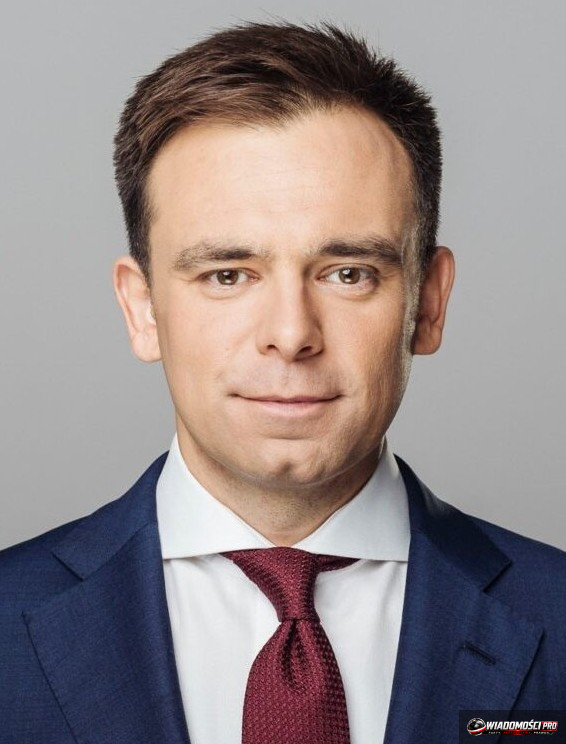
The Council of Ministers has adopted the 2025 budget bill with a deficit of 289 billion PLN, sparking criticism from the opposition, which has labeled the plan "financial vandalism." This level of debt, estimated at approximately 7.3 percent of GDP, poses a real threat to the state's fiscal stability, drastically limiting space for future pro-development investments. The dispute over these figures goes beyond immediate party rhetoric and touches upon the very foundation of Poland's economic security, forcing us to ask about the price citizens will pay to maintain the liquidity of the state apparatus.
The debt mechanism and real costs for the citizen
A deficit of 289 billion PLN is a result that forces a revision of previous assumptions about the stability of Polish finances. The Ministry of Finance, managed by Andrzej Domański, has faced the necessity of financing expenditures that largely stem from rigid state obligations and rising debt servicing costs. The mechanism is simple and ruthless. The state borrows money on the market by issuing treasury bonds. The higher the deficit, the greater the supply of debt, which, given the limited market liquidity, forces the issuer to offer investors higher yields. Every basis point increase in yield is real money flowing directly from the taxpayer's pocket into the wallets of financial institutions and investment funds.
In relation to gross domestic product, a deficit approaching the 7.3 percent threshold is a warning signal for international markets. Foreign investors assess Poland's creditworthiness through the prism of budgetary discipline. If the structure of expenditure shifts toward consumption rather than growth-generating investments, credit risk increases. In practice, this means that in the coming years, the state budget will have to allocate an even larger portion of tax revenues to paying interest on previously incurred loans, rather than to the development of modern infrastructure.
Citizens will feel this process through pressure on public services. When the budget becomes a hostage to interest costs, every zloty spent on debt servicing is a zloty missing from the healthcare or education system. A phenomenon of crowding out development expenditure by rigid expenditure occurs. The government, wanting to avoid cuts in key ministries, must seek additional sources of revenue. This often ends in raising hidden fees, expanding the tax base, or introducing new levies, which hits consumption and limits the dynamics of entrepreneurial development.
Political battle over fiscal narrative
The dispute over the budget has moved from parliamentary committee rooms to a battle over the legitimacy of exercising power. The discharge for the government, granted in July 2026, became merely a formal conclusion to a process that was, in reality, a series of political clashes. The opposition used the record deficit as its main tool to undermine trust in the cabinet. In this narrative, the government is not managing the economy but drifting toward disaster, shifting the costs onto future generations.
The government's arguments about the necessity of increasing spending on defense and social goals are understandable in a geopolitical context; however, financial markets do not always show understanding for expenditures that lack coverage in tax revenues. The lack of a long-term strategy for exiting excessive debt makes every subsequent budget debate steeped in uncertainty. Entrepreneurs, observing this process, are holding back on investments. They fear that, in the end, they will cover the costs of patching the budget hole through tax rate increases.
In this atmosphere, the discussion about structural reforms – necessary for the long-term growth of state efficiency – is almost non-existent. Instead of building foundations for future development, the legislative process resembles a constant tug-of-war between the Ministry of Finance and individual interest groups. Each pressure group tries to win the largest piece of the pie, ignoring the fact that the entire pie is financed on credit, the cost of which rises with every subsequent bond issuance.
President Karol Nawrocki as an arbiter of finance
The role of President Karol Nawrocki in the budget process has become a destabilizing factor that markets did not foresee in their 2026 forecasts. The President, possessing the power of veto and the ability to refer the act to the Constitutional Tribunal, has become the main reviewer of government fiscal plans. In January 2026, his stance toward the budget hardened, which caused nervousness in financial ministries and an immediate reaction on the stock exchanges.
The President did not hesitate to use strong language, describing the situation in some sectors, such as healthcare, as a "collapse budget." These words are not merely election rhetoric. They are a signal to investors that budget legislation in Poland is not a closed process, but a field of political battle in which the veto power is a real tool. If the President decides to block the act, the government will fall into a legal vacuum, which could lead to financial destabilization of the state on an unprecedented scale.
The tension on the line between Minister Domański and the Presidential Palace has become a permanent element of the political landscape. The Ministry of Finance must act under constant pressure, knowing that every budget draft can be subjected to verification by a President whose political priorities are contrary to the government line. This is a dualism of executive power that, under normal conditions, could be an element of a system of checks and balances, but in the face of such a high deficit, it becomes a threat to the state's liquidity.
President Nawrocki is consistently building a position as a defender of financial stability, which makes him a difficult partner for the government. From the perspective of the Presidential Palace, every attempt to impose changes to the budget is interpreted as an expression of concern for the citizen. The government, in turn, views these actions as political sabotage. This deadlock makes the budget cease to be a technical document and become a hostage to a personal conflict at the heights of power, which in turn increases the risk premium demanded by investors buying Polish debt.
Healthcare: A collapse budget or one of underestimated needs?
The healthcare sector in 2025 and 2026 became a testing ground for government cuts. Warnings from the "Rynek Zdrowia" (Health Market) about a "collapse budget" are a diagnosis of the state of a system that is unable to handle the growing needs of an aging society at the current level of funding. The massive deficit forces savings, and these first hit medical facilities that are struggling with staffing shortages and outdated infrastructure.
The healthcare system has become a victim of the state's fiscal policy. Instead of investments in modern technologies that could improve treatment efficiency and shorten queues, we are observing a phenomenon of firefighting. Hospitals, forced to balance on the verge of profitability, are increasingly reaching for commercial loans, which only deepens their debt. As a result, the patient becomes a victim of budget policy, losing access to services that should be standard in a modern state.
Critics of the government point out that a 289 billion PLN deficit is a sum that would be sufficient for a fundamental modernization of the health system if priorities were set differently. However, the government is focused on maintaining the liquidity of the entire state apparatus, pushing health needs to the margins. For the average citizen, it is not the deficit figures that are most important, but the real waiting time for a specialist or the availability of modern therapies. If the government does not change its approach to financing this sector, the effects of current policy will be felt by an entire generation of patients, and the social costs of neglect will be many times higher than the funds saved today.
Market uncertainty and the voice of experts
Poland's economic situation after adopting a budget with such a high deficit is causing deep concern among market analysts. Since August 2025, when key decisions were made regarding the shape of finances for the following year, investors have been closely following communications coming from Warsaw. The lack of a clear debt reduction strategy makes the valuations of Polish assets increasingly susceptible to shocks. Portals such as wnp.pl or Wyborcza.biz have repeatedly pointed out that markets do not like an information vacuum, and in the current dispute over the budget, there is a lack of reliable data on how the government intends to finance such a huge deficit in the long term.
Many economists are asking whether a deficit of 289 billion PLN is still the result of an expansionary policy or already a symptom of losing control over public spending. The answer to this question depends on how the government handles market pressure. If it maintains investor confidence, it will be able to finance debt at relatively acceptable costs. However, if trust is undermined by further populist decisions, Poland could find itself in a debt spiral from which an exit will be extremely costly.
Experts also emphasize that a high deficit combined with political tensions weakens our negotiating position in the European Union in the context of excessive deficit procedures. Poland, being under the scrutiny of Brussels, must demonstrate discipline, which is simply missing from the current budget draft. This leads to the question of whether the government is aware of the risk or is consciously risking financial stability in the name of short-sighted political goals. The lack of consensus between the government and the President further worsens the country's image in the eyes of rating agencies, which are increasingly mentioning the risk of a downgrade in Poland's creditworthiness.
Timeline of disputes over state finances
Analyzing the chronology of events related to the 2025 budget allows us to understand how deeply this process was steeped in politics. From August 2025, when the government made its first decisions, until July 2026, when the Sejm voted on the discharge, every legislative stage was marked by conflicts.
- August 2025: The Council of Ministers adopts the budget draft with a deficit of 289 billion PLN. This moment becomes the spark for criticism from the opposition, which calls the plan irresponsible state indebtedness.
- January 2026: President Karol Nawrocki publicly questions the budget assumptions, pointing to a collapse in healthcare. This speech opens a new front of political battle.
- January 2026: Media report on nervous reactions in financial markets to the threat of a presidential veto on the budget, which forces the government to seek additional assurances of stability.
- July 2026: The Sejm votes through the discharge for the government, ending the formal debate on budget execution but not silencing the emotions surrounding the condition of public finances.
Each of these events was proof that the budget had become a hostage to the fight for power. There was no room in this process for substantive reflection on whether Poland could afford such high debt. Instead, each side of the political dispute tried to use the budget to build its own electoral capital. For the citizen, this calendar is a record of a time when the state, instead of managing finances, was mainly managing its own image in the face of mounting economic problems.
What does this mean for the future?
The outlook for the average citizen is worrying. A record deficit means that the state will have to seek additional revenue, which in practice almost always boils down to tax increases or hidden fees. Uncertainty about the quality of public services, especially in health, will grow because the money for their improvement has been consumed by debt servicing costs.
Financial markets will continue to closely watch the relationship between the government and the President. Every signal of a possible veto or referral of the act to the Constitutional Tribunal will generate volatility in the zloty exchange rate and bond prices. Investors are looking for stability, and it is currently lacking in Poland. In the long term, this means the risk of credit rating downgrades, which will further increase the costs of the state borrowing money.
In summary, a budget with a 289 billion PLN deficit is not just a mathematical problem. It is, above all, a test for Polish state institutions. Can they work out a consensus in the face of a financial crisis, or will they sink into party bickering that could lead to a permanent weakening of the country's economic foundations? We will know the answer to this question in the coming quarters, when it comes time to face the real consequences of these decisions. The real challenge is not just passing the budget, but the state's ability to implement it under conditions of rising external costs and internal political destabilization.
Questions and answers
What is the planned budget deficit for 2025?
The planned budget deficit for 2025 is 289 billion PLN, which is approximately 7.3 percent of GDP.
Why is the opposition criticizing the current shape of the budget?
The opposition points to an excessively high level of state debt, which they believe could permanently destabilize the economy and limit the country's investment opportunities in the future.
What role does President Karol Nawrocki play in the budget process?
The President acts as an arbiter who, through the power of veto or the possibility of referring the act to the Constitutional Tribunal, can block or force changes in the government's budget draft, making him a significant player in the legislative process.
What does a discharge for the government mean in the context of the budget?
The discharge is an expression of the Sejm's acceptance of the way the government executed the budget in the previous year. The vote in July 2026 was a key moment for settling the cabinet's fiscal policy, although it did not silence political disputes.
Will the budget deficit affect the availability of doctors?
Experts point out that such a high deficit limits funds for healthcare modernization, which in practice deepens problems with access to specialists, quality of services, and the debt of hospitals that must seek external financing.
Sources
- Government receives discharge. Opposition calls it "financial vandalism" - Business Insider Polska
- Sejm makes decision on budget. Government receives discharge - polskieradio24.pl
- Sejm votes on budget. What about the discharge for the government? - Dziennik.pl
- President makes decision on budget. "This is a collapse budget for healthcare" - Rynek Zdrowia
- Polish budget in the hands of Karol Nawrocki. Decision could shake markets even without a veto - wnp.pl
- Budget in the hands of the President. Unexpected scenario on the table? - Money.pl
- Karol Nawrocki threatens government over budget. Domański grits his teeth and waits in tension - Wyborcza.biz
- State budget for 2026. Government makes decision - Interia Biznes
Article prepared by the Wiadomości PRO editorial team with the support of artificial intelligence. Facts come from the sources listed above.

Komentarze (0)
Ładowanie komentarzy...