
The amendment introduces a 2-year probationary period for new drivers and toughens penalties, including lifelong loss of driving privileges and imprisonment for gross recklessness and participation in races. The changes also include tightening the examination process, which in practice means more restrictive criteria for assessing student skills. These regulations constitute a direct implementation of EU guidelines regarding the improvement of road safety.
2-year probationary period: A new challenge for young drivers
The introduction of a 24-month probationary period for individuals who have obtained category B driving privileges for the first time changes the foundations of a young driver's functioning in Polish road traffic. From the moment the document is issued, the driver is under supervision that mandates the exercise of special caution under the threat of losing their privileges. According to the legislative assumptions, every serious offense during this time will be viewed through the prism of lack of experience and lack of respect for traffic rules. The legislator assumes that this two-year buffer will allow for the elimination of risky behaviors in people who are just learning to anticipate situations on the road.
The Ministry of Infrastructure is moving away from the model of lenient treatment for beginners. Instead of the previous warnings or relatively low fines, a young driver faces a risk that, in extreme cases, ends in definitive exclusion from traffic. Monitoring the behavior of young drivers is to be carried out continuously, and police databases will be integrated with the central system in a way that allows for immediate verification of driving experience during every inspection.
For eighteen-year-olds entering adulthood with a driver's license, this means the necessity of changing their thinking about driving itself. It is not a matter of learning vehicle handling techniques, but of internalizing legal culture. The system does not provide a grace period for those who cannot adjust their speed to road conditions. Every penalty point entered into the register during these 24 months carries significantly more weight than for drivers with many years of experience. In practice, the ministry aims for road education to end not at the moment of passing the state exam, but only after successfully completing the two-year verification period.
Penalties for recklessness: Lifelong loss of driver's license and imprisonment
The amendment of regulations is entering a phase where aggressive driving meets a reaction straight from the penal code. From September 18, 2026, for gross recklessness, in particular for organizing and participating in illegal street races, penalties have been provided that are intended to eliminate such drivers from public space forever. A lifelong ban on driving motor vehicles is becoming a real judicial ruling, not just a theoretical deterrent. In cases where recklessness leads to tragic consequences, the perpetrator will not be able to count on a suspended sentence.
The Ministry of Justice, in its assumptions for the amendment, emphasizes that public roads are not a racetrack. Participation in street races, which often end in accidents involving bystanders, will be treated as an intentional crime. Prison sentences are to be absolute, which means that judges will receive clear guidelines regarding the minimum sentence for such acts. This is a response to the growing scale of accidents that are the result of so-called showing off by young drivers, often supported by social media.
The penalty system has been constructed so that every act with signs of gross safety violation is analyzed as an entity threatening the lives of others. In addition to the lifelong ban, the legislator also provides for the forfeiture of the vehicle in specific circumstances, which hits the perpetrator's property directly. This solution has a preventive and financial character. The risk of losing a car, which often represents significant value for a young person or their family, is intended to act as a barrier more effective than a fine alone.
The judiciary is now facing the challenge of efficiently adjudicating these cases. The speed of proceedings will be crucial for the deterrent effect of the amendment. Every case of recklessness is to be treated as a priority, and the police have received guidelines regarding the securing of evidence, including recordings from surveillance and dashcams, which are to be key in trials against road pirates.
The impact of European Union guidelines on Polish regulations
Polish road legislation is largely determined by EU directives that aim to unify safety standards across the entire community. Forsal.pl already indicated in February 2024 that Brussels is emphasizing the so-called "Vision Zero" – the elimination of fatalities in traffic accidents. The 2026 amendment is a direct result of adapting the Polish legal order to these European standards.
EU guidelines leave no room for arbitrary interpretation regarding the supervision of new drivers. Member states have been obliged to implement systems that objectively verify the skills and attitude of drivers in the first years after obtaining their license. Poland, by introducing a 2-year probationary period, is fulfilling these obligations, which is also intended to improve accident statistics, which in the country still deviate from the EU average.
The implementation of these regulations does not end with the driver's license itself. The Union is also pushing for the digitalization of driver supervision. Data exchange between member states is intended to make a driving ban issued in one country enforceable in the others. This means that a young driver who loses their privileges in Poland will not be able to drive freely in another EU country. This is a step towards creating a unified European road safety area.
Critics of the EU requirements point to the bureaucratization of the process, however, the legislator argues that the social costs of road accidents many times exceed the outlays on administrative tightening of the system. Poland, as a country with a relatively high accident rate, is under special pressure from Brussels. Therefore, the Polish ministry has implemented the regulations in a rigorous variant, not seeking compromises that could be questioned by supervisory bodies in the European Union.
Exams under the microscope: Return to strict grading rules
From 2026, the process of obtaining a driver's license has become a process requiring extraordinary precision. As "Rzeczpospolita" reports, examiners have returned to extremely strict grading rules, which can be seen in the statistics of the Driver Examination Centers (WORD). The percentage of people who fail the practical exam remains at a level that forces students to repeat attempts multiple times. This change is not accidental – it is an element of a broader state strategy aimed at weeding out people who have not mastered driving techniques to a degree that guarantees safety.
Restrictive grading applies primarily to errors that were previously treated as "minor lapses." Currently, any behavior that disrupts the flow of traffic or creates a potential hazard ends the exam immediately. Examiners have received instructions not to show leniency that could be read as permission for sloppy driving. Such an attitude is intended to prepare young drivers for the harsh realities they will face during the two-year probationary period.
For driving schools, this means the necessity of changing training methodology. Instructors must place greater emphasis on learning to anticipate hazards and precisely executing maneuvers in heavy traffic conditions. The course, which was previously treated as a formality, has become a demanding training where every hour behind the wheel is accounted for with the highest accuracy.
Many students express concerns that such high standards could lead to the phenomenon of "exam tourism," where candidates will look for centers with lower traffic intensity or theoretically more lenient examiners. However, the unification of the grading system across the country, resulting from the guidelines of December 2023, is intended to minimize such differences. The exam is to be a test of skills, not a test of luck, which in the long term is intended to raise the level of training for all drivers on Polish roads.
Schedule of changes and list of offenses: What does the amendment change?
The schedule for introducing changes began with intensive legislative work, which culminated in the government draft adopted on September 18, 2026. This document is the culmination of processes that have been ongoing in Polish road law since 2023. Subsequent stages of the amendment were implemented gradually – from tightening penalties for speeding, through changes in the penalty point system, to the current regulations regarding the probationary period.
According to the adopted schedule, the probationary period becomes the standard for all persons who obtain category B privileges after September 18, 2026. The parliamentary work schedule provides for a fast legislative track, which suggests that the regulations will come into full force within the next few months, without a long transition period for people who are in the middle of a course.
Along with the introduction of the probationary period, a list of offenses that result in the loss of privileges for a young driver has been defined. This catalog is absolute and includes behaviors that, in the opinion of the legislator, pose the greatest threat to public safety:
1. Speeding in a built-up area – according to TVN24 data, even a minor speeding violation in this area by a person in the probationary period will result in being referred for retraining or losing the driver's license.
2. Participation in illegal races – for this act, according to information from Gazeta Prawna, a lifelong loss of privileges and a prison sentence have been provided. This is treated as an act of high social harm.
3. Driving under the influence of alcohol or intoxicants – in this case, there is no room for leniency. Any offense of this type ends the probationary period and results in a lifelong ban on driving vehicles.
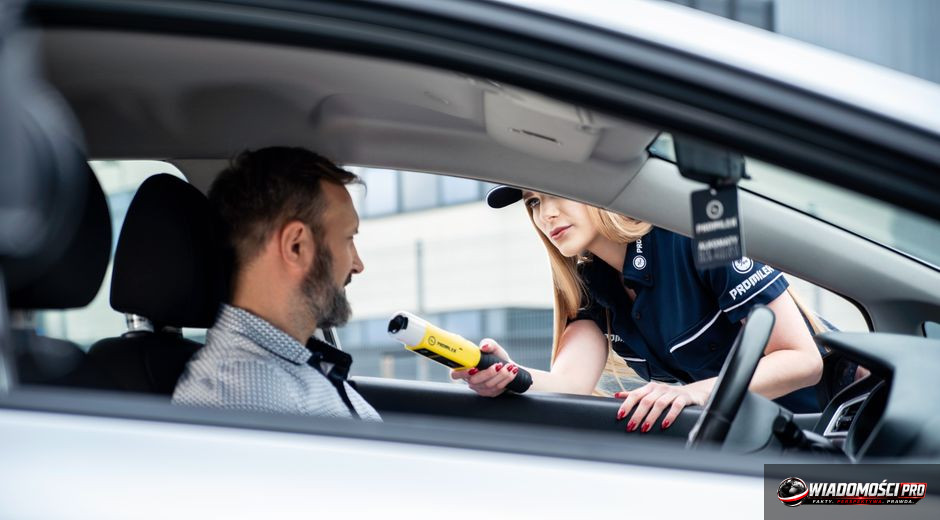
Each of the above offenses is recorded in the Central Register of Drivers. The police, having access to this data in real time, do not have to rely on the subjective assessment of an officer. The system simply flags the driver as a person in the probationary period, which obliges the police officer to follow strictly defined legal procedures.
What this means for you
For anyone planning to enter the world of motoring, the new regulations mean the end of the era of "learning freedom." Responsibility for every press of the gas pedal has become measurable and very painful. On one hand, increased examination rigors are intended to guarantee that better-prepared people get on the roads. On the other hand, the two-year probationary period imposes pressure on a young person that older generations of drivers do not know.
The lack of a margin for error in the first two years behind the wheel forces young people to adopt a defensive driving style. Every maneuver that could previously have been considered "youthful fantasy" is now monitored by a system that does not forgive. This is a paradigm shift – driving a car has ceased to be an acquired right and has become a privilege that must be worked for every day.
For parents of young drivers, this means the necessity of greater control over how their children use the car. Often, it will be the owner of the vehicle who will have to explain themselves to law enforcement if a young driver commits a gross offense. Skeptics point out that such harsh law could lead to excessive nervousness behind the wheel, which does not at all favor traffic flow. However, the Ministry of Infrastructure remains adamant, claiming that accident statistics involving young people require radical intervention.
Will this system make Polish roads safer? We will know the answer to this question after the first two years of the new regulations. Statistics from this period will be a key indicator for further changes in driver's license law. For now, however, extreme caution is recommended for every driver without experience. The era of leniency for young road pirates has definitely passed into history, giving way to a system where the smallest mistake can mean the end of dreams of driving vehicles for many years.
Questions and answers
From when exactly does the probationary period apply?
The probationary period enters into force for all persons who obtain a category B driver's license after September 18, 2026.
Will the driving test be harder?
Yes, current guidelines force examiners to grade more rigorously, which translates into a higher percentage of negative results. Every minor error is currently grounds for terminating the exam.
What penalties are there for participating in illegal races?
According to the amendment, participation in illegal street races involves a prison sentence and a lifelong ban on driving motor vehicles. The regulations do not provide for the possibility of suspending a prison sentence in such cases.
Does the police have tools to verify drivers in the probationary period?
Yes, the police use the Central Register of Drivers, which indicates in real time whether the driver is in the 24-month probationary period, which allows for automatic verification of privileges and offense history during a road check.
Can a lifelong driving ban be shortened?
The amendment does not provide for easy appeal paths in this regard. Due to the nature of the acts (gross recklessness, racing), courts are obliged to impose severe sanctions that have an eliminatory character.
Do the changes result only from the Polish government's decision?
No, the changes are closely linked to EU directives regarding road safety, which aim to unify standards across Europe. Poland is implementing these guidelines to adapt the system to the European vision of "Zero fatalities."
What if I make a mistake during the probationary period, but it is not a race?
Every violation of regulations during the probationary period is recorded. Even if it is not gross recklessness, it may result in a mandatory referral for additional training in road safety, and in the case of a accumulation of offenses – the revocation of privileges.
Do the rules become less strict after the two-year probationary period?
After 24 months, the driver acquires full privileges, which means they cease to be subject to extraordinary supervision. Nevertheless, the regulations regarding gross recklessness or driving under the influence of alcohol remain just as strict for all drivers, regardless of experience.
Is it worth speeding up obtaining a driver's license before the regulations come into force?
Although the regulations come into force on September 18, 2026, for new drivers, experts note that obtaining privileges before the full implementation of the new, tightened examination procedures may be beneficial for students who want to avoid a more difficult skill verification process.
Can I appeal against the examiner's decision if I think the assessment was too strict?
There is an appeal path, however, due to the introduction of more transparent and rigorous grading criteria, the effectiveness of such appeals is currently minimal. Examiners rely on hard guidelines that limit the room for subjective interpretation of maneuvers.
Sources
- Examiners are failing students again for minor errors. Strict rules have returned - Rzeczpospolita
- New regulations 2026: Lifelong loss of driver's license, prison for recklessness, ban on racing - Gazeta Prawna
- New rules for driving tests. Changes already on January 1, 2024 - Dziennik.pl
- New regulations will hit young drivers. Better to get a driver's license quickly - Interia Motoryzacja
- You will lose your driver's license for this offense. There will be new regulations - TVN24
- Major changes in driver's license law from 2024 - Strefa Biznesu
- New rules for the driving test. Will it be easier to pass? - Gazeta Wrocławska
- Major changes in driver's license law ahead. This is the European Union's plan - Forsal.pl
Article prepared by the Wiadomości PRO editorial team with the support of artificial intelligence. Facts come from the sources listed above.

Komentarze (0)
Ładowanie komentarzy...