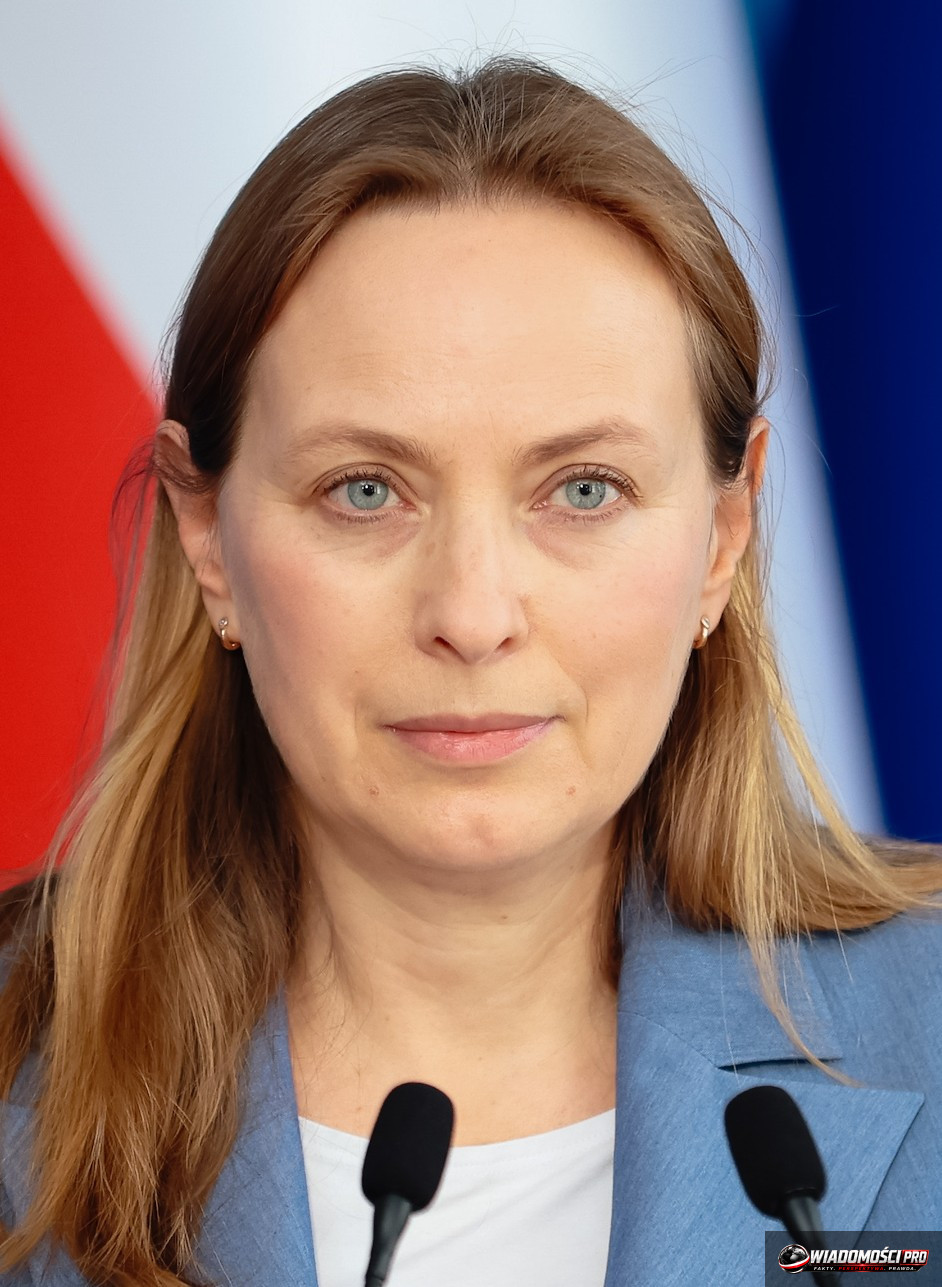
Minister Katarzyna Pełczyńska-Nałęcz has proposed the introduction of a tax on the excess profits of banks, arguing that these institutions are reaping undue benefits at the expense of borrowers. This proposal was officially submitted to the Ministry of Finance in July 2026 as a set of preliminary legislative assumptions aimed at redistributing a portion of the financial sector's capital. However, banks will not pay a new tax in 2026, as the ministry has not yet presented binding rate calculations or a final tax base, which means that work on the project is at the stage of an early political concept rather than ready-made legislation.
Chronology of the dispute over bank profits
The discussion about levies on the banking sector has evolved from loose postulates to concrete political pressure over the last dozen or so months. The first significant signal from the ministry appeared on June 10, 2025, when Minister Katarzyna Pełczyńska-Nałęcz publicly outlined the need to introduce a tax on the extraordinary income of banks. She suggested at the time that these profits do not result from innovation or operational efficiency, but from external market conditions.
In September 2025, the rhetoric gained strength. On September 3, 2025, the minister used the vivid metaphor of "the cream" that banks are supposedly skimming off thanks to the situation of borrowers. This term became the foundation of the ministry's narrative, indicating a belief in the unfair distribution of profits within the financial system. For the following months, the topic was present in public debate, although it did not translate into concrete legislative moves at the Ministry of Finance.
The spring of 2026 brought an intensification of conflicts within the ruling coalition. On April 24, 2026, Minister Pełczyńska-Nałęcz had to fend off accusations regarding the destabilization of the government, asking rhetorically if anyone even wants to destroy the coalition, while pointing to Poland 2050 as a stabilizing force. A few days later, on April 28, 2026, she emphasized that passivity in the face of economic challenges is unacceptable, using the argument of stagnation that paralyzes ministerial decisions.
The turning point came on July 13, 2026. On that day, it was confirmed that the Ministry of Finance had reviewed the new tax proposal. This was a decision made in the shadow of broader fiscal changes, including discussions on the second tax bracket. As early as July 15, 2026, industry media began pointing to growing pressure on the banking sector, which caused nervousness among investors. Today, September 17, 2026, this topic is taking on additional significance in the face of reports about a massive fuel crisis, which is forcing the government to seek new revenues for the state budget.
Tax mechanics and missing links
The Ministry of Finance operates on the assumption that bank profits generated in a high-interest-rate environment require a fiscal correction. The documentation presented in July 2026 contains only general assumptions regarding the intent to take over part of the excess capital. However, it does not specify the most important parameter: the mathematical formula that would distinguish market profit from excess profit.
The lack of a technical definition of "excessiveness" is the main point of contention. The banking sector is based on an interest margin model, i.e., the difference between the interest rate on loans and deposits. In a period of rising interest rates, bank profitability naturally increases because loan interest rates react faster than deposit rates. The ministry believes that this shift of capital from households to financial institutions should be reversed.
The lack of a specific tax rate makes it impossible to reliably assess the impact of this levy on the banks' equity. Analysts note that introducing a tax based on a discretionary definition of extraordinary profit may encounter legal barriers, including allegations of violating the freedom of economic activity. Every percentage of tax speculated about in the media directly affects capital ratios, which are crucial for maintaining the solvency of the system under financial stress.
Sector perspective: The voice of banks and analysts
The Polish Bank Association and financial market analysts reject the narrative of "excessive" profits. They argue that the Polish banking sector is already one of the most heavily burdened with levies in Europe, which is visible in financial results and stock market valuations. Additional taxation of profits limits the banks' ability to build capital buffers.
Limiting these buffers translates directly into the economy's credit potential. Banks, fearing unpredictable burdens, naturally tighten the criteria for granting financing. From the investors' point of view, a tax introduced in a political mode, without a long-term strategy, drastically lowers the investment attractiveness of the Polish sector.
An important aspect is also the issue of digitalization. Banks in Poland invest huge funds in IT security and the development of new services. Any additional tax burden forces cuts in investment plans, which in the long run may stifle the innovation of the entire sector. The market is pricing in this risk, as can be seen in the stock quotes of banking companies on the Warsaw Stock Exchange.
Political conflict within the coalition
Minister Pełczyńska-Nałęcz's proposal is not just an economic issue, but an element of Poland 2050's political strategy. This party is trying to create an image of a grouping that really influences the rules of the market game, not avoiding clashes with interest groups. Such an approach, however, meets with resistance from coalition partners who fear a negative impact on the stability of the financial sector.
Statements from April 2026, in which the minister assured that there was no desire to destroy the coalition, were a clear signal that her postulates were causing controversy within the government. Finding a consensus between budget needs and economic stability is the main challenge for the ministry. The government must decide whether the tax is of an ad-hoc nature – serving to patch the budget hole – or whether it is to be a permanent element of economic policy.
This situation is further complicated by the fuel crisis. In the face of this challenge, the tax on bank profits becomes the "easiest" solution for the authorities from a political point of view. The social perception of banks, often associated with high loan costs, gives the government a strong mandate to pursue such a policy, even if economists warn of long-term consequences for the economy.
Economic effects of the tax: What about the borrower?
Borrowers, looking at the ministry's proposal, may get the impression that the state is intervening in their defense. However, market mechanisms work in a way that often hits consumers indirectly. If banks are burdened with a new tax, the first step to protect profitability will be to raise credit margins.
This could mean more expensive mortgage loans for new clients and higher costs for maintaining current accounts. Instead of lowering the cost of living, borrowers may feel the effect of "passing on" the tax to the end user. Economists independent of the government point out that such action is inevitable under conditions of top-down imposed costs of conducting banking business.
The stability of the banking sector is closely linked to the security of citizens' savings. Draining bank profits too aggressively can weaken capital foundations, which in extreme scenarios affects the security of the entire financial system. The Ministry of Finance is therefore faced with the difficult task of balancing social arguments with hard macroeconomic indicators.
Risk of uncertainty in the financial sector
The lack of clarity regarding the shape of the act causes decision-making paralysis in banks. Management boards are refraining from making decisions about long-term investments, waiting for specific regulations. Every month that the proposal remains only a vague "idea" increases the costs of legal risk management.
Stock market investors are pricing in this risk, which is visible in the falling share prices of the largest financial institutions. The market hates uncertainty, and in this case, the uncertainty concerns the very tax base. Will it be a percentage of net profit, or perhaps a tax on interest income? The answers to these questions are crucial for risk valuation in investment portfolios.
The Ministry of Finance, by remaining silent on technical issues, gains time for analysis but loses in the eyes of professionals. The lack of transparency in the legislative process leads to the multiplication of theories about the government's fiscalism. If the ministry decides to implement the tax, it must do so based on clear criteria. Otherwise, it risks long-term litigation with banks that will defend their capital against subjective levies.
Future prospects: Will the tax come into force?
Poland's current economic situation, marked by a fuel crisis, favors looking for new sources of budget revenue. The tax on excess bank profits fits into this trend, offering the authorities a tool with significant propaganda value. Minister Katarzyna Pełczyńska-Nałęcz is consistently building her political position on this postulate, which increases the probability that the project will not be abandoned.
Everything depends on the final calculations of the Ministry of Finance. If it turns out that the revenues from the new tax will be significant for the state budget in 2027, the government will likely risk a conflict with the banking sector. However, if the analysis shows that the costs to the economy – in the form of a reduction in lending – exceed the fiscal gains, the project may be softened or postponed.
The final political decision will require a precise balancing of social moods and hard macro data. Polish banks are preparing for the worst, increasing reserves and limiting risky credit products. This is a defensive action that is already noticeable in offers for individual and corporate clients, who are preparing for more difficult access to financing.
What this means for you
The proposal to introduce a tax means the risk of a further increase in loan service costs for the average bank client. Even if the ministry argues that the levy is fair, banks will most likely pass its burden on to clients by raising margins and introducing new fees. From the perspective of financial system stability, it is worth following information on whether the government will decide to introduce hard legal frameworks or remain with political rhetoric, which will maintain a state of uncertainty on the market for the coming months.
Questions and answers
Why does the Ministry want to tax banks?
The ministry argues that banks are achieving excess profits due to high interest rates, reaping undue benefits at the expense of borrowers, which requires fiscal intervention by the state.
When did the project reach the Ministry of Finance?
The proposal was officially submitted to the Ministry of Finance in July 2026, which initiated the inter-ministerial analysis process.
What are the main concerns of the banking sector?
Banks fear a decline in the ability to finance the economy, the need to raise prices of services for clients, and a decrease in the sector's attractiveness to investors due to legal uncertainty.
Is there a definition of "excessiveness" of profit?
Currently, there is a lack of a technical definition of this concept in the public sphere, which is one of the main reasons for the criticism of the project by financial analysts.
Is the project already a foregone conclusion?
The decision to introduce the tax remains in the phase of political arrangements, and the lack of a specific draft law means that the market is in a state of waiting for the government's final decisions.
In the current economic situation, every move by the government towards taxing the banking sector is treated by investors as a warning signal. On one hand, we have the need to patch the budget in the face of external crises, such as the fuel crisis, and on the other, the stability of the financial system, which is the bloodstream of the economy. Minister Pełczyńska-Nałęcz has found herself at a point where her personal political capital depends on the effectiveness of this project.
If the ministry decides to introduce the tax, it will be crucial whether it does so in a transparent manner based on hard data, or whether it again limits itself to political declarations. The lack of transparency in the legislative process is currently the biggest problem, as it prevents banks from long-term planning. Investors, looking at the Polish market, need predictability, which is clearly missing in the current dispute over "excess profits".
In summary, although the discussion has been ongoing since June 2025, no specific tax parameters have been developed to date, which leaves the banking sector in limbo. Will the government decide to confront the sector to satisfy budget needs? We will know the answer to this question when the Ministry of Finance publishes the first assumptions of the draft law with specific rates. Until then, any information about "excess profits" remains an element of rhetoric intended to calm social moods, not to solve the systemic problems of the banking sector. However, every subsequent month of delay is an additional risk for the economy, which needs stable and certain rules for the functioning of financial institutions. This stability is the foundation of trust on which every modern capital market is based. The question remains whether the government is ready for a compromise or will go for a clash, the effects of which could be felt by every bank account holder in Poland. The current dynamics of events indicate that the issue of the bank tax will be one of the most important economic topics of the coming months, setting the direction of the state's fiscal policy in the era of fuel crisis and macroeconomic uncertainty. It is worth observing subsequent announcements from the ministry, as they will decide the future of the banking sector in Poland. Any change in this area will have far-reaching consequences for the entire financial system of our country, affecting investment decisions and loan service costs for millions of citizens. It cannot be ruled out that this proposal will become a test for the unity of the coalition, which must show great consistency in the face of such radical tools. So, will banks pay a new tax? The answer lies in the hands of the Ministry of Finance, which must now translate political slogans into hard laws. So far, the lack of specifics is the strongest proof of how difficult this process is.
Sources
- "Huge fuel crisis". Minister appeals regarding the tax - Money.pl
- Pełczyńska: The Minister of Finance has heard our proposals. There is a new idea - WP Wiadomości
- Polish banks under pressure from new taxes. The minister's words cause concern - Business Insider Polska
- Second tax bracket. Pełczyńska-Nałęcz: Political decision - Do Rzeczy
- Pełczyńska-Nałęcz on raising the second bracket: One must propose. Sitting in stagnation, nothing will happen - Rzeczpospolita
- Pełczyńska-Nałęcz: I ask, does anyone want to destroy this ruling coalition? Certainly not Poland 2050 - Rzeczpospolita
- Pełczyńska-Nałęcz: The tax on excess bank profits skims "the cream" generated by borrowers - Bankier.pl
- Pełczyńska-Nałęcz: A tax on extraordinary income of banks must be introduced - pb.pl
Article prepared by the Wiadomości PRO editorial team with the support of artificial intelligence. Facts come from the sources provided above.



Komentarze (0)
Ładowanie komentarzy...