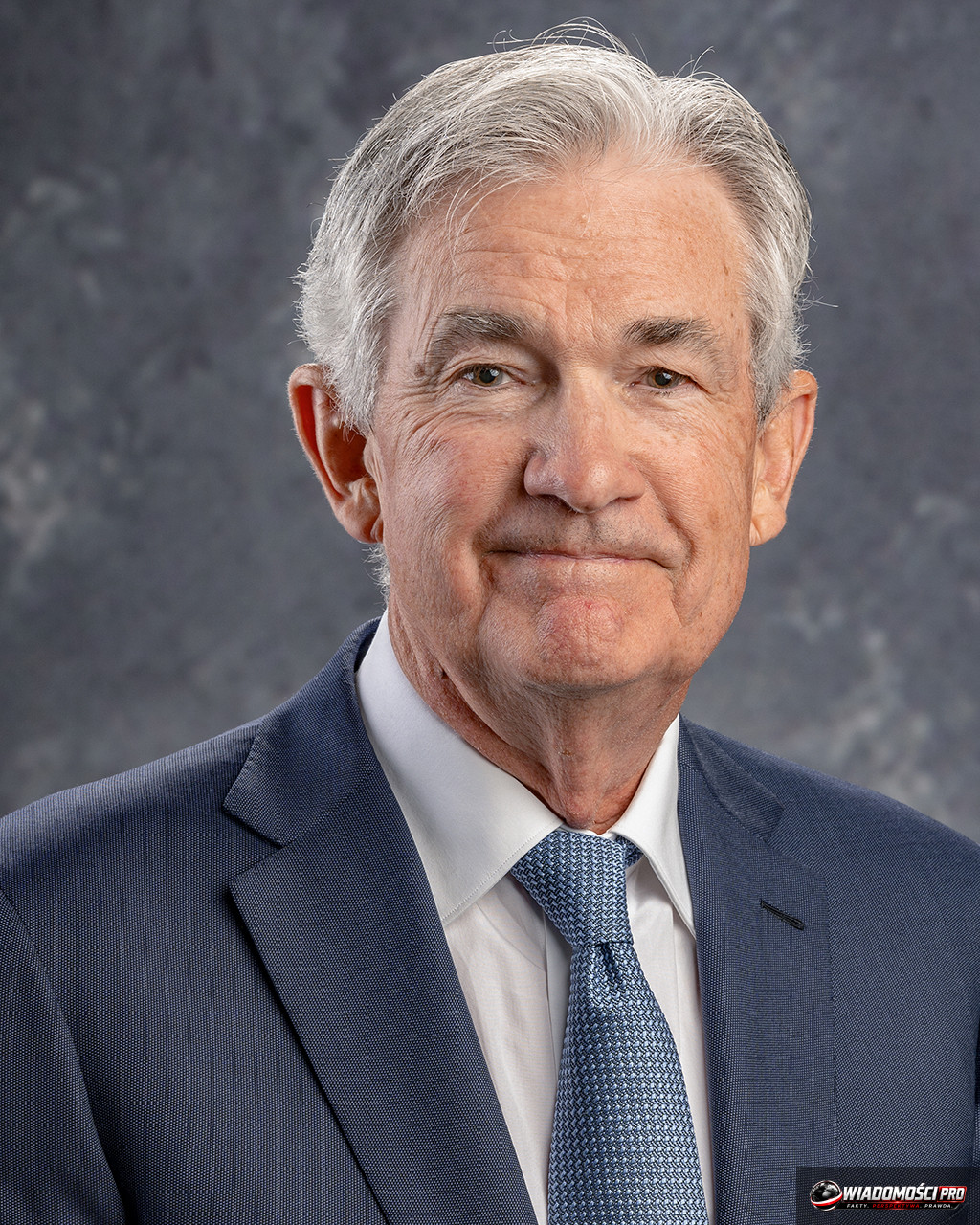
The Federal Reserve has lowered interest rates by 50 basis points to a range of 4.75-5.00%, triggering an immediate reaction in the currency and commodities markets. Investors who expected a more moderate move had to rush to adjust their strategies, which translated into massive trading volumes in the first hours after the announcement. The American central bank sent a clear signal: the fight against inflation is no longer the sole priority, and concerns about an economic slowdown have taken the helm.
The American pivot and its price
The decision of September 17, 2026, ends a period of waiting. Half a percentage point is a move that is rarely treated as a cosmetic adjustment in the annals of monetary policy. Jerome Powell, facing journalists, had to deal with the question of whether the Fed was late in responding to signals from the labor market. The suddenness of this cut suggests that behind closed doors, the institution found hard evidence of cracks in the economic foundations that were not previously included in official forecasts.
The bond market reacted with an almost immediate drop in the yields of ten-year securities. For capital that had been seeking a safe haven in high dollar interest rates for months, this is a signal to retreat. A change of 50 basis points disrupts the previous balance, in which foreign capital flowed en masse to the US, attracted by attractive interest. Now, investors must calculate whether potential gains from US bonds will compensate for currency risk.
It is worth noting how the Fed communicates its actions. They avoid the word "recession," using euphemisms about "adjusting to new conditions" instead. However, professional market players are not fooled by the rhetoric. Aggressive easing of policy has historically always been a harbinger of upcoming turbulence in the US, not just a technical adjustment of parameters. Now that the 4.75-5.00% range has become the actual benchmark, financial markets are entering a phase of high volatility that cannot be extinguished by announcements alone.
The zloty on the defensive: the costs of weakness
The Polish currency became one of the first victims of the American decision. The euro exchange rate, breaking through subsequent resistance levels, reached its highest levels since the end of 2024, which is a warning signal for the domestic economy. The zloty, perceived by foreign funds as a higher-risk asset, loses its attractiveness at a time when global capital is fleeing emerging markets. The mechanism is simple: when the dollar can be obtained more cheaply, investors close positions in the currencies of developing countries to pay off debt denominated in the American currency.
For Polish importers, this is a painful lesson. Every penny of difference in the euro or dollar exchange rate realistically reduces the margins of companies that have to pay for raw materials in a foreign currency. This, in turn, translates into final product prices on store shelves. The zloty will not recover its losses until global sentiment improves, and that does not seem likely in the coming weeks.
The National Bank of Poland is caught in a vice. On one hand, there is pressure for the zloty to weaken; on the other, market expectations for monetary policy easing at home. If the Monetary Policy Council (RPP) decides to cut interest rates, following Washington's lead, it could lead to an even deeper sell-off of the zloty. However, if rates are kept at the current level, the Polish economy will have to bear the burden of expensive money at a time when global competitors are clearly lowering capital costs. This is a classic dilemma between currency stability and growth stimulation, in which no solution is painless.
Credit math: what does it mean for your wallet?
Bank customers, especially those with variable-rate mortgages, have been asking one question for months: when will they feel real relief? To understand the scale of the central bank's decision, we must rely on numbers. Let's assume a model mortgage of 500,000 PLN, taken out for 25 years, with a bank margin of 1.7% and the current 3M WIBOR hovering around 5.8%. With these parameters, the total interest rate on the loan is 7.5%.
In this scenario, the monthly principal and interest installment is approximately 3,695 PLN. If the RPP were to decide to cut interest rates in Poland by 50 basis points, which would translate into a drop in the 3M WIBOR rate to 5.3%, the loan interest rate would fall to 7.0%. In such a situation, the mortgage installment would decrease to approximately 3,535 PLN. This means a saving of around 160 PLN per month. On an annual scale, this is less than 2,000 PLN, which is a noticeable but not breakthrough cash injection for the household budget.
However, it is worth remembering that banks do not always translate RPP decisions into installment cuts automatically and immediately. Often, deposit interest rates are adjusted first, which means that savers lose out faster than borrowers gain. The current situation in global markets suggests that bank margins will remain under pressure, which will prompt financial institutions to protect their own profits at the expense of retail customers. Therefore, one should not expect that any decision made in Warsaw or Washington will drastically improve the financial situation of households in the short term.
Commodities market: gold loses its luster before the decision
Gold, for centuries considered a safe haven in times of unrest, has behaved unusually in recent days. Data from September 15, published by XTB analysts, indicated clear declines in the valuation of the bullion even before the official Fed announcement. Investors, instead of hoarding gold in anticipation of cheap money, preferred to withdraw capital from the commodities market. This is proof that the market has stopped believing in textbook correlations.
Why does gold lose when rates go down? The answer lies in the liquidity mechanism. Faced with high uncertainty, market participants choose cash, even if it is low-interest. The sell-off of gold before the Fed's decision was a form of hedging against sharp currency fluctuations. Investors feared that a strong dollar would dominate the market and push precious metal prices even lower.
For the commodities market, the decision to cut by 50 basis points is a double-edged sword. On one hand, cheaper money favors alternative assets. On the other, if this move is perceived by the market as an act of desperation by the central bank, capital may flow toward even more defensive assets, such as short-term US Treasury bonds. The situation on gold charts is currently fluid, and the last few days have proven that speculative capital fears uncertainty more than the cost of money itself.
Kevin Warsh and the fight for credibility
Within the Fed, the voice of Kevin Warsh is gaining importance, becoming a symbol of the internal dispute over the future of American monetary policy. Warsh, known for his rigorous approach to system stability, is pushing a line where defending the institution's credibility stands above short-term stock market gains. For him, the central bank cannot succumb to market pressure, even if it involves the risk of temporary chaos on the trading floors.
Some analysts warn that such a deep rate cut is a gamble that could have the opposite effect to the one intended. If the Fed is perceived as an institution that panics under the influence of labor market data, trust in the dollar as a reserve currency could be undermined. This is the axis of the dispute: should the central bank be a technocratic manager or an active player trying at all costs to save the economy from an inevitable recession?
For the individual investor, this debate has a direct impact on portfolio risk. When policymakers in Washington are not in agreement on the direction, volatility becomes the new norm. It is worth carefully following the minutes of FOMC meetings, as it is there that signals about how deep the division within the Fed is are hidden. If the "credibility defenders" faction loses to the "stimulus supporters" faction, we can expect more equally surprising moves in the coming months.
Political context: Donald Trump and the Fed
It is impossible to talk about Fed decisions without mentioning the broader political context. Donald Trump, who has repeatedly questioned the independence of the American central bank throughout his political career, is the first to point out the Fed's mistakes. His aversion to restrictive policy is widely known, and in the face of upcoming economic challenges, every decision by Powell is analyzed through the prism of political utility.
For the former president, the decision to cut rates is grist for his mill. He can argue that it was his pressure that forced the central bankers to act. At the same time, if the economy does not respond with growth, Trump will certainly use this as proof of the incompetence of the current monetary authorities. The Fed is in a difficult situation where every decision—regardless of its substantive justification—will be interpreted as political.
Investors must take into account that political polarization in the US negatively affects market stability. If the central bank becomes a hostage to the election campaign, stock market volatility will increase. The market does not like political uncertainty, and the Fed's recent actions, although economically justified, have opened a new chapter in the open conflict between politicians and the guardians of the dollar. This is a game where the stake is not just the cost of money, but control over the narrative about the state of the American dream.
What does this mean for your portfolio?
The decision to cut rates by 50 basis points is a signal that the American central bank is prioritizing the fight against the economic slowdown. For the average investor, this means the need to revise their portfolio. Assets that benefited from a strong dollar may lose value, while defensive assets will go through a period of high volatility.
Borrowers in the US can breathe a sigh of relief, but for those with savings in foreign currencies and investors in emerging markets, this is a time of increased risk. The outflow of capital from emerging markets, including Poland, is a process that cannot be easily stopped. It is therefore worth focusing on diversification and not succumbing to the temptation of quick profits in periods of such high market uncertainty.
Questions and answers
By how much exactly were interest rates in the US lowered?
The Federal Reserve lowered interest rates by 50 basis points, setting a new range at 4.75-5.00%.
How did the Fed's decision affect the zloty?
The decision triggered an immediate weakening of the Polish currency, which led to the euro exchange rate rising to its highest levels since the end of 2024.
Did gold react to these changes?
Yes, the gold market was under downward pressure even before the decision was announced, which reflected investors' uncertainty about the central bank's effectiveness.
How will the mortgage installment in Poland change after the rate cut?
Assuming a hypothetical loan of 500,000 PLN and a drop in the 3M WIBOR rate by 50 basis points, the monthly installment could fall by about 160 PLN, provided that commercial banks fully reflect this change in their interest rates.
Why is the Fed's decision controversial?
The controversy stems from concerns about the Fed's credibility and the fact that such a deep rate cut is interpreted by some analysts as a delayed reaction to recessionary signals, which raises fears about the condition of the US economy.
Sources
- Donald Trump may not be pleased. The Fed has made a key decision - Business Insider Polska
- Fed raises interest rates. Kevin Warsh bets on defending credibility despite analysts' warnings - Strefa Inwestorów
- Fed raises rates, and the zloty falls on its face! Euro most expensive since the end of 2024 - FXMAG
- 🟡⬇️Gold loses before the Fed decision - XTB.com
- Most bank customers will not be happy. There is an important decision - Business Insider Polska
- Fed cuts interest rates sharply. Economists were wrong, however - Bankier.pl
- How markets will react if the Fed returns to rate cuts - Analizy.pl
- RPP did not change interest rates in September '24 - Miesięcznik Finansowy BANK
Article prepared by the Wiadomości PRO editorial team with the support of artificial intelligence. Facts come from the sources listed above.



Komentarze (0)
Ładowanie komentarzy...