In brief
- Tolls will be abolished in 2027 upon the expiration of the current concession.
- The change will apply exclusively to passenger vehicles and motorcycles.
- The decision ends a long-standing period of tolls that sparked numerous controversies among road users.
End of the concession and a new beginning for drivers
End of the concession and a new beginning for drivers
Tolls for the A4 motorway on the Katowice–Kraków section for passenger cars and motorcycles will be definitively abolished in 2027. This decision stems directly from the expiration of the current concession agreement, which for years was a point of contention and a source of frustration for drivers. There is no room for interpretation here: without the expiration of the contract with the concessionaire, any change in the route's status would have been legally impossible.
The current announcements finalize a process that gained momentum as early as March 2026. That was when the government, after a series of negotiations, began to officially communicate plans to take over the infrastructure. We are talking about a specific deadline, not vague promises. For thousands of people commuting daily between the Silesian and Lesser Poland agglomerations, 2027 means real savings in their household budgets.
The question of what will happen to the route's capacity, however, remains open. Removing the toll gates is not just a matter of the wallet, but above all of traffic flow. Experience from other Polish motorways shows that the liquidation of toll collection points radically reduces congestion but drastically increases vehicle volume. The Ministry of Infrastructure must now prove that after 2027, the road will not turn into a giant parking lot.
Drivers who have spent years getting used to paying for every kilometer traveled finally have a deadline. The government's work schedule, announced successively since February 2026, has become a fact. It remains to be seen whether the technical infrastructure on the state's side will be ready to take over traffic exactly on the day the concession expires, or whether the transition period will bring drivers further, this time technical, complications.
Why was the A4 Katowice-Kraków toll-based for so long?
Why was the A4 Katowice-Kraków toll-based for so long?
Drivers traveling the route between Katowice and Kraków have for years had to accept a financing model unique on a national scale. This section operated on completely different principles than other fragments of the A4 motorway, which remain under the direct management of the General Directorate for National Roads and Motorways. It was precisely this distinction that allowed for the maintenance of a toll collection system that, for most Polish drivers, became a symbol of an unnecessary financial burden.
The issue of high travel costs regularly inflamed public opinion. For years, the debate took place in the columns of national dailies, such as "Rzeczpospolita," and in regional media, including "Dziennik Zachodni." Drivers constantly pointed out price disparities compared to state-managed sections, where toll gates were systematically being phased out. Here, however, the situation was determined by a contract with a private concessionaire, whose terms were untouchable without exposing the state budget to severe contractual penalties.
It was the rigid framework of the concession agreement, signed years ago, that made changing the status of this section such a long-term process. For decades, the manager was guaranteed the right to collect tolls, which effectively blocked any attempts to make the route free for passenger cars and motorcycles.
Only the expiration of this contract in 2027 will finally close this chapter. This was not a matter of goodwill or a sudden turn in transport policy, but a mathematical consequence of an ending contract. When that date finally arrives, drivers will feel relief not only in their wallets but also in driving comfort, provided that the promised removal of toll gates goes smoothly. Until then, we can only observe how the private manager utilizes the final months of their authority on one of the most profitable routes in Poland.
Financial benefits for motorway users
Financial benefits for motorway users
Real relief will appear in the wallets of thousands of drivers commuting daily to work on the route between Silesia and Lesser Poland. Government announcements published in September 2026 leave no doubt: tolls for the A4 motorway on the Katowice–Kraków section for passenger cars and motorcycles will be abolished in 2027. This decision results directly from the expiration of the current concession agreement, which finally closes a long-standing chapter of paid travel on this stretch of road.
For people using this connection regularly, this change means measurable economic benefits:
- The abolition of tolls applies to passenger cars and motorcycles, which means direct savings in the household budgets of commuters.
- The elimination of toll gates on the route will shorten travel time by eliminating congestion forming at toll collection points.
However, the question of infrastructure maintenance remains. The State Treasury will take over management of the section at the moment the concession expires, which usually involves the need to allocate funds from the national budget for ongoing maintenance of the surface and safety systems. Users therefore gain twice: they stop paying for every kilometer traveled, and at the same time, the delays at toll booths, which could extend travel by over a dozen minutes during peak hours, will disappear.
The enthusiasm of drivers is fully justified, but it is worth remembering that a toll-free ride does not exempt the road manager from the obligation to modernize it. The question of whether the state operator will manage traffic flow as efficiently as the private concessionaire remains open. In 2027, we will see whether this change will actually affect travel comfort or merely shift the problem of traffic jams to other, non-toll locations on the route.
Investments: Third lane and infrastructure modernization
Tolls for the A4 motorway on the Katowice–Kraków section for passenger cars and motorcycles will definitively disappear in 2027. This date is not accidental – it results directly from the expiration of the current concession agreement. For drivers traveling this route, this is the long-awaited end of an era of financial burden, but the mere removal of toll gates will not solve all the road's problems.
The government is announcing a wide-ranging expansion of the motorway, as reported by Radio Piekary. The main assumption of the work is to add a third lane. Road infrastructure must be thoroughly modernized so that after the removal of toll collection points, the route can handle a larger flow of vehicles without traffic paralysis.
The question is whether construction plans will keep up with the concession expiration date. Increasing capacity is essential, because removing toll gates without simultaneously widening the road could only shift congestion from the toll plazas to the expressway itself. The current configuration of the A4, with constantly increasing traffic intensity, is already at the limit of its capacity.
The scale of the challenge is enormous. Investments must include not only adding lanes but also rebuilding junctions and safety systems. Drivers should prepare for the fact that 2026 and 2027 will be a time of intense road works. The promise of a free motorway will become a real benefit only when traffic flow is ensured by physical expansion of the route, and not just by turning off toll collection systems. Only then will motorists truly feel the difference, and not just the lack of a receipt in the glove compartment.
How will traffic organization change after the removal of toll gates?
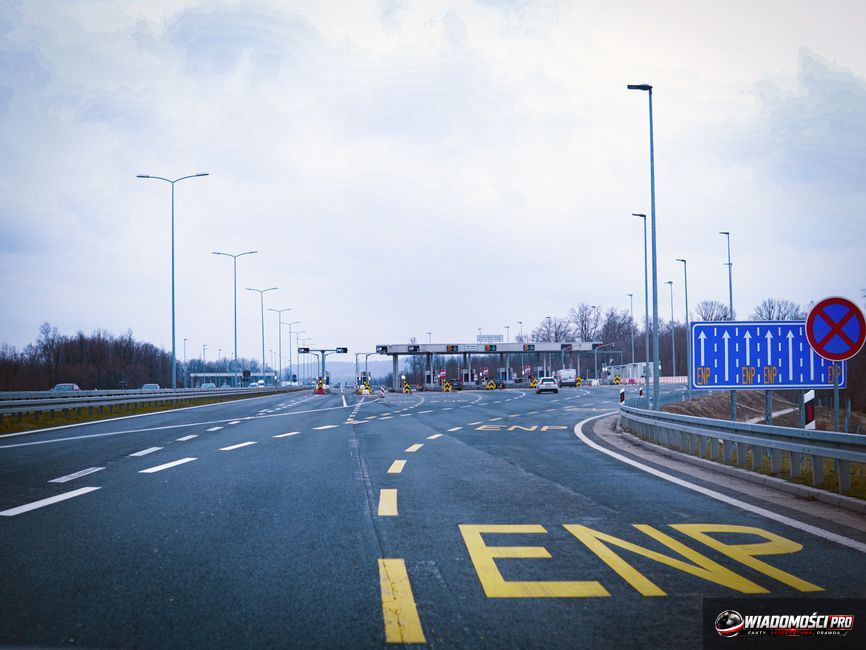
The key date for drivers traveling the A4 motorway on the Katowice–Kraków section is 2027. That is when the current concession agreement expires, which paves the way for the abolition of tolls for passenger cars and motorcycles. Travel will become free, but the removal of toll gates itself is a technical challenge that goes beyond simply lifting the barriers.
Drivers can count on a real improvement in traffic flow, as reported by, among others, "Rzeczpospolita." The end of standing at toll gates, which is currently a nightmare during peak hours, is an obvious gain for the route's capacity. However, the liquidation of toll collection points itself requires rebuilding the infrastructure. It is not enough to turn off IT systems or dismantle booths. The current architecture of the toll gates, with its bottlenecks and islands, physically blocks the free flow of vehicles.
The actual reconstruction of the toll collection points will have to be carried out in a way that allows the infrastructure to be adapted to barrier-free traffic. This most likely means the need to dismantle physical obstacles and redesign traffic lanes so that drivers can pass through these places without having to reduce speed. Engineers will face a difficult task: how to turn a toll plaza into a full-scale road without closing the motorway for long months.
It is worth remembering that a free ride for passenger cars does not mean the complete disappearance of control systems. The state, preparing to take over management of the route, will have to ensure safety and traffic supervision. The optimism associated with the end of tolls must therefore be confronted with the reality of ongoing road works, which will inevitably precede the moment when the toll gates actually cease to be a physical barrier. The year 2027 will be a transitional period for A4 users.
Schedule of changes: What are we waiting for until 2027?
Drivers using the Katowice–Kraków route have finally received what they have been waiting for for years. September 2026 brought official confirmation of the date for the abolition of tolls, which ends speculation regarding the future of this section. The mechanism of change is simple and results not from the operator's goodwill, but from the inexorable legal calendar. Tolls for the A4 motorway on the Katowice–Kraków section for passenger cars and motorcycles will be abolished in 2027, which is strictly linked to the expiration of the current concession agreement.
For thousands of people commuting daily to work between the agglomerations, this is real savings in their household budget. The question of whether the state will manage to prepare the infrastructure for a sudden increase in traffic intensity remains open. The liquidation of toll gates is not just a matter of convenience, but above all a logistical challenge that the road manager must face over the next dozen or so months. Skeptics point out that without proper modernization of the junctions, instead of paying with money, we will pay with time spent in traffic jams.
Below is a summary of key dates that set the rhythm for the upcoming changes:
- Confirmation of the toll abolition date — September 2026 (Polskie Radio Kierowców)
- Final deadline for concession expiration — year 2027 (Radio Piekary)
It is worth noting that for the last few months, the media has regularly reported on the upcoming breakthrough, but only now have we received a deadline confirmed by official sources. The year 2027 is the moment when the current concession agreement loses its legal force, and management of the section is fully taken over by the General Directorate for National Roads and Motorways. Until then, drivers must prepare for a transition period during which the manager will gradually phase out the operation of toll collection points. Will the promise of a toll-free ride be fulfilled without delays? Experience from other road investments in Poland teaches that it is worth maintaining moderate optimism.
What this means for you
Editorial angle: The abolition of tolls is a political success for the government, which responds to the long-standing demands of drivers. For users, this means measurable savings, but the challenge remains the route's capacity and the need for rapid infrastructure modernization to avoid bottlenecks at the sites of former toll gates.
Questions and answers
Does the abolition of tolls also apply to trucks?
No, the government's decision covers only passenger cars and motorcycles.
Why do we have to wait for a free motorway until 2027?
This date results from the expiration time of the current concession agreement, which could not be unilaterally terminated earlier without high compensation.
Will the toll gates on the A4 be completely liquidated after 2027?
Yes, the planned modernization assumes rebuilding the infrastructure in such a way as to enable smooth passage without the need to stop.
Sources
- A4 Katowice-Kraków motorway for free. The date for toll abolition is set - Polskie Radio Kierowców
- A4 Katowice – Kraków will become toll-free. A specific date has been given - WP
- End of standing at toll gates. This is how the A4 motorway will change - Rzeczpospolita
- A4 Kraków-Katowice motorway: end of concession in 2027, third lane and abolition of tolls - Radio Piekary
- A4 Katowice–Kraków motorway toll-free from 2027. Details of changes - MyCompanyPolska.pl
- Drivers will breathe a sigh of relief. A4 Katowice–Kraków to be toll-free, and the state is preparing an expansion - oswiecimonline.pl
- You can start counting down. The A4 motorway will be toll-free. There is an exact date. It concerns the most important section in Poland - Auto Świat
- Toll gates on the A4 will disappear. When will the Katowice-Kraków motorway become toll-free? - Dziennik Zachodni
Article prepared by the Wiadomości PRO editorial team with the support of artificial intelligence. Facts come from the sources provided above.

Komentarze (0)
Ładowanie komentarzy...