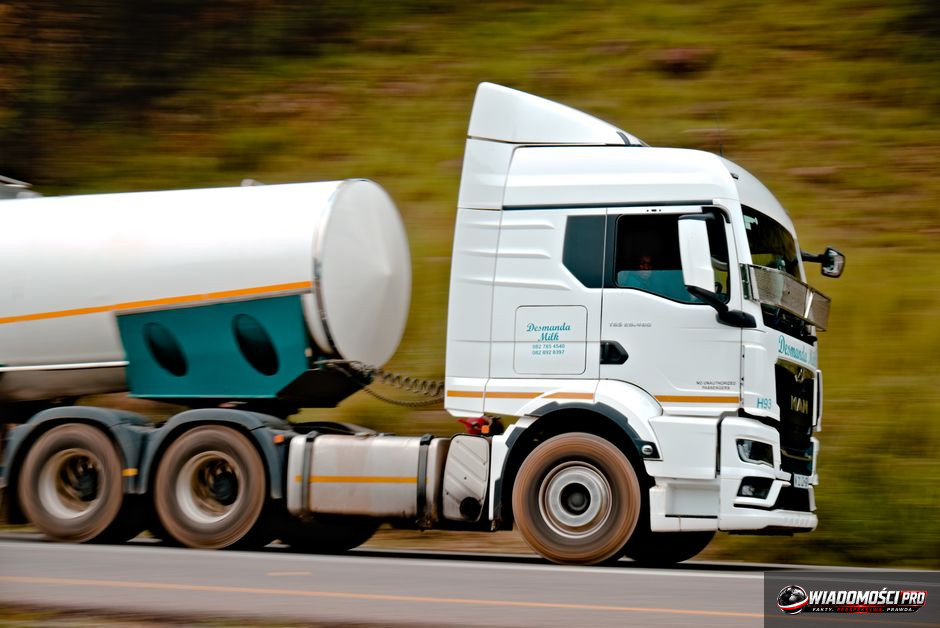
The proposed 60% tax on windfall profits could exceed the operating profits of companies like Unimot, while the government plans to raise 4 billion PLN from it, which experts say threatens the stability of fuel supplies. This mechanism directly hits the financial liquidity of importers, who, under such a drastic burden, lose the ability to regularly pay for raw material purchase contracts. The consequence could be a physical lack of fuel at stations when fuel entities are forced to limit the scale of their operations to avoid bankruptcy in the face of fiscal drainage.
The mechanism of the 60% tax and its impact on sector liquidity
The government's draft law on the windfall tax, pushed in June 2026, was constructed in a way that ignores the basic principles governing the fuel market. The 60% rate is not just a high fiscal burden, but an instrument that, in practice, cuts companies off from working capital. Companies like Unimot, which deal with the import and distribution of fuels, operate on low unit margins, making up for it with sales volume and supply continuity. Imposing a levy on them that in many cases exceeds the generated operating profit means the necessity of an immediate revision of purchasing strategy.
Money that previously served to secure contracts for oil and finished products is now to go to the state budget. This is not an accounting issue, but an operational one. Fuel importers must have huge credit lines to buy cargoes on international markets. Banks financing these transactions look at debt and profitability ratios. If the tax drastically reduces profits, banks may consider the companies as high-risk entities. The result will be a reduction in credit limits, which directly translates into fewer tankers leaving terminals.
The fuel market in Poland is highly dependent on independent importers who fill the gaps in supply produced by domestic refineries. If the tax system punishes them for effective price risk management, which is an inherent feature of this business, the entire supply chain becomes fragile. Empty stations, which analysts fear, will not be the result of a lack of fuel in the world, but a lack of the financial liquidity needed to bring it into the country.
Orlen counters: Why did the giant suspend its membership in the organization?
In June 2026, an unprecedented event occurred. Orlen, the largest player on the Polish market, decided to suspend its membership in a key industry organization. This move was a direct response to the windfall tax pushed by the Ministry of Finance. This decision, widely commented on in business media such as Business Insider or Energetyka24, is a clear signal that dialogue between the government and business has ceased to exist in any constructive form.
The fuel giant, which is both a beneficiary and a victim of price policy, decided that further participation in discussions on the shape of the tax is pointless. The dispute over the windfall tax has become the spark for a conflict that goes beyond simple differences of opinion regarding tax rates. Orlen points out that the way "windfall profits" were defined is arbitrary and harmful to companies that invest billions of zlotys in energy transition.
Suspending membership in an industry organization is a manifestation of the powerlessness of the largest entity on the market. When the largest company in the country withdraws from public dialogue, it means it sees no room for negotiation. For the rest of the market – smaller importers and distributors – this is a signal that the government does not intend to back down. The increase in tension between the state and business translates into nervous moves by shareholders, which was visible in the listings on the Warsaw Stock Exchange after the tax assumptions were announced.
4 billion zlotys: Budgetary calculation versus market realities
The Ministry of Finance assumes that the new tax will bring 4 billion PLN to the budget. This amount, although it seems to be significant support for public finances, is only a fraction of what the economy may lose in the event of market destabilization. The government argues that windfall profits result from market anomalies, but the fuel industry responds that these profits are the result of hard logistical work and skillful management of oil price volatility on the London and New York stock exchanges.
Comparing the 4 billion PLN in revenue with the risk posed by the paralysis of supplies shows a disproportion in the thinking of decision-makers. Fuel is a strategic raw material. Any disruption in its availability immediately translates into transport, food, and service prices. If the government "sucks" 4 billion PLN out of the sector, fuel companies must look for savings. The first areas for cuts are always safety stocks and investments in transmission infrastructure.
It is worth noting the way these 4 billion PLN are to be calculated. If the tax base is the profit generated in conditions of high price volatility, the tax will effectively become a penalty for operational success. Companies that handled the fuel crisis best will be punished with the highest levy. This demotivates efficiency and promotes stagnation. Instead of building a competitive market, the government is creating a system where it is better to show a lower profit to avoid the 60% fiscal axe.
Retroactive application of law as a fiscal tool
One of the most serious accusations made by lawyers and market analysts, including experts cited by the Bankier.pl portal, is the retroactive nature of the tax. The legislator plans to cover with the levy profits that have already been generated in periods preceding the introduction of new regulations. Such a practice is a dangerous precedent that destroys the foundations of investor trust in the Polish state.
Foreign investors, looking at such actions, are beginning to price political risk much higher than before. If the rules of the game can change during the match, capital will either withdraw from Poland or demand a much higher risk premium. In the case of the fuel industry, this means more expensive investment financing. Ultimately, consumers will pay for this "retroactive" taxation, because every company that has to factor in the risk of sudden changes in the law will raise margins on its products to build its own financial cushions.
This precedent is particularly dangerous in the context of supply stability. If companies do not know if another retroactive tax will appear tomorrow, they stop planning long-term. They focus solely on surviving the next quarter. In the fuel industry, where oil supply contracts are planned months in advance, such short-sightedness is deadly for the country's logistical continuity.
Karol Nawrocki and the promise of a fuel price reduction of 2.6 PLN
September 2026 brought a new card in the political game over fuel prices. Karol Nawrocki's project, assuming a price reduction of 2.6 PLN per liter, stands in stark contrast to the government's fiscal policy. On one hand, we have the Ministry of Finance, which wants to take billions of zlotys from the industry, and on the other – a politician who promises drivers cheaper fuel. These two poles are irreconcilable under market conditions.
If a 60% tax is imposed on fuel companies, their margins will fall to levels that make any price reductions for consumers impossible. On the contrary – companies will have to strive to maximize the margin on every liter to at least partially compensate for the losses resulting from the new levy. Nawrocki's promise, although attractive to voters, is mathematically impossible to fulfill in current economic realities without subsidies from the state budget, which in turn creates a vicious circle of spending.
Political rhetoric often ignores the hard facts coming from financial reports. Companies like Unimot are unable to "conjure up" price cuts at a time when the state is draining their accounts. Experts clearly indicate that attempting to force price cuts while simultaneously imposing high taxes will lead to the disappearance of fuel from independent stations. In such a situation, the price reduction will become theoretical, because there will be nowhere to buy the cheaper product.
Risk of a fuel crisis: Scenarios for Poland
The threat of a fuel crisis, which analysts are warning about, is not fear-mongering, but a logical consequence of the destabilization of the supply chain. The mechanism is simple: a fuel company needs cash to purchase a cargo of oil or finished fuel at the port in Gdańsk or Gdynia. If 60% of the profit is taken by the tax, the company does not have sufficient working capital to cover transport and excise costs. As a result, it cancels the purchase of the cargo.
When there are more such companies, the market begins to run out of goods. Then prices rise, and the state is forced to intervene, often using strategic reserves. However, this is a stopgap solution that does not fix the foundations of the market. Experts point out that if the tax comes into force in its current form, the Polish fuel market will become a "shortage" market. This, in turn, leads to queues at stations and panic, which is the worst possible scenario for social stability.
It is worth noting that in other European countries that introduced windfall taxes, these mechanisms were much better balanced. They took into account investment costs and the need to maintain liquidity. The Polish approach is drastically more restrictive. The government, chasing a quick budget injection of 4 billion PLN, risks losing control over the country's energy security. The math is ruthless: either the state receives tax revenues, or the sector maintains supply liquidity. Expecting both of these things at the same time is an illusion.
Perspective for investors: What's next for fuel stocks?
Stock market investors are already pricing in the risk associated with the new tax. Companies in the fuel sector are experiencing volatility that does not result from business fundamentals, but from fears of political decisions. Valuations of companies like Unimot have become a hostage to legislation. The market does not like uncertainty, and in this case, the uncertainty is almost total.
It is unknown how "windfall profit" will ultimately be defined. It is also unknown whether the 60% rate will be maintained or if it will be softened in the legislative process. This uncertainty causes capital to flee from the fuel sector towards more predictable branches of the economy. In the long run, this means more difficult access to financing for Polish companies, which again hits their operational capabilities.
If the government had decided to engage in dialogue with the industry instead of confrontation, it would have been possible to develop a model that would fuel the budget without destroying the profitability of companies. Unfortunately, the current course indicates a choice of a forceful path. Orlen, by suspending its membership in organizations, showed that the industry will not passively accept the imposed conditions. Is this enough for the government to change its mind? For now, there is no indication of this, which forces investors to prepare for subsequent months of high volatility and valuation declines in the fuel sector.
Summary: Is the fuel price worth destabilizing the market?
The debate about the 60% windfall tax is essentially a debate about what energy security is for the state. Is it a superior value, or is it a hostage to current fiscal policy? We will learn the answer to this question in the coming months, when the draft law goes to parliament.
The situation is dynamic. Every day of delay in making a decision to soften the tax increases the risk to the stability of the supply chain. The fuel industry, from independent importers to giants like Orlen, is sending warning signals. Ignoring them could lead to a situation where the budget gains 4 billion PLN, but the economy loses much more due to transport bottlenecks and higher logistics costs.
From the point of view of an ordinary driver, this dispute may seem distant until they see empty dispensers or drastic price jumps resulting from fuel shortages. It is therefore worth following the fate of this tax, because it depends on it whether the Polish fuel market will remain a stable pillar of the economy or become a field of political experiment with dangerous side effects.
Questions and answers
Why are fuel companies so strongly opposed to the new tax?
Because the 60% windfall tax rate may exceed their operating profits, which makes distribution activity unprofitable and blocks the capital necessary to finance fuel supplies.
How much does the government want to gain from this tax?
The government estimates budget revenues from the new windfall tax at 4 billion PLN, which raises controversy in the face of the risk of market destabilization.
Is the proposal to lower fuel prices by 2.6 PLN realistic with current taxes?
This is a political postulate of Karol Nawrocki from September 17, 2026, which contradicts the financial situation of companies burdened with the new tax, as draining capital from companies makes it impossible for them to simultaneously lower prices for consumers.
What is the main threat resulting from this tax for the consumer?
The biggest threat is the loss of financial liquidity by fuel importers, which may lead to supply interruptions and a physical lack of fuel at stations, regardless of its price.
What does the retroactive application of law mean in this case?
It means that the tax is intended to cover profits generated in periods earlier than the date the law enters into force, which destroys investor trust in Polish law and increases the costs of raising capital by companies.
Why did Orlen suspend its membership in the industry organization?
It was a protest against the shape of the regulations regarding the windfall tax, which shows a deep conflict between the company and the government regarding interference in the economic calculation of the fuel sector.
Is a 60% tax a standard in the European Union?
The Polish proposal is considered by the market to be extremely high compared to solutions used in other countries, where windfall taxes are usually better balanced, taking into account operational and investment costs.
What consequences does this regulation have for companies like Unimot?
This company, due to the specificity of its import activity, is particularly exposed to the loss of creditworthiness and operational liquidity, which may force it to radically limit the scale of its operations.
Sources
- "Extremely high". The market evaluates the fuel windfall tax rate - Parkiet
- Orlen disputes the new tax. Suspends membership in a key organization - businessinsider.com.pl
- Orlen, Saudi Aramco... who will pay the windfall tax and why? - Strefa Inwestorów
- Windfall tax will work retroactively. The new tax may create a dangerous precedent - bankier.pl
- Orlen cuts ties with a key organization. In the background, a dispute over the windfall tax - Energetyka24.com
- Sudden decision by Orlen. In the background, a new tax. The government counts on 4 billion PLN - money.pl
- War over the new 60% tax. Orlen made a move not seen in years - Gazeta Prawna
- Karol Nawrocki wants to lower fuel prices by up to 2.6 PLN per liter. There is a project - Autocentrum.pl
Article prepared by the Wiadomości PRO editorial team with the support of artificial intelligence. Facts come from the sources provided above.
Komentarze (0)
Ładowanie komentarzy...