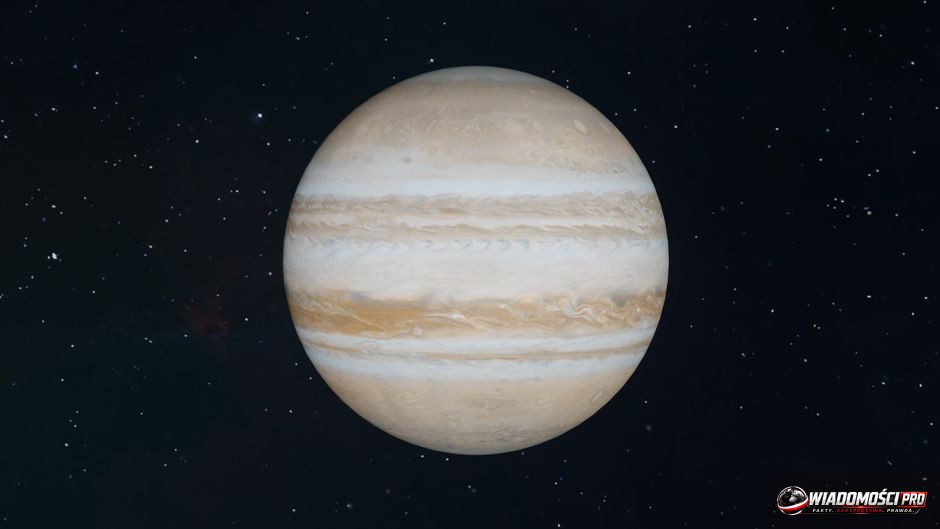
The Europa Clipper probe, launched in October 2024, is tasked with investigating whether conditions favorable to life exist beneath Europa's icy crust by analyzing, among other things, potential volcanic activity on the ocean floor. The probe does not carry detectors capable of directly detecting biological metabolism or cells, so it will not provide a definitive answer to the question of the existence of alien organisms. Instead, it will provide chemical and geophysical data that will allow for an assessment of whether the environment of this Jovian moon is capable of sustaining life processes in the form we know.
Finance and technology: A costly flight into the unknown
The total budget for the Europa Clipper mission is around 5 billion dollars. This amount includes the construction of the probe, launch costs, and multi-year operational support. It is one of the most expensive planetary missions in NASA's history. This investment is reflected in the scale of the construction – Clipper is the largest spacecraft the American agency has ever built to explore another celestial body. Once the solar panels are deployed, the probe's span exceeds 30 meters, which is necessary to collect energy in the distant Jovian system, where sunlight is more than 25 times weaker than on Earth.
The target date for reaching the Jovian system is 2030. After entering orbit around the gas giant, Clipper will begin a series of flybys near Europa. This will not be a landing or an orbit around the moon itself, but rather 49 precisely planned close passes. Each flyby is an opportunity to collect data, which will be sent to Earth using an advanced communication system.
On board is a set of ten primary scientific instruments. Among them, the most important is REASON (Radar for Europa Assessment and Sounding: Ocean to Near-surface). This ice-penetrating radar is designed to study the structure of Europa's crust, reaching depths of several kilometers. Scientists hope that it will be able to detect pockets of liquid water trapped in the ice, which could be potential habitats for microorganisms.
The second key device is MISE (Mapping Imaging Spectrometer for Europa). This spectrometer will map the chemical composition of the moon's surface. MISE will look for ice, salts, organic compounds, and other substances that may be evidence of matter exchange processes occurring between the moon's interior and its surface. If there are indeed active volcanoes or hydrothermal vents on the ocean floor, their products should be carried by convection currents to the upper layers of the ice, where they will be detected by the probe's instruments.
NASA vs. ESA: The race for Jupiter
The rivalry for primacy in exploring the Jovian system is not just a matter of ambition, but primarily of differences in budgetary and technical approaches. The European Space Agency (ESA) is carrying out the JUICE (JUpiter ICy moons Explorer) mission, the cost of which is estimated at approximately 1.6 billion euros, which converts to just under 1.8 billion dollars. The difference in financial expenditure between the NASA mission and the European initiative is significant and stems from the specificity of the scientific goals.
JUICE is a mission with a broad spectrum of activities. The European probe is studying the Jovian system as a whole, dedicating attention to Europa, Callisto, and Ganymede. The American Europa Clipper program has focused exclusively on one object – Europa. Such specialization allowed NASA engineers to design a probe dedicated specifically to surviving the extreme radiation prevailing around this one moon.
A larger budget allowed for the use of heavier radiation shielding for electronics, which in the Jovian environment is a decisive factor in the mission's lifespan. Clipper's onboard systems must constantly contend with Jupiter's strong magnetic field, which bombards electronics with charged particles. The European JUICE, having less capital, had to make certain compromises regarding the mass of the shields, which forced a different flyby strategy. NASA, having greater resources, opted for multiple, close approaches to Europa, which, at higher operational costs, provides a better chance of collecting high-resolution data.
The two missions are not mutually exclusive, but complementary. Data from the JUICE mission will allow for a broader view of the evolution of icy moons, while Clipper will provide detailed information about the chemistry of Europa's ocean. This is a collaboration forced by the vast distance and difficult conditions, where every additional piece of information is worth its weight in gold.
Ocean under the ice: Are volcanoes life?
The theory about the existence of an ocean on Europa is not new, but it is the Clipper mission that is expected to finally verify it. Beneath an icy crust 15 to 25 kilometers thick lies an ocean up to 100 kilometers deep. It contains more liquid water than all of Earth's oceans combined. The key question remains the source of heat necessary to keep this water in a liquid state.
Geophysical models suggest that Jupiter's tidal forces stretch and compress Europa's interior, generating heat through internal friction. This phenomenon may drive volcanic activity on the ocean floor, similar to what occurs in Earth's rift systems. Hydrothermal vents on Earth are home to ecosystems that function without access to sunlight, utilizing chemosynthesis.
However, scientists do not expect Clipper to see "oases" with fish. The mission is intended to detect chemical signatures. If there are organic compounds in the ocean water, Clipper should detect them in trace amounts in samples of matter ejected from the moon's interior. There is a hypothesis that in some places the ice on Europa is thinner, which allows for periodic ejections of water vapor or geysers. By flying through such plumes, the probe could collect samples of matter directly from the moon's interior.
This approach has its drawbacks. The instruments must be extremely sensitive to distinguish biological traces from matter of purely geological or meteoritic origin. If Europa is chemically "dead," Clipper will transmit data on the composition of salts and minerals, which will finally close the debate on the biological potential of this place. Conversely, the presence of complex carbon compounds would be a breakthrough, although still not definitive proof.
Humanity's legacy: A message in a bottle
The Europa Clipper probe carries on board not only measurement equipment but also an element of symbolic significance. NASA placed a metal plate on the probe with a message in a bottle engraved on it. This project engaged the public, allowing thousands of people to send their names into space.
From the point of view of physics and astrobiology, this plate has no significance. However, it is a carrier of culture in a world where space exploration is becoming the domain of algorithms. Placing names on a probe that will reach the Jovian system in 2030 is a gesture toward future generations. It is an attempt to mark humanity's presence in places our bodies will never physically reach.
Critics of such actions point to their marketing nature. However, in the context of a 5-billion-dollar mission, such actions build public support for further research. Without the acceptance of taxpayers, funding such expensive NASA projects would be much more difficult. In this sense, the message in a bottle is a political tool that allows for the continuity of research over the coming decades.
Engineering challenges: Radiation is enemy number one
Jupiter possesses one of the strongest magnetic fields in the Solar System. Inside this field is a giant radiation belt that is lethal to electronics. The Europa Clipper probe was constructed in such a way as to survive years of staying in this environment, however, its operational time is strictly limited. Each flyby near Europa is a risk of damaging the systems.
Engineers had to use special titanium and aluminum shields, which act as armor for the most sensitive components. The mass of these shields significantly affects the probe's design. If not for these protections, Clipper would have failed long before the end of the mission. Designing such durable electronics is the greatest technical achievement of this mission.
Another challenge is communication. A radio signal takes about an hour to travel from the vicinity of Jupiter to Earth. This means the probe must be fully autonomous during real-time flybys. All decisions, course corrections, and instrument management must be performed by onboard software without direct control from the command center at the Jet Propulsion Laboratory.
This autonomy is necessary because a software error could lead to a loss of contact or a collision with the moon. The mission has been programmed so that in the event of a failure, the probe enters a safe mode, but in the Jovian environment, even a short power outage can be critical. This meant that engineers had to develop extreme system redundancy.
The role of science in the search for life
The Europa Clipper probe, launched in October 2024, will not send us a photo of an alien. Its role is more mundane – it is a chemical detective. If, after reaching its destination in 2030, data from the MISE instrument indicate the presence of amino acids or complex polymers, we will have to ask about their origin. Are they the result of abiogenic processes, or perhaps a trace of life?
In space sciences, there is no room for over-optimism. Every signal must be verified multiple times by theoretical models. If the water in Europa's ocean turns out to be too salty, life in the form we know may be impossible there. Clipper will provide salinity maps that will allow for the assessment of the stability of conditions in this ocean.
What we will achieve through this mission is an understanding of "habitability" – that is, the ability of an environment to support life. This is a completely different goal than finding a civilization. Focusing on ocean chemistry is a safer research strategy because it is based on hard physicochemical data. If Europa turns out to be a place favorable to life, it will be a signal that the universe may be full of similar "water-ice" worlds.
What does this mean for the reader?
For a person observing the development of space technology, Europa Clipper is proof of how far our engineering has come. The probe, which will reach its goal in 2030, is the pinnacle of technological capabilities that we possess in the third decade of the 21st century. The cost of 5 billion dollars is the price for an answer to the question of whether there is even a shadow of a chance for biological development in our Solar System outside of Earth.
If Clipper finds nothing, our knowledge of Europa will be updated with detailed geological maps. If it finds chemical traces of life, our understanding of biology will be revised. In both cases, we gain a new perspective on our place in the universe. It remains to wait for the data that will flow for years, changing our astronomy textbooks.
Questions and answers
Will Europa Clipper land on the moon's surface?
No, the probe was designed to perform a series of 49 flybys at a close distance from Europa to study it from Jupiter's orbit using remote sensors.
What is the main threat to the probe?
The probe must face Jupiter's extremely strong radiation field, which is one of the greatest technical challenges of this mission and required the use of thick titanium shields.
When will we know the first research results?
The probe will reach Jupiter in 2030, after which it will begin collecting data; the most groundbreaking discoveries regarding the composition of the ocean may appear after several years of intensive flybys.
Why is NASA sending a probe if it has no life detectors?
The mission aims to check environmental conditions. Detecting the right chemistry and energy is a necessary step before sending a mission capable of directly searching for microorganisms in the future.
How does Europa Clipper differ from the European JUICE?
Clipper is dedicated exclusively to Europa and has a larger budget (5 billion USD), which allowed for better radiation shielding, while JUICE (approx. 1.8 billion USD) is studying the entire Jovian system, including Ganymede and Callisto.
Which instruments are key to the mission?
The most important are REASON (ice-penetrating radar) and MISE (surface-mapping spectrometer), which are designed to detect traces of water and organic compounds.
Sources
- Europa Clipper probe to search for life on Europa - Urania - Polish Astronomical Portal
- Start of the Europa Clipper mission [BROADCAST]. Americans will overtake Europeans in the search for life on Europa - Wyborcza.pl
- Beginning of the Europa Clipper mission - Kosmonauta.net
- Europa Clipper has launched. It will investigate whether there are conditions for life on Jupiter's moon - Polskie Radio 24
- Searching for life in the Solar System outside Earth. NASA sends a mission - Geekweek Interia
- Flying to search for life. Start of the NASA mission in just three weeks - Antyweb
- NASA sends a "message in a bottle" into space. You can sign it! - Radio ESKA
- Probable volcanoes on the ocean floor beneath the surface of Europa - astronet.pl
Article prepared by the Wiadomości PRO editorial team with the support of artificial intelligence. Facts are derived from the sources listed above.
Komentarze (0)
Ładowanie komentarzy...