
NASA has not yet confirmed the presence of life, but the Europa Clipper probe, launched in October 2024, is investigating whether the chemical and thermal conditions necessary for the existence of organisms are present beneath the moon's icy shell. This project represents the most expensive and ambitious research endeavor in the history of Jupiter system exploration, aimed at precisely determining the habitability potential of this icy world. Instead of looking for direct biological traces, the mission focuses on geochemical data that will determine whether the ocean hidden under a dozen-kilometer-thick layer of ice is a stable environment capable of sustaining metabolic processes.
Why has Europa become NASA's primary target?
Jupiter's moon has dominated astrobiology discussions for years due to its unique geological structure. Beneath the icy shell, estimated to be between 15 and 25 kilometers thick, lies a global ocean of liquid water. The volume of this water mass is twice that of all Earth's oceans combined. However, the mere presence of liquid water is not enough to initiate biological processes. A crucial factor remains the availability of energy and the appropriate chemical composition of the environment, which determines the possibilities for sustaining life on a planetary scale.
Research published in June 2021 by the team at astronet.pl points to probable volcanic activity on the floor of Europa's ocean. If the hypothesis regarding the existence of hydrothermal vents is confirmed, we will be dealing with a mechanism analogous to Earth's deep-sea ecosystems. On Earth, communities of organisms around such vents function in total isolation from sunlight, drawing energy from chemical reactions occurring between water and hot rocky material. Europa Clipper is set to verify whether similar processes occur in the dark depths of Jupiter's moon.
Scientists face the challenge of distinguishing signals originating from the interior of the ocean from background noise generated by Jupiter's strong magnetic field. The probe does not have a lander, so analysis is conducted via remote sensing during close approaches to the surface. Each flyby provides an opportunity to collect data that will allow for the construction of a chemical and thermal map of the ocean. Hypotheses about volcanism remain in the realm of theory until instruments detect anomalies in the surface's chemical composition or identify characteristic thermal signatures in specific areas of the moon. The path from finding an environment favorable to life to confirming its existence is extremely long and requires hard data.
Technological challenges of the Europa Clipper mission
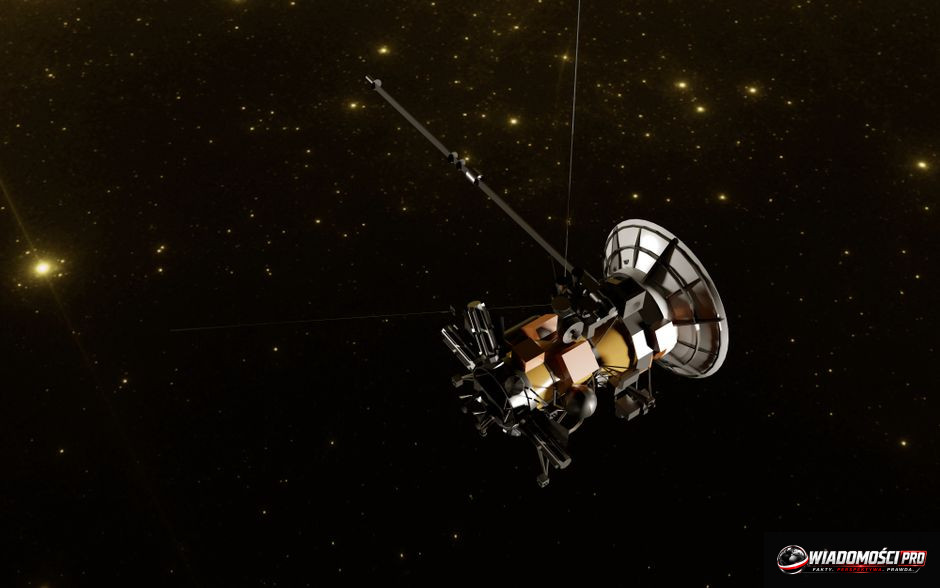
The probe's design had to be optimized for survival in one of the most difficult environments in the Solar System. Europa orbits within Jupiter's strong radiation belt, which means that the onboard electronics are constantly bombarded by high-energy particles. To protect critical systems, engineers placed the most important equipment inside a special titanium-aluminum "vault." This structure acts as armor, protecting sensitive integrated circuits from degradation caused by ionizing radiation, which is lethal to standard components in these regions.
Another challenge is power. Due to the vast distance from the Sun, the intensity of radiation reaching the Jupiter system is negligible, representing only a fraction of what Earth receives. The probe is equipped with powerful solar panels with a span of over 30 meters. Once fully deployed, they occupy a surface area allowing for the collection of energy necessary to power research instruments, communication systems, and maneuvering thrusters.
The heart of the mission is a set of instruments designed to study the moon's interior without the need for physical contact with its surface:
- REASON (Radar for Europa Assessment and Sounding: Ocean to Near-surface) – an ice-penetrating radar tasked with studying the internal structure of the icy shell and locating pockets of liquid water.
- MISE (Mapping Imaging Spectrometer for Europa) – an infrared imaging spectrometer used for mapping the chemical composition of the surface, including the search for organic carbon compounds, salts, and other chemicals.
- Europa-UVS (Ultraviolet Spectrograph) – an ultraviolet spectrograph designed to detect potential water vapor plumes ejected from the moon's interior and to analyze the chemical composition of the exosphere.
- MASPEX (Mass Spectrometer for Planetary Exploration) – a device for analyzing the composition of gases found near the surface, allowing for the study of molecules originating from the subsurface ocean.
- E-THEMIS (Europa Thermal Emission Imaging System) – a thermal imaging system tasked with detecting areas of elevated temperature, which could indicate volcanic activity or geological processes within the ice.
Designers had to balance the sensitivity of these instruments with their resistance to conditions in Jupiter's magnetic field. Each of these instruments has been calibrated to survive years of intense bombardment by charged particles while maintaining the measurement precision required to detect subtle signals from the depths of the ocean.
Flight schedule and navigation strategy
The flight toward the Jupiter system does not follow a straight line. The probe uses gravity-assist maneuvers, flying near other planets to gain the necessary speed and precisely reach its destination while optimizing fuel consumption. Each stage of this journey is supervised by the team at the Jet Propulsion Laboratory in Pasadena.
The current status of the mission involves the execution of the interplanetary phase:
- Maintaining the integrity of all onboard systems during the long flight through deep space.
- Precisely executing correction maneuvers that will allow the probe to enter Jupiter's capture trajectory on schedule.
- Preparing instruments for the science phase, which will begin after reaching the Jupiter system and stabilizing the orbit around the moon.
The distance between Earth and Jupiter means that radio communication is subject to a delay of several dozen minutes. The probe's systems must possess a high degree of autonomy so that in the event of a failure or anomaly, they can make the decision to enter safe mode without the intervention of operators from Earth. Upon entering the strong radiation zone, each instrument will undergo a stress test that will verify whether the technology created in NASA laboratories is truly capable of surviving in the most hostile region of the planetary system.
At this stage, the mission does not yet provide direct evidence of the existence of life. Europa Clipper is focusing on verifying assumptions regarding habitability. If, during the flybys, the probe does not show thermal or chemical activity consistent with models, the hypothesis about Europa's biological potential will be subjected to brutal verification. The expectations of the scientific community are high, but they must be confronted with hard data that will only flow in after the operational phase near the moon begins.
A message in a bottle: Humanity in space
Europa Clipper serves not only as an advanced laboratory but also as a carrier of a symbolic payload. On board the probe, a "message in a bottle" has been placed, containing the signatures of thousands of people from around the world. This initiative, part of a global social campaign, aimed to bring the mission's goals closer to the public. NASA, by including the names of private individuals on a metal plate mounted on the probe's body, emphasized the communal dimension of space exploration.
Sentiments have no influence on the results of the research. Even the most moving testimonies of humanity's presence in the universe will not change the physics that the machine must face. Onboard instruments analyze chemical data that are meant to answer the question of whether conditions for biological evolution truly exist beneath the icy shell. If Europa turns out to be merely a frozen block of ice without internal energy sources, this message will become a monument to human hope, rather than a confirmation that we are not alone in the universe.
In this mission, data from the sensors will determine success or failure. Researchers must decide whether Europa's ocean is a living, dynamic ecosystem or a dead reservoir of brine. Every piece of information sent to Earth will be subjected to multi-stage verification by international teams of specialists. A lack of direct evidence for life will not mean that the mission did not achieve its goals – if Clipper precisely determines the chemical and thermal composition of the moon, it will provide knowledge that will define the directions of astrobiological searches for decades to come.
What's next? Expectations for research results
NASA has not yet confirmed the presence of life, but the device has one specific task: to check whether the chemical and thermal conditions necessary to sustain organisms actually exist beneath the icy shell of Jupiter's moon. This is not an "all or nothing" mission, but a precise investigation conducted from a great distance.
Scientists at the JPL laboratory in Pasadena are tempering emotions. Although earlier analyses regarding probable volcanoes on the ocean floor beneath Europa's surface have sparked the imagination of researchers, the probe will not land on the surface. Instead, during numerous flybys, the set of onboard instruments will be busy mapping the chemical composition and thickness of the ice shell.
Expectations for this mission are enormous:
- The mission is expected to provide data that will revolutionize our knowledge of the habitability of icy worlds, changing the way we define life zones in the Solar System.
- Research results will be published by NASA after the probe reaches its destination and begins the science phase, which means we will have to wait a few more years for hard evidence.
In practice, this means that for the near future, we will receive communications about the correct operation of systems. Only when Clipper begins sending data from the immediate vicinity of Europa will we find out whether life is actually teeming under the ice, or if we have stumbled upon another geologically barren place in space. The risk of disappointment is high, but that is the price for trying to answer the question of whether we are alone in the universe.
What this means for you
The Europa Clipper mission is a test for the American space sector, which is competing for primacy in the exploration of the Jupiter system. Scientists and the public gain, because even a negative result – confirming that Europa is dead – will be valuable information for science. The catch remains time; we will wait a few more years for final results, which requires patience from a public accustomed to instant news.
Questions and answers
Will the probe land on the surface of Europa?
No, Europa Clipper is an orbiter-type probe that will perform multiple flybys near the moon, collecting data from a safe distance.
When will we know the first concrete research results?
Full scientific data will begin to flow in after the probe reaches the Jupiter system and begins the data collection phase, which is planned for the years following the 2024 launch.
Is the mission safe for Europa?
Yes, NASA uses rigorous planetary protection procedures to prevent biological contamination of the moon by Earth microorganisms.
Why wasn't a lander sent if we are looking for life?
Technical complexity, high cost, and risks associated with extreme radiation near Jupiter made remote sensing using advanced orbital equipment the optimal solution.
What is the main threat to the probe?
The greatest threat is the strong ionizing radiation in Jupiter's magnetosphere, which can permanently damage the probe's electronics, despite the use of protective armor.
Can Europa Clipper confirm the existence of life?
The probe has instruments for detecting organic compounds and conditions favorable to life, but direct confirmation of the existence of organisms would require collecting samples, which the mission does not provide for.
What is the main energy source for potential life on Europa?
Scientists hold hope in heat generated by tidal interactions and potential hydrothermal activity on the ocean floor, which could provide the necessary chemical ingredients.
Is the Europa Clipper mission the only mission studying this moon?
Europa Clipper is the largest mission dedicated exclusively to Europa, however, data is also collected by other missions exploring the Jupiter system, which allows for a broader view of the entire system.
How long will the journey to Jupiter take?
The probe's journey will take about 5.5 years, during which the probe will perform a series of gravity-assist maneuvers to gain the required speed.
Can anyone interested follow the progress of the mission?
Yes, NASA provides updates regarding the status of the probe and planned mission stages via its official information channels and scientific portals.
Does Europa Clipper only study Europa?
The main goal is Europa, however, during flybys, the probe can also collect data regarding other objects in the Jupiter system if the trajectory allows.
What will happen when the probe finishes its mission?
After exhausting resources or completing planned research, the probe will be introduced in a controlled manner into Jupiter's atmosphere or into a safe orbit, in accordance with planetary protection protocols.
Is the REASON radar technology new?
The REASON radar is an advanced tool designed specifically to penetrate a thick layer of ice, using modern signal processing methods to obtain an accurate image of the subsurface structure.
What role does the MISE spectrometer play?
MISE is used to create chemical maps of the surface, which allows for the identification of places rich in minerals and organic compounds, which is crucial for assessing biological potential.
Does Europa Clipper use nuclear energy?
No, the mission uses huge solar panels, which is an innovative approach at such a great distance from the Sun.
Does the mission have an impact on Polish science?
Polish scientists collaborate with international research teams, analyzing data from space missions, which allows for a contribution to the development of astrobiology and planetary physics.
Is there a risk that the probe will not reach its destination?
Every interplanetary mission carries technical risk, however, NASA has implemented rigorous testing procedures to minimize the probability of failure during the long journey.
Why is it so important to study the ocean under the ice?
The ocean under the ice is one of the few places in the Solar System where conditions necessary to sustain life in the form we know exist, which makes it a priority for astrobiology.
Will Clipper detect microorganisms?
The probe does not have equipment for detecting biological activity in real-time, but it will provide data about the environment in which such organisms could potentially exist.
How much does this mission cost?
The mission budget is counted in billions of dollars, which reflects the scale of engineering and scientific challenges faced by NASA engineers and researchers.
Sources
- Europa Clipper probe to search for life on Europa - Urania - Polish Astronomical Portal
- Start of the Europa Clipper mission [BROADCAST]. Americans to outpace Europeans in the search for life on Europa - Wyborcza.pl
- Beginning of the Europa Clipper mission - Kosmonauta.net
- Europa Clipper has launched. It will investigate whether there are conditions for life on Jupiter's moon - Polskie Radio 24
- Searching for life in the Solar System beyond Earth. NASA sends a mission - Geekweek Interia
- Flying to search for life. Start of the NASA mission in just three weeks - Antyweb
- NASA sends a "message in a bottle" into space. You can sign it! - Radio ESKA
- Probable volcanoes on the ocean floor beneath Europa's surface - astronet.pl
Article prepared by the Wiadomości PRO editorial team with the support of artificial intelligence. Facts come from the sources listed above.


Komentarze (0)
Ładowanie komentarzy...